Award-Winning AP Physics C: Electricity and Magnetism Tutors
serving Colorado Springs, CO
AP Physics C: Electricity and Magnetism
Tutors in Colorado Springs
Private 1-on-1 tutoring, weekly live classes for academic support, test prep & enrichment, practice tests and diagnostics, and more to elevate grades and test scores.
Based on 3.4M Learner Ratings
UniversitiesSchools & Universities
DeliveredHours Delivered
ProficiencyGrowth in Proficiency
Who needs tutoring?
No obligation. Takes ~1 minute.

Gauss's law, Ampère's law, Faraday's law — AP Physics C: E&M asks students to think in vector fields and surface integrals, which is a major leap from mechanics. As an astrophysics and chemistry double major at CU Boulder, Graham works with electromagnetic theory as a core part of his studies and breaks down each law into the physical picture behind the math. He holds a 5.0 rating from students.
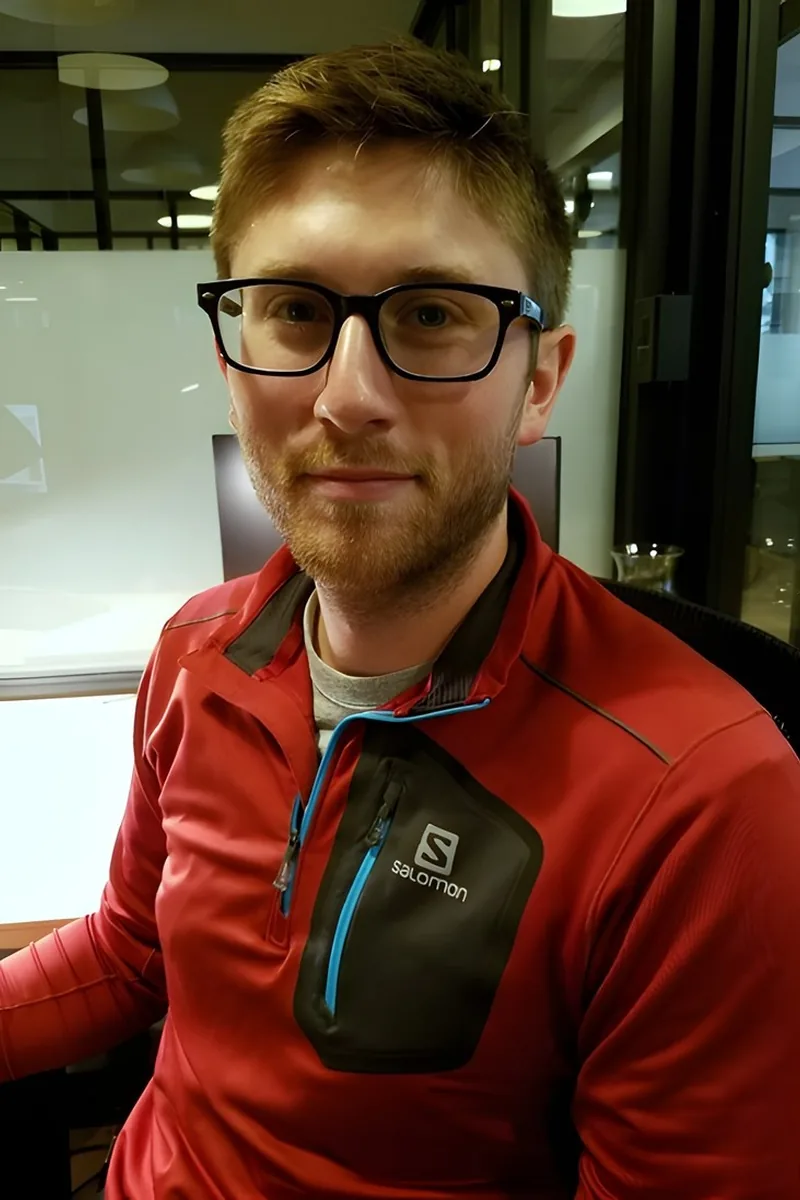
Gauss's law, Ampère's law, Faraday's law — E&M demands that students think in three dimensions about fields they can't see, then translate that reasoning into vector calculus. Evan breaks these abstract concepts into concrete, visual steps, connecting each integral to the physical situation it describes. His physics background makes him especially sharp on the Maxwell's equations framework that ties the whole course together.
Gauss's law, Ampère's law, Faraday's law — AP Physics C: E&M throws vector calculus at students who are often still getting comfortable with integrals. Timothy's physics degree and his parallel depth in multivariable calculus let him unpack concepts like electric flux and induced EMF in a way that makes the math feel like a tool, not an obstacle.
Gauss's law, Ampère's law, Faraday's law — E&M asks students to visualize invisible fields and then do calculus on them, which is a uniquely difficult combination. Ava's engineering training at Washington University in St. Louis gave her deep practice with vector calculus and electromagnetic theory in applied settings like circuit analysis and energy systems. She unpacks each law by grounding it in a physical scenario before touching the math, so the integrals actually make sense.
E&M is where most AP Physics students hit their ceiling — Gauss's law, Ampère's law, and Faraday's law demand spatial reasoning and calculus fluency at the same time. Bidyut's biomedical engineering curriculum at Johns Hopkins required extensive work with electromagnetic theory, from circuit analysis to field modeling. He unpacks each law by building the physical picture first, then layering in the math so the integrals actually make sense.
Gauss's law, Ampère's law, RC circuits, and electromagnetic induction can feel abstract until someone connects them to physical systems. Justin's ME coursework at Illinois includes electronics and E&M-heavy physics sequences, so he unpacks Maxwell's equations and circuit analysis with the same rigor his engineering professors demand. He teaches students to sketch field diagrams first, turning intimidating integrals into manageable geometry.
AP Physics C: E&M is widely considered the hardest AP science exam, demanding fluency with vector calculus, Gauss's law, Faraday's law, and RC/RL circuit analysis under serious time pressure. Nima is a physics major at Duke who earned a 1580 SAT, and he unpacks these topics by deriving results from Maxwell's equations so students understand the structure behind each problem type rather than pattern-matching from examples.
Gauss's law, Ampère's law, Faraday's law — AP Physics C: E&M throws vector calculus at students who are still getting comfortable with electric fields and circuits. Will breaks each law down to its physical meaning first, then layers in the integral formulations so students understand what they're computing and why. As a current Rice physics student, he's recently worked through this exact material at the college level.
AP Physics C: E&M is where calculus and physics collide — Gauss's law, Ampère's law, and Faraday's law all require setting up and solving integrals that many students haven't encountered in their math classes yet. Raphael's combined strength in calculus and physics, built through his Cornell science curriculum, means he can teach both the mathematical machinery and the physical intuition behind electromagnetic fields and circuits. Rated 5.0 by students.
Gauss's law, Ampère's law, Faraday's law — AP Physics C: E&M throws a wall of abstract vector calculus at students who were just getting comfortable with mechanics. Lillian tackles each law by grounding it in a concrete physical scenario first, then layering in the math. Her systematic approach to problem-solving, sharpened through years of STEM coursework, translates well to navigating complex circuit and field problems.
AP Physics C: E&M is where calculus and physics truly merge — Gauss's law, Ampère's law, and Faraday's law all require setting up and evaluating integrals that many students haven't encountered in their math classes yet. Eitan's physics degree means he can teach both the physical intuition behind electric and magnetic fields and the vector calculus needed to solve the problems. Rated 5.0 by students.
Hello, my name is Yosef and I would be happy to serve as a math tutor. I place strong emphasis on a good balance between knowledge of mathematical content and proficiency in problem-solving, reasoning, and conveying mathematical ideas in writing. There are times when a student needs to be informed of a solution, times when he or she also needs to hear the explanation of why the solution works, and times when he or she should be guided to finding the solution on his or her own. It is important for the tutor to recognize which approach is appropriate. Frequently, when students struggle, it is because they do not understand the notation or terminology in use. In such cases, it is important to reassure the student, reminding him or her that he or she is only struggling with understanding a single word, not the entire mathematical concept. As a rule, people perform better and are better motivated when they have self-confidence, not when the task ahead seems frighteningly daunting. It is also important to recognize that different students learn best through different means. As an example, some students are visual learners and can understand the material best through pictures and gestures. Other students learn best through hearing the procedures vocalized, while still others learn best through writing out the steps of the solution procedure. I know to adapt my teaching style to the individual student. with these considerations in mind, I promise to provide the best assistance that I can, taking your individual needs into consideration.
Gauss's law, Ampère's law, and Faraday's law all require students to visualize invisible fields and reason through multivariable integrals — a combination that trips up even strong physics students. Dylan's coursework at Vanderbilt covers exactly this material, and his instinct is to sketch field lines, draw Gaussian surfaces, and build physical intuition before diving into the math. That graphical-first approach turns E&M from the most feared AP Physics exam into something manageable.
Gauss's law, Ampère's law, Faraday's law — AP Physics C: E&M asks students to think in three dimensions with vector calculus tools they've barely learned. Taha breaks down each Maxwell equation into physical intuition first, then builds up the mathematical formalism around it. His deep background in both calculus and physics lets him bridge the gap between what students see in their math classes and what the E&M exam actually demands.
Testimonials
Because the right AP Physics C: Electricity and Magnetism tutor makes all the difference.
Average Session Rating – Based on 3.4M Learner Ratings
Practice AP Physics C: Electricity and Magnetism
Free practice tests, flashcards, and AI tutoring for AP Physics C: Electricity and Magnetism
Nearby AP Physics C: Electricity and Magnetism Tutors
Other Colorado Springs Tutors
Related Science Tutors in Colorado Springs
Frequently Asked Questions
AP Physics C: Electricity and Magnetism focuses on electrostatics, conductors and insulators, electric potential, capacitance, current and resistance, magnetic fields, and electromagnetic induction. The course emphasizes calculus-based problem-solving and mathematical reasoning, requiring students to apply derivatives and integrals to physics concepts. Understanding the relationships between electric and magnetic fields is essential for success on the exam.
Score improvement depends on your starting point and commitment level, but personalized 1-on-1 instruction typically helps students identify and address conceptual gaps that classroom instruction may not catch. Many students struggle with the calculus-based problem-solving required in E&M, and targeted tutoring can significantly strengthen both conceptual understanding and calculation skills. Working with a tutor to practice problems consistently and review weak areas often leads to measurable score gains within a few months.
Students in Colorado Springs often find Gauss's Law, electromagnetic induction (Faraday's Law), and the relationship between electric and magnetic fields most difficult because they require strong conceptual understanding combined with calculus skills. Many students also struggle with circuit analysis and understanding how capacitors and resistors behave in different configurations. A tutor can break down these abstract concepts with visual explanations and step-by-step problem-solving to build confidence.
The exam has 45 multiple-choice questions (45 minutes) and 3 free-response questions (45 minutes). For multiple-choice, aim to spend about 1 minute per question, flagging difficult ones to revisit if time permits. For free-response, allocate roughly 15 minutes per question, reading carefully to identify what's being asked before diving into calculations. Practicing full-length exams under timed conditions helps you develop a pacing strategy and reduces test-day anxiety.
Start by working through practice problems organized by topic to build mastery in each area, then move to mixed problem sets that require you to identify which concepts apply. Taking full-length practice tests under exam conditions is crucial—it helps you manage timing, identify weak areas, and build test-taking stamina. Spacing out your practice over several months, reviewing mistakes carefully, and focusing extra time on topics where you consistently struggle will yield the best results.
Look for tutors with strong physics backgrounds—ideally those who have taught AP Physics C, scored well on the exam themselves, or have advanced degrees in physics or engineering. They should be able to explain both the conceptual foundations and the calculus-based problem-solving clearly, and they should be familiar with the specific format and expectations of the AP exam. Varsity Tutors connects you with expert tutors in Colorado Springs who specialize in AP Physics C and can tailor instruction to your learning style.
Your first session typically involves an assessment of your current understanding—the tutor will ask about topics you find challenging, review your recent practice test scores, and work through a few problems to identify specific gaps. From there, you'll develop a personalized study plan targeting your weak areas while reinforcing strengths. This foundation helps ensure that every session afterward builds directly on your needs and moves you toward your score goal.
Yes—AP Physics C: E&M is calculus-based, so comfort with derivatives and integrals is essential. You'll need to apply calculus to derive equations, solve differential equations, and interpret graphs. If your calculus skills are rusty, a tutor can help you refresh those fundamentals while connecting them directly to physics applications, making the math feel more purposeful and easier to retain.
Let’s find your perfect tutor
Answer a few quick questions. We’ll recommend the right plan and match you with a top 5% tutor.