Award-Winning Reading Tutors
serving San Jose, CA
Reading
Tutors in San Jose
Private 1-on-1 tutoring, weekly live classes for academic support, test prep & enrichment, practice tests and diagnostics, and more to elevate grades and test scores.
Based on 3.4M Learner Ratings
UniversitiesSchools & Universities
DeliveredHours Delivered
ProficiencyGrowth in Proficiency
Who needs tutoring?
No obligation. Takes ~1 minute.
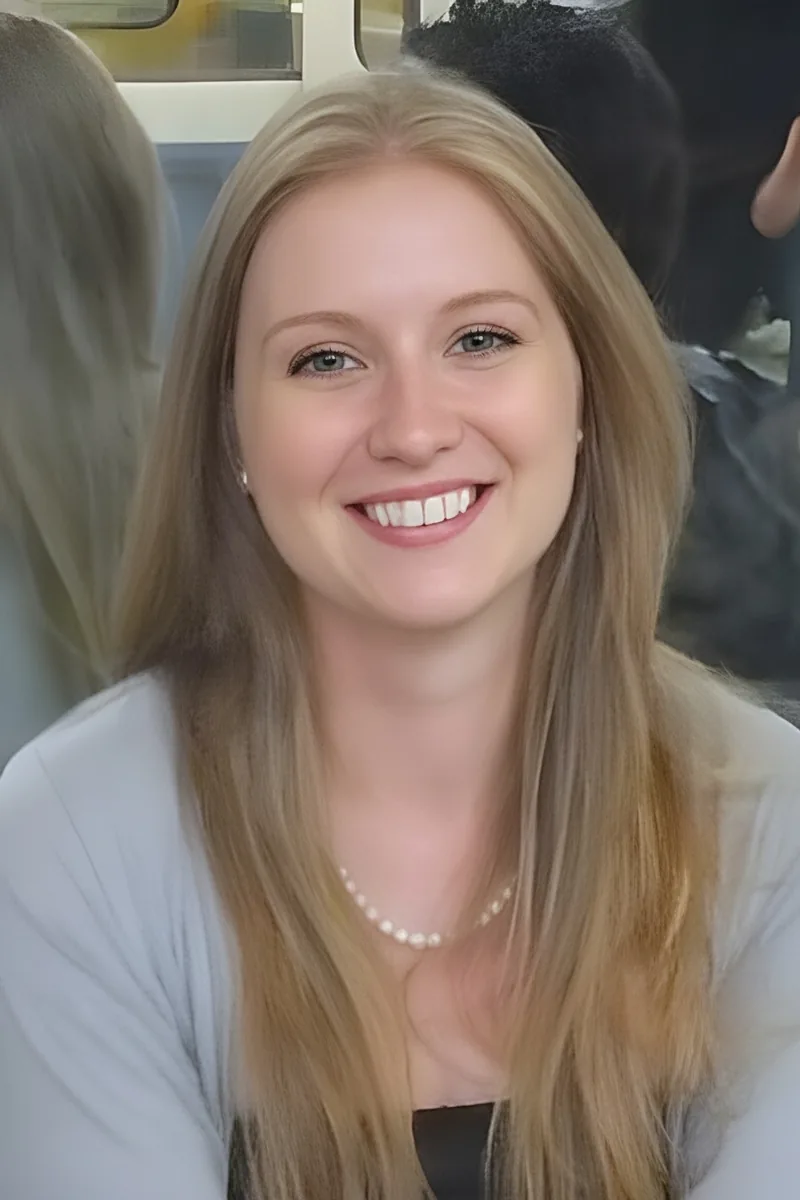
Elementary-age students who can decode words but zone out before the end of a paragraph need a different kind of practice — and Christina's two-plus years of private tutoring with younger learners gave her a toolkit for building that bridge between sounding out words and actually understanding what they say. Her computer science training reinforces the habit of reading precisely, since a single misread line of documentation can derail an entire program.
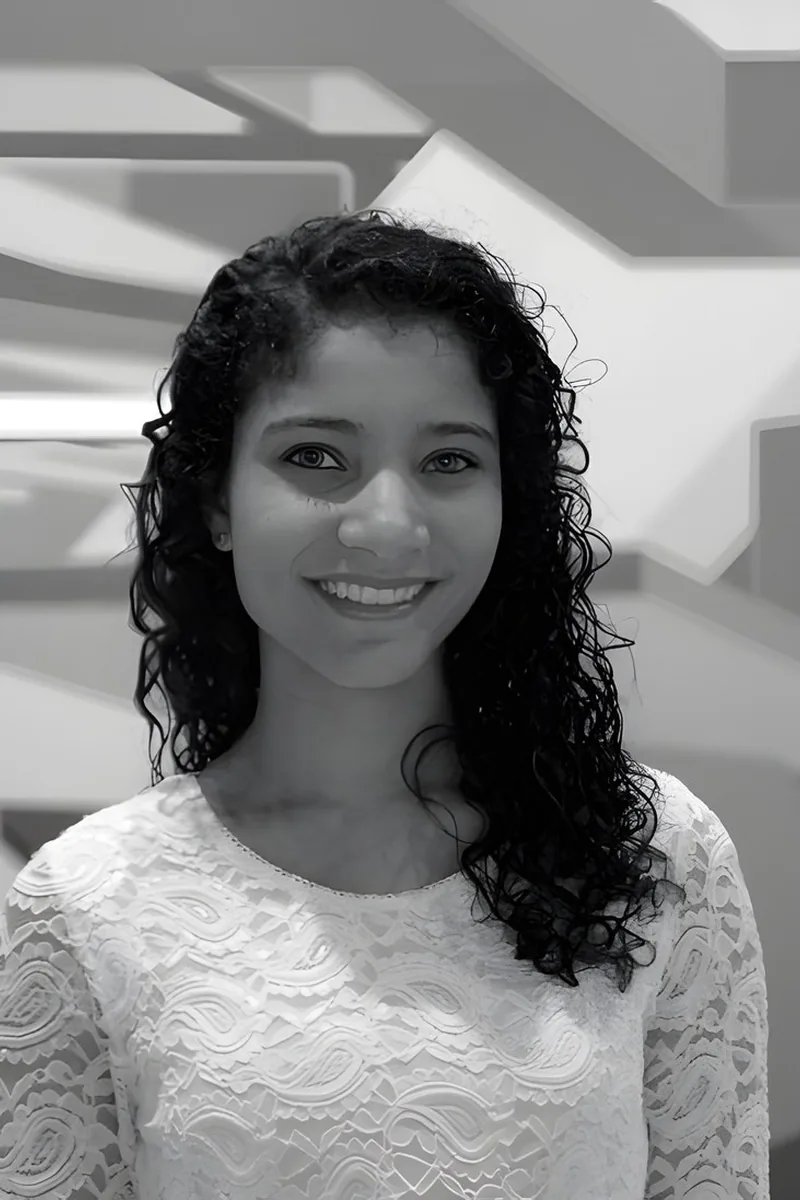
Strong reading comprehension comes down to knowing what to do when a passage gets confusing — how to re-anchor in the main argument, identify tone shifts, and separate evidence from opinion. Katrina's sociology and media studies training at Yale required parsing dense academic texts daily, and she brings those concrete strategies to students working on everything from standardized test passages to assigned novels.
Poetry trained Carla to read slowly and deliberately — weighing every word choice, catching shifts in tone, noticing what a writer leaves unsaid. That habit, built through her English degree and deep immersion in both English and French literature, is exactly what she brings to reading sessions: teaching students to move through a passage with real attention instead of skimming for a quick answer. Rated 5.0 by students.
Literary manager for two theater companies and section editor at the Los Angeles Review of Books, John spends his professional life inside texts — evaluating manuscripts, weighing how writers construct arguments, and deciding what makes a piece of writing actually work. That editorial eye shapes how he teaches reading: students learn to track what an author is doing structurally, not just what the words say on the surface. Rated 5.0 by students.
Pop culture articles, literature seminars, kung fu movie deep-dives — Andrew reads across registers constantly, which means he knows firsthand that the skills for parsing a poem and the skills for following a news article aren't as different as students think. He teaches readers to pick up on a writer's moves — tone shifts, structural choices, the gap between what's stated and what's implied — so they stop passively scanning and start actually catching what's on the page. Rated 5.0 by students.
Translating Arabic texts and analyzing Near Eastern primary sources throughout her undergraduate work at gave Anna a reading practice most tutors never get — decoding meaning across languages, registers, and cultural contexts where nothing can be taken at face value. That habit of careful, deliberate extraction carries into how she teaches English reading comprehension: breaking a passage into its core claims, identifying what the author assumes versus what they prove, and building the kind of active engagement that turns passive skimming into real understanding.
Breaking a passage into its moving parts — main idea, supporting evidence, author's purpose, tone shifts — is the core of what Linda teaches in reading sessions. She's worked with learners ranging from elementary students building fluency to ESL adults navigating complex texts, so she knows how to match strategies to a reader's actual sticking points.
Earth science research papers and GIS technical documentation at USC trained Krista to extract key information from dense, jargon-heavy material — a skill she now breaks down for students who freeze up when a passage feels too long or too unfamiliar. She teaches practical habits like annotating as you go, identifying topic sentences before diving into details, and using context clues to decode vocabulary without reaching for a dictionary.
A double major in Computer Science and English means Milan spent college toggling between two radically different kinds of reading — parsing technical documentation where every word is literal, and literary texts where meaning hides between the lines. That range shows up in how he teaches comprehension: breaking down what a passage is doing structurally before worrying about what it "means," so students build a reliable process for tackling any text they encounter.
For students who find reading slow or frustrating, the issue is often a missing toolkit — they don't know how to identify a passage's main argument, track an author's shifting tone, or distinguish evidence from opinion. Naama's linguistics study at NYU trained her to dissect how language creates meaning, and she applies that same precision to building active reading strategies across fiction and nonfiction.
Years of working with international students transitioning into American college-level coursework gave Mary a detailed understanding of where reading comprehension actually breaks down — whether it's unfamiliar vocabulary, implicit arguments, or difficulty distinguishing main ideas from supporting details. She teaches active reading strategies like annotation and summarization that make dense texts manageable. Rated 5.0 by students.
Dual degrees in mathematics and violin from La Sierra might seem like an unusual background for a reading tutor, but Alexander's training in both fields demanded the same core skill: parsing dense, unfamiliar material and extracting precise meaning from every line, whether it's a proof or a musical score. He applies that same discipline to reading sessions, teaching students how to slow down, identify what a passage is actually communicating, and build the kind of deliberate attention that transfers across subjects.
A biology major who scored a 33 ACT, Nicholas learned to read like a scientist — pulling key claims out of dense material, distinguishing supporting evidence from filler, and connecting ideas across paragraphs that don't always signal their relationships clearly. He applies that same analytical process to reading sessions, teaching students to break a passage into movable parts and figure out what the author is actually doing before answering a single question.
Performing at NYU's Atlantic Acting School and Experimental Theatre Wing meant Michael spent years doing script analysis — breaking down subtext, character motivation, and the precise meaning behind a writer's word choices. That trained instinct for reading beneath the surface translates directly to teaching comprehension: he shows students how to catch what a passage is really saying, not just what it states outright. His 35 ACT and 4.8 rating back up the approach.
A chemistry major who scored a 34 ACT, Chandler knows what it takes to pull key information from dense, detail-heavy material — a skill that transfers directly to teaching reading comprehension strategies like identifying main ideas, making inferences, and using context clues to decode unfamiliar vocabulary. His analytical mindset means he approaches a reading passage the way he'd approach a lab report: systematically, looking for what the author is actually saying versus what's just background detail.
Neuroscience coursework means Megan spent years reading research papers where missing a single qualifier — "may" versus "does," "correlated" versus "caused" — changes the entire conclusion. She brings that precision to reading sessions, teaching students to pay attention to how authors use specific language to shape meaning and build arguments. Rated 4.9 by students.
Trained as both an actor and a writer at Northwestern, Zach reads texts the way a performer does — breaking down tone, subtext, and authorial intent line by line. That skill translates directly to teaching students how to identify main ideas, make inferences, and track an argument across complex passages.
Strong reading comprehension is really about knowing what to do when a passage doesn't make sense on the first pass — how to identify a main claim, track an author's shifting tone, or distinguish evidence from opinion. Luke's interdisciplinary background across literature, philosophy, and history means he can tackle texts from almost any subject area and show students how to extract meaning efficiently.
Struggling readers often skip the step that matters most: slowing down to ask what a passage is actually doing, not just what it says. Claire's K-6 teaching credential and experience with diverse learners — including gifted and special education students — means she can pinpoint exactly where comprehension breaks down, whether it's vocabulary, inference, or tracking an author's argument across paragraphs.
I am a Los Angeles area native, and hold a JD from the University of Virginia School of Law, as well as a B.A. in English from Tulane University in New Orleans. I have been a California licensed attorney since December of 2011, and currently practice full-time as a Law Clerk for four Los Angeles Superior Court Judges.
An MFA in Creative Writing means Patrick has spent years inside sentences — not just reading them, but pulling apart how word choice, rhythm, and structure shape what a reader understands and feels. He brings that writer's awareness to reading sessions, teaching students to notice when a passage is persuading versus informing, or when a shift in tone signals something the text never says outright. Holds a 5.0 rating and a 32 ACT that reflects his own sharp verbal instincts.
Neuroscience textbooks don't let you skim — every paragraph builds on the last, and missing one detail means the whole pathway stops making sense. That's the kind of disciplined, active reading Jenna developed through her degree at Indiana University Bloomington, and she brings it to sessions where students practice breaking a passage into pieces, tracking how ideas connect, and pulling meaning from context instead of guessing. Rated 4.9 by students.
An aspiring author with an English degree, Thomas lives inside written language daily — drafting, revising, and pulling apart how sentences build meaning on the page. That writer's eye gives him a specific edge when teaching reading: he shows students how to notice the choices an author is making, from paragraph structure to word-level signals, so they can follow an argument or narrative with real comprehension instead of passive scanning.
Stronger readers don't just decode words faster — they actively predict, question, and summarize as they move through a text. Travis builds these comprehension strategies explicitly, using passages from fiction, nonfiction, and informational texts to practice skills like identifying an author's purpose or distinguishing fact from opinion. His own broad background in literature, history, and government gives him a deep well of context to draw from across reading topics.
Lizzy's International Development coursework meant constant reading across genres — policy briefs, ethnographies, economic reports, and firsthand accounts from communities around the world — all requiring her to pull key arguments from dense, unfamiliar material quickly. She teaches students to do the same: identify what a passage is actually saying, separate supporting details from the main point, and build the kind of active reading habits that work whether the text is a novel or a nonfiction article.
Decoding a passage isn't just about vocabulary; it's about recognizing how authors signal main ideas through repetition, contrast, and paragraph structure. Caroline spent years teaching reading comprehension to elementary and middle school students in Oakland, building the kind of active-reading habits that carry through to high school and standardized tests.
Stronger reading starts with knowing what to do when a passage doesn't make sense on the first pass. Sarah teaches active annotation strategies — identifying argument structure, distinguishing claims from evidence, and tracking how an author builds toward a conclusion. Her work across SAT Reading, literature, and special education gives her a flexible toolkit for different reading levels.
Trained in literary analysis at the University of Verona, Enrico brings a structured approach to reading comprehension that treats every passage like a puzzle with identifiable moves — topic sentences, signal words, shifts in tone. Students learn to annotate actively and extract meaning on the first read instead of rereading three times.
An international studies degree means Will spent years reading across genres and disciplines — political theory, literary criticism, foreign policy briefs — learning to extract the core argument from any text regardless of how dense or unfamiliar the subject matter. He teaches students to do the same thing: identify what a writer is actually claiming, trace how the evidence connects, and recognize when a passage shifts direction. His 5.0 rating and 1590 SAT reflect how well that translates to sharper, more deliberate reading.
Ten years of teaching math gave Mariapaz something unexpected: a deep understanding of how students process complex information on the page. She applies that same diagnostic eye to reading comprehension, breaking down how to identify main ideas, track an author's argument, and make inferences from context clues in both fiction and nonfiction passages.
Strong reading skills come down to active engagement — annotating, questioning the text, and tracking how ideas develop from paragraph to paragraph. Alanna teaches students to approach any passage with a specific purpose, whether that's identifying an author's central claim or tracing a character's arc. Her own coursework in American Studies keeps her immersed in dense, varied texts daily, which gives her a practical toolkit for making difficult reading accessible.
I'm a recent graduate of the California Institute of Technology in Economics and Computer Science. I was also accepted at Harvard, Princeton, MIT, and Stanford. I have a broad range of interests spanning science, math, engineering, social science, the humanities, the arts, and athletics (I also played on the Caltech basketball team). My background allows me to tutor general college prep, especially the SAT, ACT and the GRE. I love to teach analytical thinking, ranging from advanced Math and Physics to strategies for understanding literature and developing arguments.
I am a sophomore at Vanderbilt University and have been tutoring since I was a freshman in high school. I love working with elementary and middle school students, but also have the knowledge and skills to tutor high school students in AP classes and standardized tests. I scored a 35 on my ACT (36 math, 35 english, 35 science, 33 reading), a 770 on the Math II SAT subject test and a 780 on the Chemistry SAT subject test. In high school, I took AP Calculus BC, AP Chemistry, AP Physics C, AP Microeconomics, AP Macroeconomics, and Multivariable Calculus, and scored a 5 on every AP exam. In addition to specific subject matter, I am highly knowledgable on the college process and know how to strategize to get into your dream school!
I am hoping to start law school next fall. Before I lose another three years of my life to academia, I hope to spend the time I have now to help students get the grades and marks they need to reach the schools of their dreams. I've been on the "treadmill" and I know how brutal the educational arena can be. Thus, I find great satisfaction in being able to help people who were in similar situations as myself. I have extensive experience in tutoring from two previous positions in which I taught in both a classroom setting and a one-on-one setting. Regarding the subjects I have taught- I am familiar with math all the way up to Algebra 2 (including SAT Math), I have helped many students prepare for the SAT and ACT, I am very familiar with the LSAT, and I can assist students with Literature and Writing as well. In my experience with tutoring, I have found that students can often learn best when the instruction is tailored to their needs. Each student has unique strengths and weaknesses, and I enjoy the challenge of figuring out how to play on those strengths and weaknesses in order to bring out the best performance from the student. Although law is still my passion, I've found that I truly enjoy teaching; the friendships I've developed and the lessons I've learned are invaluable, and within this next year, I hope to help as many students as possible. Outside of teaching, I like watching a good UFC fight now and then, and I am shamelessly addicted to the NBA and all its glory. I have an insatiable appetite for good music, films, art, and of course, food, and I love experiencing and learning about different cultures, religions, and views. Lastly, I think the cheeseburger is the greatest invention man has ever made, and I am forever in pursuit of the best burger in L.A.
I am a junior studying Writing for Screen and Television at the University of Southern California's School of Cinematic Arts. For the past two spring semesters I worked as a CollegeSpring Mentor, tutoring Green Dot Charter high school juniors for the SAT and teaching them predatory skills for college. In addition to my experience tutoring for the SAT, as a screenwriting major I most enjoy teaching my favorite subject, English. I love showing students the power language endows upon them to communicate their ideas and beliefs with others. I believe every student deserves the chance to succeed and to try to capitalize on their strengths while encouraging them to improve in areas they may traditionally find challenging. Endowing a student with confidence in themselves through patience and support is the best way not only to improve academic performance, but also transform them into lifelong learners. I try to share not only my passion for knowledge with students, but also my love of sports (football, baseball, and softball), action films, and global affairs. Seeing students not only improve academically but also show improved confidence and happiness is the most rewarding part of my job.
I am a UCLA Bioengineer. I am a well qualified tutor and have had many years of experience in both paid and unpaid roles from 6th grade to 12 grade to present. I have always excelled in academics, math, writing, and english and have scored well on all standardized tests and state tests. I have scored 800/800 in SAT 1 math, SAT 2 math. I have scored 760/800 in SAT writing. I received scores of 5/5 in AP Calculus AB and BC and have taken numerous other APs, passing the APs in Physics, Biology, Literature, Language and Composition, Environmental Science, Economics, US history, and Chemistry. I was the President of my high school's only tutoring club and only math club, Infinity Math Club, where I dedicated my time tutoring struggling students in all math levels. I was a tutor in my high school's RAMS program for all academic subjects. I love working with students and love to see them succeed in subjects that they once struggled in.
I am currently working toward a MD at Loma Linda University. My tutoring experience includes mentoring Christian college students during a 2 year post-graduate program, helping primary school kids with homework in an after-school program, and tutoring my high school sister in various subjects. I enjoy tutoring subjects like English, Writing, Critical Reading, Math, and Science. My favorite subject to tutor is writing because I enjoy helping my students come up with ideas and synthesize them in an essay. In my tutoring sessions, I like to encourage my students to find their own solutions to problems, because I believe that the best learning results from self-discovery. My role as a tutor is that of a guide, one that leads the student on the right path to find the answer. I hope to not only impart understanding of the subject material, but also an appreciation for the subject to all my students. Outside of academics, my hobbies include going to church gatherings, running, and singing.
I am committed to providing my students with the best learning experience achievable. I strive to cater to their needs and challenge them to achieve their academic goals.
I am currently attending UCLA School of Dentistry. I have spent a big chunk of my life tutoring. I had 600 hours of volunteer experience tutoring 5th graders in language. I also was the Tutoring Head of the Science National Honor Society in high school and spent every week tutoring high school level biology and chemistry. I spent one summer working at Kumon tutoring children in basic math and reading. In college, I spent two years tutoring adults to pass their GED. I was also an Undergraduate Teaching Assistant (UTA) for a development and physiology biology class, as well as a Peer Tutor for other intro level biology classes. If you chose me as your tutor, I look forward to working with you and helping you be the best student you can be!
I am not working, I am usually swing dancing! I also spend my time reading, crocheting, and taking selfies with my cat.
Testimonials
Because the right Reading tutor makes all the difference.
Average Session Rating – Based on 3.4M Learner Ratings
Nearby Reading Tutors
Other San Jose Tutors
Related English Tutors in San Jose
Frequently Asked Questions
Many students struggle with reading comprehension, particularly when tackling complex texts or understanding an author's purpose and tone. Others find it difficult to analyze literature deeply, make connections between ideas, or retain information from longer passages. Personalized 1-on-1 instruction helps identify whether a student needs support with foundational skills like decoding and fluency, or more advanced skills like critical analysis and inference.
Research on 1-on-1 instruction shows that personalized tutoring significantly accelerates learning by allowing tutors to target a student's specific gaps and learning style. A tutor can provide immediate feedback, model reading strategies like annotation and summarization, and help students build confidence with challenging texts. This individualized approach is especially valuable for students preparing for standardized tests, working through grade-level curriculum, or developing a stronger love of reading.
The first session is an opportunity for a tutor to understand your student's current reading level, goals, and challenges. They'll likely assess comprehension skills, discuss what types of texts the student enjoys, and learn about any specific curriculum needs—whether that's preparing for a class assignment, standardized test, or simply building stronger reading habits. From there, the tutor creates a personalized plan tailored to your student's needs.
Effective tutors teach evidence-based strategies like previewing texts before reading, asking questions while reading, making predictions, and summarizing key ideas. They also help students understand how to annotate texts, identify main ideas versus supporting details, and make inferences based on textual evidence. These metacognitive strategies empower students to approach any text with confidence and develop stronger critical thinking skills.
Yes—many students need support moving beyond basic comprehension to analyze themes, character development, symbolism, and author's craft. Tutors can guide students through the process of developing a thesis, finding textual evidence to support their arguments, and organizing their thoughts into well-structured essays. This combination of reading analysis and writing instruction helps students excel in English classes and on standardized assessments that require literary analysis.
Tutors assess reading level by considering factors like fluency, comprehension, vocabulary, and the complexity of texts a student can handle independently. They may use informal assessments, observe how a student tackles different texts, and discuss grade-level expectations and curriculum requirements. This helps them select appropriate materials and strategies—whether your student needs foundational support or enrichment with more advanced texts.
Varsity Tutors connects you with expert reading tutors who understand San Jose's school curricula and can provide personalized instruction tailored to your student's goals. Whether your student needs help with comprehension, literary analysis, test preparation, or building a stronger reading foundation, you can get matched with a tutor who fits your schedule and learning preferences. Simply reach out to get started.
Absolutely. Tutors help students develop test-taking strategies specific to standardized reading assessments, such as time management, identifying question types, and efficiently finding evidence in passages. They also build the foundational comprehension and vocabulary skills that these tests measure. With targeted practice and personalized feedback, students gain both the skills and confidence needed to perform well on tests like the SAT, ACT, or state assessments.
Let’s find your perfect tutor
Answer a few quick questions. We’ll recommend the right plan and match you with a top 5% tutor.