Award-Winning Thermodynamics Tutors
serving Sacramento, CA
Who needs tutoring?
FEATURED BY


TUTORS FROM
- YaleUniversity
- PrincetonUniversity
- StanfordUniversity
- CornellUniversity
Award-Winning Thermodynamics Tutors serving Sacramento, CA
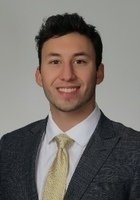
Certified Tutor
9+ years
Andrea
Three mechanical engineering degrees mean Andrea didn't just take thermodynamics — she's been through the full gauntlet of energy systems, fluid behavior, and heat transfer that the discipline demands. She teaches concepts like control volume analysis and the interplay between work and internal ener...
Cornell University
Bachelor of Science
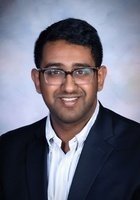
Certified Tutor
6+ years
Rahul
Rahul calls thermodynamics his personal favorite subject, and his chemical engineering degree from Cornell is the reason — it's where energy balances, phase equilibria, and reaction spontaneity stopped being abstract and started governing every process he studied. He pushes past plug-and-chug proble...
Cornell University
B.S. in Chemical Engineering
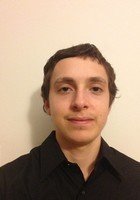
Certified Tutor
9+ years
Justin
Having studied both physics and computational mathematics through the PhD level at UChicago, Justin built his understanding of thermodynamics from two directions — the physical intuition behind heat, work, and energy transfer, and the rigorous mathematical framework that makes entropy and state func...
Washington University in St. Louis
Bachelor's in Physics and Mathematics
University of Chicago
Doctor of Philosophy, Computational Mathematics
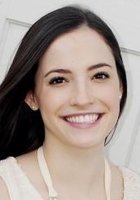
Certified Tutor
10+ years
Madeline
Chemical and biomolecular engineering at Johns Hopkins means Madeline has worked through energy balances, reaction spontaneity, and phase equilibria in contexts where getting the thermodynamics wrong means the entire process design falls apart. She's especially strong at teaching students to set up ...
Johns Hopkins University
Bachelors

Certified Tutor
5+ years
Siva
Chemical engineering at its core is applied thermodynamics — energy balances, phase equilibria, reaction spontaneity — and Siva's ChemE degree plus medical training means he's worked through these principles from both the industrial process side and the biological systems side. He's particularly sha...
University of Illinois at Chicago
Bachelor of Science, Chemical Engineering
Northwestern University
Doctor of Medicine, Health Sciences, General
Certified Tutor
6+ years
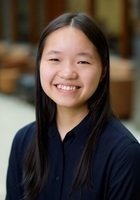
Ingrid
Biomedical engineering at Northwestern means Ingrid has worked through the thermodynamic principles that govern biological systems — from enthalpy changes in biochemical reactions to the energy constraints on drug delivery and biomaterial behavior. She connects the laws of thermodynamics to problems...
Northwestern University
Bachelor of Science, Biomedical Engineering

Certified Tutor
5+ years
Pallavi
Penn's biology curriculum gave Pallavi a deep dive into the thermodynamic principles that govern living systems — from the free energy changes driving ATP hydrolysis to the entropic forces behind protein folding and membrane dynamics. Her neurobiology concentration means she's especially comfortable...
University of Pennsylvania
Master's in Biology
University of Pennsylvania
Bachelor of Arts in Biology (Neurobiology concentration)
Certified Tutor
9+ years
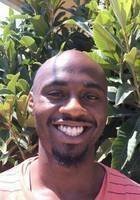
Brian
Most students struggle with thermodynamics not because the math is hard, but because the concepts — entropy, enthalpy, free energy — feel like abstractions piled on abstractions. Brian's Caltech training in economics and computer science actually sharpens his approach here: he treats thermodynamic s...
University of California-Santa Cruz
PHD, Technology & Information Mgmt (Indef. deferred)
California Institute of Technology
Bachelors in Economics and Computer Science
Certified Tutor
9+ years
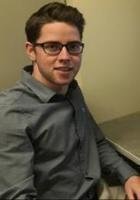
Thomas
Heading into a PhD in electrical engineering after completing his physics degree, Thomas has tackled thermodynamics from the fundamental side — statistical mechanics, heat engines, and the laws that connect microscopic behavior to macroscopic quantities like temperature and pressure. He's especially...
University of Notre Dame
Bachelor of Science in Physics
Certified Tutor
6+ years
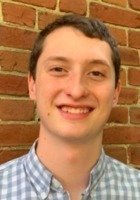
Phillip
Biomedical engineering at Brown means Phillip works through thermodynamic principles in contexts most physics students never see — heat transfer in biological tissue, energy constraints on implant materials, and the thermodynamic feasibility of biochemical processes. He's sharp at breaking down the ...
Brown University
Bachelor of Science, Biomedical Engineering
Nearby Thermodynamics Tutors
Other Sacramento Tutors
Related Science Tutors in Sacramento
Frequently Asked Questions
Thermodynamics requires students to think abstractly about energy transfer and molecular behavior, which can feel disconnected from everyday experience. Many students struggle with the mathematical relationships between pressure, volume, and temperature, or misunderstand the second law of entropy. Personalized tutoring helps clarify these conceptual gaps by breaking complex ideas into digestible pieces and connecting them to real-world applications, rather than moving at the pace of a classroom with a 22.5:1 student-teacher ratio.
During an initial session, a tutor will assess your current understanding of foundational concepts like heat, work, and the laws of thermodynamics, then identify specific areas where you need the most support. Whether you're struggling with problem-solving strategies, conceptual understanding, or exam preparation, the tutor will create a personalized plan tailored to your learning style and goals. This diagnostic approach ensures you're not reviewing material you already know, and you can start making progress immediately.
Thermodynamics is typically taught in high school physics courses and college-level chemistry or engineering programs, with content varying based on your specific course. Expert tutors are familiar with standard physics and chemistry curricula, including topics like the first and second laws of thermodynamics, entropy, enthalpy, and thermochemical calculations. They'll work with your textbook, class notes, and assignments to ensure tutoring directly supports what you're learning in your Sacramento school or college.
In a classroom setting, students often learn one approach to solving thermodynamics problems, but personalized tutoring teaches you multiple strategies so you can choose the most efficient method for each question type. A tutor can slow down and explain the reasoning behind each step—why you use a specific equation, what assumptions you're making, and how to check your work—rather than just showing you the final answer. This deeper understanding transfers directly to exams and helps you tackle unfamiliar problems with confidence.
Absolutely. Many students grasp the big ideas in thermodynamics but get stuck on the mathematical execution—manipulating equations, unit conversions, or multi-step calculations. A tutor can isolate these specific math skills and build them up separately, then help you integrate them back into thermodynamics problem-solving. This targeted approach is much more efficient than trying to fix everything at once in a large classroom.
Ideally, starting 4-6 weeks before an exam gives you time to review all major concepts, practice problems, and build confidence. However, even 2-3 weeks of focused tutoring can significantly improve your understanding if you're struggling with specific topics. The key is consistent, targeted practice—working through problems you've gotten wrong, refining your problem-solving strategy, and identifying knowledge gaps before test day.
Varsity Tutors connects you with tutors who have deep expertise in thermodynamics and understand how to teach it effectively. When you get matched with a tutor, you can discuss their background, experience with your specific course level, and teaching approach to ensure it's a good fit. You'll work with someone who knows thermodynamics inside and out and can adapt their teaching to your learning style.
Clear progress markers include improving accuracy on practice problems, reducing the time it takes to solve problems correctly, and moving from needing help on every step to working through problems independently. You might also track improvement on quizzes or practice exams, or notice that concepts that once felt confusing now make intuitive sense. Your tutor will help you set specific goals—whether that's raising your grade, mastering a particular unit, or scoring higher on the AP Physics or IB exam—and regularly assess whether you're hitting those targets.
Connect with Thermodynamics Tutors in Sacramento
Get matched with local expert tutors