Award-Winning Thermodynamics Tutors
serving Mission Viejo, CA
Who needs tutoring?
FEATURED BY


TUTORS FROM
- YaleUniversity
- PrincetonUniversity
- StanfordUniversity
- CornellUniversity
Award-Winning Thermodynamics Tutors serving Mission Viejo, CA
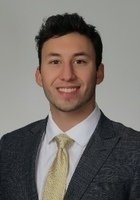
Certified Tutor
9+ years
Andrea
Three mechanical engineering degrees mean Andrea didn't just take thermodynamics — she's been through the full gauntlet of energy systems, fluid behavior, and heat transfer that the discipline demands. She teaches concepts like control volume analysis and the interplay between work and internal ener...
Cornell University
Bachelor of Science
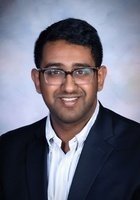
Certified Tutor
6+ years
Rahul
Rahul calls thermodynamics his personal favorite subject, and his chemical engineering degree from Cornell is the reason — it's where energy balances, phase equilibria, and reaction spontaneity stopped being abstract and started governing every process he studied. He pushes past plug-and-chug proble...
Cornell University
B.S. in Chemical Engineering
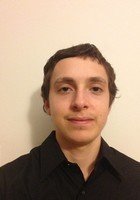
Certified Tutor
9+ years
Justin
Having studied both physics and computational mathematics through the PhD level at UChicago, Justin built his understanding of thermodynamics from two directions — the physical intuition behind heat, work, and energy transfer, and the rigorous mathematical framework that makes entropy and state func...
Washington University in St. Louis
Bachelor's in Physics and Mathematics
University of Chicago
Doctor of Philosophy, Computational Mathematics

Certified Tutor
10+ years
Madeline
Chemical and biomolecular engineering at Johns Hopkins means Madeline has worked through energy balances, reaction spontaneity, and phase equilibria in contexts where getting the thermodynamics wrong means the entire process design falls apart. She's especially strong at teaching students to set up ...
Johns Hopkins University
Bachelors

Certified Tutor
5+ years
Siva
Chemical engineering at its core is applied thermodynamics — energy balances, phase equilibria, reaction spontaneity — and Siva's ChemE degree plus medical training means he's worked through these principles from both the industrial process side and the biological systems side. He's particularly sha...
University of Illinois at Chicago
Bachelor of Science, Chemical Engineering
Northwestern University
Doctor of Medicine, Health Sciences, General
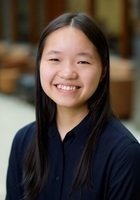
Certified Tutor
6+ years
Ingrid
Biomedical engineering at Northwestern means Ingrid has worked through the thermodynamic principles that govern biological systems — from enthalpy changes in biochemical reactions to the energy constraints on drug delivery and biomaterial behavior. She connects the laws of thermodynamics to problems...
Northwestern University
Bachelor of Science, Biomedical Engineering

Certified Tutor
5+ years
Pallavi
Penn's biology curriculum gave Pallavi a deep dive into the thermodynamic principles that govern living systems — from the free energy changes driving ATP hydrolysis to the entropic forces behind protein folding and membrane dynamics. Her neurobiology concentration means she's especially comfortable...
University of Pennsylvania
Master's in Biology
University of Pennsylvania
Bachelor of Arts in Biology (Neurobiology concentration)
Certified Tutor
9+ years
Brian
Most students struggle with thermodynamics not because the math is hard, but because the concepts — entropy, enthalpy, free energy — feel like abstractions piled on abstractions. Brian's Caltech training in economics and computer science actually sharpens his approach here: he treats thermodynamic s...
University of California-Santa Cruz
PHD, Technology & Information Mgmt (Indef. deferred)
California Institute of Technology
Bachelors in Economics and Computer Science
Certified Tutor
9+ years
Thomas
Heading into a PhD in electrical engineering after completing his physics degree, Thomas has tackled thermodynamics from the fundamental side — statistical mechanics, heat engines, and the laws that connect microscopic behavior to macroscopic quantities like temperature and pressure. He's especially...
University of Notre Dame
Bachelor of Science in Physics
Certified Tutor
6+ years
Phillip
Biomedical engineering at Brown means Phillip works through thermodynamic principles in contexts most physics students never see — heat transfer in biological tissue, energy constraints on implant materials, and the thermodynamic feasibility of biochemical processes. He's sharp at breaking down the ...
Brown University
Bachelor of Science, Biomedical Engineering
Nearby Thermodynamics Tutors
Other Mission Viejo Tutors
Related Science Tutors in Mission Viejo
Frequently Asked Questions
Thermodynamics is notoriously abstract—students struggle most with visualizing energy transfer, understanding entropy conceptually, and applying the laws of thermodynamics to real-world problems. Many students also find the mathematical components challenging, particularly when working with equations like the first law (ΔU = Q - W) or calculating work and heat in different processes. Personalized 1-on-1 instruction allows tutors to identify exactly where a student's understanding breaks down and rebuild those foundations systematically.
Thermodynamics is typically covered in AP Physics 2, IB Physics HL, or college-level physics courses, usually in the second half of the year after mechanics. The curriculum focuses on heat, temperature, internal energy, the laws of thermodynamics, entropy, and applications like heat engines and refrigeration cycles. For students in Mission Viejo's schools, understanding thermodynamics is essential for AP exams and college physics prerequisites, making targeted preparation particularly valuable.
In a classroom of 20+ students, teachers must move at a set pace—but thermodynamics requires deep conceptual understanding that can't be rushed. Personalized instruction lets tutors slow down on confusing topics like the second law of thermodynamics or PV diagrams, use multiple explanations and visual approaches, and adjust difficulty based on real-time understanding. This targeted approach is especially valuable in thermodynamics, where one misunderstanding early on cascades into confusion throughout the unit.
Thermodynamics problems require both conceptual clarity and systematic problem-solving strategies. The most effective approach combines understanding the underlying physics (what's happening in the system), identifying which law or principle applies, setting up equations correctly, and practicing with varied problem types. Tutors help students develop this structured approach, work through challenging problems step-by-step, and build confidence tackling unfamiliar scenarios—skills that directly transfer to exams and lab practicals.
In the first session, a tutor will assess your current understanding—what concepts feel solid, where confusion exists, and what specific challenges brought you to tutoring (struggling with exams, understanding lectures, lab reports, etc.). They'll likely work through a few problems or concepts with you to get a sense of your learning style and pace, then create a personalized plan targeting your goals, whether that's improving your grade, preparing for AP exams, or mastering specific thermodynamics units.
Many students see meaningful improvement—better problem-solving clarity, increased confidence on assessments—within 3-4 sessions of consistent, focused work. However, thermodynamics is cumulative; deeper conceptual mastery and the ability to tackle complex multi-step problems typically develop over 8-12 weeks of regular tutoring. The timeline depends on your starting point, how frequently you meet, and how actively you practice between sessions.
Look for tutors with strong physics backgrounds—ideally a physics degree or extensive teaching experience—who specifically mention thermodynamics expertise. They should be able to explain concepts clearly in multiple ways, work comfortably with both conceptual and mathematical problem-solving, and understand the specific curriculum your school uses (AP Physics 2, IB HL, college physics, etc.). Varsity Tutors connects you with expert tutors who match your needs and learning style.
Absolutely. The AP Physics 2 exam heavily emphasizes thermodynamics concepts and problem-solving, and targeted tutoring can significantly improve your performance. Tutors help you master the specific topics tested (laws of thermodynamics, heat engines, entropy, PV diagrams), practice with released AP exam questions, develop time-management strategies for the exam format, and build the conceptual depth needed to answer qualitative reasoning questions. Many students see score improvements of 2-3 points on the AP scale with focused preparation.
Connect with Thermodynamics Tutors in Mission Viejo
Get matched with local expert tutors