Award-Winning Science Tutors
serving Tampa, FL
Science
Tutors in Tampa
Private 1-on-1 tutoring, weekly live classes for academic support, test prep & enrichment, practice tests and diagnostics, and more to elevate grades and test scores.
Based on 3.4M Learner Ratings
UniversitiesSchools & Universities
DeliveredHours Delivered
ProficiencyGrowth in Proficiency
Who needs tutoring?
No obligation. Takes ~1 minute.
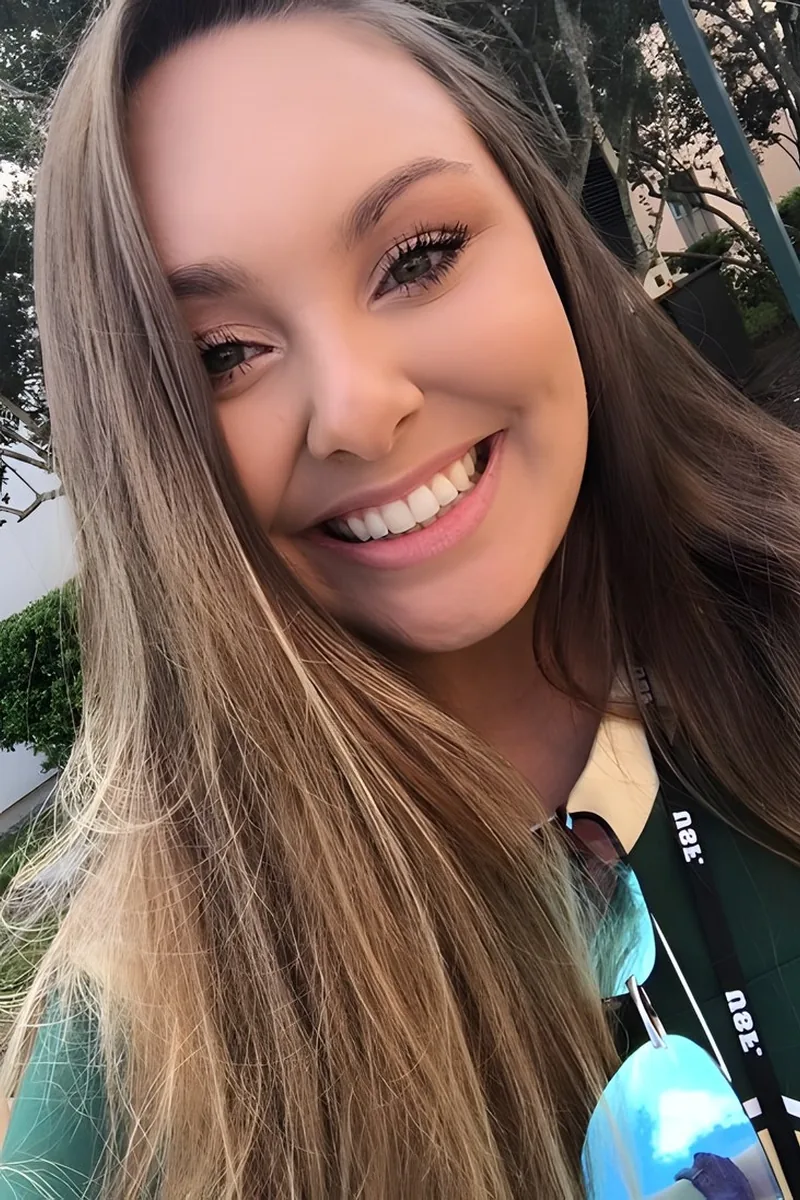
A criminology major might not seem like an obvious science tutor, but Jordan's coursework in forensic science and research methods gave her a practical grip on the scientific method, data interpretation, and core biology and chemistry concepts. She breaks down experiments and vocabulary-heavy material into pieces that are easier to retain and apply on exams.
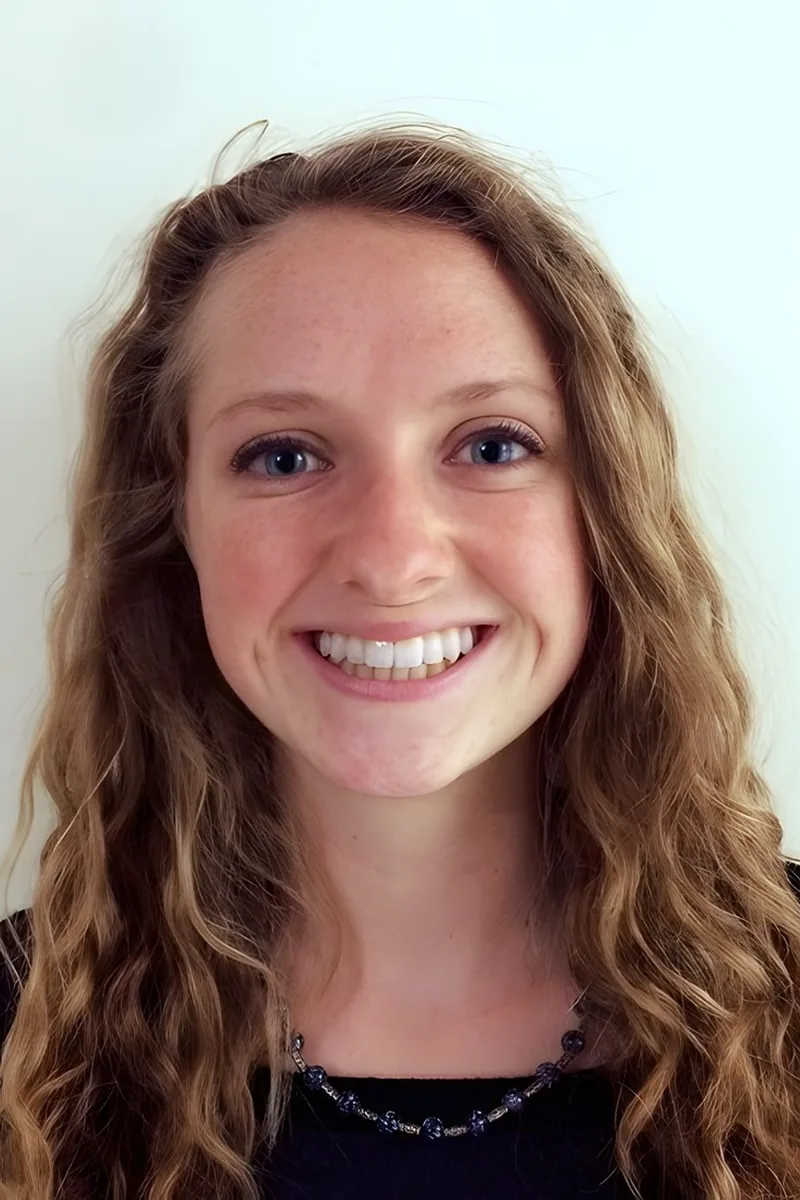
Studying neuroscience at Emory means Genny lives inside the scientific method every day — designing experiments, interpreting data, and connecting biological systems to observable outcomes. She channels that hands-on experience into science tutoring, whether a student needs to understand the water cycle, cell division, or how to read a data table without panicking.
Studying in a BS/MD program means Adonai is neck-deep in biology, chemistry, and physiology every day — so when he explains concepts like cell division, chemical bonding, or energy transfer, he's drawing on material he actively uses. He unpacks the logic behind scientific processes so students understand cause and effect rather than treating each fact as something to memorize in isolation.
Chemical engineering sits at the intersection of chemistry, physics, and applied math — so Sara doesn't teach science concepts in isolation. She connects ideas like conservation of energy, reaction kinetics, and fluid behavior to real systems, which makes abstract formulas feel grounded. Students who need to see the "so what" behind a scientific principle tend to do especially well with her approach.
Education has always been at the center of my life. I earned my Bachelor's degree in Industrial Engineering from Georgia Tech, then went on to study Mathematics at the graduate level at the University of South Florida. Later, I completed a degree in Educational Leadership, which allowed me to combine my love for teaching with strong expertise in tutoring for exams such as the PRAXIS and FTCE. I began tutoring many years ago, and it quickly became one of the great joys of my career. I truly love everything about schoollearning, teaching, and being part of the academic journey. As a high school math teacher, I taught a wide range of subjects, from Algebra to AP Calculus, and I've carried that same versatility into my tutoring work. My goal is always to break down difficult concepts into clear, understandable lessons while keeping students engaged, confident, and never overwhelmed. Beyond teaching content, I focus on building strong connections with my students. I believe that when a student feels comfortable asking questions and isn't afraid to say, "I don't understand," real learning happens. I create a relaxed, encouraging atmosphere that fosters curiosity and growth. Over time, I've also developed a wealth of test-taking strategies, which I share as needed to help students manage anxiety and approach exams with confidence. The greatest reward for me is seeing my students succeednot just in mastering the material, but in gaining confidence in themselves as learners. Many of my students have told me how much easier math feels after working together, and I'm proud to have earned nearly perfect ratings throughout my years of tutoring. At the heart of everything I do is a love of learning and a passion for helping others discover it too. Tutoring is not just my profession it's my calling, and I am grateful for every opportunity to make a difference in a student's academic journey.
Two biology degrees and admission to medical school mean Perry has lived the full arc of science education, from introductory labs to upper-level biochemistry and physiology. He connects abstract concepts like cellular respiration or chemical equilibrium to concrete examples that make the logic stick. Students working with him get someone who genuinely thinks in scientific terms, not just someone reciting definitions.
Earning a medical doctorate means Jessica didn't just study science — she lived it across biology, chemistry, physics, and anatomy for years. She teaches scientific concepts by linking them to real processes in the body or the natural world, making abstract ideas like energy transfer or cellular respiration tangible and easier to retain.
Cognitive neuroscience sits at the intersection of biology, chemistry, and experimental design, so Kaylah has a hands-on understanding of the scientific method that goes well beyond textbook definitions. She connects topics like cell biology, experimental variables, and data interpretation back to how real research labs actually operate, which makes abstract concepts more concrete.
As a neuroscience major at Duke, Michelle lives at the intersection of biology, chemistry, and research methods every day. She brings that cross-disciplinary perspective to science tutoring, connecting concepts like cellular processes or chemical reactions to the bigger picture of how systems work. Students preparing for IB Chemistry or general science courses get someone who genuinely thinks in scientific terms.
Derek's science teaching draws on the same analytical rigor that earned him 5s on both AP Physics 1 and AP Physics C: Mechanics — breaking complex systems into manageable pieces and testing predictions against evidence. Whether the topic is force diagrams, energy conservation, or experimental design, he connects abstract principles to concrete, solvable problems.
Tiffany's accounting and legal training built the kind of methodical, detail-oriented thinking that translates surprisingly well to science — particularly when it comes to reading dense material, evaluating evidence, and constructing logical arguments from data. She teaches students to approach scientific problems the way a lawyer builds a case: identify the claim, examine the supporting evidence, and determine whether the conclusion holds up.
Between AP Physics 1 and 2, thermodynamics, and statics, Andrea has spent years translating scientific principles into solvable problems. She breaks down concepts like energy conservation, force diagrams, and wave behavior by tying them to real-world engineering scenarios that make abstract ideas click.
An MBA in finance means Hari spent years building models, testing assumptions against real data, and interpreting statistical outcomes — the same hypothesis-driven thinking that underpins science coursework. He's particularly effective at walking students through the quantitative side of science, from reading graphs and calculating rates to understanding what a set of results actually proves. Holds a 5.0 rating.
Studying chemical engineering at Johns Hopkins means Joshitha applies scientific thinking daily — designing experiments, interpreting data, and connecting molecular-level behavior to real-world outcomes. She breaks down topics like the periodic table, reaction balancing, and energy transfer by tying them to tangible examples students can actually picture.
Studying both business and computer science at Penn means Gabriel spends most of his week toggling between data analysis, statistical modeling, and Python-based problem solving — all of which sharpen the same skills science demands: interpreting graphs, isolating variables, and explaining what results actually mean. His 35 ACT confirms he can handle the reading-heavy, data-rich questions that trip students up in science coursework. Rated 4.9 by students.
An American Studies degree means Olivia spent four years doing exactly what good science thinking requires — pulling evidence from multiple sources, weighing competing explanations, and building arguments that hold up under scrutiny. Her 34 ACT confirms she can handle data interpretation and quantitative reasoning, and she's especially effective at teaching students to read graphs and explain experimental findings in clear, well-organized prose.
Pre-med coursework at Duke means Caitlin is neck-deep in biology and chemistry, which she translates into accessible explanations for younger students tackling their first science classes. She's particularly strong at teaching students how to read data tables, set up lab reports, and connect vocabulary terms to the underlying processes — like understanding why osmosis matters, not just what it is.
Working in two labs at Vanderbilt — one in clinical neuroscience, the other in chemistry — gives Anabel daily practice with the scientific method in action, from designing experiments to interpreting data. She brings that real-world context into tutoring sessions, whether the topic is cell biology, chemical reactions, or how to read a data table on an exam. Science clicks faster when students see how concepts connect to actual research.
As a psychology major at Duke, Santiago engages with scientific methodology daily — designing studies, interpreting data sets, and evaluating whether conclusions actually follow from evidence. He brings that same rigor to science tutoring, especially when it comes to understanding experimental design, variables, and how to read graphs critically. Students who struggle with the 'why' behind scientific concepts tend to benefit most from his analytical style.
Studying planetary bodies for NASA means Miriam regularly crosses between physics, chemistry, geology, and data analysis — exactly the kind of integrated thinking that makes science click for students. Whether the topic is Newton's laws, rock cycles, or how to read a phase diagram, she unpacks the reasoning behind each concept instead of asking students to accept it on faith.
As a pre-med student, Manuela has spent years immersed in biology, chemistry, and the scientific reasoning that ties them together — from cellular respiration pathways to experimental design. She approaches science tutoring the way she approaches her own studying: connecting concepts across disciplines so that understanding one system illuminates another. Students get someone who recently tackled the same material and knows which details actually matter.
I am graduated from Penn State University in Industrial Engineering in 2017. I've tutored ever since I was in high school, and I love helping people! I like to help my students understand math (and other topics) instead of just doing it blindly. My goal is to help my students improve their math (and other topics) and build skills that will help them find learning easier in the future! Fun fact, I used to work for Disney and I like to salsa dance!
Pursuing a Doctorate of Physical Therapy at Washington University means James lives inside science — anatomy, physiology, chemistry, and biomechanics are part of his daily coursework. He unpacks scientific concepts by tying them to how the human body actually works, which makes topics like cell biology, chemical reactions, and body systems far more concrete. That real-world anchor is especially useful for students who find textbook science abstract.
Libby's science background spans environmental science and bioinformatics, giving her a strong grasp of how living systems interact at both the ecological and molecular level. She breaks down concepts like nutrient cycling, population dynamics, and data interpretation by connecting them to real-world examples that make abstract processes concrete. She holds a 5.0 client rating.
Studying Mechanical & Aerospace Engineering at Princeton means Nicolas lives inside physics, chemistry, and applied math every day — not as abstract textbook topics but as tools for solving real problems like energy transfer and fluid dynamics. He connects classroom science to tangible applications, which makes concepts like Newton's laws or thermodynamic cycles click faster.
While science isn't Amanda's primary credential, her graduate research in child development at UCL required fluency in experimental design, data interpretation, and the scientific method. She's well-suited to students who need support understanding how to read a study, analyze variables, or connect observations to broader concepts in introductory science courses.
A decade of classroom teaching across multiple grade levels means Paulkey has seen where science trips students up — whether it's balancing chemical equations, interpreting data tables, or connecting abstract concepts like energy transfer to real experiments. He breaks each topic into concrete, sequential steps so students can reason through problems instead of guessing.
Having taught middle school math for over two years using Common Core standards, Jacob knows exactly how students are expected to apply mathematical reasoning to science — reading data tables, calculating rates of change, and using graphs to support conclusions about experiments. His math degree means the quantitative backbone of science coursework (unit conversions, proportional relationships, interpreting formulas) comes naturally, and he scaffolds those skills so students build real understanding instead of just plugging numbers in. Rated 5.0 by students.
A chemical engineering degree from Princeton means Shellee didn't just study science — she lived it across chemistry, physics, and biology coursework for four years. She unpacks concepts like the scientific method, energy transfer, and chemical reactions by connecting them to everyday phenomena students can actually observe.
A math background might seem unusual for a science tutor, but quantitative reasoning is the backbone of every science class — unit conversions, interpreting graphs, setting up equations from experimental data. Dalila teaches students to connect the math they already know to the scientific problems in front of them, which tends to unlock understanding faster than rereading the textbook.
Studying Human Biology at Harvard means Destiny lives inside scientific reasoning every day — designing experiments, interpreting data, and connecting molecular processes to larger biological systems. She brings that real-world lab perspective to science tutoring, whether a student is working through cell biology, chemistry stoichiometry, or understanding how to read a results table.
Studying neuroscience and computer science at Duke meant Ankit spent years moving between biology labs, chemistry problem sets, and data analysis — so he teaches science as interconnected rather than siloed. Whether a student is working through cell respiration, balancing redox reactions, or interpreting experimental data, he connects each concept to the bigger picture of how systems interact. That cross-disciplinary instinct makes him especially effective for students juggling multiple science courses.
Biomedical engineering sits at the intersection of biology, chemistry, and physics, so Apoorva doesn't teach science concepts in isolation — she connects them. A student struggling with cell membrane transport, for instance, gets an explanation grounded in both biology and the physics of diffusion. That cross-disciplinary instinct, built through her undergrad at UIC and graduate work at Berkeley, makes abstract science tangible.
A math-heavy graduate education — including a dissertation touching graph theory and group theory — means Benjamin is comfortable with the quantitative backbone of science: dimensional analysis, interpreting data sets, and modeling relationships between variables. He's especially useful for students who hit a wall when science shifts from vocabulary recall to actually calculating rates, reading graphs, or working through proportional reasoning problems.
An environmental biology major with medical school ambitions, Andrew brings genuine depth to science topics ranging from cell biology and microbial ecology to the data-interpretation skills that show up across every science class. He unpacks complex processes — like cellular respiration or nutrient cycling — by breaking them into smaller cause-and-effect steps that are easier to reason through. That explanatory instinct makes dense textbook material far more approachable.
Studying neuroscience means Mariam lives at the intersection of biology, chemistry, and physics every day — from membrane potentials and ion channel kinetics to the molecular biology of neurotransmitters. She unpacks scientific concepts by connecting them to real systems in the body, which makes abstract ideas like cellular respiration or chemical bonding click faster for students who need something concrete to hold onto.
Civil engineering sits at the intersection of physics, chemistry, and applied math, so Wanqi is comfortable translating scientific concepts into concrete, visual examples — forces acting on a bridge, energy transfer in a heating system, chemical properties of building materials. She's a strong fit for middle and high school students who need someone to make abstract science tangible.
Brandon's background is in computer science rather than a traditional lab science, but his graduate research in AI and machine learning at RIT requires strong quantitative reasoning and data analysis — skills that transfer directly to interpreting experiments and working through scientific problems. He brings a structured, logical approach to breaking down unfamiliar material.
A Biology and Psychology double major with a neuroscience specialization, Emerson lives in the overlap between life sciences and experimental design every day at the University of Chicago. He breaks down concepts like cellular respiration, chemical equilibria, and data interpretation by connecting them to real research questions — the kind of contextual understanding that sticks longer than flashcard definitions. Rated 5.0 by students.
Triple-majoring in mathematics, computer science, and chemistry — then completing a medical degree — means Lance has genuinely studied science from the molecular level to the systems level. He's especially strong at connecting quantitative reasoning to scientific concepts, whether that's stoichiometry in chemistry, kinematics in physics, or cellular energetics in biology. Students get someone who can explain both the math and the science behind it simultaneously.
Testimonials
Because the right Science tutor makes all the difference.
Average Session Rating – Based on 3.4M Learner Ratings
Practice Science
Free practice tests, flashcards, and AI tutoring for Science
Nearby Science Tutors
Other Tampa Tutors
Related Science Tutors in Tampa
Frequently Asked Questions
Many students struggle with connecting abstract concepts to real-world applications, especially in chemistry and physics where visualization is critical. Others find it difficult to balance memorization of vocabulary and formulas with deeper conceptual understanding. Personalized tutoring helps address these gaps by breaking down complex topics into manageable pieces and using examples relevant to each student's learning style.
During the initial session, a tutor will assess your current understanding of science concepts, identify specific areas where you're struggling, and learn about your learning preferences. This helps create a customized plan targeting your needs—whether that's preparing for an upcoming test, strengthening foundational skills, or diving deeper into advanced topics. The tutor will also explain their approach and answer any questions you have about the tutoring process.
Tutors are familiar with Florida's science standards and the curricula used across Tampa's 242 schools, ensuring instruction matches what you're learning in class. Whether you're in middle school earth science, high school biology, chemistry, or physics, personalized tutoring reinforces classroom learning and fills gaps in understanding. Tutors can also help you prepare for state assessments and standardized science tests.
Yes. Beyond explaining concepts, tutors can help you understand experimental procedures, interpret lab data, and develop critical thinking about scientific methodology. They can walk you through how to design experiments, analyze results, and communicate findings—skills that are essential for success in science courses and important for developing scientific literacy.
In a classroom with a typical student-teacher ratio of 16.6:1, teachers must pace instruction for the whole group. Personalized tutoring adapts to your specific learning speed and style, allowing tutors to spend extra time on difficult concepts, use examples that resonate with you, and adjust explanations until the material clicks. This focused attention leads to deeper understanding and stronger retention of complex scientific ideas.
Tutors develop targeted study plans based on your exam format and content, use practice problems to build confidence, and teach test-taking strategies specific to science. They can help you understand why incorrect answers are wrong, strengthen weak topic areas, and manage test anxiety. Whether preparing for unit exams, AP Science exams, or standardized assessments, personalized prep significantly improves performance.
Tutors work with students across all grade levels—from elementary science and middle school earth science, life science, and physical science, to high school biology, chemistry, physics, and AP/honors science courses. Whether you need foundational help understanding the scientific method or advanced preparation for college-level coursework, Varsity Tutors connects you with tutors who specialize in your specific science subject.
Many students see noticeable improvement within 2-4 weeks of consistent tutoring, especially when addressing specific gaps or preparing for an upcoming test. Deeper conceptual understanding and sustained grade improvement typically develop over several months of regular sessions. The timeline depends on your starting point, how frequently you meet with your tutor, and how actively you engage with the material between sessions.
Let’s find your perfect tutor
Answer a few quick questions. We’ll recommend the right plan and match you with a top 5% tutor.