Award-Winning Physics Tutors
serving Manhattan, NY
Award-Winning
Physics
Tutors in Manhattan
Private 1-on-1 tutoring, weekly live classes for academic support, test prep & enrichment, practice tests and diagnostics, and more to elevate grades and test scores.
Based on 3.4M Learner Ratings
UniversitiesSchools & Universities
DeliveredHours Delivered
ProficiencyGrowth in Proficiency
Who needs tutoring?
No obligation. Takes ~1 minute.

Mechanical engineering grad school is essentially applied physics on repeat — Aaron solves statics, dynamics, thermodynamics, and fluid mechanics problems daily, so the concepts in introductory and AP-level courses are second nature rather than something he has to dust off. He's especially sharp at breaking down free-body diagrams and energy conservation setups, connecting the physical picture to the math so students see why an equation applies instead of guessing which one to use. Rated 5.0 by students.
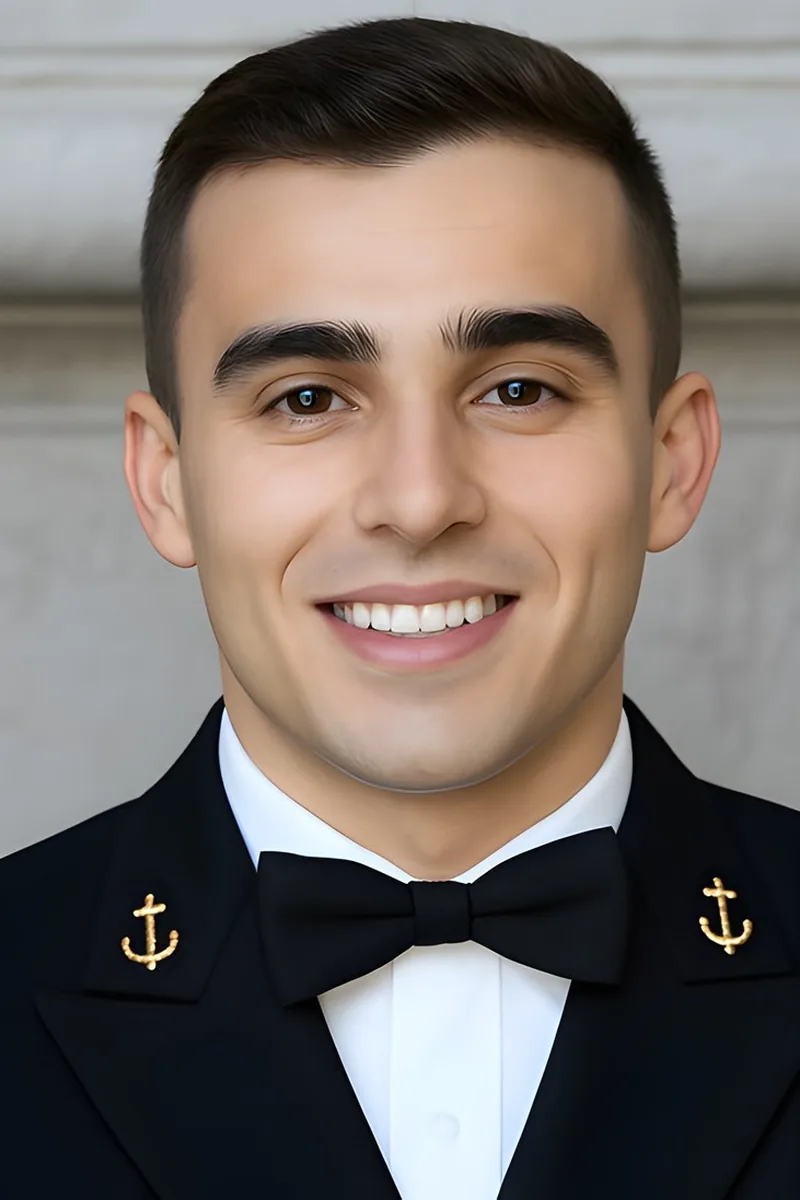
Engineering is applied physics, which means Charles doesn't just remember the formulas for kinematics, energy conservation, or rotational dynamics — he uses them to solve design problems at Yale every week. That practical fluency lets him explain not just how to set up a free-body diagram but why each force matters and what happens when you change a variable. Rated across math and science subjects, he's especially sharp on real-world application problems.
Studying mechanical engineering at Harvard means Christopher doesn't just remember physics — he's actively building on it every semester, from Newtonian mechanics and thermodynamics to electromagnetism and wave behavior. He breaks down complex problems by teaching students to draw clean free-body diagrams, identify which conservation law applies, and translate word problems into solvable equations. That systematic approach turns intimidating multi-step problems into manageable sequences.
Three years of tutoring introductory physics at Washington University gave Justin a sharp sense of where students get stuck — usually at the gap between understanding a concept verbally and translating it into a free-body diagram or equation. His dual bachelor's degrees in physics and math, plus doctoral training in computational methods, let him attack problems from both the physical intuition side and the mathematical machinery side. Rated 5.0 by students.
A PhD in biomedical engineering built on a bachelor's in physics means Andrew has spent years solving problems across mechanics, electromagnetism, and thermodynamics. He teaches physics by emphasizing free-body diagrams, unit analysis, and the habit of translating word problems into mathematical models before reaching for formulas. That systematic approach turns intimidating multi-step problems into manageable sequences.
Three science degrees from Yale — including one in chemistry — mean Zosia has worked through mechanics, thermodynamics, and electromagnetism problems repeatedly across disciplines, building the kind of cross-subject fluency that makes her especially clear on where physics concepts connect to the math underneath. She digs into the specific step where a student's reasoning breaks down, whether that's setting up Newton's second law for a pulley system or tracking signs through a conservation-of-energy equation. Rated 4.9 by students.
Engineering students see physics differently than most tutors do — every force diagram, energy conservation problem, and wave equation is a tool they actually use. Ellie's biomedical engineering program at Yale means she tackles mechanics, electricity, and thermodynamics regularly in applied contexts. She unpacks the math behind each physics concept so students understand the equations instead of just memorizing them.
Akarsh's cellular and molecular biology training — both bachelor's and master's — required grinding through the same mechanics, thermodynamics, and electromagnetism that physics students face, particularly in biophysics coursework where forces, pressure gradients, and energy transfer aren't optional. He tackles problem sets by first isolating which physical law is actually at work, then mapping the math onto it step by step, so students stop guessing at formulas and start reasoning through solutions.
Engineering is applied physics, so Kate spent years solving the exact kinds of problems — free-body diagrams, energy conservation, circuit analysis — that show up in introductory physics courses. She walks through each problem by identifying what physical principle applies and why, which builds the kind of intuition that makes new problems feel approachable instead of intimidating.
Most physics struggles come down to one thing: not knowing how to start a problem. Phillip teaches a systematic approach — draw the diagram, identify the forces, pick the right coordinate system — that turns intimidating multi-step problems into a sequence of smaller, solvable ones. He's taken physics through the college level as part of his biomedical engineering degree at Brown and knows exactly where conceptual gaps tend to hide.
A Caltech economics and computer science graduate, Brian brings serious quantitative depth to physics — from Newtonian mechanics and energy conservation through electromagnetism and wave behavior. He teaches students to set up problems systematically, identifying which principles apply before touching a single equation, which is the skill that separates students who understand physics from those who just memorize formulas.
Engineering students use physics every day, and Ava's dual degree in mechanical and energy engineering means she didn't just learn kinematics, Newton's laws, and energy conservation — she applied them to real systems. She TAed physics-related engineering courses at WashU and tutored high school physics students for several years, so she's comfortable adjusting her explanations whether someone is solving their first free-body diagram or wrestling with rotational dynamics.
Eric approaches physics the way his Duke engineering program taught him: start with a free-body diagram, identify what's conserved, and let the math follow from the concept. Whether it's projectile motion, circuits, or rotational dynamics, he walks through each problem type until the setup becomes second nature.
Teaching middle school science in Philadelphia meant John had to make forces, motion, and energy intuitive for students encountering those ideas for the first time — a skill that translates directly to breaking down introductory physics at any level. His history background also sharpened a habit of asking "why" before "how," so he digs into the reasoning behind Newton's laws or conservation principles before rushing to plug numbers into equations. Rated 5.0 by students.
Dennis doesn't just teach physics — he does it. His research at Princeton simulating cosmic ray acceleration at supernova shock fronts and his engineering work designing optical filters at Norfolk State mean he can connect textbook topics like kinematics, energy conservation, and wave behavior to real systems. That context turns abstract force diagrams and equations into something students can actually picture.
JF's dual training in mathematics and computer science at Stanford means the calculus and vector algebra that bog down most physics students are second nature — freeing up mental bandwidth to actually think about what's happening physically in a problem. He tackles everything from AP Physics 1 mechanics to AP Physics 2 electromagnetism, and he's particularly effective at teaching students to build equations from diagrams rather than hunting for the right formula to plug into. Rated 5.0 by students.
Understanding physics means seeing the same core principles — Newton's laws, conservation of energy, wave behavior — show up in wildly different problems. Amber teaches students to identify which principle applies and how to set up the math, drawing on her strong background in both science and mathematics. Her 5.0 client rating speaks to an approach that makes even tricky free-body diagrams and projectile motion problems feel manageable.
From Newton's laws to wave behavior to electric fields, physics is ultimately about translating real situations into mathematical models. Aimee's engineering training at Georgia Tech means she's spent years doing exactly that — and she teaches students to sketch free-body diagrams and set up equations with the same systematic approach she uses in her own work.
Kinematics equations and free-body diagrams are straightforward once a student learns to read a physics problem like a story — identifying what's moving, what forces act on it, and what the question is really asking. Maggie teaches that translation process explicitly, drawing on her science background to walk through mechanics, energy conservation, and wave behavior with clarity. She holds a 5.0 student rating.
Bidyut's dual focus in biomedical engineering and computer science at Johns Hopkins means physics isn't something he studied once — it's embedded in his daily coursework, from mechanics to electromagnetism to fluid dynamics. He teaches students to translate word problems into free-body diagrams and equations systematically, rather than guessing which formula to use. That structured approach, combined with his 5.0 client rating, makes him especially effective for students who feel lost in problem-solving.
Kinematics equations and free-body diagrams become far less intimidating once a student learns to read each problem as a physical story rather than a math puzzle. Garrett breaks problems into setup, diagram, and solve phases, teaching students a repeatable framework they can apply from Newton's laws through electromagnetism. His science and math background lets him bridge the conceptual reasoning and the calculations seamlessly.
A year as a course assistant in Harvard's math department means Richard can handle the calculus that often becomes the real obstacle in physics — setting up integrals for work-energy problems or differentiating position functions in kinematics. He teaches across physics, calculus, and AP-level math, so when a mechanics problem demands clean vector decomposition or a tricky trig substitution, the math doesn't slow the physics down.
Between a mechanical engineering bachelor's and a PhD program at Rice, Jeffrey has spent years solving statics, dynamics, and thermodynamics problems that most students only encounter in their first physics course. He taught calculus-based physics at Notre Dame and assisted in Differential Equations and Mechanics, so he knows exactly where students lose the thread — especially when multi-step force and energy problems demand both physical reasoning and clean math. Rated 4.9 by students.
Michael holds a PhD in Physics from the University of Michigan and a BS from Rice, and he's spent years teaching everything from basic mechanics to advanced electrodynamics and special relativity. He's particularly effective at connecting abstract principles — like conservation laws or field theory — to real-world phenomena students can actually visualize. Rated 4.7 by students, he brings both deep subject knowledge and genuine teaching experience to every session.
Jackie took AP Physics C — the calculus-based version — and scored a 5 on the exam, which means she's comfortable with everything from Newtonian mechanics to electromagnetic induction. She unpacks free-body diagrams and energy conservation problems by tying the math to real physical situations students can visualize. That combination of calculus fluency and physical intuition makes her especially effective for students preparing for AP or college-level physics.
As a Yale physics major who also teaches thermodynamics, special relativity, and statics and dynamics, Ian has worked through the full arc from introductory mechanics to upper-division theory — so he knows exactly where each concept builds on the last and where students tend to lose the thread. He's particularly sharp at finding the analogy or reframing that makes a stubborn idea finally click, whether that's torque, wave superposition, or conservation laws in multi-body systems. His 1550 SAT speaks to the quantitative precision he brings to every problem.
A Stanford computer science and political science student, Margaret went through the Project Lead the Way STEM magnet program, where physics wasn't just a class but a daily toolkit for engineering challenges. She teaches kinematics, force diagrams, and energy conservation by tying each concept to tangible scenarios that make the math feel purposeful.
Studying applied math at Stanford gave Alex a deep comfort with the mathematical backbone of physics — setting up differential equations for oscillating systems, working through vector fields, or translating a word problem into a free-body diagram. He teaches the problem-solving process itself, showing students how to identify which principles apply before touching a single equation.
Engineering students solve physics problems differently than most — they diagram forces, track units obsessively, and translate word problems into equations almost automatically. Annie brings that engineering instinct from her Cornell coursework to topics like kinematics, Newton's laws, energy conservation, and circuits, showing students a systematic approach that works across problem types.
Benjamin's physics teaching goes beyond plugging values into kinematic equations. He digs into free-body diagrams, energy conservation, and vector decomposition by asking students to predict outcomes before calculating — a habit that builds the physical intuition textbooks often skip. His math fluency from studying economics at UChicago means the quantitative side never becomes a bottleneck.
Cornell's biology curriculum put Alec through the full gauntlet of introductory and intermediate physics — mechanics, electromagnetism, and thermodynamics — all in the calculus-based sequence that pre-med and science majors dread most. His experience as a general chemistry TA sharpened his instinct for spotting where students lose track of units, signs, or vector directions in multi-step problems, and he teaches the habit of mapping out the physical situation before writing a single equation. Rated 4.8 by students.
Serving as a Course Assistant for Harvard's calculus sequence means Sanjana regularly works through the exact derivatives, integrals, and differential equations that underpin every physics topic from kinematics to rotational dynamics — and she teaches AP Physics 1 through AP Physics C: E&M, so she knows where the math starts tripping students up in each course. She breaks problems down by isolating the physical principle first, then building the mathematical solution step by step so nothing feels like a leap. Rated 5.0 by students.
Earning a BS in physics from Yale gave Anthony deep comfort with the subject's core challenge: translating a physical scenario into a mathematical model and then interpreting the result. He breaks down force diagrams, energy conservation, and wave behavior by tying each concept back to the underlying math rather than treating equations as formulas to memorize.
Applied math at Caltech means Samuel's daily coursework is the calculus and differential equations that power every physics problem — from projectile motion to oscillating springs to electric fields. He teaches students to build the mathematical setup first, identifying which principles apply and why, so that plugging into formulas becomes the easy final step rather than a frantic guessing game.
Understanding physics means learning to translate a word problem into a free-body diagram, then into equations, then into an answer that makes physical sense. Pranav teaches that full translation process — whether the topic is kinematics, energy conservation, or electromagnetism — drawing on his Biomedical Engineering studies at Johns Hopkins. He's especially good at identifying the exact step where a student's reasoning breaks down and addressing it on the spot.
A mechanical engineering degree from WashU means Caroline didn't just study physics — she applied it daily, from fluid dynamics to stress analysis. She teaches students to set up free-body diagrams and energy conservation problems by connecting the math to physical intuition, making kinematics and Newton's laws click rather than feel like formula hunts.
A Princeton-trained mechanical and aerospace engineer, Fred spent years solving physics problems that mattered — calculating drag forces on aircraft, modeling orbital mechanics, analyzing stress distributions in structural components. That depth lets him teach everything from Newtonian mechanics to electromagnetism with real intuition about what the equations describe physically. He unpacks the free-body diagrams, energy conservation setups, and vector decompositions that students struggle with most.
Holding degrees in both mechanical and electrical engineering, Steve has solved the full spectrum of physics problems professionally — from statics and dynamics in mechanical systems to electromagnetism in circuit design. That dual perspective is especially useful when students hit the transition from mechanics to E&M, since he can show how the same problem-solving structure carries across both halves of a physics course. Rated 4.9 by students.
Free-body diagrams, conservation laws, and circuit analysis all demand a specific way of thinking: translating a physical scenario into math and then interpreting what the math tells you. Zachary's biophysics training required exactly this skill set across mechanics, electromagnetism, and thermodynamics, and he breaks complex problems into clear, repeatable steps that build real problem-solving confidence.
Bryan holds a B.S. in Physics and teaches the subject the way it's actually practiced — starting from a real situation, identifying the relevant principles, and building a solution step by step. Whether the problem involves conservation of momentum or circuit analysis, he emphasizes drawing clear free-body diagrams and checking units before touching a calculator.
Testimonials
Because the right Physics tutor makes all the difference.
Average Session Rating – Based on 3.4M Learner Ratings
Practice Physics
Free practice tests, flashcards, and AI tutoring for Physics
Other Manhattan Tutors
Related Science Tutors in Manhattan
Frequently Asked Questions
Your first session is focused on understanding your current level, learning goals, and specific challenges—whether that's grasping Newton's laws, mastering kinematics, or preparing for the AP Physics exam. A tutor will assess what concepts are clicking and where you need the most support, then create a personalized plan to help you build both conceptual understanding and problem-solving skills.
Physics tutors excel at translating abstract ideas—like electromagnetic fields, quantum mechanics, or relativistic motion—into concrete explanations and visual models you can actually picture. They use diagrams, real-world analogies, and step-by-step problem breakdowns to make invisible forces and theoretical concepts tangible, so you're not just memorizing formulas but truly understanding what's happening.
Memorizing a formula gets you through one problem; understanding it helps you solve hundreds. Expert tutors focus on teaching you *why* formulas work and *when* to use them, so you can tackle unfamiliar problems with confidence. This approach—connecting equations to physical principles and real-world scenarios—is what separates students who pass physics from those who truly master it.
Students often struggle with unit conversions, balancing equations, and translating word problems into mathematical models. Another common hurdle is the jump from memorizing definitions to applying scientific reasoning—understanding not just *what* happens, but *why* and *how* to predict it. Tutoring addresses both the technical skills and the conceptual thinking needed to excel in physics.
Absolutely. Tutors can help you understand the scientific method, design experiments, analyze data, and write lab reports that connect your observations to theory. Whether you're struggling with experimental design, data interpretation, or explaining your results, personalized instruction helps you develop the hands-on scientific thinking skills that matter in physics.
Tutors work with you on both content mastery and test-taking strategy—identifying which topics are your weak spots, drilling problem types you'll see on the exam, and teaching you how to manage time and avoid common mistakes. They also help you understand the difference between what the exam is testing (conceptual understanding, not just calculations) so you can prepare strategically.
Look for tutors with strong physics backgrounds—ideally a degree in physics or a related field, plus teaching experience at the level you need (high school, AP, college, etc.). Beyond credentials, the best tutors can explain complex ideas clearly, adapt to how you learn, and help you develop problem-solving skills rather than just giving you answers.
Expert tutors show you how physics principles apply beyond the classroom—from how bridges are engineered to withstand forces, to how smartphones use electromagnetic principles, to how medical imaging works. Connecting theory to real-world contexts makes physics more engaging and helps you retain concepts because you understand their purpose and relevance.
Let’s find your perfect tutor
Answer a few quick questions. We’ll recommend the right plan and match you with a top 5% tutor.