Award-Winning Microeconomics Tutors
serving Sarasota, FL
Microeconomics
Tutors in Sarasota
Private 1-on-1 tutoring, weekly live classes for academic support, test prep & enrichment, practice tests and diagnostics, and more to elevate grades and test scores.
Based on 3.4M Learner Ratings
UniversitiesSchools & Universities
DeliveredHours Delivered
ProficiencyGrowth in Proficiency
Who needs tutoring?
No obligation. Takes ~1 minute.

Supply and demand curves are just the starting point — Hari digs into elasticity, marginal utility, and market structures like oligopoly and monopolistic competition to show how firms actually make pricing decisions. His MBA in Finance gives him real-world context for concepts like cost curves and profit maximization that textbooks often present too abstractly. Rated 5.0 by students.
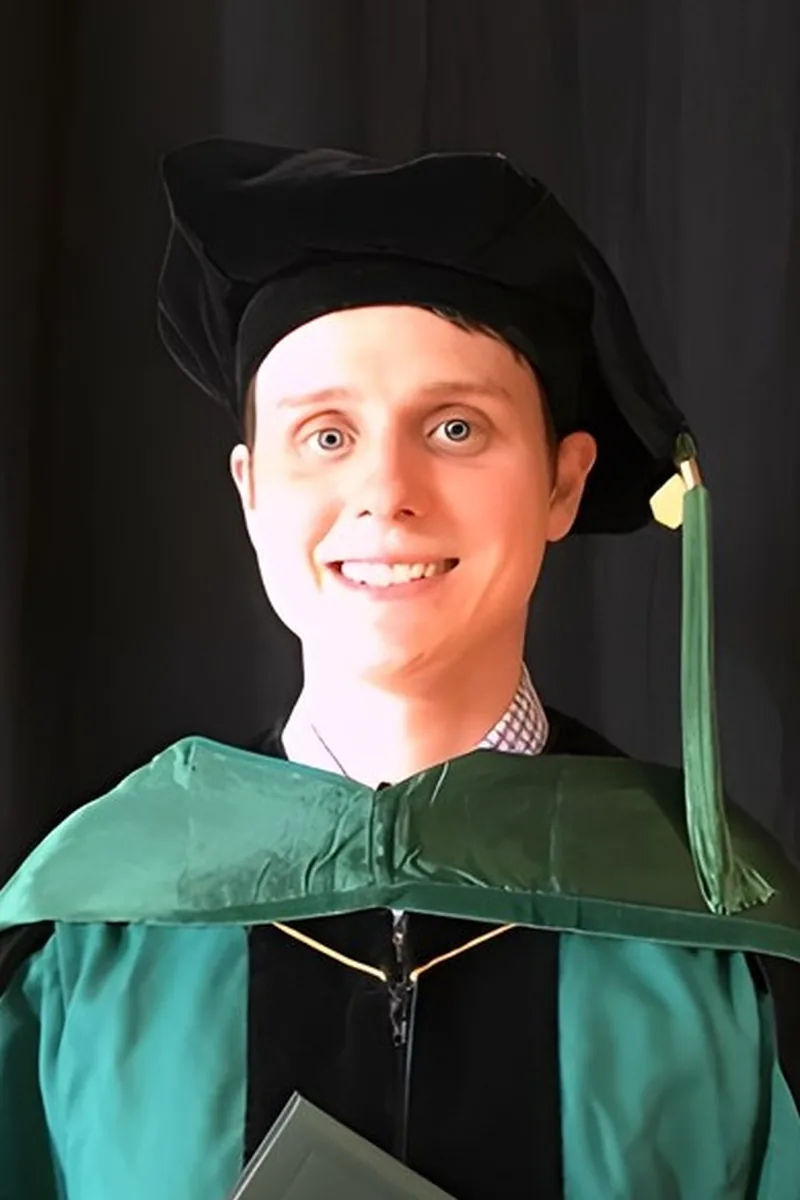
An economics degree from SUNY Albany means James can teach microeconomic concepts — supply and demand curves, elasticity, market structures, consumer choice theory — with the depth of someone who studied them formally. He connects abstract models like marginal utility and cost curves to real-world pricing decisions that make the logic intuitive. His 4.9 rating speaks to how clearly he breaks down graphs and mathematical relationships that trip students up.
Elasticity, marginal cost curves, market structures, welfare analysis — microeconomics is built on deceptively simple ideas that get complicated fast. Stephen's PhD research at Rice and his current teaching at Fordham keep him immersed in exactly these concepts, and his market research career means he can show students how firms actually use pricing strategy and cost analysis outside the classroom.
Caroline's comparative literature degree might seem unrelated to microeconomics, but her economics and public policy coursework gave her a solid handle on how incentive structures, trade-offs, and market behavior actually work. She's particularly good at translating the verbal reasoning behind models — explaining in plain language why a demand curve slopes downward or what drives a firm's shutdown decision — which clicks for students who get lost when the graphs pile up.
Having passed 15 AP exams — including both Calculus and Physics sequences — Nathan is comfortable with the optimization and graphical reasoning that trips up most microeconomics students, from setting up marginal analysis to interpreting shifts in supply-and-demand models. His computer science background at UCF reinforces that systematic, logical approach: breaking a complex problem into smaller steps, whether it's debugging code or tracing how a tax wedge creates deadweight loss. Rated 4.9 by students.
Marginal cost curves, price discrimination, game theory matrices — microeconomics is deceptively math-heavy for a social science course. Dariel digs into the graphical and algebraic sides together, making sure students can both sketch a firm's cost structure and calculate the profit-maximizing output behind it. His quantitative strengths in math and statistics give him an edge when courses lean into the more technical problem sets.
Elizabeth breaks down microeconomic concepts like elasticity, marginal cost curves, and market structures by tying them back to real business decisions — something her accounting studies at UCF reinforce constantly. She's particularly strong at teaching students how to read and interpret the graphs that make or break exam performance. Rated 4.9 by students.
Supply and demand diagrams are deceptively simple until students hit elasticity, market failures, or game theory — that's where Microeconomics gets interesting. Marissa unpacks how firms actually make pricing and production decisions, turning what can feel like memorizing graph shifts into genuine economic reasoning.
Supply and demand curves are just the starting point — microeconomics gets interesting when students dig into market failures, game theory, and why perfectly competitive markets almost never exist in real life. Matthew approaches each model by asking what assumptions it makes and what happens when those assumptions break down, which turns memorization into genuine economic reasoning.
I am a senior at Rollins College and have my IB diploma from high school. I did TOK, HLs: Psych, Econ, language and literature, and SLs: Spanish, biology, and mathematical studies. I prefer psych, econ, business, and anything English or literature related. I can do paper revisions, essay help, reading comprehension, elementary/middle/high school math. I would prefer more basic math and science, can help with reading and writing in Spanish, and am up for anything.
I am a graduate of the University of Notre Dame with a degree in Accounting. I spent the first 20 years of my career in public accounting with PwC (PriceWaterhouseCoopersLLP), including 7+ years as a a partner.
The jump from introductory economics to microeconomics trips students up right around market structures — distinguishing monopolistic competition from oligopoly, or calculating deadweight loss under a price ceiling. Julian's finance background at the University of Miami means he's comfortable with the math behind these models and can walk through the graphing and algebra that micro demands.
I'm from Las Vegas, NV. I am currently a junior at the University of Miami majoring in Industrial Engineering with a double minor in Mathematics and Economics. My hobbies include laying by the pool and listening to new music.
Consumer choice theory, production functions, market structures — microeconomics is full of models that look abstract until someone shows you how they map onto real behavior. Natalie's dual focus in economics and engineering at Duke means she approaches these models both intuitively and mathematically, breaking down each graph until the logic behind it is clear.
Jake's marketing degree gives him a practical angle on microeconomic concepts — he's studied how firms actually respond to price elasticity, how consumers weigh marginal utility in purchasing decisions, and why market structures shape advertising strategy. That real-world grounding makes abstract models like profit maximization and cost curves feel less like graph exercises and more like tools businesses use every day. Rated 4.9 by students.
With an applied math degree and PhD-level engineering work, Professor Florence tackles microeconomics from a deeply quantitative angle — the kind that makes optimization problems, constrained utility maximization, and cost function analysis feel like natural extensions of calculus rather than foreign territory. She teaches the mathematical machinery behind economic models so students understand what they're solving, not just how to push symbols around on an exam.
Supply and demand curves are simple enough on the surface, but microeconomics gets tricky fast once students hit elasticity calculations, game theory matrices, and market failure models. Laura studied economics at the undergraduate level and brings real fluency to topics like consumer surplus, price discrimination, and production cost analysis. She connects the math behind each graph to the economic intuition it represents, which makes problem sets far less mechanical.
Marginal cost curves, consumer surplus, and price discrimination can feel like a pile of disconnected graphs until someone ties them back to how actual firms make decisions. Frank connects microeconomic theory to the real market behavior he analyzed during his years as a Wall Street research executive, making concepts like market structure and deadweight loss intuitive rather than abstract.
A political science degree from Williams College means Noah studied how policy decisions ripple through markets — tax incidence, rent controls, minimum wage effects — where microeconomic models meet real-world trade-offs. He teaches students to trace the logic of those models, breaking down why a subsidy shifts a curve or how deadweight loss emerges, rather than treating graphs as shapes to memorize for an exam.
Elasticity, consumer surplus, and market structures like monopolistic competition can feel abstract until someone maps them to decisions you actually make. Sheena, who is pursuing an accelerated Master's in Economics, teaches microeconomics by anchoring each concept in concrete scenarios — why airlines price-discriminate, how a tax shifts deadweight loss, what drives firm entry in the long run. She makes the graphs tell a story rather than just sit on the page.
David's sociology research at Columbia and Chicago trained him to model how individuals make decisions under constraints — which is exactly what microeconomics formalizes with utility functions, budget lines, and optimization problems. His computer science background adds fluency with the quantitative side, from setting up cost minimization equations to interpreting the slopes of indifference curves. Rated 4.9 by students.
Supply and demand curves are just the starting point — the real challenge in microeconomics is applying optimization logic to consumer choice, firm behavior, and market structures. Darin's engineering background means he's comfortable walking through the calculus behind marginal analysis and showing students how each graph tells a precise quantitative story.
I am currently working in a Bronx Public School as a teaching apprentice in Algebra. I have four years of experience tutoring one on one with students of all ages.
Elasticity, market structures, consumer surplus — microeconomics is full of concepts that seem straightforward on the surface but get tricky the moment you apply them to problem sets. Jack's Northwestern economics training means he can walk through the math behind each model while keeping the bigger economic intuition in focus. He holds a 5.0 rating from students.
Introductory microeconomics is where Reed cut his teeth as a tutor — he served as a prefect and TA for Carleton College's micro courses, running both classroom sessions and one-on-one reviews. He digs into consumer and producer theory, cost curves, and market structures with an emphasis on connecting the graphs to the underlying math so each concept reinforces the other.
Testimonials
Because the right Microeconomics tutor makes all the difference.
Average Session Rating – Based on 3.4M Learner Ratings
Nearby Microeconomics Tutors
Other Sarasota Tutors
Related Business Tutors in Sarasota
Frequently Asked Questions
Microeconomics studies how individuals, households, and businesses make economic decisions—covering topics like supply and demand, pricing, consumer behavior, and market competition. Understanding microeconomics is essential for college-level economics courses, business programs, and developing critical thinking about real-world financial decisions, from budgeting to understanding why prices change.
Many students struggle with abstract economic concepts like elasticity, marginal analysis, and equilibrium, especially when connecting theory to real-world applications. Graphing demand and supply curves, interpreting economic models, and mastering the mathematical foundations (algebra and basic calculus) are frequent pain points. Personalized tutoring helps break down these complex ideas into digestible pieces and shows how they apply to actual market situations.
In a classroom of 13 students per teacher (Sarasota's average), it's difficult for instructors to address individual knowledge gaps or adjust pacing to your learning style. Personalized tutoring focuses entirely on your specific challenges—whether that's mastering utility theory, understanding perfect competition, or improving problem-solving speed. A tutor can also tailor explanations to your interests, making abstract concepts more concrete and memorable.
Your first session is a diagnostic and goal-setting meeting. A tutor will assess your current understanding of key microeconomic concepts, identify specific areas where you need support, and learn about your learning style and goals—whether you're preparing for an AP exam, college course, or just aiming to improve your grade. From there, you'll develop a personalized plan that targets your priorities.
Yes. Microeconomics tutoring covers all major curriculum standards, including AP Microeconomics content (supply, demand, elasticity, consumer choice, production, market structures, and factor markets) and introductory college microeconomics courses. Tutors can align instruction with your specific course requirements and help you master both conceptual understanding and problem-solving skills needed for exams and assignments.
Many students notice improved understanding and confidence within 2-3 sessions, especially when focusing on specific topics like graphing or elasticity calculations. Meaningful grade improvement typically takes 4-6 weeks of consistent tutoring, depending on your starting point and how frequently you meet. The key is regular practice between sessions—tutors can assign targeted problems that reinforce what you've learned.
Varsity Tutors connects you with tutors who have strong backgrounds in economics—including those with degrees in economics, business, finance, or related fields, as well as experienced high school and college instructors. Each tutor is vetted for subject expertise and teaching ability, ensuring you get instruction from someone who deeply understands microeconomic principles and how to explain them clearly.
Connect with Varsity Tutors to describe your microeconomics goals and challenges, and you'll be matched with a qualified tutor who fits your needs and schedule. You can start with a single session to see if the fit is right, then adjust your tutoring frequency based on your progress. Whether you need weekly support or intensive help before an exam, we can customize a plan that works for you.
Let’s find your perfect tutor
Answer a few quick questions. We’ll recommend the right plan and match you with a top 5% tutor.