Award-Winning AP Statistics Tutors
serving Seattle, WA
AP Statistics
Tutors in Seattle
Private 1-on-1 tutoring, weekly live classes for academic support, test prep & enrichment, practice tests and diagnostics, and more to elevate grades and test scores.
Based on 3.4M Learner Ratings
UniversitiesSchools & Universities
DeliveredHours Delivered
ProficiencyGrowth in Proficiency
Who needs tutoring?
No obligation. Takes ~1 minute.

Teaching statistics at the university level at Washington State University Vancouver, Moayad knows exactly where AP Statistics students stumble — inference logic, interpreting p-values, and distinguishing between experimental designs. He breaks down hypothesis testing and confidence intervals using the same framework he uses with his college students, scaled to the AP curriculum.
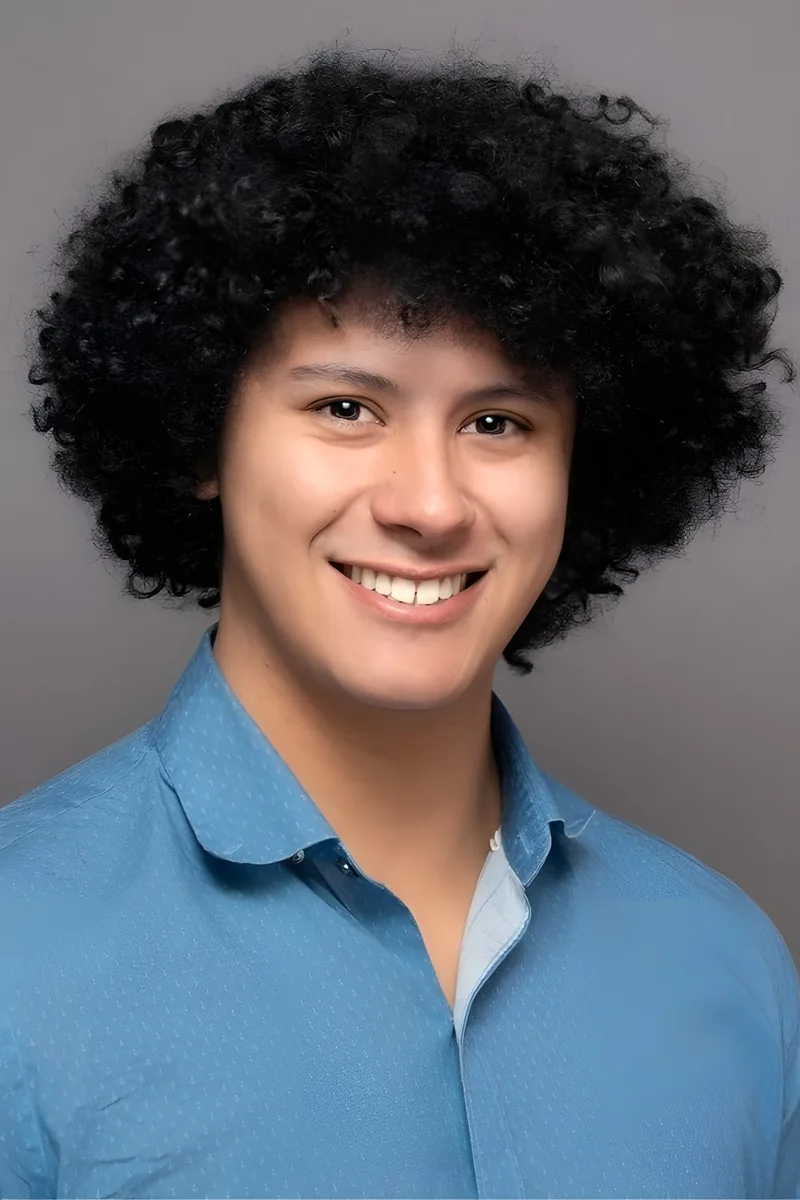
Hello! My name is Gabe, and I currently work as a Biostatistician in New York. I hold a Master's degree in Epidemiology from Johns Hopkins and a Bachelor's degree from NYU. Statistics isn't for everyone, but I hope to help students expand their knowledge or gain confidence in using it for a class. I am skilled in R studio for statistical and epidemiological analysis. My goal is to help students perform their best by becoming comfortable with the concepts.
Most AP Stats students come in expecting another formula-driven math class, then hit a wall when the exam asks them to explain *why* a normal model applies or *what* a 95% confidence level actually means in context. JF's math and CS background at Stanford means he thinks in both precise computation and logical argumentation — exactly the combination the free-response section rewards. Rated 5.0 by students.
Running experiments in a brain sciences PhD program means Tashina designs studies, collects behavioral data, and determines whether her results hold up under statistical scrutiny — the same cycle of experimental design, data analysis, and inference that AP Stats tests on every free-response question. She's especially sharp on the interpretive side, like articulating why a particular sampling method matters or what a confidence interval actually captures, because her dissertation work requires defending those choices to peer reviewers. Rated 4.7 by students.
Cornell biology coursework has Drishti knee-deep in research methods — designing controlled experiments, interpreting data tables, and evaluating whether results actually support a hypothesis or just look like they do. That training maps cleanly onto the AP Stats units on experimental design and inference, where she teaches students to articulate the reasoning behind their procedure choices instead of just punching numbers into a calculator. Rated 5.0 by students.
Twenty-five years teaching science in Massachusetts public schools means Jacques has walked hundreds of students through the messy reality of collecting lab data, spotting outliers, and deciding whether results actually mean something — which is the interpretive core of AP Statistics. His Princeton chemical engineering training leaned heavily on statistical modeling and differential equations, giving him a quantitative backbone that makes concepts like normal distributions and expected value click in context rather than in isolation. Rated 4.8 by students.
Hello, my name is Yosef and I would be happy to serve as a math tutor. I place strong emphasis on a good balance between knowledge of mathematical content and proficiency in problem-solving, reasoning, and conveying mathematical ideas in writing. There are times when a student needs to be informed of a solution, times when he or she also needs to hear the explanation of why the solution works, and times when he or she should be guided to finding the solution on his or her own. It is important for the tutor to recognize which approach is appropriate. Frequently, when students struggle, it is because they do not understand the notation or terminology in use. In such cases, it is important to reassure the student, reminding him or her that he or she is only struggling with understanding a single word, not the entire mathematical concept. As a rule, people perform better and are better motivated when they have self-confidence, not when the task ahead seems frighteningly daunting. It is also important to recognize that different students learn best through different means. As an example, some students are visual learners and can understand the material best through pictures and gestures. Other students learn best through hearing the procedures vocalized, while still others learn best through writing out the steps of the solution procedure. I know to adapt my teaching style to the individual student. with these considerations in mind, I promise to provide the best assistance that I can, taking your individual needs into consideration.
Computational biology at Cornell means Emily lives in statistical analysis — hypothesis testing, regression models, and probability distributions are part of her daily coursework. She breaks down AP Stats concepts like experimental design and inference by connecting them to real datasets, making the logic behind each test click before students ever touch a formula sheet.
Biology research at Yale means Shreya regularly interprets data — reading regression output, evaluating sample designs, and deciding whether results are statistically significant before drawing conclusions. She brings that same analytical lens to AP Statistics, teaching students how to set up and justify inference procedures the way the free-response section demands. Rated 5.0 by students.
Most AP Stats students come from algebra and calculus courses where there's one right answer — so the shift to interpreting output, justifying assumptions, and writing about uncertainty in plain English catches them off guard. Matthew's dual math and computer science background at Harvard means he's comfortable on both sides of that divide: the formal probability theory underneath and the data-driven reasoning the exam actually grades you on. Rated 4.9 by students.
Cognitive science at Rice meant Adam spent semesters immersed in experimental design, hypothesis testing, and statistical inference — the exact skills AP Statistics demands. He teaches students to think through probability distributions and confidence intervals the way a researcher would, connecting each concept to the logic behind the test rather than just the formula sheet.
Studying statistics at Northwestern means Jake isn't just learning the concepts AP Stats covers — he's using them daily in upper-division coursework involving real data analysis, probability models, and inference procedures. That ongoing immersion makes him sharp on the details students tend to blur, like the difference between a parameter and a statistic or why checking conditions before running a test isn't optional. Rated 5.0 by students.
Neuroscience research runs on statistics — hypothesis testing, confidence intervals, regression analysis, interpreting p-values from real experimental data. Daniel applies that firsthand lab experience from his work at the Jungers Center for Neuroscience Research to break down AP Statistics concepts in ways that go beyond formula sheets. His biomedical engineering coursework at Rice keeps these tools sharp and current.
Testimonials
Because the right AP Statistics tutor makes all the difference.
Average Session Rating – Based on 3.4M Learner Ratings
Practice AP Statistics
Free practice tests, flashcards, and AI tutoring for AP Statistics
Other Seattle Tutors
Related Math Tutors in Seattle
Frequently Asked Questions
AP Statistics focuses on four main units: exploring data through distributions and relationships, sampling and experimentation, probability and random variables, and inference. The course emphasizes statistical thinking and interpretation rather than heavy computation, requiring students to understand concepts like sampling bias, experimental design, probability distributions, confidence intervals, and hypothesis testing. Tutors can help you master each unit's key concepts and learn how to apply them to real-world scenarios on the exam.
Score improvement depends on your starting point and how consistently you engage with tutoring. Students who work with tutors typically see gains by focusing on their specific weak areas—whether that's interpreting statistical output, designing experiments, or understanding probability concepts. With regular practice and targeted instruction, many students move from a 2 or 3 to a 4 or 5, though realistic improvement timelines vary based on your current understanding and the time you invest.
Many students struggle with probability concepts and distinguishing between different types of statistical tests—knowing when to use a t-test versus a chi-square test, for example. Interpreting statistical output and translating real-world problems into statistical language also trips up test-takers. Additionally, the free-response section requires clear communication of your reasoning, which can be challenging if you're not used to explaining statistical thinking in writing. Expert tutors can break down these concepts and give you practice explaining your work.
Most students benefit from starting exam preparation 2-3 months before the May test date, though this depends on when you started the course and your comfort level. A typical study schedule includes reviewing each unit, taking practice tests to identify weak areas, and focusing your final weeks on problem areas and test-taking strategies. Personalized tutoring can accelerate your preparation by targeting exactly what you need to work on rather than reviewing material you already understand.
Practice tests are essential for AP Statistics because they help you understand the exam format, manage your time effectively, and identify which topics need more review. The exam includes both multiple-choice and free-response sections with different time pressures, so practicing under timed conditions is crucial. Tutors can review your practice test results with you, explain where you went wrong, and help you develop strategies for tackling similar questions on test day.
Test anxiety in statistics often stems from uncertainty about which approach to use or fear of making calculation mistakes. Building confidence through repeated practice with different problem types helps reduce anxiety—when you've seen similar questions before, the exam feels less intimidating. Tutors can also teach you time-management strategies and help you develop a calm approach to reading questions carefully and checking your work, which builds the confidence you need to perform your best.
Varsity Tutors connects you with expert tutors in Seattle who specialize in AP Statistics and understand the specific demands of the exam. When you get matched with a tutor, you'll work with someone who has deep knowledge of the curriculum and can tailor instruction to your learning style and pace. You can discuss your goals—whether you're aiming for a 3 or pushing for a 5—and your tutor will create a personalized study plan to help you get there.
In your first session, your tutor will assess your current understanding of AP Statistics concepts, learn about your goals, and identify which topics need the most work. You might take a diagnostic quiz or review some practice problems together to pinpoint your strengths and weaknesses. From there, your tutor will create a personalized study plan with you, explaining how you'll work together to build confidence and improve your exam score.
Let’s find your perfect tutor
Answer a few quick questions. We’ll recommend the right plan and match you with a top 5% tutor.