Award-Winning ACT Reading Tutors
serving Virginia Beach, VA
ACT Reading
Tutors in Virginia Beach
Private 1-on-1 tutoring, weekly live classes for academic support, test prep & enrichment, practice tests and diagnostics, and more to elevate grades and test scores.
Based on 3.4M Learner Ratings
UniversitiesSchools & Universities
DeliveredHours Delivered
ProficiencyGrowth in Proficiency
Who needs tutoring?
No obligation. Takes ~1 minute.

Hello! I am currently a junior at The Ohio State University majoring in mechanical engineering. I've been tutoring for around 5 years and have worked with students of all ages. I specialize in helping students improve their SAT and ACT scores. My teaching method is to target students weak areas in a subject and reteach them the topic from scratch with tips and tricks. I believe the best way to learn is by applying the topics learnt to real questions to ensure your student feels comfortable solving them come time for the exam!
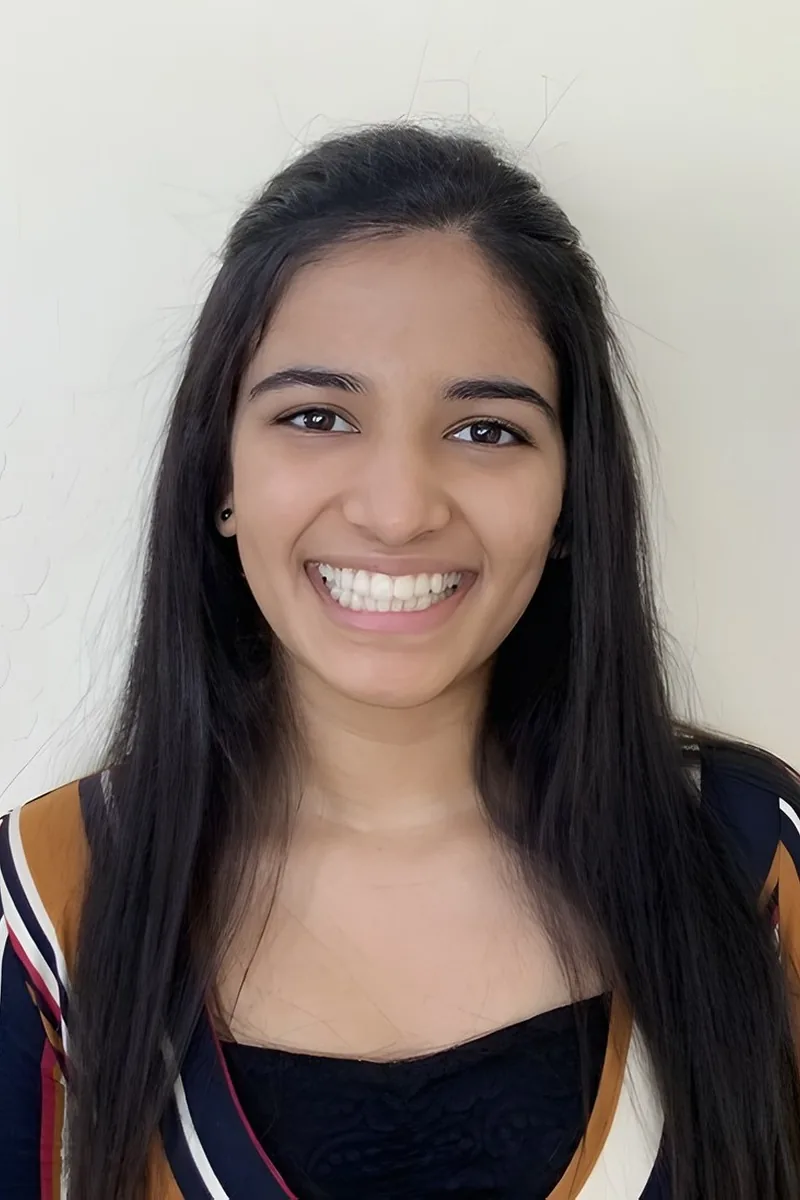
The ACT Reading section isn't about being a fast reader — it's about knowing what the questions actually ask and where to find the evidence. Roshni breaks each passage type (prose fiction, social science, humanities, natural science) into a targeted strategy so students stop re-reading entire paragraphs and start pinpointing answers. Her 35 ACT composite backs up an approach that consistently clicks.
I am a sophomore electrical engineering student and member of the honors college at Virginia Commonwealth University. I recently graduated from Maggie L. Walker Governor's School in June of 2017. I have a passion for mathematics, especially calculus, and am excited to share my knowledge with others.
I am a student at the University of Virginia majoring in Commerce. I have a passion for statistics, mathematics, and teaching others.
Hi, I'm Vennela! I specialize in making advanced subjectsfrom Multivariable Calculus to Machine Learningaccessible and intuitive. Having studied at Thomas Jefferson High School for Science and Technology and moving into Mathematics at Northeastern University, I understand the rigor of top-tier STEM programs. My tutoring philosophy centers on 'first principles': I don't just teach you how to solve a problem; I help you understand why the math works the way it does. Whether we are solving differential equations or learning the basics of geometry, my goal is to build your confidence and your skills.
Every ACT Reading passage is a timed argument-analysis exercise, and Kyle's philosophy training makes him unusually fast at extracting a passage's main claim and supporting structure. He teaches specific annotation strategies for each passage type — prose fiction, social science, humanities, natural science — so students stop rereading and start answering with confidence.
The ACT Reading section isn't really testing whether you understood the passage — it's testing whether you can find specific evidence under time pressure. Zeke scored a 34 ACT composite and developed a passage-mapping strategy that cuts through dense prose in the social science and humanities sections. Rated 5.0 by students, he breaks down how to eliminate wrong answers quickly even when two choices look equally plausible.
I am currently a student at the University of Pittsburgh! I originally hail from the DC area. I have been tutoring for about 2 years and have a lot of experience because my family has a huge teaching background. I am majoring in biochemistry and psychology but I love to write and read books! I love to tutor not only because I love to teach but also because I love to meet new people and help people lead happier lives.
I am ready to help all students by answering their questions and frequently addressing some questions to them....
Computer science teaches you to process information in layers — scan the structure first, then drill into the details that matter — and that's exactly how Anmol approaches the ACT Reading section's four passage types under tight time pressure. He trains students to build a quick mental map of each passage's argument before engaging with questions, turning inference and detail items into targeted retrieval instead of panicked re-reading. His 33 ACT composite and 5.0 student rating back up the method.
From the moment I began helping classmates in middle school study for math quizzes, I realized how much I enjoyed guiding others toward understanding. Over time, that spark grew into a genuine passion for education. What drives me most is witnessing the transformation in a student's confidencethe moment when confusion gives way to clarity, and they begin to believe in their own abilities. Tutoring, for me, is not simply about helping students achieve better grades; it's about empowering them to trust their capacity to learn and grow. My journey as a tutor began in high school, where I volunteered as a math tutor for underclassmen struggling with algebra and geometry. I worked one-on-one with students after school, helping them tackle difficult problems and build foundational skills. This early experience taught me how patience and consistent encouragement could make a lasting difference. In college, I served as a teaching assistant for general chemistry at the University of Virginia.
I am currently a lead preschool teacher. I received my Bachelor's in Psychology from VCU and am looking to return to school to further my education. While in college, I worked as a Supplemental Instruction leader, teaching general biology and anatomy. I have also worked in an after school program with elementary age children, but I have my fondest memories volunteering as a counselor for Camp Kesem. In my own experience, I loved school and now I love teaching even more at all age levels! I especially enjoy the challenge of getting creative to discover what approach and mediums work best for each student. I am available for in person as well as online tutoring.
I'm currently a Junior at VCU. My major is Biology and I'm minoring in Chemistry and Mathematics. In addition, I'm also on the pre-med track, so I have taken many science classes!
Having studied and worked abroad in Spain and Brazil, Jessica developed a habit of reading for meaning in unfamiliar contexts — a skill that translates surprisingly well to the ACT Reading section, where students face dense passages on topics they've never encountered. She teaches students to lock onto an author's central claim and track how supporting details connect to it, which keeps inference and detail questions from becoming guessing games. Her 33 ACT composite backs up an approach grounded in active, purposeful reading.
I'm Julian and I'm currently pursuing a Bachelor's degree in Mechanical Engineering at the University of Virginia. I have been there before. Repeatedly, there are moments where I do not understand a certain subject and I am in need of assistance. Even the most notable scholars need help at some point in their lifetime. For this reason, I'd like to repay the favor and help other students in need. More people than I can count have been there to help me and I would like to do the same with other students. To do this, I will tutor with an engaging and interactive environment. When assisting students, I like to go beyond explicit instructions. I strive for the student to fully understand the processes that we cover so that it sticks in the student's mind more effectively. Subsequently, I believe it is important to continue practicing the content individually. The main goal is to instill long term confidence in the student that surpasses what is being taught.
Most ACT Reading mistakes happen not because students misunderstand the passage but because they misread what the question is actually asking — "main idea" vs. "the author suggests" require completely different retrieval strategies. Eileen, a Vanderbilt neuroscience major who scored a 36 composite, walks students through a passage-mapping technique that cuts rereading time dramatically and keeps evidence-based answers distinct from inference questions.
I am most excited about helping other students achieve their dreams of going to medical school by helping them study for the MCAT. Besides MCAT tutoring, my favorite subjects are chemistry, biology, and math which are all subjects I have tutored in before. I believe that every student can learn the material they hope to with the right guidance and effort. I hope that I can help students realize their full potential and grow in confidence as a learner. Outside of teaching, I like to perform in musicals, most recently I have been in local productions of Mamma Mia and Footloose, as well spend time with friends.
I am an undergraduate of the Johns Hopkins University, majoring in Biomedical Engineering and Computer Science. I have years of experience tutoring and teaching math and various sciences from an elementary to a college level. I primarily tutor college level courses such as physics and biochemistry, but also have extensive experience in social sciences, biology, and higher mathematics such as Calculus and Differential Equations. I believe that demonstrating the various real-world applications of a given concept is the best method to increase a student's understanding.
Most ACT Reading mistakes come from running out of time, not from lack of comprehension. Sydney, who scored a 35 composite, teaches a passage-attack strategy that prioritizes skimming for structure before diving into questions — so students spend their minutes on the questions that actually earn points. Her literary training at Carnegie Mellon makes her especially sharp on the prose fiction and humanities passages that often feel trickiest.
I am a recent graduate of Cornell University, where I received a B.S. in Chemical Engineering and graduated Magna Cum Laude. Over the past several years, I have worked with students from diverse backgrounds and experiences tutoring thermodynamics (my personal favorite), chemistry, and math. I have also tutored in the past for ACT/SAT and other subjects such as history, but I am deeply passionate about science and engineering. I tend to push my students to understand conceptual topics, as opposed to rote or algorithmic learning. In my free time, I love to bake sourdough, learn about history, garden, and recently started biking again.
Most ACT Reading mistakes come from spending too long on one passage or second-guessing answers that felt right the first time. Edward teaches a timing strategy that allocates minutes by passage type — prose fiction, social science, humanities, natural science — and shows students how to locate textual evidence quickly instead of re-reading entire paragraphs. His 36 composite reflects command of every section, not just the math side.
After scoring a 35 ACT composite, Frances developed a systematic method for the Reading section that prioritizes passage mapping — identifying the author's purpose and argument structure before touching the questions. She's especially strong on the paired-passage format, where students often lose points by conflating the two authors' positions.
The ACT Reading section isn't about being a fast reader — it's about knowing where to look and how to eliminate answer choices efficiently across four dense passages in 35 minutes. Zhenrui, who earned a 36 composite, breaks down each passage type (prose fiction, social science, humanities, natural science) and teaches the specific retrieval strategies that keep students from second-guessing themselves.
I am available to tutor in a broad range of subjects, though I am most passionate about Economics, History, and Civics. Please feel free to contact me and I would be happy to arrange a session.
I am a current sophomore at Rensselaer Polytechnic Institute, where I am majoring in Biology as part of the 7 Year Accelerated Medical Program. I am also minoring in Healthcare Economics and Policy. My favorite subjects in school are Chemistry, Biology, and Math, but I also enjoy the process of writing and editing thought provoking essays. During high school, I spent time tutoring for the National Honor Society. My approach to tutoring is to teach the concepts in a simplistic manner and reinforcing the concepts while adding difficulty through effective practice problems. In my free time, I have recently found myself reading, working out, drawing, and spending time with my siblings.
I'm not tutoring, I love walking through New York for design inspiration and taking carpentry, metalworking, and illustration classes.
Tracy's strategy for ACT Reading starts with the dual-passage comparison questions, which she considers the section's biggest point opportunities once students learn to read structurally. Instead of re-reading entire passages, she teaches a targeted annotation method — marking tone shifts, key claims, and concession language on the first pass so answers come faster on the second. Her 36 composite reflects how well this approach scales across all four passage types.
Testimonials
Because the right ACT Reading tutor makes all the difference.
Average Session Rating – Based on 3.4M Learner Ratings
Practice ACT Reading
Free practice tests, flashcards, and AI tutoring for ACT Reading
Other Virginia Beach Tutors
Related Test Prep Tutors in Virginia Beach
Frequently Asked Questions
Score improvement depends on your starting point and how consistently you apply strategies learned. Many students see 2-4 point increases within 4-8 weeks of focused tutoring, though some improve more significantly. The key is identifying your specific weaknesses—whether that's pacing, vocabulary in context, or understanding complex passages—and practicing targeted strategies with expert guidance.
The biggest hurdle for most students is managing time—you have 35 minutes to read and answer 40 questions, which requires strategic pacing. Many also struggle with inference questions that require reading between the lines, and vocabulary-in-context questions that test whether you understand word meaning beyond dictionary definitions. A tutor can help you develop a personalized reading strategy and practice recognizing question patterns so you answer more efficiently.
Your first session focuses on assessment and strategy. A tutor will review your practice test results or have you complete a diagnostic passage to identify your specific weaknesses—whether that's timing, question types, or passage comprehension. From there, you'll develop a personalized study plan that targets those areas and establishes realistic goals for your score improvement.
Practice tests are essential because they build test-taking stamina and help you identify patterns in the questions you miss. Taking full-length practice tests under timed conditions mimics the real test experience, while reviewing your errors reveals whether you're missing questions due to timing pressure, comprehension issues, or misunderstanding question formats. Most students benefit from taking 3-5 full practice tests during their preparation, with focused review after each one.
There's no one-size-fits-all approach, which is why working with a tutor is valuable. Some students read the entire passage first, others skim then answer questions, and some read the questions before the passage. A tutor will help you test different strategies during practice sessions to find what works for your reading speed and comprehension style, then help you refine it through repeated practice.
Yes—ACT Reading includes several recurring question types: main idea, detail, inference, vocabulary-in-context, and function/purpose questions. Each requires a slightly different approach. For example, inference questions reward careful reading of what's implied, while vocabulary-in-context questions test whether you can determine meaning from surrounding words. A tutor can teach you to recognize these patterns quickly and apply the right strategy for each type.
Test anxiety often stems from feeling unprepared or unsure of your approach. Tutoring builds confidence through repeated practice with clear strategies, so you know exactly what to expect and how to handle different passage types and questions. As you practice and see improvement, the anxiety naturally decreases because you have concrete evidence that you can perform well under time pressure.
Most students benefit from 4-12 weeks of focused preparation, depending on their starting score and target improvement. If you're aiming for a modest increase (2-3 points), 4-6 weeks of consistent work may be sufficient. For larger improvements or if you're starting from a lower baseline, 8-12 weeks allows time to build skills, take multiple practice tests, and refine your approach. A tutor can create a customized timeline based on your goals and current performance.
Let’s find your perfect tutor
Answer a few quick questions. We’ll recommend the right plan and match you with a top 5% tutor.