Award-Winning Trigonometry Tutors
serving Phoenix, AZ
Trigonometry
Tutors in Phoenix
Private 1-on-1 tutoring, weekly live classes for academic support, test prep & enrichment, practice tests and diagnostics, and more to elevate grades and test scores.
Based on 3.4M Learner Ratings
UniversitiesSchools & Universities
DeliveredHours Delivered
ProficiencyGrowth in Proficiency
Who needs tutoring?
No obligation. Takes ~1 minute.

Trig identities and unit circle relationships often feel like arbitrary rules until someone shows you the logic connecting them. Rachelle approaches trigonometry the way she approached her philosophy degree at ASU — by teaching students to see the underlying structure so that identities like double-angle and sum-to-product formulas become derivable, not just memorizable.
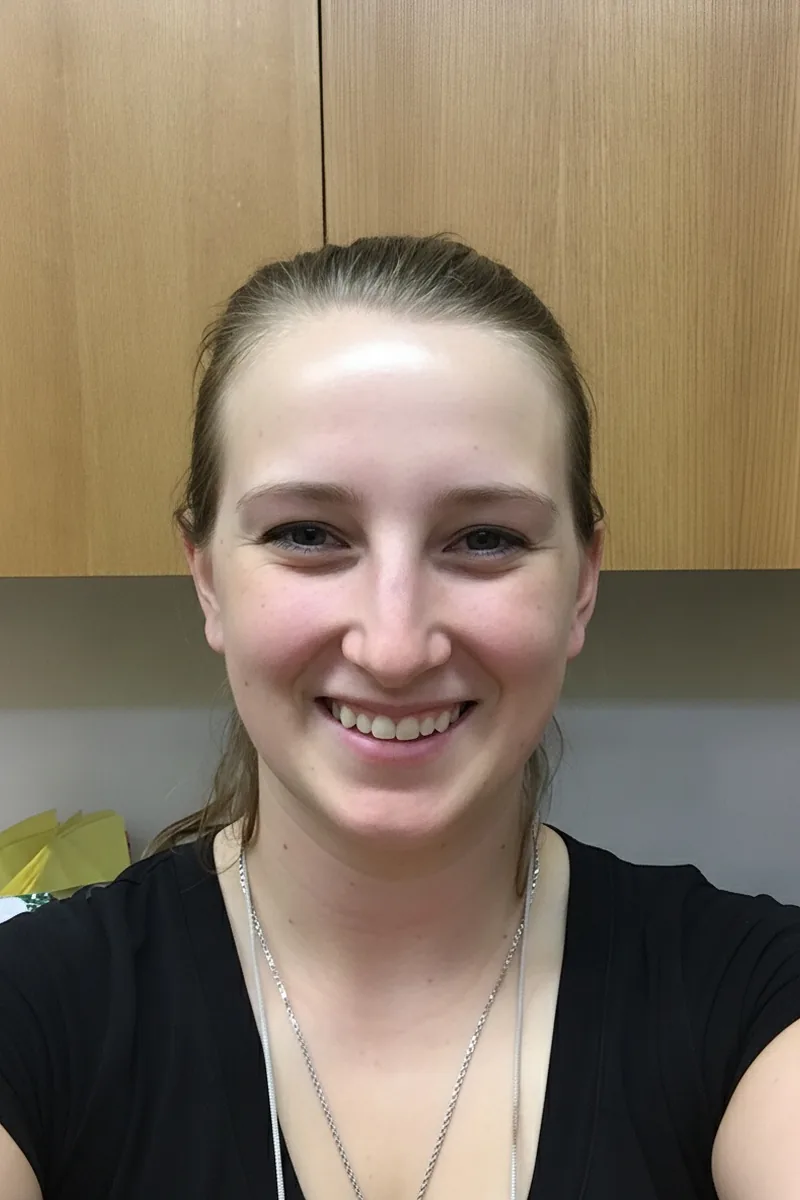
The unit circle is where most trig students either click or check out, and Tracey has a knack for making that moment land. She walks through identities, inverse functions, and the Law of Sines and Cosines by connecting each one back to the geometry students already know. Pursuing her M.A. in Mathematics Education, she's studied how to sequence these ideas so they build on each other naturally.
The unit circle is where most trigonometry students either click or check out, and Maurice treats it as the backbone of every lesson — connecting sine, cosine, and tangent back to that single diagram until the relationships feel automatic. He also digs into identities by showing students how to spot which manipulation to try first, turning what feels like guesswork into a repeatable strategy.
The unit circle alone trips up more students than almost any other single concept in high school math. Daniel teaches trig identities and sinusoidal modeling by tying them to the physics and engineering applications where they actually matter — wave behavior, force components, rotational motion — so the formulas carry meaning instead of just sitting on a reference sheet.
The unit circle doesn't have to be a memorization nightmare — Teresa teaches students to see the underlying patterns connecting sine, cosine, and tangent so that identities and angle relationships click naturally. Her approach to trig proofs emphasizes logical structure, building each step from what a student already understands rather than handing them a formula sheet.
Co-teaching an organic chemistry lab at UC Berkeley might seem unrelated to trig, but Yuxuan's biochemistry training means he's constantly working with periodic functions — from modeling enzyme kinetics to analyzing spectral waveforms — so the unit circle and sinusoidal graphs are second nature. He approaches identity verification and angle relationships by building from the algebra and geometry underneath them, making the logic visible rather than handing students a formula sheet. Rated 4.9 by students.
Trig identities can feel like an endless list of formulas until someone shows you the handful of core relationships everything else derives from. Jake teaches students to prove and manipulate identities by working from sine and cosine definitions outward, which makes unit circle fluency, graphing transformations, and solving trig equations far more intuitive.
The unit circle, inverse trig functions, and identities like double-angle formulas trip students up because they seem like arbitrary rules to memorize. Tim approaches trig the way a physicist does — every identity has a geometric meaning, and once you see it visually, the algebra follows naturally.
The unit circle, identities, and the shift from algebraic to periodic thinking make trigonometry feel like a completely different language. Diana breaks trig down by connecting each identity back to geometric intuition, so students understand *why* sin²θ + cos²θ = 1 instead of just memorizing it. Her years tutoring the full math sequence from arithmetic through calculus mean she can quickly spot and fill the algebra gaps that often stall trig progress.
Trig identities and the unit circle start clicking when a student sees them as a connected system instead of a pile of formulas to memorize. John approaches trigonometry the way he approaches complex legal arguments — by mapping relationships between pieces until the whole picture makes sense. His 5.0 rating speaks to how well that method translates for students.
Trig identities and unit circle values can feel like an endless list to memorize, but there's a logic underneath that makes them click once someone lays it out clearly. Arshia's science background means she constantly uses sine, cosine, and angular relationships in real contexts — so she teaches trig as a toolkit, not a collection of formulas.
Trig identities, unit circle values, and the shift from degree to radian thinking are the exact skills Alex uses constantly in his chemical engineering graduate work — from modeling waveforms to solving differential equations. He unpacks each identity by showing where it comes from geometrically, so students can reconstruct formulas on a test instead of relying on a memorized list. Rated 5.0 by his students.
I am here because I thoroughly enjoy working with students and watching them succeed in their academic studies. As a Mathematics major at the University of Arizona (currently a junior), I have extensive experience teaching and tutoring: I have been a teacher's assistant for a Calculus II section at my university and have spent a great deal of time assisting students with non-math related subjects as well such as English and essay-writing, time management and study skills techniques, and standardized test prep (SAT).
Trig identities and unit circle values can feel like an endless list to memorize, but Amanda teaches the underlying logic so students can derive what they need on the spot. Her science coursework in biology and anthropology required constant application of trigonometric relationships to measurement and spatial analysis, giving her a concrete toolkit to draw from.
Trig identities can feel like an endless list of formulas to memorize, but most of them trace back to the unit circle and a handful of core relationships. Sam teaches students to derive identities from first principles so that verifying equations and solving trig proofs becomes a logical exercise, not a memory test. His physics background also means he can show where sine and cosine actually show up in the real world.
The unit circle tends to feel like arbitrary memorization until someone shows you the geometry driving it. Madeleine approaches trig identities, inverse functions, and sinusoidal modeling through the lens of her applied math training — emphasizing why the relationships hold so students can reconstruct formulas instead of relying on flashcards.
Trig identities and unit circle values stop feeling arbitrary once you see them in action. Chris spent years at NASA applying sine, cosine, and angular relationships to orbital mechanics and telescope calibration on projects like Cassini and Galileo. That hands-on fluency means he can explain everything from law of sines to inverse trig functions with concrete, memorable context.
Trig identities and the unit circle can feel like a wall of memorization until someone shows you the underlying logic. Steven approaches trigonometry the way he approaches complex accounting problems — by mapping out relationships systematically so that sine, cosine, and tangent become tools you understand, not formulas you cram.
Trig identities can feel like an endless list of formulas to memorize, but they're really just a handful of relationships on the unit circle applied in different ways. Lindsay unpacks those connections visually, tying sine and cosine back to triangles and circular motion so that verifying identities and solving equations becomes pattern recognition. Her combined math and science training means she also shows where trig shows up in real applications like wave behavior and vector analysis.
Trig identities stop feeling like random formulas once you see them as relationships on the unit circle. Geoffrey's electrical engineering coursework at ASU relies heavily on sinusoidal functions, phase shifts, and polar coordinates, so he teaches trigonometry with the fluency of someone who uses it daily in circuit analysis and signal processing.
Every angle, slope, and load calculation in Aaron's career as an architectural engineer runs through trigonometry — sine and cosine aren't abstract to him, they're tools he uses to design real structures. He unpacks identities, unit circle relationships, and the law of sines/cosines by tying them back to spatial reasoning that makes the math intuitive. His 5.0 client rating speaks to how well that practical clarity translates to tutoring.
Trig identities can feel like an endless list of formulas to memorize, but they're really just a handful of ideas rearranged. Yurok approaches trigonometry through the unit circle as a single unifying picture — once a student genuinely understands why sine and cosine behave the way they do, identities and equations start falling into place on their own.
Trig identities like sin²θ + cos²θ = 1 aren't just formulas to memorize — they're tools that unlock everything from simplifying expressions to solving equations. Mehek teaches students to see the unit circle as a map that connects angles, coordinates, and ratios into one coherent picture. Her computer science background also means she can show how trig functions power real applications like graphics and signal processing.
The unit circle, identities, and inverse trig functions trip students up when they're treated as isolated formulas to memorize. Emily approaches trigonometry by showing how each identity connects to the geometry underneath it, turning a long list of equations into a handful of ideas that make sense. Her 1550 SAT score speaks to the precision she brings to math at every level.
Trig identities and unit circle values tend to feel like arbitrary memorization until someone shows you the geometry underneath them. Charles approaches trigonometry by building intuition for why sine and cosine behave the way they do, then uses that understanding to tackle identities, inverse functions, and graphing transformations. His science background means he can also show where trig shows up in wave mechanics and vector analysis.
The unit circle tends to be where trigonometry either makes sense or falls apart. Leah approaches it by connecting each identity and ratio back to the geometry students already know — once the visual intuition is there, solving equations and graphing sinusoidal functions becomes far more manageable.
Unit circle values, sinusoidal graphs, and trig identities start making sense when a student sees the geometry behind them instead of just memorizing formulas. Adam's math and statistics background gives him multiple ways to explain why sin²θ + cos²θ = 1 or how to approach a tricky law-of-cosines application, depending on what clicks for each learner.
When I was in high school, I remember seeing the joy of my math teachers when they would teach in class. This inspired me to become a high school math teacher. The first step was becoming a peer tutor to my classmates. This lead to tutoring math to college students. Then tutoring students while working as a TA. Then I worked as a data scientist which not only did I understand more how to apply math in the workspace, but also learned how to explain math concepts to coworkers without a strong math background. This helped me to shape my tutoring philosophy to relate to the person being tutored and this opened the door to me teaching high school calculus 1 & calculus 2! I am currently teaching precalculus at a community college.
Trig identities can feel like an endless list until someone shows you the handful of relationships everything else derives from. Aaron, a pure mathematics major at Rice, walks students through the unit circle, inverse trig functions, and identity proofs by emphasizing geometric intuition — why sine and cosine are projections, how the Pythagorean identity connects to an actual triangle. That foundation turns verification problems from guesswork into strategy.
Trig identities and the unit circle click faster when a student understands *why* sine and cosine behave the way they do, not just where to look them up on a reference sheet. Robert's electrical engineering background at ASU means he regularly applies trigonometric functions to analyze waveforms and circuits, giving him a practical fluency that translates well to teaching the subject.
Trig identities and unit-circle values stop feeling like random memorization once a student sees the geometry behind them. Jack teaches trigonometry through that lens — connecting sine and cosine to actual triangles and circular motion — which is exactly how he applies these functions in his civil engineering program at Arizona State.
The unit circle, identities, and law of sines tend to feel like a wall of memorization until someone shows you the geometry underneath them. Dale's biomedical engineering work relies heavily on trigonometric modeling — signal analysis, waveform behavior, biomechanics — so he teaches trig as a toolkit with real applications, not a list of formulas to cram.
The unit circle tends to be where trigonometry either clicks or collapses for students. Ekta approaches identities, inverse functions, and angle relationships by connecting them back to the geometric intuition that makes them memorable. Her engineering training keeps trig grounded in practical application — wave behavior, force components, and signal analysis all rely on the same core ideas.
The jump from memorizing trig identities to actually applying them in proofs and equations trips up a lot of students. Jake approaches trigonometry by grounding everything in the unit circle first, then showing how identities like double-angle and sum-to-product formulas emerge logically from that single diagram. His 5.0 rating speaks to how well that visual, connected approach lands.
The unit circle tends to be the make-or-break moment in trigonometry, and Amber teaches it as a visual tool rather than a table to memorize. From there she connects identities, inverse functions, and graphing transformations so each new topic feels like an extension of something students already understand. Her 5.0 rating speaks to how well that structured approach clicks.
The unit circle tends to feel like an arbitrary thing to memorize until someone shows you the geometry behind it. Matt unpacks trig identities and sinusoidal functions by tying them back to the triangles and circles students already understand, building intuition that carries into calculus and physics.
The unit circle, sine and cosine graphs, and trig identities are notoriously easy to memorize and notoriously easy to forget. Waleed teaches trigonometry by grounding every identity in geometric reasoning — once a student can see why sin²θ + cos²θ = 1 on a circle, the rest of the identities start to feel inevitable rather than arbitrary.
Understanding the unit circle is one thing; knowing when to apply the law of cosines versus a double-angle identity under time pressure is another. As a physics major at Duke, Nima uses trigonometric relationships daily in wave mechanics and vector analysis, giving him an intuitive grasp of the subject that translates into clear, practical explanations.
Between her computer science major and physics minor at Duke, Florence has used trig functions in contexts most tutors haven't — rotation matrices in graphics, phase calculations in E&M, and waveform analysis in signal processing. That range means she can explain why a sine graph shifts or how to verify an identity by connecting it to something concrete a student actually cares about. Rated 5.0 by students, with a 36 ACT to back up the math fundamentals.
The unit circle tends to be the make-or-break moment in trigonometry, and everything after it — identities, inverse functions, the law of cosines — depends on actually understanding why it works. Mackenzie unpacks the geometry behind each trig ratio so that memorizing special angles becomes unnecessary. Rated 4.8 by her students, she covers the subject from foundational definitions through applications in physics and calculus prep.
Testimonials
Because the right Trigonometry tutor makes all the difference.
Average Session Rating – Based on 3.4M Learner Ratings
Practice Trigonometry
Free practice tests, flashcards, and AI tutoring for Trigonometry
Other Phoenix Tutors
Related Math Tutors in Phoenix
Frequently Asked Questions
Trigonometry requires students to shift from concrete arithmetic to abstract relationships between angles and sides—a big conceptual jump. Many students memorize formulas like sine, cosine, and tangent without understanding what these ratios actually represent or why they matter. When students grasp that trig is fundamentally about proportions and patterns in right triangles, the subject becomes much more manageable and even interesting.
A tutor will start by assessing your current understanding—where you're strong, where you're stuck, and what specific topics are causing frustration. They'll explore whether the challenge is conceptual (not understanding why sin = opposite/hypotenuse) or procedural (struggling to apply formulas to word problems). From there, they'll create a personalized plan to build your confidence and fill gaps, whether that means reviewing right triangle basics or diving into unit circles and identities.
Word problems are where students often get stuck because they require translating real-world scenarios into trig equations. A tutor will teach you a systematic approach: identify what you know, draw a diagram, choose the right trig ratio, and solve step-by-step. With practice and guided problem-solving strategies, you'll develop the confidence to tackle angles of elevation, bearings, periodic phenomena, and other classic trig applications.
Showing work in trigonometry isn't just about getting the right answer—it demonstrates your understanding of which ratio to use, why you chose it, and how you solved the problem. Teachers and tutors can spot exactly where a mistake happened and help you correct your thinking. When you show your work clearly, you're also building the habit of checking your reasoning, which catches errors and deepens your conceptual understanding.
The unit circle is one of the most powerful tools in trigonometry because it connects right triangle ratios to periodic functions and extends trig beyond just triangles. It helps you visualize why sine and cosine repeat, why tangent has asymptotes, and how to find trig values for any angle. Many students struggle with the unit circle at first, but once they see it as a visual map rather than a memorization task, it unlocks understanding of everything from graphs to identities.
Yes. Varsity Tutors connects you with tutors who are familiar with Arizona's math standards and the approaches used across Phoenix's 195 school districts. Whether your school emphasizes right triangle trigonometry, unit circles, or applications in precalculus, tutors can align their instruction with your specific curriculum and textbook. This ensures the strategies and examples you learn directly support your classwork and exams.
Absolutely. Math anxiety often stems from not understanding concepts or feeling rushed, and personalized tutoring addresses both. Working 1-on-1 with a tutor means you can ask questions without judgment, move at your own pace, and build understanding gradually. As you start seeing patterns, solving problems correctly, and realizing that trig is logical and learnable, your confidence naturally grows—and anxiety decreases.
Trig proofs require both knowing the key identities and understanding how to manipulate them strategically—skills that improve with guided practice. A tutor can teach you the common techniques (factoring, using Pythagorean identities, converting to sine and cosine) and help you recognize which approach works best for different problems. Over time, you'll develop the intuition to see the path from the left side of an equation to the right.
Let’s find your perfect tutor
Answer a few quick questions. We’ll recommend the right plan and match you with a top 5% tutor.