Award-Winning Math Tutors
serving Madison, WI
Math
Tutors in Madison
Private 1-on-1 tutoring, weekly live classes for academic support, test prep & enrichment, practice tests and diagnostics, and more to elevate grades and test scores.
Based on 3.4M Learner Ratings
UniversitiesSchools & Universities
DeliveredHours Delivered
ProficiencyGrowth in Proficiency
Who needs tutoring?
No obligation. Takes ~1 minute.
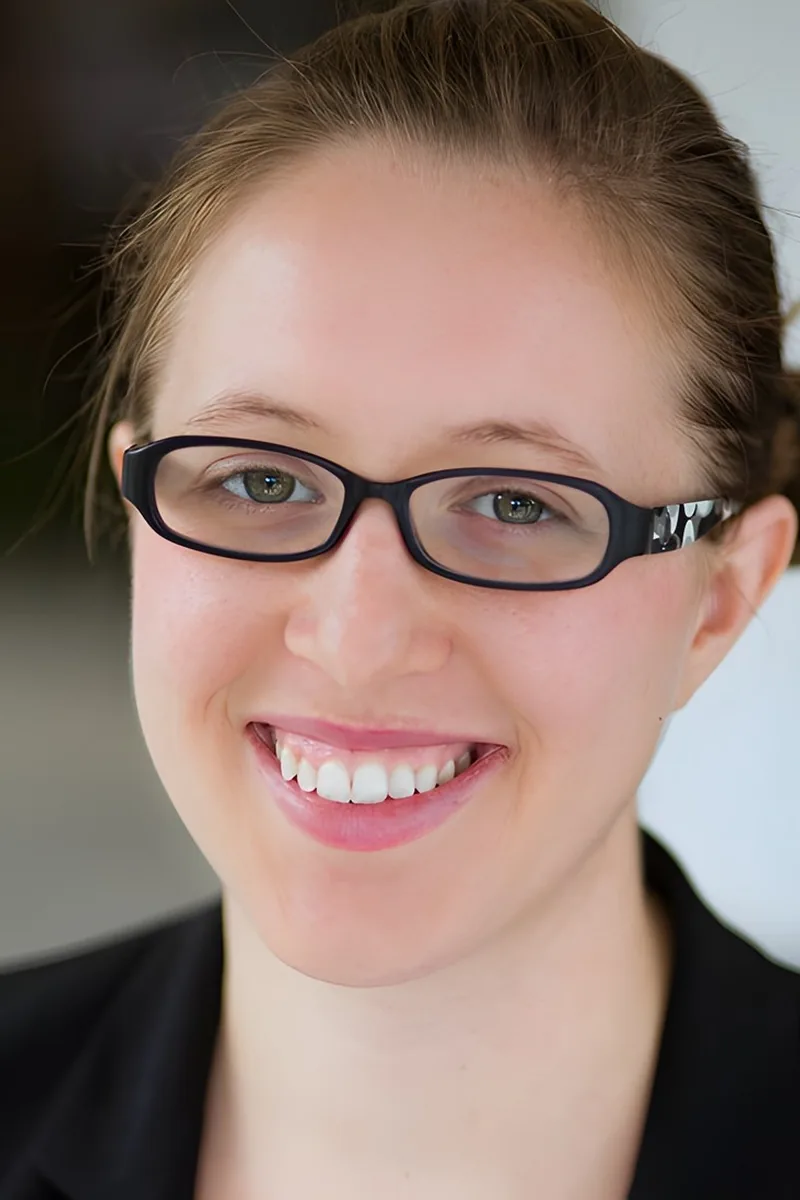
Amber covers math from elementary arithmetic through calculus and statistics, which means she understands how gaps at one level create confusion at the next. She's especially effective at diagnosing where a concept first went sideways — whether that's fraction operations, function notation, or algebraic reasoning — and rebuilding understanding from that exact point. Her 35 ACT and 1570 SAT confirm the depth of her own quantitative skills.
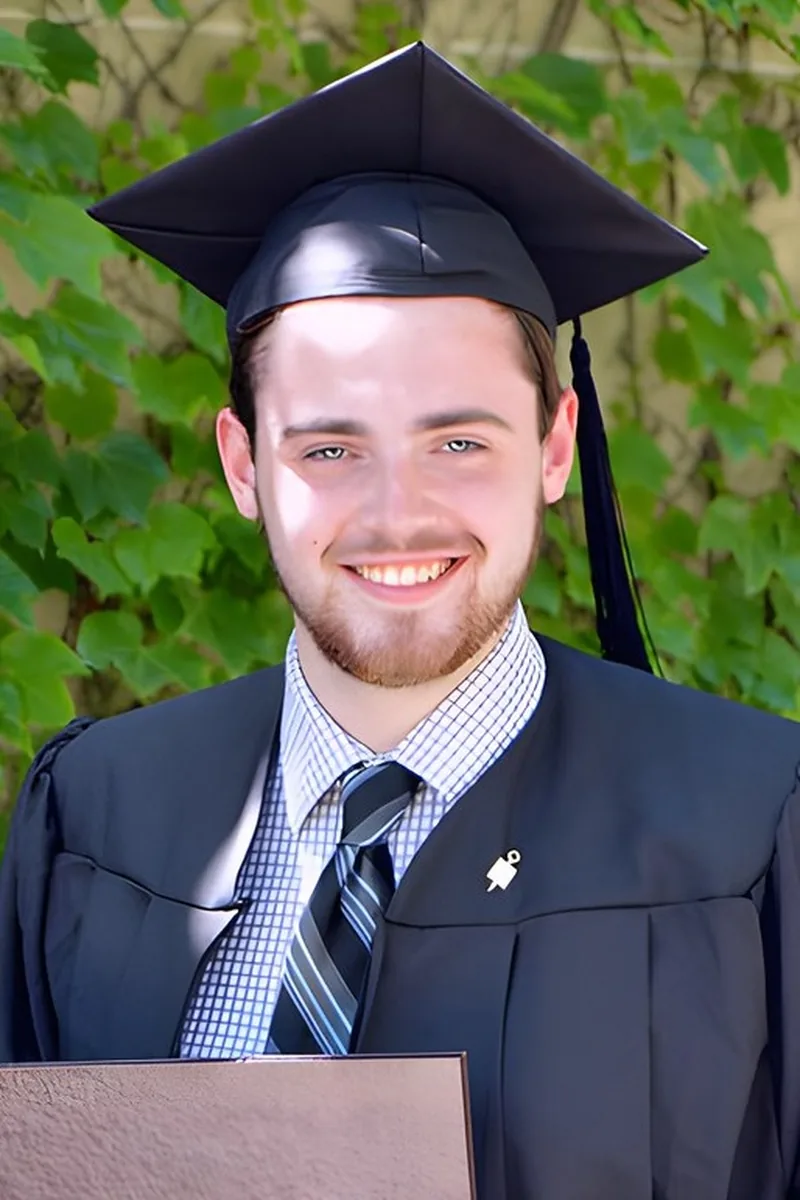
Patrick scored a 35 ACT and 1560 SAT, both of which demand serious quantitative reasoning under pressure. While English is his primary domain, he teaches math with the same analytical precision he applies to language — breaking word problems into their logical components and making sure students understand the reasoning behind each step rather than just the procedure.
Karann's dual degree in Biological Engineering and Biological Sciences means math was never just a standalone subject — it was the tool for modeling real systems, from population growth curves to fluid dynamics. That applied perspective makes abstract concepts like ratios, proportions, and multi-step problem solving click for students who wonder when they'll ever use math outside a classroom.
An Applied Math major who scored 1570 on the SAT, Sophie sees math as a connected web of ideas rather than isolated procedures. Whether a student is working through fraction operations or tackling quadratic equations, she traces each concept back to the reasoning underneath it so the next topic feels like a natural extension — not a brand-new puzzle.
Every math struggle has a root cause — sometimes it's a gap in number sense from years ago, sometimes it's a conceptual leap that hasn't been explained clearly enough. James's training in cognitive skill-building taught him to pinpoint those gaps quickly, whether a student is working through basic operations or tackling word problems that require multi-step reasoning.
Whether a student is tackling fraction operations or early calculus, Maddy zeroes in on the specific step where confusion starts and rebuilds understanding from that point forward. Her 33 ACT score and business coursework at Vanderbilt reflect a quantitative fluency she applies across math levels. She holds a 5.0 rating from students.
Holding a B.S. in Mathematics, Richard covers everything from foundational arithmetic and fractions through algebra, geometry, trigonometry, and into calculus. He's particularly skilled at identifying the exact conceptual gap that's causing a student to struggle — whether it's number sense, variable manipulation, or function behavior — and addressing that root issue directly.
Not every math tutor comes from a pure STEM background, and that can actually be an advantage — Sarah explains arithmetic, fractions, and early algebra concepts in plain language rather than assuming the notation is intuitive. Her teaching experience spans pre-K through university, so she's skilled at matching explanations to a student's developmental level and building confidence alongside competence.
Madeline's science career runs on math — from calculating dilution ratios in the lab to interpreting statistical results in research papers. She tackles arithmetic, fractions, word problems, and early algebra by connecting each concept to something tangible, so students understand the reasoning behind each step instead of just following procedures.
Jacob's 33 ACT composite reflects real comfort with math fundamentals, and he brings a structured, step-by-step approach to topics like algebraic manipulation, word problems, and equation solving. His teaching style emphasizes understanding the logic behind each operation so students can adapt when a problem looks unfamiliar rather than freezing up.
From pre-algebra fundamentals through multivariable calculus, Michael's physics training means he constantly connects math to something tangible — a rate of change becomes velocity, a system of equations becomes a circuit. He's especially effective at bridging the gap when students transition from arithmetic thinking to algebraic reasoning and suddenly feel lost.
An applied mathematics degree from Johns Hopkins means Shona doesn't just know how to solve math problems — she understands the underlying structures connecting arithmetic to algebra to calculus. Whether a student is stuck on fraction operations or wrestling with early equation-solving, she traces the logic behind each step so the next concept clicks faster.
Not every math tutor comes from a STEM background, and that's sometimes an advantage — Jonas learned math the way most students have to, by working through the logic step by step rather than relying on intuition. He's particularly effective at breaking down word problems and translating real-world scenarios into equations, a skill sharpened by years of close reading in his literature training.
Running tutoring sessions at a K-8 school sharpened Dylan's ability to break down arithmetic, fractions, and early algebra for students who haven't yet clicked with math. He approaches each problem collaboratively — working through the logic step by step rather than just showing the answer. His goal is making the reasoning behind each operation feel intuitive, not mysterious.
Materials Science & Engineering at UW-Madison is essentially applied math — Adam's coursework demands fluency in calculus, linear algebra, and differential equations to model everything from stress-strain curves to thermodynamic systems. That daily immersion in quantitative problem-solving gives him a practical grip on math concepts that makes tutoring feel less like reviewing formulas and more like showing students how the pieces actually connect. He scored a 35 on the ACT and is rated 4.8 by clients.
Miriam's dual focus in Biology and English at UW-Madison means she tackles math the way she tackles lab data — by making sure every step has a reason behind it, whether that's setting up proportions, interpreting graphs, or working through word problems. She breaks larger problems into smaller, logical pieces so students can see the structure instead of feeling overwhelmed.
Julia covers math at the foundational level, from arithmetic operations and fractions through basic algebraic reasoning. She's especially effective at connecting abstract math concepts to concrete, real-world examples — a skill she honed tutoring elementary and middle school students. Her goal is always to make the logic behind a procedure click, not just drill the steps.
Most people hear "applied math PhD" and picture someone who lives in abstractions, but Aaron's approach runs the opposite direction — he treats math as an art form built on surprise, using visual tools and unexpected connections (like linking right triangles to circle diameters through Thales' theorem) to make concepts land viscerally. His competition background in problem-solving means he teaches students to attack unfamiliar problems by anchoring them in what they already know, building from simpler "forward" problems toward harder inverse ones. Rated 5.0 by students.
Growing up learning math from her mother — one of the two teachers she credits with shaping how she thinks — gave Olivia an intuitive, almost conversational approach to working through problems that she now brings to her own tutoring. Her journalism career keeps her sharp with quantitative reasoning daily, whether she's fact-checking statistics or interpreting data for a story, and that real-world fluency makes abstract concepts feel grounded. She scored a 1580 on the SAT and is rated 4.7 by students.
From pre-algebra fundamentals through calculus, Eitan covers the full math pipeline and knows where students tend to lose the thread — usually around the transition from arithmetic thinking to algebraic reasoning. He unpacks abstract concepts like variable manipulation and function behavior by tying them to concrete, step-by-step problem solving. His approach builds fluency with number sense so that higher-level topics feel like natural extensions rather than foreign territory.
An applied math major at UW-Madison, Connor covers everything from basic arithmetic operations to pre-algebra concepts like fractions, ratios, and order of operations. He's particularly good at identifying the specific step where a student's understanding breaks down and rebuilding from that exact point. Rated 5.0 by students across his tutoring subjects.
From basic operations through statistics and geometry, Breanna covers a wide range of math levels and knows that a gap in one concept often explains a struggle three topics later. She traces confusion back to its source — whether that's place value, fraction reasoning, or order of operations — and rebuilds understanding from there.
I'm fluent in R, Python, SQL, and M (MUMPS). This September I will be pursuing a Master's degree in data science. I'm available to tutor GRE, ACT, and SAT math as well as other math, statistics, and economics subjects. Although I am most passionate about math, I'm also happy to help students with general testing strategies and preparation for the other parts of the standardized exams.
While English is Chloe's primary expertise, she brings the same structured, step-by-step thinking to math concepts. She's particularly effective at translating word problems into equations — a skill that sits right at the intersection of reading comprehension and mathematical reasoning. For students who struggle more with understanding what a problem is asking than with the computation itself, that crossover perspective is genuinely useful.
From pre-algebra fundamentals through calculus, Zach has tutored nearly every level of math and taken college-level courses that depend on all of it. He's especially good at breaking a complicated problem into smaller, logical steps so students can see exactly where they got lost. His 33 ACT and 5.0 tutoring rating speak to how well that approach lands.
Samantha's science coursework in genetics and microbiology keeps her fluent in applied math — from algebraic problem-solving to the calculus behind population growth models. She scored a 32 on the ACT and tackles math by connecting abstract procedures to concrete problems, making concepts like functions, equations, and graphing feel purposeful rather than arbitrary.
Wolly's communications degree and grad-level therapy training both lean heavily on structured thinking — building logical arguments, interpreting data in research methods courses, and breaking complex systems into parts that make sense. That same analytical wiring is what he brings to math tutoring, especially when a student needs someone who can explain a concept three different ways until the right one lands. His background in building trust with clients means students actually speak up when they're lost instead of nodding along.
Having tested out of college math entirely and graduated from a STEM academy in high school, Almira built the kind of fluency across algebra, geometry, trigonometry, and calculus that lets her move fluidly between topics when a student's gap turns out to be somewhere unexpected. Her Industrial and Organizational Psychology training also sharpened her statistical reasoning, so she's comfortable pivoting from a geometry proof to a data interpretation question without missing a beat. She teaches the full K-12 math sequence and is especially quick at diagnosing which foundational piece needs reinforcing before a new concept can land.
From pre-algebra through calculus, Sarah covers the full math pipeline — which means she spots exactly where a gap from an earlier topic is causing trouble in a current one. Her computer science and math emphasis at UW-Madison keeps her working with quantitative reasoning daily, and she brings that fluency to everything from fraction operations to derivative rules.
From pre-algebra through calculus, Halle has tutored across nearly every level of math and knows exactly where students tend to stall — whether it's fraction operations in middle school or the chain rule in AP Calc. Her approach is to simplify each concept down to its core logic so a student can reason through unfamiliar problems independently, not just replicate steps from a textbook example.
Joseph calls the moment students start improvising with math concepts — connecting ideas across topics without a formula sheet — "mathematical freestyling," and building toward that fluency is what drives his teaching. His UW-Madison math degree means he can trace a concept like slope from its first appearance in middle school through derivatives in calculus, giving students a coherent picture instead of disconnected procedures.
India's liberal arts emphasis in math means she's comfortable across a wide range — from fraction operations and proportional reasoning up through algebra and introductory calculus. She zeroes in on the specific concept a student is stuck on, whether that's setting up word problems, graphing linear equations, or understanding what a variable actually represents.
Mingxi tutored students across 13 different college math courses at UW-Madison, covering everything from foundational arithmetic to multivariable calculus. That breadth means she can pinpoint exactly where a concept breaks down — whether it's fraction operations, proportional reasoning, or interpreting word problems — and explain the underlying logic so the fix actually sticks. Rated 4.7 by students.
From basic arithmetic through pre-algebra concepts like order of operations and working with fractions, Danny covers the full range of foundational math skills. He demonstrates each problem type step by step, then hands the pencil over — a deliberate shift that lets students discover they can solve problems on their own.
From fraction operations in middle school to differential equations in college, Eric covers the full math pipeline and knows exactly where each concept feeds into the next. He's especially effective at identifying the specific gap — maybe it's negative exponents, maybe it's function notation — that's causing a student to stall on harder material. His tutoring style leans on real-world applications and visual explanations to make abstract ideas stick.
I currently work for an afterschool enrichment program (Best Brains) tutoring elementary English and math, and I have 4+ years of experience as a private ESL tutor for both children and adults. I am working toward my Masters of Science in Secondary English Education and ESL at the University of Wisconsin- Madison. I graduated from the University of Oregon with a Bachelor of Arts in Comparative World Literature and Japanese, and from the University of Wisconsin-Madison with a Master of Arts in Japanese Language and Literature. I began tutoring while I was in high school, assisting with algebra homework. In college, I volunteered as a kindergarten reading assistant through a program called Start Making a Reader Today. I later volunteered while in graduate school at a local high school tutoring students in beginner Japanese. I have also been employed by the University of Wisconsin as a Teaching Assistant, and taught in Religious Studies and East Asian Studies. In all cases, it has been a pleasure watching students progress in their academics and to see them grow as young scholars. I especially enjoy teaching language arts because of the feeling of connection that language can bring. My favorite part of teaching is seeing the smiling face of someone the moment that they finally "get" something they've been struggling with and watching their confidence boost. In my free time, I host a small book club, pen pal with friends around the world, and try my hand at new recipes.
I am currently a Master's student in Business Analytics at the University of WisconsinMadison, where I also earned my Bachelor's degree in Industrial Engineering. I specialize in tutoring mathematics at all levels through Calculus I, as well as statistics. With a strong analytical background and experience solving real-world quantitative problems, I focus on helping students build confidence, understand core concepts, and develop effective problem-solving skills.
Testimonials
Because the right Math tutor makes all the difference.
Average Session Rating – Based on 3.4M Learner Ratings
Practice Math
Free practice tests, flashcards, and AI tutoring for Math
Nearby Math Tutors
Other Madison Tutors
Related Math Tutors in Madison
Frequently Asked Questions
Madison's six school districts use various math programs, from traditional to inquiry-based approaches. Tutors work with students using their specific curriculum—whether that's Eureka Math, Big Ideas, or another program—and help bridge gaps between procedural steps and deeper conceptual understanding. This personalized approach ensures students aren't learning in isolation from their classroom experience.
Word problems require students to translate language into mathematical thinking—a skill that's separate from computation. Tutors teach students to break down problems systematically: identifying what's given, what's being asked, and which operations apply. Through guided practice with real examples, students develop confidence in tackling unfamiliar problem types rather than memorizing solutions.
Math anxiety is common and very treatable through personalized instruction. Tutors create low-pressure environments where students can ask questions freely, work through mistakes, and experience success on manageable challenges. When students see patterns emerge and understand the 'why' behind procedures—not just the 'how'—confidence naturally builds alongside competence.
Showing work reveals a student's thinking process and helps identify where misunderstandings occur. Tutors teach students to organize their steps clearly, explain their reasoning, and use proper notation—skills that matter for both partial credit and deeper learning. This practice also helps students catch their own errors before submitting assignments.
Proofs and graphing require students to see connections between abstract concepts and visual or logical representations. Tutors break these down into manageable steps, helping students understand not just how to construct a proof or plot points, but why each step matters. Consistent practice with immediate feedback helps students move from confusion to confidence in these challenging topics.
The first session focuses on understanding where your student is—their current strengths, specific challenges, and learning style. Tutors assess whether gaps are conceptual (misunderstanding core ideas), procedural (struggling with steps), or confidence-based, then create a personalized plan. This foundation ensures every session that follows targets what actually matters for your student's progress.
Many students learn math as isolated procedures rather than interconnected ideas. Tutors deliberately highlight how topics relate—for example, how fractions, decimals, and percentages represent the same concept, or how graphing connects to equations. When students see these patterns, math becomes less about memorization and more about understanding how ideas fit together.
Multi-step equations trip up students who haven't internalized the order of operations or lose track of their work. Tutors teach systematic approaches—like isolating variables step-by-step and checking work by substituting back—along with strategies for organizing messy algebra. With guided practice, students develop the confidence to tackle complex equations without feeling overwhelmed.
Let’s find your perfect tutor
Answer a few quick questions. We’ll recommend the right plan and match you with a top 5% tutor.