Award-Winning History Tutors
serving Richmond, VA
History
Tutors in Richmond
Private 1-on-1 tutoring, weekly live classes for academic support, test prep & enrichment, practice tests and diagnostics, and more to elevate grades and test scores.
Based on 3.4M Learner Ratings
UniversitiesSchools & Universities
DeliveredHours Delivered
ProficiencyGrowth in Proficiency
Who needs tutoring?
No obligation. Takes ~1 minute.

Treating history as an exercise in argument-building rather than date memorization, Waleed teaches students to read primary sources critically and connect causes to consequences. His MBA training in case-study analysis translates naturally to evaluating historical events through multiple perspectives and constructing evidence-based responses.
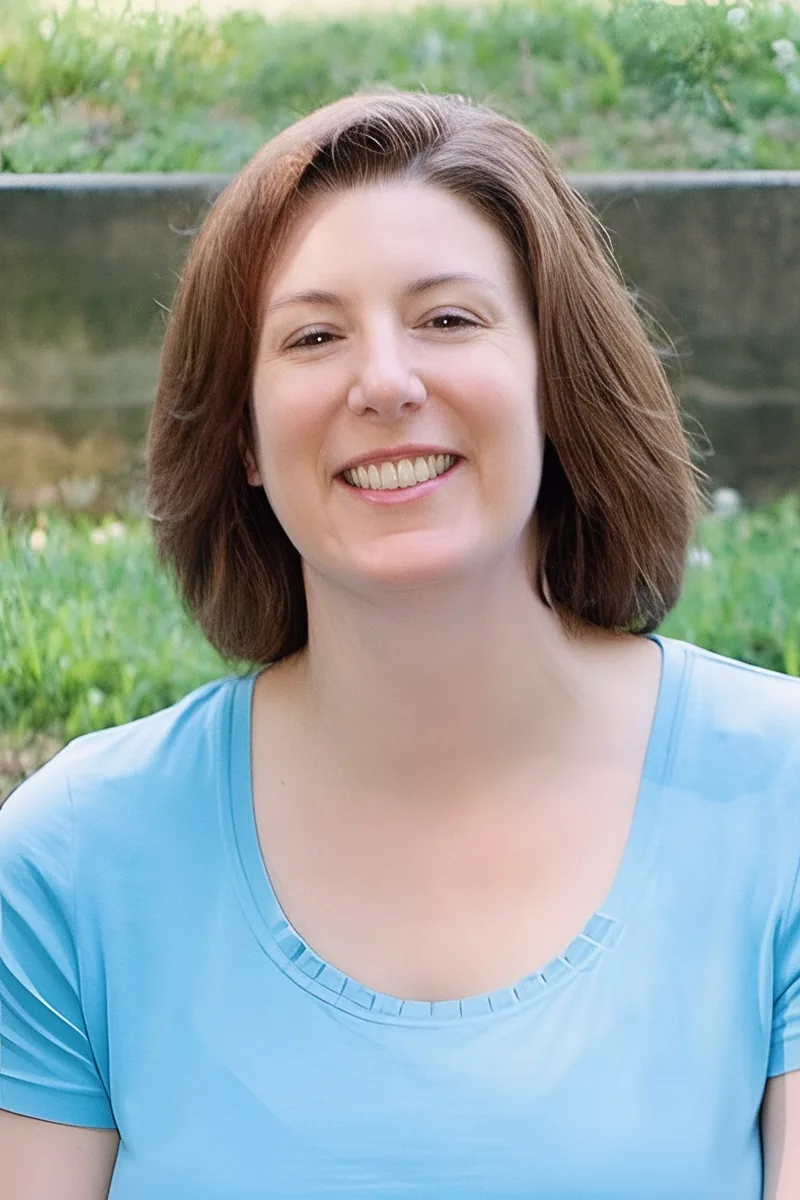
Amber earned her bachelor's degree in History and Sociology, which means she doesn't treat the subject as a list of dates and battles. She teaches students to analyze cause-and-effect chains — how economic pressures, social movements, and political decisions interact — and to construct arguments using primary sources, a skill that pays off in AP exams, research papers, and beyond.
Studying Global Affairs at Yale meant constantly evaluating how political, economic, and cultural forces interact across time periods — skills that translate directly to historical analysis. Molly teaches students to read primary sources critically, construct document-based arguments, and move beyond summarizing events toward explaining why they mattered. She's particularly strong at connecting thematic threads across eras, which is where most history essays fall apart.
Growing up as one of seven kids means Austin learned early how to explain things clearly to people with very different learning styles — a skill that carries into history, where he teaches students to build cause-and-effect arguments rather than memorize dates. His applied mathematics background gives him a quantitative edge when coursework involves interpreting demographic data, economic trends, or statistical evidence embedded in primary sources.
Briana approaches history as an exercise in constructing arguments from evidence, not memorizing dates. Her criminal justice graduate work required deep engagement with how legal systems, policing, and social movements have evolved over time, giving her particular strength in U.S. social and political history. She teaches students to read primary sources critically and write thesis-driven essays that hold up under scrutiny.
Teaching chemistry courses as adjunct faculty at VCU means Joel spends most of his time training students to read evidence carefully and defend conclusions — skills that map directly onto historical document analysis and essay writing. His biochemistry research background adds a habit of asking how systems interact over time, which he brings to questions about political cause-and-effect and the economic forces behind major events. Holds a 5.0 rating.
Bhumi's strength in history lies in teaching students to build arguments from evidence rather than recite dates. She emphasizes skills like analyzing primary sources, identifying causation versus correlation in historical events, and structuring a document-based essay that earns full marks. Her writing background makes her especially useful for students who understand the material but struggle to put it on paper.
Anurag treats history the way he was trained to treat scientific literature at VCU: question the source, weigh the evidence, and build an interpretation that accounts for complexity. He tackles essay-based history assignments by teaching students to construct arguments around primary sources rather than simply recounting events in order.
Roshni's BS/MD program at VCU requires extensive writing across disciplines, which translates well into the thesis-driven essays and document analysis that history courses demand. She teaches students to pull apart a primary source — identifying the author's purpose, audience, and blind spots — and turn that analysis into a structured argument. Rated 4.9 by students, she's a practical choice for anyone who needs to sharpen historical writing skills alongside content knowledge.
Engineering coursework trains you to ask how systems work — and Emma brings that same diagnostic instinct to history, pushing students to trace how political structures, economic pressures, and social tensions interacted to produce specific outcomes. Her honors college background at VCU means she's comfortable with heavy reading loads and writing analytical arguments under pressure, both of which map directly onto document-based questions and timed history essays. Rated 4.9 by students.
Medical school admissions forced Sanam to spend serious time with the social and political history of public health — how epidemics reshaped government policy, why certain communities were excluded from medical advances, and what drove the Progressive Era's sanitation reforms. That background in community health and preventive medicine means she naturally connects historical events to their real-world consequences, which is exactly the kind of causal thinking history essays reward. Rated 5.0 by students.
Most history students struggle not with the facts but with constructing arguments from them — turning a pile of evidence into a coherent thesis about causation or significance. Kyle's philosophy training makes him especially effective at teaching that exact skill, walking through how to weigh competing sources and build a case that holds up under scrutiny.
Engineering coursework at VCU drills one thing relentlessly: figuring out why systems behave the way they do under specific conditions. Ying applies that same cause-and-effect thinking to history, walking students through how political pressures, resource constraints, and social tensions combined to produce events like wars or revolutions. It's a more analytical take than most, and it works especially well for students who struggle to move past memorizing dates.
I am currently a lead preschool teacher. I received my Bachelor's in Psychology from VCU and am looking to return to school to further my education. While in college, I worked as a Supplemental Instruction leader, teaching general biology and anatomy. I have also worked in an after school program with elementary age children, but I have my fondest memories volunteering as a counselor for Camp Kesem. In my own experience, I loved school and now I love teaching even more at all age levels! I especially enjoy the challenge of getting creative to discover what approach and mediums work best for each student. I am available for in person as well as online tutoring.
I am a graduate of Tufts University. I received my Bachelor of Arts in English as well as a minor in History. Since graduation, I have worked as a 7th grade Reading Language Arts teacher in Dallas Texas at a newly formed public all boys school. This has provided me with great experience and insight into how students best learn and how to create culturally responsive lessons that students will engage with. I am most passionate about English, Literature, History, and Spanish. In my experience, working to prepare students for state standardized tests has had the additional benefit of helping students to discover what they enjoy reading about. This increase in intrinsic motivation to read has had an important impact on struggling students. I am dedicated towards ensuring that students are provided with an education that increases their quality of life.
Kendra studied Development Economics and International Development at UCLA, which means she learned history not as a list of dates but as a story of how societies change, clash, and rebuild. She teaches students to read primary sources critically and to connect events across regions — why the Industrial Revolution reshaped colonial economies, or how Cold War politics played out in the developing world. That global lens makes history feel relevant rather than distant.
Understanding history means building arguments from evidence, not just memorizing dates — and Megan treats every unit like a puzzle of cause, effect, and interpretation. Her interdisciplinary studies at UVA in cognitive science and studio art give her a knack for making connections across political, cultural, and social movements that stick with students long after the exam.
Studying public policy at the undergraduate level meant Braveen spent years analyzing how historical events — from Reconstruction-era legislation to Cold War foreign policy — shaped the institutions we live with today. He teaches history as a discipline of cause-and-effect reasoning, showing students how to connect evidence from primary sources to broader arguments rather than treating each era as an isolated set of facts.
An English degree sharpens one skill that history courses quietly depend on: close reading — knowing how to pull meaning, bias, and intent out of a document written centuries ago. Amanda applies that literary training to primary source analysis and essay writing, teaching students to build arguments around what a text reveals about its historical moment rather than just summarizing events. Rated 5.0 by students.
Strong history students don't just memorize dates — they learn to read sources critically and construct narratives that explain cause and effect. Julia approaches historical material the way she approaches literature: by asking what a document reveals about its author's assumptions, audience, and moment in time. Her English training makes her especially effective at teaching students to write clear, evidence-driven historical arguments.
Pre-med coursework at VCU's Honors College means Shahad spends most of her time in biology and chemistry — but the scientific method's emphasis on asking *why* something happened and supporting claims with evidence is exactly what history essays and DBQs demand. She teaches students to treat a historical prompt the way she'd approach a research question: define the problem, gather the relevant evidence, and build a clear argument from it. Rated 4.9 by students.
Allison treats history as an exercise in building arguments from evidence, not memorizing dates. Her philosophy background sharpens how she teaches students to evaluate conflicting sources and construct claims that hold up under scrutiny — skills that transfer directly to document-based questions and research papers.
Three semesters as an academic tutor at VCU's Campus Learning Center meant Shona worked across disciplines constantly — and history was where her biology and psychology minors intersected most unexpectedly, since understanding epidemics, eugenics movements, or public health policy requires both scientific literacy and historical context. She teaches students to build cause-and-effect arguments by treating historical events the way a scientist treats data: asking what the evidence actually supports before drawing conclusions.
A Communications and English degree trains you to do one thing history courses constantly demand: read a source, figure out what argument it's actually making, and respond with a structured claim of your own. Lauren applies that rhetorical training to teaching students how to unpack primary documents — identifying bias, audience, and purpose — and turn that analysis into coherent essay arguments. It's less about memorizing dates and more about learning to read like someone who knows what persuasion looks like.
Biomedical engineering coursework is essentially applied history — tracing how scientific discoveries, regulatory decisions, and public health crises drove the development of modern medical technology. Monika draws on that background to teach students how to identify the political and social forces behind historical events and organize their analysis into clear, thesis-driven writing. Her pre-med science training reinforces the kind of evidence-based reasoning that history assignments demand.
Elderen approaches history as a discipline built on evidence and argument, not memorization of dates. He teaches students to read primary sources critically — asking who wrote something, why, and what it leaves out — which is exactly the skill that separates A-level analysis from surface-level summaries on DBQs and research papers.
An English degree trains you to read texts closely and ask what's really being argued beneath the surface — a skill Brooke applies directly to historical document analysis, where students need to unpack the rhetoric in speeches, letters, and political pamphlets. Her background in critical analysis of film and theater adds another layer, teaching students to read visual and cultural sources as historical evidence, not just decoration.
Mechanical engineering is all about understanding how forces, constraints, and design decisions interact to produce outcomes — a mental model Michael carries into history, where he teaches students to trace how political pressures, resource limitations, and technological changes converged to trigger events like industrialization or wartime mobilization. That engineering habit of asking "what were the constraints?" gives students a concrete, repeatable framework for tackling DBQs and essay prompts. Rated 5.0 by students.
Social work training means constantly examining how institutions, policies, and cultural forces shape people's lives — which is essentially what history asks students to do with the past. Kai teaches students to build arguments from evidence rather than just recounting events, whether the topic is Reconstruction-era politics or Cold War diplomacy.
A double major in English Literature and Arabic gave Andrea deep practice in the skill history demands most: reading complex texts carefully and constructing clear, evidence-based arguments about them. She applies that training to everything from analyzing primary source documents to structuring compare-and-contrast essays on historical movements.
Jessica's International Studies degree from the University of Richmond — plus minors in Economics and Latin American and Iberian Studies — means she studied history the way it actually happened: across borders, languages, and economic systems. Time living in Spain and Brazil deepened her understanding of colonialism, trade, and political change in ways that make her especially sharp on essay topics connecting regional events to global patterns.
Too many students treat history as a list of names and dates to memorize for a test. Katie approaches it differently, teaching students to read primary sources critically and understand cause-and-effect relationships between events. Her English and writing background is a real asset here — she's especially good at showing students how to construct document-based essays and support historical arguments with textual evidence.
Studying both Business Administration and Romance Languages means Mac spent college toggling between analyzing market forces and close-reading French and Spanish texts in their cultural context — a combination that maps neatly onto history, where understanding economic incentives and interpreting primary documents are the two skills that matter most. He teaches students to build arguments around those connections, especially when essay prompts ask them to explain how trade, colonization, or diplomacy reshaped societies.
Physics teaches you to ask 'why does this system behave this way?' — and Bryan brings that same causal reasoning to history, pushing students to trace the forces behind events rather than memorize sequences of dates. His triple science background means he's especially sharp at helping students analyze how technological and scientific developments drove historical change, from the Industrial Revolution to the Space Race. Rated 5.0 by students.
Most students struggle with history not because the facts are hard but because they can't see why those facts matter. Cole, whose economics training centers on understanding how institutions and incentives shape societies over time, teaches students to analyze cause and effect across eras — turning a pile of dates and names into arguments they can actually write about. Holds a 5.0 rating.
Too many students treat history as a list of dates and names to memorize. Gary approaches it as argumentation: what caused what, whose account do we trust, and what evidence supports a given interpretation. His experience co-authoring a published policy article and working on Capitol Hill grounds historical thinking in the same skills professional analysts actually use.
An anthropology degree teaches you to look at historical events through the structures underneath them — power, kinship, economics, belief systems. Marin applies that framework when teaching history, pushing students to analyze primary sources and construct causal arguments rather than memorize dates. Her legal training at Harvard Law has only sharpened her ability to evaluate evidence and competing narratives.
Calin treats historical events the way a philosopher treats arguments: every cause has assumptions behind it, and every primary source carries a point of view worth interrogating. That analytical framework is particularly useful for students writing document-based essays or struggling to move beyond summarizing dates and names.
Having lived in Paris and studied architecture across multiple eras, Christianna approaches history through the built environment — how cities, monuments, and public spaces reveal the political and social forces that shaped them. She teaches students to analyze primary sources and construct arguments, not just memorize dates and names.
Kara's pre-med biology track at UVA might seem unrelated to history, but her Global Public Health studies constantly require digging into how epidemics, sanitation movements, and healthcare policy evolved across centuries. She teaches students to pull arguments from historical documents and structure essays around clear cause-and-effect reasoning — skills her own interdisciplinary coursework demands daily.
Testimonials
Because the right History tutor makes all the difference.
Average Session Rating – Based on 3.4M Learner Ratings
Other Richmond Tutors
Related Social Studies Tutors in Richmond
Frequently Asked Questions
Many students struggle with memorizing dates and names without understanding the broader context, making it hard to retain information long-term. Others find it difficult to analyze primary sources, construct arguments based on evidence, or see how historical events connect to each other and to the present day. Personalized tutoring helps students move beyond memorization to develop critical thinking skills that make History engaging and meaningful.
A tutor will start by understanding your current level, learning goals, and specific challenges—whether that's preparing for a test, writing essays, or grasping a difficult unit. They'll assess your knowledge of key concepts and identify gaps in understanding, then create a personalized plan tailored to your needs. This foundation ensures every session builds on your strengths and addresses areas where you need support.
Tutors work with you on the full writing process—developing strong thesis statements, organizing arguments with historical evidence, and crafting compelling narratives that demonstrate analytical thinking. They provide targeted feedback on your drafts and teach you how to analyze sources critically and support claims with specific examples. With personalized guidance, you'll develop the writing skills that earn higher grades and prepare you for college-level work.
Yes. Tutors can help you master the content, develop strategies for multiple-choice questions, and practice essay responses under timed conditions. They'll focus on the specific skills the AP exam tests—synthesizing information, making historical connections, and supporting arguments with evidence—while ensuring you're prepared for both the breadth and depth of material. Personalized preparation significantly increases confidence and performance on test day.
Tutors are familiar with Virginia's Standards of Learning (SOLs) and the specific curricula used across Richmond's 8 school districts. Whether you're in middle school, high school, or preparing for AP exams, tutoring is tailored to match your school's pacing and expectations. This alignment ensures you're learning exactly what you need to succeed in your classroom while building deeper understanding.
Tutors teach you a structured approach to source analysis—examining who created the document, when, why, and for what audience—before drawing conclusions about its reliability and significance. They guide you through practice with actual historical documents and show you how to use source analysis to support historical arguments. This skill is essential for essays, DBQ (Document-Based Question) exams, and developing genuine historical thinking.
In a classroom with a 14:1 student-teacher ratio, instruction must move at an average pace, which can leave some students behind or unchallenged. Personalized tutoring adapts completely to your learning style, pace, and specific gaps—whether you need extra time on the Civil War or are ready to tackle advanced comparative history. You get immediate feedback, targeted practice on weak areas, and the chance to ask questions without time constraints, leading to faster progress and deeper understanding.
Students typically see improvements in test scores, essay grades, and overall confidence with historical analysis within 4-6 weeks of consistent tutoring. Beyond grades, you'll develop critical thinking skills that help you understand current events, engage in meaningful discussions, and approach complex topics with nuance. Many students discover they actually enjoy History once they move beyond rote memorization to real understanding.
Let’s find your perfect tutor
Answer a few quick questions. We’ll recommend the right plan and match you with a top 5% tutor.