Award-Winning Spanish Tutors
serving Ogden, UT
Spanish
Tutors in Ogden
Private 1-on-1 tutoring, weekly live classes for academic support, test prep & enrichment, practice tests and diagnostics, and more to elevate grades and test scores.
Based on 3.4M Learner Ratings
UniversitiesSchools & Universities
DeliveredHours Delivered
ProficiencyGrowth in Proficiency
Who needs tutoring?
No obligation. Takes ~1 minute.
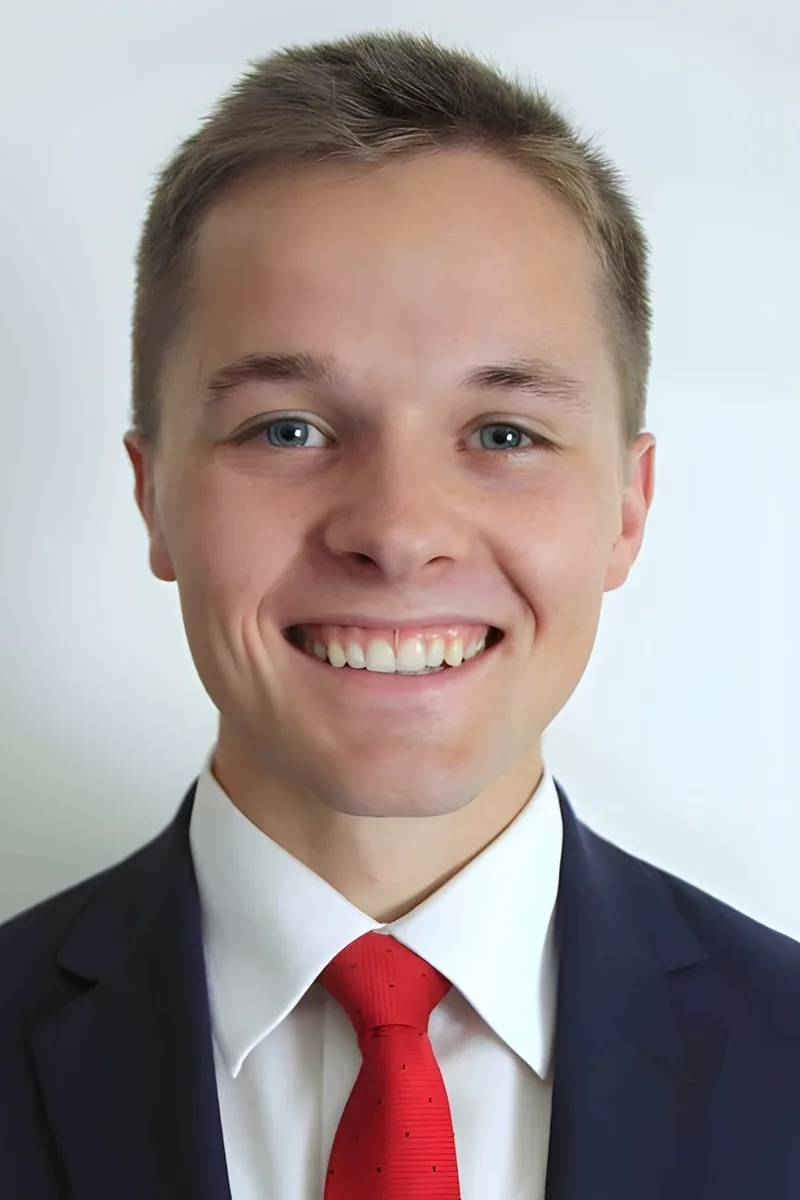
Spencer teaches across all four levels of Spanish, which means he understands the full arc from conjugating regular verbs in the present tense to navigating the subjunctive mood and complex reading passages. He approaches grammar as a logical system with patterns to internalize, not random rules to memorize — something his science-trained mind is particularly good at making clear.
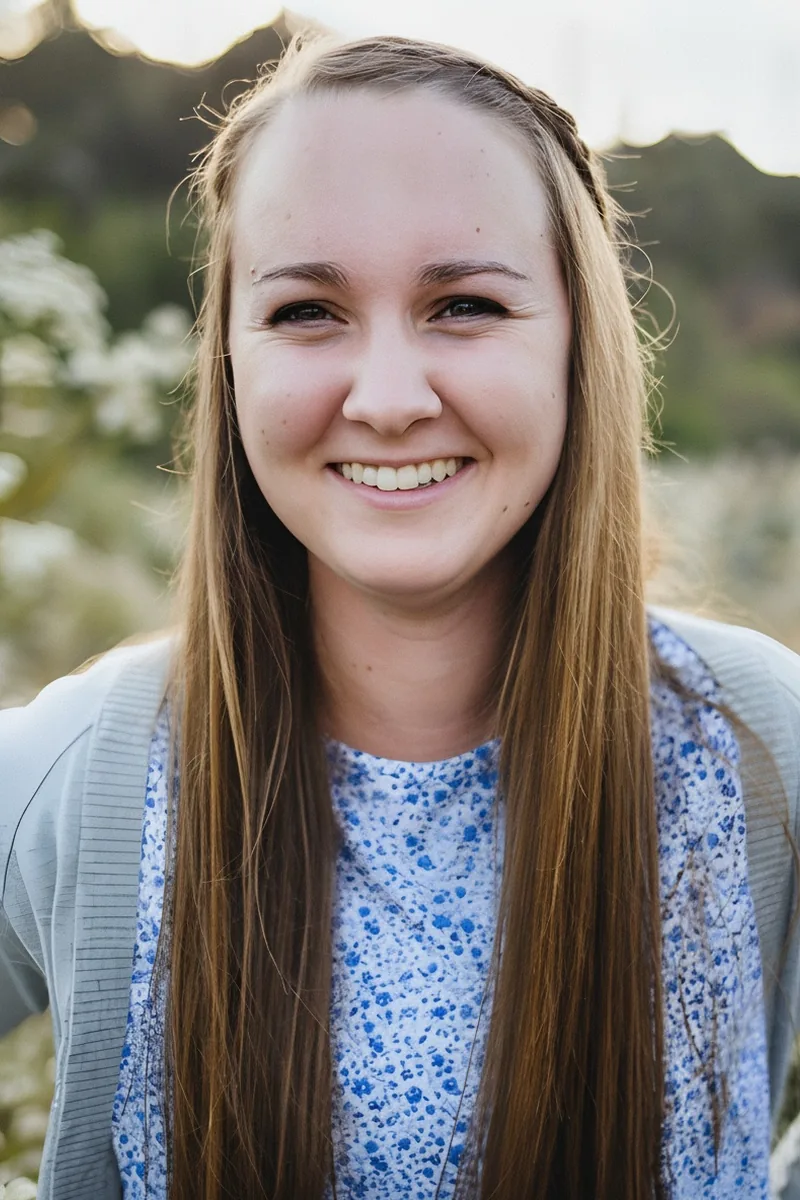
Living in Mexico for 18 months made Heather fluent in Spanish, but she also learned the language through high school classes — so she remembers exactly where verb conjugations get confusing and why ser versus estar trips everyone up. Her Spanish Dual Language Immersion minor at BYU adds formal training in how the language is structured and taught. That combination of lived fluency and classroom knowledge makes her especially effective at breaking down tricky grammar concepts.
Two years living and working entirely in Spanish — during a church mission — gave Jared the kind of fluency that textbooks alone can't replicate. He now volunteers with a Hispanic literacy group and brings that real-world immersion into lessons on verb conjugation, subjunctive mood, and reading comprehension. His 4.9 rating speaks to how naturally he bridges classroom Spanish with how the language actually sounds.
Rachel approaches Spanish with the structured analytical mindset of someone trained in communications and humanities research, breaking down verb conjugations and sentence construction into patterns students can internalize. While her primary expertise is in English and writing, she tackles Spanish grammar and vocabulary with the same systematic attention to language that defines her academic work.
Two years living in Spain gave Taylor fluency that textbooks can't replicate — he learned Castilian Spanish by speaking daily with people from across the Spanish-speaking world. He teaches verb conjugations, subjunctive mood, and idiomatic expressions with the kind of intuition that comes from real immersion rather than rote drills.
Kjirsten is fluent in Spanish, which means she teaches the language as a living system rather than a set of conjugation tables. Whether a student is wrestling with subjunctive mood triggers or struggling to keep preterite and imperfect straight, she explains the logic behind the grammar so the rules actually stick. She also brings reading and writing strategies from her communication background into vocabulary and composition work.
Brett's experience with Spanish spans conversational practice and structured grammar work, making him a good fit for students wrestling with verb conjugations, subjunctive mood triggers, or reading comprehension exercises. He takes a methodical, science-student approach to language — breaking rules into patterns that are easier to internalize than rote lists.
Covering Spanish from introductory through advanced levels, Helaman emphasizes the grammar structures — subjunctive mood, preterite versus imperfect, pronoun placement — that trip students up most often. His 4.9 rating speaks to an approach that balances conversational practice with the structural precision needed for exams and real-world fluency.
I have a BA in Spanish from the University of Montana and am currently applying to medical school . During my college career I had the pleasure of working as a teaching assistant for an Anatomy and Physiology lab and for a Freshman Honors Seminar. Both of these were extremely rewarding experiences, and as I got to know my students and watched them grow in confidence and competency, I discovered my love of teaching. I have a wide field of interests, but I particularly love to teach the Spanish language. I have studied Spanish for eight years, to the extent that it has become part of the way I think and experience the world. It brings me no small amount of joy to be able to speak this language, and I love to help others on their journey to mastering it (which is a long path, I know!). I firmly believe in the pursuit of learning in all forms, be it experiential or classroom-based, and I warmly anticipate working with my students.
I am currently a student at Brigham Young University studying Applied Physics. After finishing my degree I am planning on pursuing a master's degree in Aerospace Engineering. Since January 2014 I have worked in the physics help lab at BYU. Throughout this time I have greatly enjoyed helping many students increase their understanding of physics. I love seeing my students have a "light-bulb" moment where suddenly everything we discussed makes sense to them. I think it is extremely important for everyone to have (at least) a basic understanding of math and science as this helps us to better understand our world. I am greatly motivated to teach in a way that my students understand the fundamental principles and not in a way that they can merely get the right answer. I love trying to pass on my enthusiasm for math and science to my students, and I am always looking for ways to show how cool and fun mastering these subjects can be. Although I am most passionate about physics, I also tutor math and Spanish. When I'm not studying or teaching I enjoy swimming, reading (especially Michael Crichton and Orson Scott Card), and exchanging movie quotes with my roommates.
I am dedicated, passionate, patient, and enthusiastic. I am also empathetic, and above all, I love teaching..Helping students is fulfilling because it allows educators to inspire and empower young people to reach their full potential.Believing in the student's potential to develop into extraordinary young learners.I'm passionate about education,and I'm actively engaged in various activities that promote learning and knowledge sharing.I volunteer at local schools,helping students with their studies and providing mentorship.I do believe that passion in education acts as a guiding light that motivates students to excel in their academic endeavors.It fuels one's determination,resilience,and performance leading to holistic growth and success.And ignites a fire within students,pushing them to go the extra mile in pursuit of their goals.Increased resilience when faced with setbacks,drives the student to bounce back stronger,learning valuable lessons along the way.Passion in education,lead the students to strive for excellence,resulting in a higher level of achievement in their academic pursuits.
Hey, I'm Brock and I am excited to help students improve their SAT, Spanish, and History Skills. I'm here to help you find practically application to your school subjects so they become more interesting and you can see your abilities skyrocket.
Conjugation tables only get you so far — Ian builds Spanish skills by connecting grammar rules to actual usage patterns so students can construct sentences on the fly, not just recognize them on a worksheet. He's comfortable covering everything from foundational Spanish 1 vocabulary through the more complex subjunctive and preterite-vs-imperfect distinctions in Spanish 3. His structured, patient approach keeps the material from feeling overwhelming.
Studying Philosophy, Politics & Economics means Bina spends her days parsing arguments, dissecting texts, and building structured cases — skills she applies directly to Spanish grammar, where understanding *why* a rule works (say, the logic behind ser versus estar) matters more than memorizing charts. Her background in law adds another layer: she treats sentence construction like building a legal argument, where every word has to be in the right place for the meaning to hold. Rated 5.0 by students.
Learning Spanish clicks faster when grammar rules connect to real usage — why the subjunctive shows up in certain emotional expressions, or how reflexive verbs change meaning in everyday conversation. Rebecca teaches across four levels of Spanish and uses that range to meet each student at their current stage, building verb conjugation and sentence structure into contexts that actually stick.
Matt minored in Spanish during his undergraduate studies and has carried the language through multiple levels of coursework, from foundational grammar to advanced composition. He tackles tricky areas like subjunctive mood, ser versus estar distinctions, and preterite-imperfect contrasts by linking each rule to real usage patterns rather than rote conjugation charts. Rated 5.0 by students.
Studying at the Horace Mann School in New York City meant Ethan took Spanish alongside a rigorous academic curriculum, and his current economics and public policy coursework at UChicago keeps him reading and analyzing across disciplines — skills that transfer directly to parsing Spanish texts and constructing grammatically sound written responses. He's particularly sharp at breaking down the logic behind ser versus estar or preterite versus imperfect, treating tricky distinctions as puzzles with clear rules rather than exceptions to memorize.
Having studied Spanish through the advanced level — Spanish 2, 3, and 4 — Sarah can walk students through tricky grammar concepts like subjunctive mood, preterite vs. imperfect, and ser vs. estar with clear, practical explanations. She pairs grammatical accuracy with conversational practice so that conjugation charts actually translate into usable language skills.
Kaya teaches Spanish from conversational basics through advanced grammar, covering everything from preterite vs. imperfect distinctions to subjunctive mood in complex sentences. Her experience across Spanish 1 through 4 and IB Language B means she can pinpoint exactly where a student's gaps are and address them systematically.
Diana's TESOL training gave her deep expertise in how languages are structured and acquired, which she applies directly to Spanish instruction. She breaks down verb conjugation patterns, pronoun placement, and sentence-building in ways that make the grammar feel logical rather than arbitrary. Students in Spanish 1 or 2 especially benefit from her ability to explain why the language works the way it does.
Learning Spanish means internalizing patterns — verb conjugation systems, pronoun placement, the subjunctive triggers that trip up English speakers. David has taught every level from Spanish 1 through AP and knows exactly where students tend to stall out, whether it's ser vs. estar or navigating preterite and imperfect in the same paragraph.
Samantha teaches Spanish across multiple levels, from foundational verb conjugations and noun-adjective agreement through advanced grammar like the subjunctive mood and complex sentence structures. Her analytical approach — honed through a Duke science education — treats language acquisition as a system to decode rather than a list to memorize.
Teaching elementary school in diverse classrooms gave Victoria daily practice communicating in Spanish with students and families, and she carries that real-world fluency into her tutoring. She covers verb conjugations, reading comprehension, and written composition across Spanish 1 through 4, adjusting complexity to wherever a student currently sits in the sequence.
Jane tutors Spanish 1 and 2 students on the grammar fundamentals that trip most English speakers up — ser versus estar, preterite versus imperfect, and pronoun placement in different sentence structures. Her analytical approach to language, sharpened by studying English at Princeton, gives her a knack for explaining why Spanish grammar rules work the way they do rather than just listing them.
Testimonials
Because the right Spanish tutor makes all the difference.
Average Session Rating – Based on 3.4M Learner Ratings
Nearby Spanish Tutors
Other Ogden Tutors
Related Languages Tutors in Ogden
Frequently Asked Questions
In a typical classroom setting, students get limited one-on-one speaking time. With personalized 1-on-1 instruction, you get dedicated conversation practice every session—a tutor focused entirely on helping you develop fluency, refine pronunciation, and build confidence speaking in real time. This direct feedback on accent and natural phrasing accelerates progress that's difficult to achieve in group settings.
Both matter, but the balance shifts as you progress. Early on, understanding verb conjugation, tense formation, and sentence structure gives you a foundation. As you advance, natural usage—how native speakers actually speak—becomes equally important. Expert tutors teach grammar as a tool for communication, not an end in itself, helping you move from rule-following to intuitive, fluent speech.
Spaced repetition and using words in context are far more effective than memorizing lists. A tutor can help you learn vocabulary through conversation, reading, and real-world scenarios relevant to your interests, then strategically revisit words over time to cement them in memory. This approach builds active vocabulary you can actually use, not just recognize.
Varsity Tutors connects you with tutors who understand Utah's Spanish curriculum standards and can support whatever level you're studying—whether you're in middle school Spanish I, high school AP Spanish, or preparing for the SAT Spanish subject test. Tutors can reinforce classroom learning, fill gaps, or accelerate your progress depending on your goals.
Yes—this is one of the biggest advantages of working with a tutor one-on-one. A tutor can model correct pronunciation, listen closely to your speech, and give immediate, specific feedback on sounds that differ from English (like the Spanish 'r' or regional vowel differences). Regular practice with a native or fluent speaker accelerates accent improvement far faster than self-study.
Many tutors incorporate cultural elements—literature, film, current events, regional differences between Spanish-speaking countries—because language and culture are inseparable. Learning about Spanish-speaking cultures deepens comprehension, makes vocabulary more meaningful, and builds the contextual understanding that fluent speakers have. Ask about a tutor's approach to cultural immersion when you connect.
Your first session is an assessment and goal-setting conversation. A tutor will evaluate your current level across reading, writing, speaking, and listening; understand your goals (passing a class, preparing for a test, achieving conversational fluency); and discuss your learning style. From there, they'll create a personalized plan tailored to your needs and pace.
Verb conjugation becomes intuitive through repeated use in conversation and writing, not through rote memorization. A tutor helps you see patterns, practice conjugations in context, and gradually internalize the rules through real communication. This approach builds automaticity—you'll conjugate correctly without thinking, just like native speakers do.
Let’s find your perfect tutor
Answer a few quick questions. We’ll recommend the right plan and match you with a top 5% tutor.