Award-Winning Science Tutors
serving Memphis, TN
Science
Tutors in Memphis
Private 1-on-1 tutoring, weekly live classes for academic support, test prep & enrichment, practice tests and diagnostics, and more to elevate grades and test scores.
Based on 3.4M Learner Ratings
UniversitiesSchools & Universities
DeliveredHours Delivered
ProficiencyGrowth in Proficiency
Who needs tutoring?
No obligation. Takes ~1 minute.
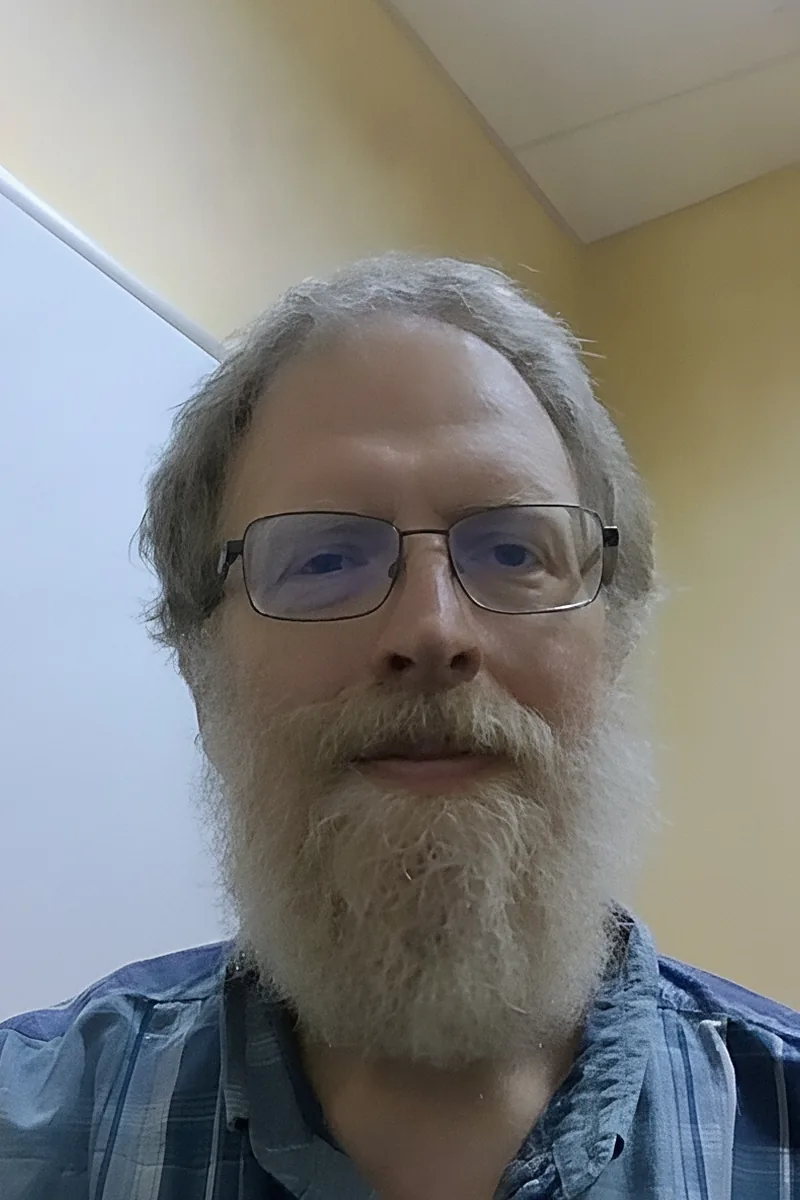
From atomic structure to thermodynamics to biological chemistry, Jeremy has taught the full sweep of introductory science at the college level — including courses designed specifically for students encountering science for the first time. He approaches each topic as a set of skills to build through practice, walking students through problems until the reasoning becomes second nature.
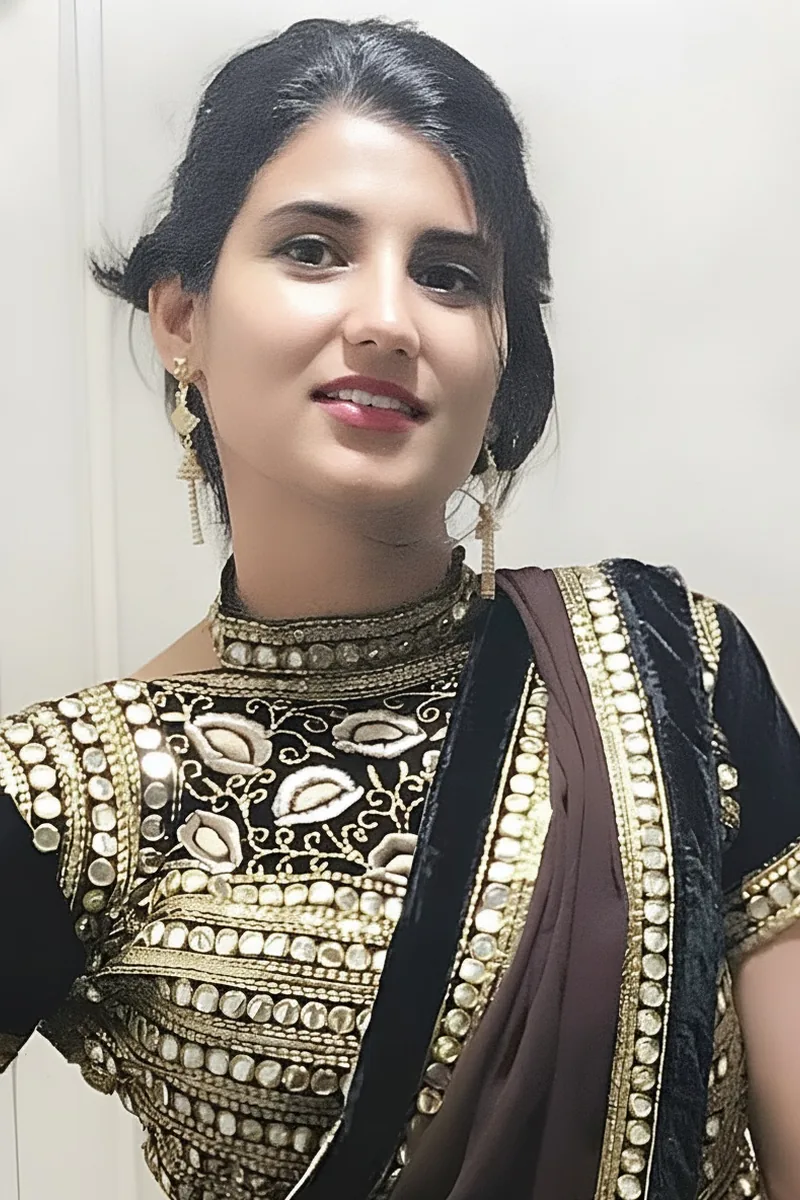
Monika's math-heavy background makes her especially effective for the quantitative side of science — unit conversions, interpreting graphs, setting up equations from word problems, and reasoning through experimental data. She connects scientific concepts to their underlying mathematical structure, which makes formulas feel logical instead of arbitrary.
Patrick approaches science the way he approaches historical research: by teaching students to read data carefully, form hypotheses, and evaluate evidence before jumping to conclusions. His background at the Educational Testing Service gave him deep familiarity with how standardized science questions are constructed, which sharpens his ability to break down graphs, experiments, and analytical reasoning for students.
Grant's English literature training might not scream science, but his magna cum laude work at the University of Memphis required the same close-reading and evidence-evaluation skills that make or break a student's ability to interpret lab results and pull meaning from dense textbook passages. He's particularly useful for the reading-heavy side of science — understanding what a question is actually asking, breaking down complex explanations, and writing clear answers that show real comprehension rather than recycled definitions.
Dotty's quantitative social science training at Swarthmore — where data analysis meets research design — means she's spent serious time with the mechanics of hypothesis testing, variable control, and statistical interpretation that underpin science coursework. Her current work in marketing analytics keeps those skills sharp daily, and she brings that same habit of interrogating data to teaching students how to read graphs, evaluate experimental setups, and explain what results actually demonstrate. Holds a 5.0 rating.
Common core science at the elementary and middle school level leans heavily on reading comprehension and mathematical reasoning — two areas where Juan's English degree and math teaching certifications overlap in exactly the right way. His classroom experience across public, charter, and private schools means he's seen how different curricula frame the same core concepts, from life cycles to simple machines, and can adapt his explanations to match what a student's particular program expects.
A chemistry degree from Rhodes College plus pre-med clinical internships — from transplant medicine to acupuncture wellness — means Eric has applied scientific thinking across disciplines where getting the details wrong has real consequences. He teaches students to connect the dots between chemistry, biology, and physics rather than treating each unit as a separate pile of vocabulary to memorize. That cross-disciplinary fluency is especially useful when students hit topics like energy transfer or biochemical processes that don't stay neatly inside one textbook chapter.
Edgar's language teaching background — explaining how verb conjugation systems follow predictable rules, or why certain phonetic patterns exist — is really about teaching students to spot patterns and ask 'why does this work that way,' which is the core habit science coursework demands. His Masters in International Education also means he's practiced at adapting complex material for different learning styles, so he can adjust explanations of concepts like classification systems or the water cycle until they actually land.
I am a rising sophomore at Emory University working towards a Bachelors of Arts degree in Psychology, as well as a minor in global health, culture, and society. I tutored in multiple subject areas in high school as a peer tutor as well as a tutor to younger students in elementary and middle school. I also tutored elementary school students in multiple subject areas during my first year at Emory. I tutor in many subjects, but have always been passionate specifically about tutoring in math. I have been tutored by peers many times throughout high school and college in different subjects, including the ACT. I found unique ways to solve problems and expand my problem solving skills through this, especially because I felt as though my peers were better able to relate to me, and therefore cater to my needs as a student. My approach is catered specifically to each student by first learning how he or she best learns, and then using tactics that will benefit them the most as they learn and grow as a student.
Living abroad in France and Switzerland taught Mary to observe closely, ask precise questions, and adapt when the evidence doesn't match her assumptions — habits that map neatly onto how science asks students to hypothesize, test, and revise. She's especially strong at helping younger learners decode the dense nonfiction reading that science assignments demand, since breaking down unfamiliar terminology is something she does daily across multiple languages. Rated 5.0 by students.
Twenty years of teaching languages gave Jenny something surprisingly useful for science: the ability to make unfamiliar terminology feel manageable by breaking it down into Latin and Greek roots that students can actually decode and remember. She applies that same structured, step-by-step approach to walking through the scientific method — helping students organize observations, form hypotheses, and articulate conclusions in clear, precise language.
A psychology degree means Lindsey spent years learning to design experiments, control for confounding variables, and interpret statistical results — skills that sit at the heart of any science course. She's especially strong at walking students through the logic of hypothesis testing and helping them see data tables and graphs as stories rather than just numbers. Rated 4.8 by students.
A public health administration degree means Carlos spent years reading and interpreting scientific research — experimental design, data analysis, and the biological concepts behind health outcomes. He breaks down scientific reasoning into clear, manageable steps and ties concepts back to real-world applications that make them easier to retain.
Illustration requires constant problem-solving with physics and chemistry — understanding how light behaves on surfaces, how pigments mix, how perspective obeys geometric rules — and Brennan brings that hands-on, visual intuition to science topics that often feel abstract on the page. His 31 ACT confirms he can handle the data interpretation and quantitative reasoning side of science, and his instinct is to sketch out concepts like force diagrams or energy flows so students can literally see what's happening.
Holding a biology degree and teaching physics and chemistry alongside it, Andrew covers the full spread of high school and college science. He's particularly effective at showing how the disciplines connect — how chemistry's atomic structure explains biology's enzyme behavior, or how physics principles underpin lab techniques. Students rated him 5.0, and he brings that cross-disciplinary perspective to every session.
Working daily with clinical trial data — tracking variables, interpreting results, spotting patterns in outcomes — keeps Sarah's scientific thinking sharp and current. She brings that real-world lens to topics like the scientific method, data analysis, and experimental design, connecting textbook concepts to how science actually gets practiced.
Teaching middle school science and physics alongside math gives Christean a useful double lens — he can walk students through the conceptual side of a topic like force or energy transfer and then reinforce it with the calculations that make those ideas precise. His approach treats science vocabulary and formulas as tools for answering real questions, not lists to memorize before a test.
A chemistry degree and doctoral training in dentistry mean Jackson has lived in the sciences for years — balancing equations, interpreting force diagrams, tracing metabolic pathways. He connects topics across biology, chemistry, and physics so students see how one concept feeds into the next rather than treating each unit as isolated material.
Brian's elementary teaching background means he knows how to make scientific concepts tangible for younger learners — turning a lesson on plant life cycles or states of matter into something a kid can observe, sketch, and explain in their own words. His English training also comes in handy when students need to read a science passage carefully and pull out key details, since nonfiction comprehension is where a lot of elementary science struggles actually begin.
Two years of teaching elementary students with literacy struggles gave McKenna a firsthand understanding of how much science depends on reading comprehension — pulling key details from a passage about ecosystems, interpreting a diagram of the water cycle, or following multi-step instructions for a simple experiment. Her English training at Tulane makes her especially useful for the language-heavy side of science, where students who can't parse the text never get a chance to learn the concepts underneath.
Tutoring science through Shelby County schools meant working with students who often had gaps in reading comprehension that made textbook passages and word-heavy lab instructions feel impossible — and Matthew's English and journalism background is exactly what closes that gap. He teaches students to pull key information from dense scientific text, identify what a question is actually asking, and organize their thinking before jumping to an answer.
A literature major might not scream 'science tutor,' but Paige's summa cum laude honors work at the University of Memphis required the same close-reading and evidence-evaluation skills that science demands — pulling meaning from dense material, identifying patterns, and building arguments from what's actually on the page. She's especially useful for students who can handle the concepts but struggle to articulate their reasoning in lab write-ups or short-answer explanations, since clear scientific writing is really just clear writing.
Anthropology is a science — fieldwork, hypothesis formation, cross-cultural data analysis — and Hayley's degree means she learned the scientific method by actually using it to study human populations and cultural systems. She's especially strong at teaching students to move from observation to explanation, connecting evidence to claims the way ethnographic research demands. Her professional writing background also makes her a natural fit for the lab-report and scientific-writing side of the subject.
Coming from an engineering and applied mathematics background, Eduardo tackles science topics by grounding them in the quantitative reasoning that holds everything together — unit conversions, interpreting graphs, and building equations from experimental data. He's especially effective at bridging the gap when students understand the concept but struggle to set up the math behind it.
Engineering at Yale means Charles lives at the intersection of physics, chemistry, and applied math every day — analyzing forces in a truss, modeling heat transfer, or interpreting experimental data. He brings that hands-on perspective to general science tutoring, connecting abstract formulas to physical situations students can actually picture. Whether the topic is kinematics, energy conservation, or interpreting lab results, he makes the reasoning behind each step visible.
Comparative literature might seem worlds away from science, but Brittney's Princeton training in close reading and textual analysis translates surprisingly well to parsing dense lab instructions, extracting meaning from data tables, and interpreting the kind of evidence-based passages that show up across science coursework. She's strongest with students who can grasp the concepts but struggle to articulate their reasoning in writing — lab reports, short-answer explanations, and constructing arguments from observations. Rated 5.0 by students.
Few tutors can move as fluidly between physics, chemistry, and biology as Dennis can. His Vanderbilt masters in Chemical and Physical Biology sat at the intersection of all three, so when a student asks why molecules behave a certain way or how energy transfers through a system, he connects the answer across disciplines instead of treating each science as its own silo.
Sociology and anthropology coursework means Lisa spent her undergraduate years doing exactly what science asks students to do — observing systematically, collecting evidence, and drawing conclusions that hold up to scrutiny. She's particularly strong at walking students through how to design a fair experiment and interpret results, since her social science training required distinguishing real patterns from coincidence in messy, real-world data.
Kerr's computer science coursework at Vanderbilt — debugging code, testing hypotheses about why programs fail, and interpreting output data — mirrors the same systematic thinking that science demands: isolate variables, predict outcomes, and figure out what went wrong when results don't match expectations. His 36 ACT confirms he can handle the data interpretation and passage-based reasoning that show up across science disciplines, and his 4.9 rating suggests he makes those connections stick.
Neuroscience at Vanderbilt means Eileen lives in the overlap of biology, chemistry, and data analysis every day. She unpacks scientific concepts — cellular respiration, ecological relationships, experimental design — by connecting them to real research examples, which makes abstract processes far easier to remember than rote definitions alone.
Heather's coursework at Vanderbilt included quantitative methods and cell biology, giving her a grounding in both the data-analysis and life-science sides of general science. She teaches students to read graphs, design simple experiments, and connect scientific vocabulary to the concepts behind it — skills that transfer across biology, chemistry, and earth science units.
Double-majoring in math and computer science at Vanderbilt's School of Engineering means Nat lives inside the quantitative side of science — unit conversions, graphing relationships, and working through formulas are daily habits, not occasional hurdles. He also spent a summer teaching middle schoolers through Higher Achievement in D.C., so he knows how to slow down and rebuild a concept from scratch when a student's eyes start to glaze over. His 35 ACT confirms he can handle the full range of science material, from data interpretation to experimental design.
A pre-law political science major might not scream "science tutor," but Kit's 1540 SAT required sharp data interpretation and evidence-based reasoning — reading graphs, evaluating experimental setups, and distinguishing supported conclusions from unsupported ones. He brings that same analytical rigor to science material, teaching students to treat every hypothesis like a claim that needs evidence and every lab report like an argument that needs structure.
Alexander's history training at Vanderbilt — building arguments from primary sources, evaluating conflicting evidence, weighing cause and effect — maps onto science more than most students expect, particularly when it comes to interpreting data and explaining why results support or undermine a hypothesis. His 32 ACT confirms he can handle the quantitative and analytical demands of science material, and his strength in reading-heavy subjects means he's especially useful when students struggle to extract meaning from dense textbook passages or diagram-laden lab instructions.
Engineering students see science differently — every physics equation or chemistry concept is a tool they'll eventually use to build something real. Rhamy brings that applied perspective from his Vanderbilt computer engineering program, especially for topics like circuits, wave behavior, and mechanics where intuition matters as much as formulas. He scored a 1570 SAT, so the quantitative rigor behind the science comes naturally.
Chemical engineering sits at the intersection of chemistry, physics, and applied math, so Kelly brings an unusually integrated perspective to general science tutoring. She unpacks concepts like stoichiometry, energy transfer, and the scientific method by connecting them to tangible examples — how a chemical plant balances reactions at scale, or why unit conversions matter when real materials are on the line.
I'm a 24 year old student of life that graduated from Vanderbilt University in 2014. My first experience with tutoring came 5 years ago when I opened a branch of ACT prep tutoring for Revolution Prep. At that time, I taught small classes of 5-9 students and also worked as a private tutor. I absolutely love to learn and am fulfilled by guiding students to reach their maximum potential.
I am a freshman at Vanderbilt University studying biochemistry and involved in analytical chemistry research. Despite my studies being very science oriented, I also enjoy studying English and the humanities. I'd be happy to tutor you in any of these areas!
Teaching science at the elementary and middle school level is really about sparking curiosity — getting students to ask questions about how things work and then guiding them toward answers. Christina's childhood education training at NYU covered science instruction across grades 1–6, and her knack for making lessons interactive keeps younger learners engaged through hands-on exploration and clear explanations.
A computer science degree from Duke means Michelle spent four years immersed in the empirical side of problem-solving — designing experiments, analyzing datasets, and building models that either work or don't. She brings that same rigor to science tutoring, particularly when students need to interpret graphs, control variables, or connect quantitative evidence to a conclusion. Her 5.0 rating and 36 ACT suggest the approach lands.
Testimonials
Because the right Science tutor makes all the difference.
Average Session Rating – Based on 3.4M Learner Ratings
Practice Science
Free practice tests, flashcards, and AI tutoring for Science
Nearby Science Tutors
Other Memphis Tutors
Related Science Tutors in Memphis
Frequently Asked Questions
Many students struggle with connecting abstract scientific concepts to real-world applications, especially in chemistry and physics where visualization is critical. With an average student-teacher ratio of 18.2:1 in Memphis schools, students often don't get individualized feedback on misconceptions—like confusing velocity with acceleration or struggling to balance chemical equations. Personalized tutoring helps identify these specific gaps and build conceptual understanding rather than just memorization.
Tutors working with Varsity Tutors are familiar with Tennessee science standards and the specific curricula used across Memphis schools, whether you're in biology, chemistry, physics, or earth science. They tailor their instruction to match what your student is learning in class, reinforcing key concepts and filling gaps that emerge during classroom instruction. This alignment means tutoring directly supports your student's classroom success and test performance.
Yes—tutors help students develop critical lab skills including hypothesis formation, data collection, analysis, and drawing evidence-based conclusions. Many students struggle with the reasoning behind experiments rather than just following procedures, and personalized instruction focuses on building that deeper understanding. This preparation is especially valuable for students taking AP or honors science courses that emphasize inquiry-based learning.
Standardized science tests require both content knowledge and strategic test-taking skills—knowing not just the science, but how to interpret graphs, analyze data, and eliminate wrong answers efficiently. Tutors use targeted practice and feedback to strengthen weak content areas while teaching students to manage time and approach complex multi-step questions. Consistent, personalized practice has been shown to significantly improve test performance over time.
Your first session is focused on assessment and connection—the tutor will discuss your student's current science course, specific challenges, and learning goals. They'll ask diagnostic questions to understand your student's conceptual understanding and identify where personalized instruction will have the most impact. This foundation helps the tutor create a customized plan for ongoing sessions that targets the areas where your student needs the most support.
Tutors support students across all science disciplines—biology, chemistry, physics, earth science, and environmental science—from middle school through AP and honors levels. Whether your student is building foundational skills in general science or preparing for advanced placement exams, Varsity Tutors connects you with tutors who have expertise in the specific subject and level your student needs. This specialized knowledge ensures instruction is appropriately challenging and aligned with course expectations.
In a classroom with 18+ students, teachers focus on pacing through the curriculum—personalized tutoring focuses on your student's individual understanding. A tutor can spend extra time on concepts your student finds challenging, use explanations tailored to how your student learns best, and immediately address misconceptions before they compound. This one-on-one approach is particularly valuable in science, where building strong conceptual foundations is essential for success in more advanced courses.
Contact Varsity Tutors to discuss your student's science needs, current course level, and specific challenges. You'll be matched with a tutor who has expertise in your student's subject area and understands how to help them succeed. From there, you can schedule your first session and begin building the personalized support your student needs to strengthen their science skills and confidence.
Let’s find your perfect tutor
Answer a few quick questions. We’ll recommend the right plan and match you with a top 5% tutor.