Award-Winning Science Tutors
serving Nashville, TN
Science
Tutors in Nashville
Private 1-on-1 tutoring, weekly live classes for academic support, test prep & enrichment, practice tests and diagnostics, and more to elevate grades and test scores.
Based on 3.4M Learner Ratings
UniversitiesSchools & Universities
DeliveredHours Delivered
ProficiencyGrowth in Proficiency
Who needs tutoring?
No obligation. Takes ~1 minute.
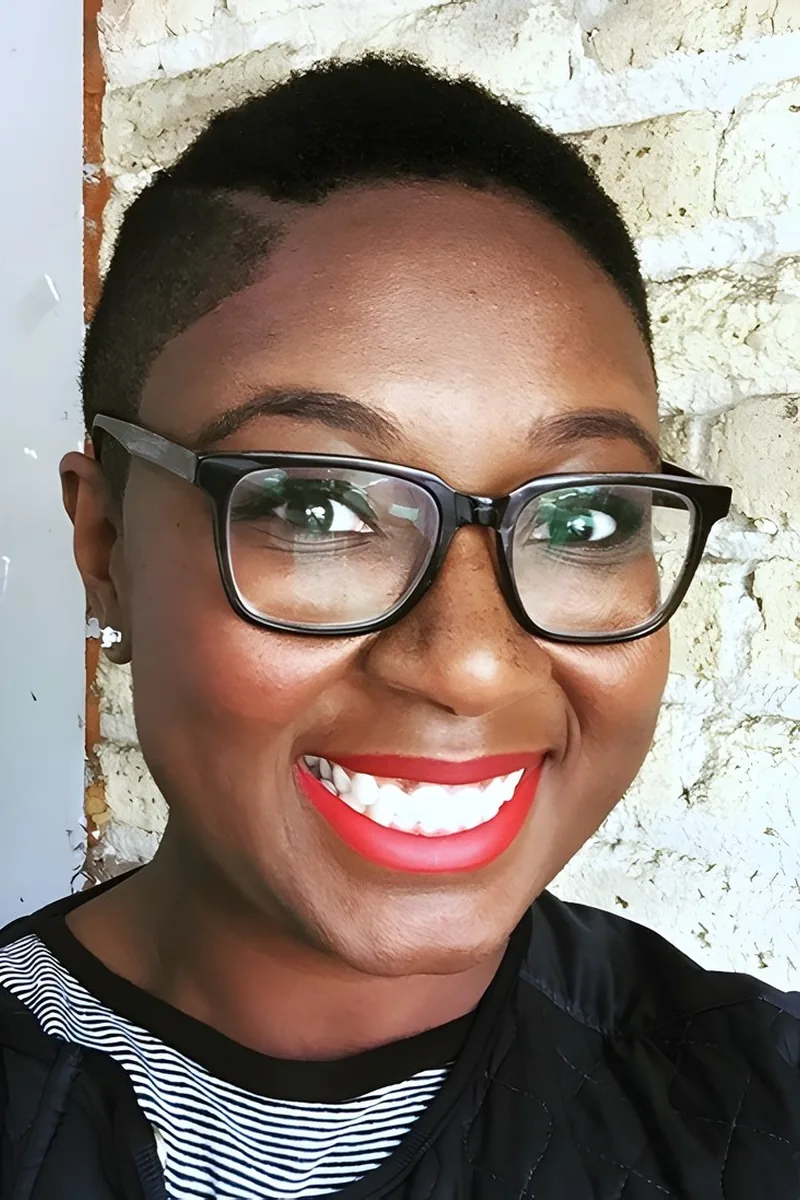
Comparative literature might seem worlds away from science, but Brittney's Princeton training in close reading and textual analysis translates surprisingly well to parsing dense lab instructions, extracting meaning from data tables, and interpreting the kind of evidence-based passages that show up across science coursework. She's strongest with students who can grasp the concepts but struggle to articulate their reasoning in writing — lab reports, short-answer explanations, and constructing arguments from observations. Rated 5.0 by students.
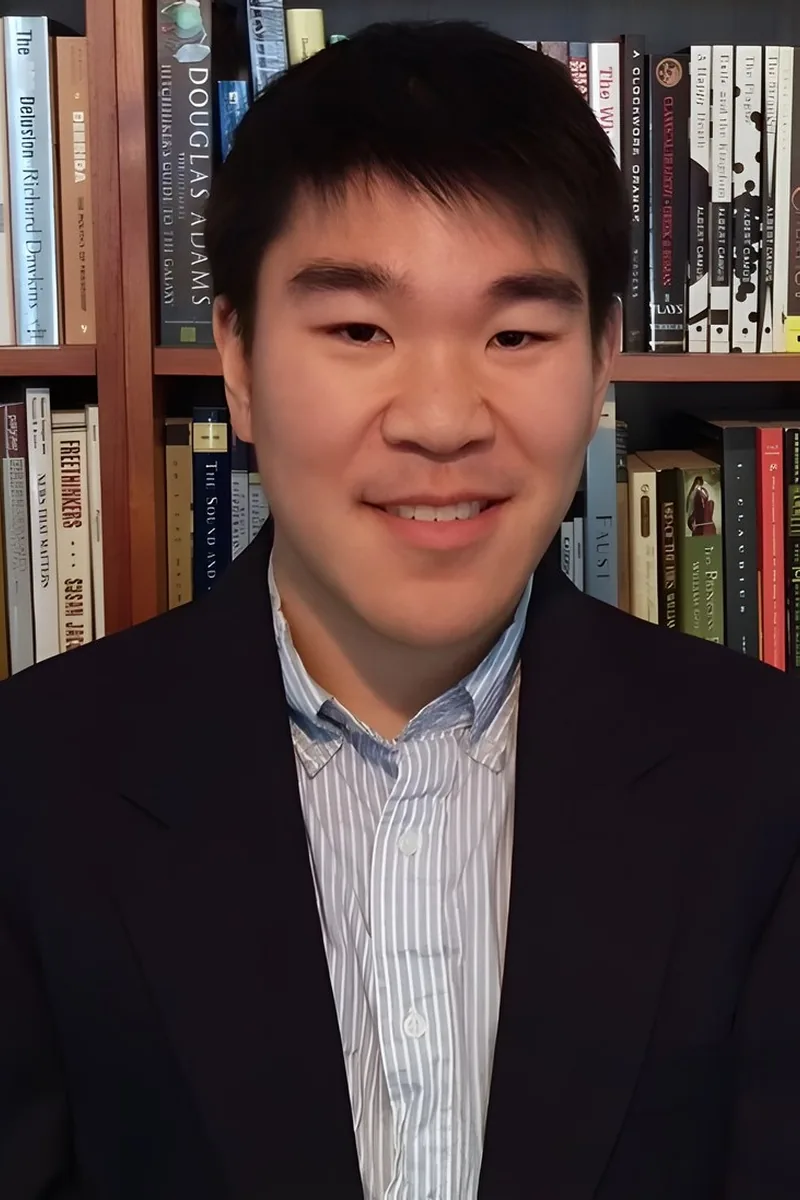
Few tutors can move as fluidly between physics, chemistry, and biology as Dennis can. His Vanderbilt masters in Chemical and Physical Biology sat at the intersection of all three, so when a student asks why molecules behave a certain way or how energy transfers through a system, he connects the answer across disciplines instead of treating each science as its own silo.
Sociology and anthropology coursework means Lisa spent her undergraduate years doing exactly what science asks students to do — observing systematically, collecting evidence, and drawing conclusions that hold up to scrutiny. She's particularly strong at walking students through how to design a fair experiment and interpret results, since her social science training required distinguishing real patterns from coincidence in messy, real-world data.
Kerr's computer science coursework at Vanderbilt — debugging code, testing hypotheses about why programs fail, and interpreting output data — mirrors the same systematic thinking that science demands: isolate variables, predict outcomes, and figure out what went wrong when results don't match expectations. His 36 ACT confirms he can handle the data interpretation and passage-based reasoning that show up across science disciplines, and his 4.9 rating suggests he makes those connections stick.
Neuroscience at Vanderbilt means Eileen lives in the overlap of biology, chemistry, and data analysis every day. She unpacks scientific concepts — cellular respiration, ecological relationships, experimental design — by connecting them to real research examples, which makes abstract processes far easier to remember than rote definitions alone.
Double-majoring in math and computer science at Vanderbilt's School of Engineering means Nat lives inside the quantitative side of science — unit conversions, graphing relationships, and working through formulas are daily habits, not occasional hurdles. He also spent a summer teaching middle schoolers through Higher Achievement in D.C., so he knows how to slow down and rebuild a concept from scratch when a student's eyes start to glaze over. His 35 ACT confirms he can handle the full range of science material, from data interpretation to experimental design.
Heather's coursework at Vanderbilt included quantitative methods and cell biology, giving her a grounding in both the data-analysis and life-science sides of general science. She teaches students to read graphs, design simple experiments, and connect scientific vocabulary to the concepts behind it — skills that transfer across biology, chemistry, and earth science units.
Engineering students see science differently — every physics equation or chemistry concept is a tool they'll eventually use to build something real. Rhamy brings that applied perspective from his Vanderbilt computer engineering program, especially for topics like circuits, wave behavior, and mechanics where intuition matters as much as formulas. He scored a 1570 SAT, so the quantitative rigor behind the science comes naturally.
Alexander's history training at Vanderbilt — building arguments from primary sources, evaluating conflicting evidence, weighing cause and effect — maps onto science more than most students expect, particularly when it comes to interpreting data and explaining why results support or undermine a hypothesis. His 32 ACT confirms he can handle the quantitative and analytical demands of science material, and his strength in reading-heavy subjects means he's especially useful when students struggle to extract meaning from dense textbook passages or diagram-laden lab instructions.
A pre-law political science major might not scream "science tutor," but Kit's 1540 SAT required sharp data interpretation and evidence-based reasoning — reading graphs, evaluating experimental setups, and distinguishing supported conclusions from unsupported ones. He brings that same analytical rigor to science material, teaching students to treat every hypothesis like a claim that needs evidence and every lab report like an argument that needs structure.
Early science classes ask students to do something surprisingly difficult: read a passage about photosynthesis or the water cycle and extract the key relationships between concepts. Mary's research background in cognition and language at Vanderbilt makes her especially effective at teaching students how to break down scientific texts, interpret diagrams, and connect new vocabulary to ideas they already understand.
I'm a 24 year old student of life that graduated from Vanderbilt University in 2014. My first experience with tutoring came 5 years ago when I opened a branch of ACT prep tutoring for Revolution Prep. At that time, I taught small classes of 5-9 students and also worked as a private tutor. I absolutely love to learn and am fulfilled by guiding students to reach their maximum potential.
I am a freshman at Vanderbilt University studying biochemistry and involved in analytical chemistry research. Despite my studies being very science oriented, I also enjoy studying English and the humanities. I'd be happy to tutor you in any of these areas!
Teaching science at the elementary and middle school level is really about sparking curiosity — getting students to ask questions about how things work and then guiding them toward answers. Christina's childhood education training at NYU covered science instruction across grades 1–6, and her knack for making lessons interactive keeps younger learners engaged through hands-on exploration and clear explanations.
Ruiy's cognitive science curriculum at Vanderbilt spans neuroscience, biology, and research methods, giving her a solid grounding in core scientific concepts. She tackles science by teaching students to read experiments the way scientists do — identifying variables, interpreting data tables, and distinguishing correlation from causation.
A biology degree, physics tutoring experience, and a public health focus give Jakobi a broad scientific toolkit that spans molecular-level processes to ecosystem dynamics. He connects concepts across disciplines — showing, for example, how energy conservation in physics parallels metabolic energy flow in biology — so students see science as interconnected rather than siloed.
As a chemistry major on a pharmacy track, Elsa lives in the natural sciences daily — from atomic structure and chemical reactions to biological systems and lab technique. She unpacks scientific concepts by tying them to real-world examples, which makes abstract ideas like energy transfer or cellular processes far easier to retain.
Mechanical engineering at Vanderbilt means Megan applies physics and chemistry daily — from thermodynamics and fluid mechanics to materials science and energy systems. She breaks down scientific concepts using real engineering problems, which makes abstract ideas like force diagrams or heat transfer click faster than textbook examples alone.
Engineering coursework at Vanderbilt puts Daniel at the intersection of physics, chemistry, and applied math every week. He tackles science topics by connecting formulas to real phenomena — explaining why a circuit behaves a certain way or how energy conservation actually plays out in a lab setting.
Studying cognitive science requires a solid grounding in research methods, data interpretation, and the biological mechanisms behind human behavior — all of which overlap with core science topics. Leanna connects scientific concepts like the scientific method, basic biology, and experimental design to real-world examples that make the material click.
Training to teach middle and high school social studies means Karen spends a lot of time with primary sources, data tables, and evidence-based argumentation — skills that carry over naturally when students need to interpret scientific diagrams, design fair experiments, or explain what their results actually show. Her 1570 SAT confirms she handles quantitative and analytical reasoning at a high level, and her 5.0 rating suggests she makes those connections click for the students she works with.
Currently pursuing a PhD in Biomedical Sciences at Vanderbilt, Caroline lives inside scientific thinking every day — designing experiments, interpreting data, and connecting molecular mechanisms to larger biological questions. She brings that real research perspective to topics like cell biology, genetics, and the scientific method, making abstract concepts tangible.
I'm pursuing a double major in Mathematics and English at Vanderbilt University. I have been tutoring math since High School and have native proficiency in Mandarin Chinese. I am dedicated to helping students explore the study methods that will fit their individual needs.
Miah's ACT Science section — part of her 34 composite — tested exactly the skills she now teaches: pulling patterns from data tables, evaluating competing hypotheses, and figuring out what a graph is actually saying versus what it looks like at first glance. As a political science student at Vanderbilt, she spends her coursework doing the same thing with polling data and policy research, so translating between evidence and conclusions is something she practices daily.
Elena's approach to science leans on her Child Development training — she knows that younger students grasp scientific concepts best through observation, prediction, and hands-on reasoning rather than abstract definitions. She walks through topics like the water cycle, ecosystems, or basic forces by connecting each idea to something tangible the student has already experienced.
A PhD in economics means Zeeshan spends his days building models, testing hypotheses against real-world data, and defending conclusions under rigorous peer review — the same scientific thinking students need when designing experiments, interpreting results, and explaining what the evidence actually supports. His quantitative training at Vanderbilt, especially in statistical methods and causal inference, makes him particularly useful for the data-heavy side of science: reading graphs, understanding controls, and figuring out whether results are meaningful or just noise.
Three science degrees and a master's in science education give Katie an unusually deep bench to draw from — whether a student needs to understand cellular respiration, energy flow in ecosystems, or how to design a controlled experiment. She ties every concept back to observable, real-world phenomena so the material sticks long after the test.
Between tutoring organic chemistry, prepping students for SAT Subject Tests in biology and chemistry, and taking rigorous STEM coursework at Vanderbilt, Jacob covers a wide swath of science topics. He approaches each concept by tying it to something concrete — reaction mechanisms become stories with causes and consequences, and physics problems become puzzles with a clear logical sequence.
Growing up tutoring students from kindergarten through eleventh grade meant Jamie learned to explain the same concept — say, how plants convert sunlight into energy or why ice floats — at wildly different levels of detail, which is one of the hardest things about science teaching. Her Human Development studies at Vanderbilt also covered research design and evidence-based reasoning, giving her a real framework for walking students through hypothesis formation and experimental logic rather than just drilling vocabulary.
A biology degree gives Marjorie a home base in the life sciences, but her teaching covers the broader scientific toolkit: interpreting data tables, designing controlled experiments, and connecting observations to underlying mechanisms. She's especially effective at showing students how to read a graph and extract a claim from it — a skill that crosses every science class.
A creative writing major might not scream 'science tutor,' but Kaitlyn's psychology coursework at Vanderbilt — covering research methods, experimental design, and statistical reasoning — means she's spent real time working with the scientific method from the inside. She's especially strong at teaching students how to read data displays and write clear, precise explanations of what an experiment actually showed, since translating complex ideas into accessible language is what writers do best.
Grant's economics degree means he spent years working with models, variables, and data-driven conclusions — the same core skills students need when interpreting graphs in biology or calculating rates in chemistry. He teaches the quantitative side of science by grounding it in real-world examples, like how supply curves and growth curves follow the same underlying logic. Rated 5.0 by students.
A classics and linguistics degree means William spent years learning to dissect Latin and Greek roots — the same roots that make up most scientific vocabulary, from 'photosynthesis' to 'mitochondria' — so he can teach students to decode unfamiliar terms on sight instead of relying on flashcards. He also brings strong quantitative chops (32 ACT) and a methodical approach to reading data and working through multi-step problems. Rated 4.9 by students.
I am able to create quality, yet comprehensive curriculum for my students that will thrust them to succeed. I am very detailed oriented, creative, and have a passion for ensuring student success. It is my endeavor to combine my range of experience with my wealth of education. This includes being a loving, motivating, supporting, fun, and integral educator who will make a positive contribution to each student. I want to help all students build confidence, which will enhance their self esteem as well as personal values. Reaching this objective will directly reflect in the progression of their academic success.
Running experiments in a business school — market research, financial modeling, testing pricing strategies — trains the same core skills science demands: isolating variables, collecting data, and figuring out what the results actually mean. Ryan brings that analytical framework from his Vanderbilt MBA program to science topics like measurement, graphing, and interpreting experimental outcomes, making the process feel structured rather than overwhelming.
Elementary education majors at Vanderbilt take methods courses specifically designed around teaching science to younger learners — how to scaffold an experiment so a third grader can actually follow it, or how to turn a messy classroom observation into a real hypothesis. Jessica brings that pedagogical training to her tutoring, walking students through hands-on concepts like states of matter, plant life cycles, and simple machines in ways that build genuine curiosity rather than rote recall.
Mary's Masters in Learning and Design from Vanderbilt trained her to diagnose exactly how a student processes new information — useful in any subject, but especially in science, where a concept like energy conversion or cell division often needs to be explained three different ways before it lands. Her English background also means she can coach students through the reading-heavy parts of science: parsing dense textbook passages, interpreting diagram labels, and writing lab reports that actually communicate results. Rated 5.0 by students.
As a PhD candidate studying how human behavior reshapes the brain and contributes to obesity, Tristan lives at the intersection of biology, chemistry, and data-driven experimentation. He teaches science by connecting individual concepts — cell signaling, experimental design, hypothesis testing — to the bigger question they're trying to answer, which makes the details easier to remember.
A neuroscience major who also teaches physics and biology, Julia bridges those subjects in a way that makes scientific thinking click — showing how experimental design, data interpretation, and hypothesis testing work the same whether you're studying cell division or projectile motion. She's especially good at translating dense textbook language into something a student can actually reason through.
I'm a first year surgical resident at Vanderbilt University Medical Center in the field of Otolaryngology (Ear, Nose, and Throat). I typically work with medical students while at the hospital, but I'd enjoy tutoring any student with an interest in medicine and/or science. In addition to tutoring in subjects such as the MCAT, ACT, and Biology, I can also assist in application prep for Medical School and Medical Residency.
Testimonials
Because the right Science tutor makes all the difference.
Average Session Rating – Based on 3.4M Learner Ratings
Practice Science
Free practice tests, flashcards, and AI tutoring for Science
Nearby Science Tutors
Other Nashville Tutors
Related Science Tutors in Nashville
Frequently Asked Questions
Many Nashville students struggle with connecting abstract scientific concepts to real-world applications, particularly in physics and chemistry where visualization is critical. With an average student-teacher ratio of 18.3:1 across Nashville's school districts, students often don't get individualized feedback on misconceptions—like thinking force and motion work differently than they actually do. Personalized tutoring helps identify exactly where understanding breaks down and rebuilds those foundations with targeted practice.
Tutors work with Tennessee's science standards across all grade levels, whether students are working through middle school life science, high school biology, chemistry, or physics. They assess where each student stands relative to grade-level expectations and adjust pacing and depth accordingly. This personalized approach ensures students master foundational concepts before moving forward, rather than falling further behind in a one-size-fits-all classroom setting.
The first session focuses on understanding your student's current level, learning style, and specific challenges—whether that's lab report writing, problem-solving in physics, or memorization in biology. The tutor will work through a few practice problems or concepts to identify knowledge gaps and misconceptions. From there, they'll create a personalized plan targeting the areas that will have the biggest impact on grades and understanding.
Many students show measurable improvement within 4-6 weeks of consistent, focused tutoring—particularly in areas like test performance or homework completion. Deeper conceptual understanding often develops over 2-3 months as foundational gaps are filled and new material becomes more accessible. The timeline depends on where your student is starting and what specific goals you're targeting, whether that's improving a grade, preparing for the AP exam, or building confidence in the subject.
Yes—tutors can help students understand lab procedures, interpret data, write lab reports, and grasp the reasoning behind experimental design. While tutoring isn't a substitute for hands-on lab work in school, personalized instruction helps students understand what they're observing, why the experiment matters, and how to communicate findings clearly. This support is especially valuable for students preparing for AP Science exams or struggling with the lab component of their course.
Absolutely—Varsity Tutors connects students with tutors experienced in AP-level science courses, including AP Biology, AP Chemistry, AP Physics, and AP Environmental Science. These courses move quickly and require both deep conceptual understanding and strong problem-solving skills. Personalized tutoring helps students keep pace with the curriculum, master difficult units, and build confidence heading into the AP exam.
In a classroom of 18+ students, teachers can't address individual misconceptions or adjust pacing for each learner. Personalized tutoring targets your student's specific gaps, learning style, and pace—whether they need to slow down and rebuild foundations or accelerate through material they've mastered. This focused attention means more efficient learning and faster progress toward measurable goals like grade improvement or test readiness.
Varsity Tutors connects students with tutors who have strong backgrounds in their science subject areas—whether that's biology, chemistry, physics, or earth science. Tutors understand both the content and how to teach it effectively to students at different levels. They're vetted for subject expertise and teaching ability, ensuring they can explain complex concepts clearly and help students develop genuine understanding, not just memorization.
Let’s find your perfect tutor
Answer a few quick questions. We’ll recommend the right plan and match you with a top 5% tutor.