Award-Winning Math Tutors
serving Memphis, TN
Math
Tutors in Memphis
Private 1-on-1 tutoring, weekly live classes for academic support, test prep & enrichment, practice tests and diagnostics, and more to elevate grades and test scores.
Based on 3.4M Learner Ratings
UniversitiesSchools & Universities
DeliveredHours Delivered
ProficiencyGrowth in Proficiency
Who needs tutoring?
No obligation. Takes ~1 minute.
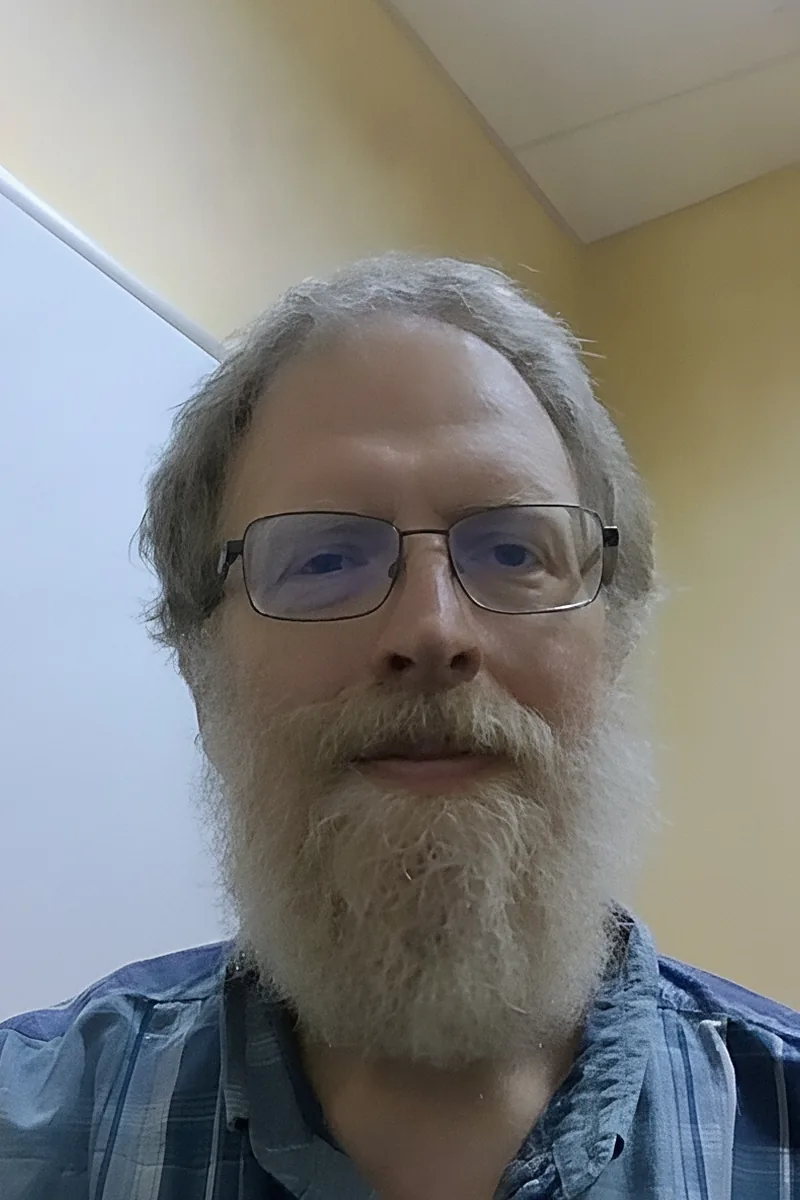
Chemistry at the college level is applied math, and Jeremy has spent years teaching students how to set up and solve problems involving logarithms, unit conversions, algebraic manipulation, and basic calculus. That constant reinforcement of mathematical reasoning in real contexts makes him especially effective at showing younger students why the math they're learning actually matters.

From elementary arithmetic through real analysis, Monika has taught nearly every level of math and knows exactly where the conceptual jumps trip students up. Her training at IIT Bombay — one of India's most rigorous programs — means she can explain not just how a method works but why it's the right tool for a given problem. Rated 4.5 by students.
Patrick's PhD work in European history requires more quantitative reasoning than most people expect — demographic analysis, economic modeling of trade networks, interpreting statistical trends across centuries — which keeps his comfort with algebra and calculus sharp. His years developing SAT questions for the Educational Testing Service mean he knows exactly how standardized math problems are constructed and where they're designed to trip students up. He holds a 4.7 rating.
Edgar approaches math as a language with its own grammar, drawing on his background in linguistics to show students how equations communicate relationships between quantities. He's particularly effective at translating word problems into mathematical expressions — a skill that trips up many students in pre-algebra through early calculus.
A chemistry degree requires years of applied math, from algebraic manipulation in stoichiometry to calculus in thermodynamics. Eric uses that applied perspective to show students why a formula works, not just how to use it — which makes problem-solving on homework and exams far less dependent on memorization. He's comfortable across algebra, geometry, and introductory calculus topics.
Quantitative Social Science at Swarthmore required serious math chops — regression analysis, probability, and applied statistics woven into every semester. Dotty uses that background to teach math concepts through real-world data problems, which tends to click for students who've struggled with abstract drills. She covers everything from foundational algebra through introductory calculus.
Common Core math asks students to explain their reasoning, not just get the right answer — and that shift trips up a lot of kids who can compute but can't articulate why a strategy works. Juan has trained specifically in Common Core math instruction and breaks down concepts like place value, fractions, and proportional reasoning in ways that build genuine number sense.
While English and literature are Grant's primary strengths, his 32 ACT composite reflects solid quantitative reasoning across the board. He tackles foundational math concepts — working through equations, word problems, and basic functions — with the same structured, step-by-step clarity he applies to writing.
I am a rising sophomore at Emory University working towards a Bachelors of Arts degree in Psychology, as well as a minor in global health, culture, and society. I tutored in multiple subject areas in high school as a peer tutor as well as a tutor to younger students in elementary and middle school. I also tutored elementary school students in multiple subject areas during my first year at Emory. I tutor in many subjects, but have always been passionate specifically about tutoring in math. I have been tutored by peers many times throughout high school and college in different subjects, including the ACT. I found unique ways to solve problems and expand my problem solving skills through this, especially because I felt as though my peers were better able to relate to me, and therefore cater to my needs as a student. My approach is catered specifically to each student by first learning how he or she best learns, and then using tactics that will benefit them the most as they learn and grow as a student.
Elementary and middle school math builds the number sense that everything else depends on — fractions, ratios, order of operations, early algebraic thinking. Mary is a patient instructor who connects these concepts to real-world contexts, like calculating travel distances or splitting a recipe, so that abstract rules start to feel logical rather than arbitrary.
Jenny's primary expertise is in language and literacy, but she has spent years tutoring math alongside her other subjects. She's particularly effective at breaking down word problems, where her language-teaching instincts help students parse what a question is actually asking before they start calculating.
Carlos approaches math by connecting abstract operations — fractions, percentages, ratios — to real-world scenarios drawn from his economics and public health background. Whether it's interpreting data sets or working through word problems, he makes the logic behind each step concrete rather than mechanical.
Covering everything from arithmetic fundamentals to early algebra concepts, general math tutoring is where Brennan zeroes in on the reasoning behind procedures — why you invert and multiply when dividing fractions, or how order of operations actually reflects mathematical structure. He scored a 31 on the ACT, which required fluency across multiple math domains under time pressure. That experience informs how he teaches students to think flexibly with numbers rather than rely on memorized steps.
From arithmetic fundamentals through algebra and into introductory calculus, Lindsey zeroes in on the specific step where a concept stops making sense and rebuilds understanding from that point. She's particularly effective at translating word problems into equations, a skill that trips up students who otherwise handle computation just fine.
From pre-algebra fundamentals through calculus, Andrew covers a wide range of math and zeroes in on the specific concept causing the bottleneck — whether that's fraction operations, function transformations, or setting up word problems correctly. His science background means he's constantly using math as a tool, so he explains concepts through practical application rather than abstract rules alone.
From basic arithmetic through algebra and into calculus, Christean covers a wide range of math concepts and tailors his explanations to wherever a student is getting stuck. He's particularly effective at translating word problems into equations — a step that trips up students at every level. Each session zeroes in on the specific gap holding a student back rather than reteaching material they already know.
A math and statistics degree doesn't just mean knowing formulas — it means understanding why a particular approach works for one problem and falls apart on the next. Sarah zeroes in on the reasoning behind each step, whether a student is working through fraction operations, proportional relationships, or early algebraic thinking, so the logic carries forward instead of resetting every chapter.
From pre-algebra fundamentals through calculus, Jackson covers a wide swath of math and zeros in on the step where a student's understanding breaks down. His approach leans on the "learn one, do one, teach one" cycle — once a student can explain a problem-solving method back to him, he knows it's locked in.
McKenna's English and political science degrees from Tulane won't fool anyone into thinking math is her wheelhouse — but her creative writing concentration trained her to think in structures and sequences, which is exactly what untangling a word problem or setting up an equation demands. She's at her best when a student knows what they want to solve but can't figure out what the question is actually asking, bridging the gap between reading comprehension and mathematical setup. Rated 5.0 by students.
Brian's elementary teaching training gives him a precise understanding of how number sense develops — from place value and basic operations through fractions, decimals, and early proportional reasoning. He catches the specific conceptual gaps that cause students to struggle with multi-step problems and addresses them directly rather than just re-explaining procedures.
Matthew's primary expertise is in English and writing, but his experience tutoring math means he's comfortable walking students through foundational concepts in arithmetic, pre-algebra, and basic algebra. He takes a patient, step-by-step approach that emphasizes understanding the logic behind each operation rather than rushing to an answer. For students who need support with core math skills alongside their other coursework, he's a practical choice.
Hayley's math tutoring draws on the same structured, step-by-step thinking she uses as a professional writer — breaking a problem into its components and tackling each piece in order. She's particularly effective at translating word problems into equations, a skill that trips up students who understand procedures but freeze when math is embedded in language.
While Paige's primary expertise is in English and literature, she tutors math with the same structured, step-by-step approach she applies to essay writing — breaking a problem into parts, identifying what's being asked, and building toward a solution methodically. She's a strong fit for students who need patient, clearly explained walkthroughs of foundational concepts in arithmetic, pre-algebra, and early algebra.
Testimonials
Because the right Math tutor makes all the difference.
Average Session Rating – Based on 3.4M Learner Ratings
Practice Math
Free practice tests, flashcards, and AI tutoring for Math
Nearby Math Tutors
Other Memphis Tutors
Related Math Tutors in Memphis
Frequently Asked Questions
The first session is all about understanding where your student is starting from. A tutor will assess their current math level, identify specific challenges (whether it's word problems, multi-step equations, or conceptual gaps), and learn about their learning style. This helps create a personalized plan that targets their unique needs rather than using a one-size-fits-all approach.
Many students can follow steps without truly understanding why they work. Tutors help build conceptual understanding by asking questions like "Why does this method work?" and connecting procedures to real patterns and relationships. This deeper understanding makes it easier to tackle unfamiliar problems and retain what they've learned long-term.
Word problems require students to translate language into mathematical thinking—a skill that takes practice. Tutors teach problem-solving strategies like identifying what information matters, breaking problems into steps, and checking answers for reasonableness. With guided practice and feedback, students build confidence and develop a systematic approach rather than feeling overwhelmed.
Math anxiety often comes from past struggles or pressure to perform. One-on-one instruction creates a low-pressure environment where students can ask questions freely, make mistakes safely, and build confidence through small wins. As they experience success and see patterns they didn't notice before, their relationship with math often shifts dramatically.
Yes. Tutors work with students using their school's textbook and curriculum approach, whether that's traditional methods, Singapore Math, or any other framework used in Memphis schools. This alignment means tutoring reinforces what's happening in class and helps students understand their teacher's specific approach, leading to better performance on classroom assignments and tests.
Showing work reveals a student's thinking process, making it easier to spot where misunderstandings happen. Tutors help students develop clear, organized work habits that not only satisfy teacher requirements but also help them catch their own mistakes and deepen their understanding. This skill transfers across all math topics and builds stronger problem-solving abilities.
Graphing and proofs require students to see connections between different representations and think logically about why something must be true. Tutors break these down into manageable pieces, use visual tools and real examples, and guide students through the reasoning step-by-step. Many students find these topics click once they understand the underlying logic rather than just memorizing procedures.
Absolutely. With 250 schools across Memphis serving nearly 100,000 students, there's significant variation in curricula and pacing. Varsity Tutors connects students with tutors who can adapt to any school's approach, whether your student attends a public school in Shelby County Schools or a charter or private institution. This flexibility ensures personalized support regardless of which school your student attends.
Let’s find your perfect tutor
Answer a few quick questions. We’ll recommend the right plan and match you with a top 5% tutor.