Award-Winning Math Tutors
serving Nashville, TN
Math
Tutors in Nashville
Private 1-on-1 tutoring, weekly live classes for academic support, test prep & enrichment, practice tests and diagnostics, and more to elevate grades and test scores.
Based on 3.4M Learner Ratings
UniversitiesSchools & Universities
DeliveredHours Delivered
ProficiencyGrowth in Proficiency
Who needs tutoring?
No obligation. Takes ~1 minute.
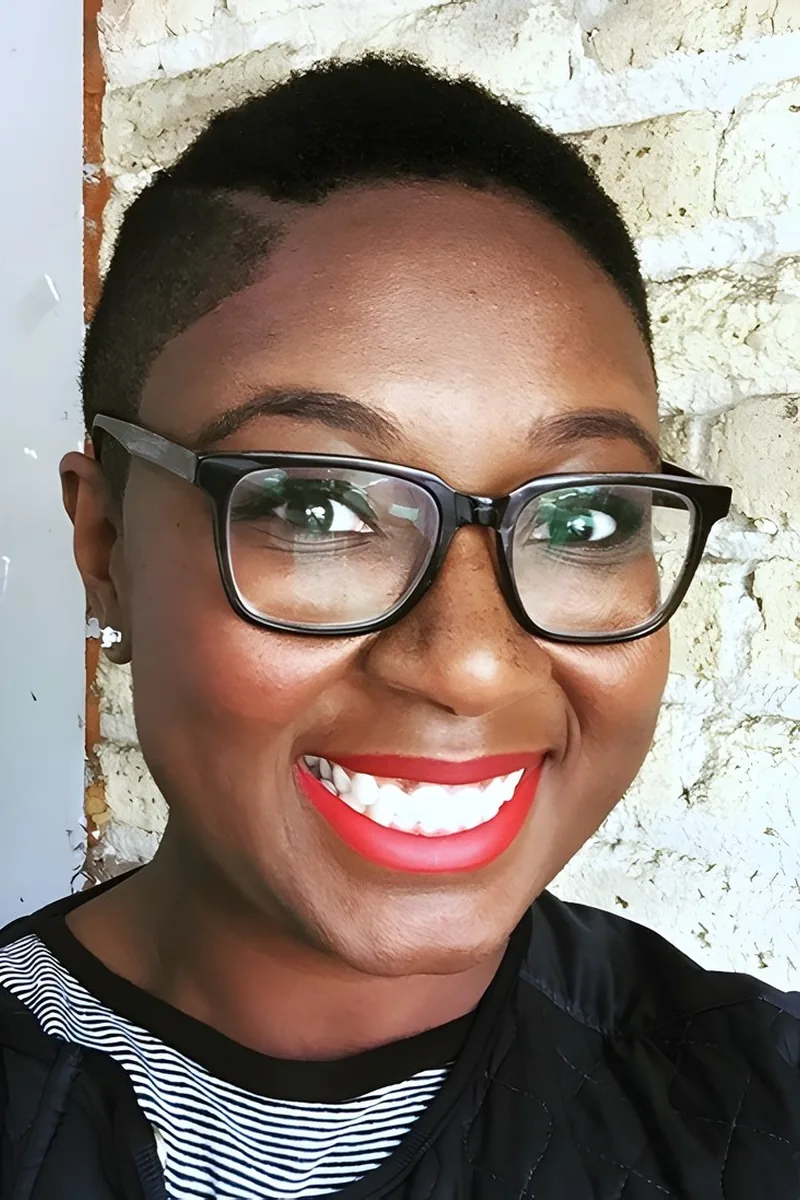
While Brittney's primary expertise is in English and literature, she also tutors math and brings the same structured, step-by-step reasoning she applies to literary analysis. Her SAT composite of 1440 reflects strong quantitative skills, and she's particularly effective at translating word problems into mathematical language for students who think more verbally.
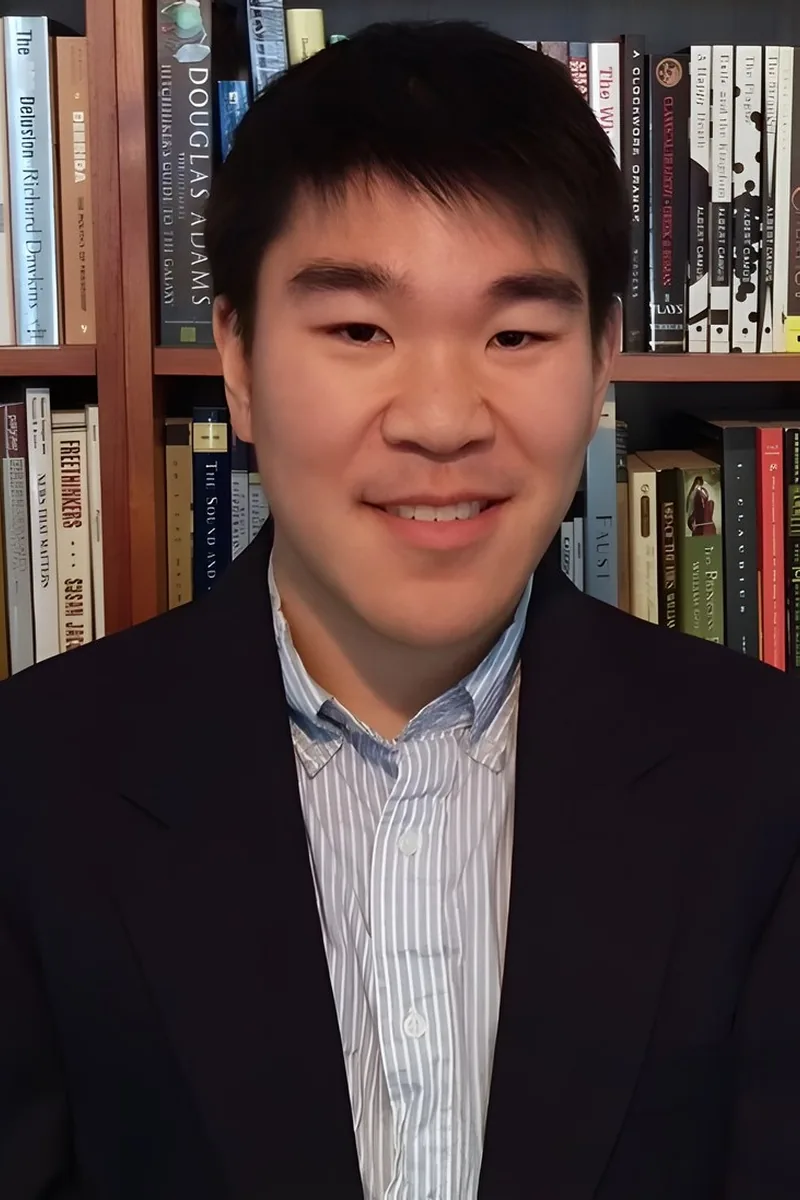
A biochemistry and physical biology background means Dennis has spent years applying math as a tool — using calculus to model reaction kinetics, algebra to balance complex equations, and statistics to interpret experimental data. That applied perspective makes him especially effective at showing students why a mathematical concept matters, not just how to execute the steps on a worksheet. Rated 5.0 by students.
The jump from arithmetic to algebraic thinking trips up a lot of students, and Kerr tackles that transition by making abstract ideas visual and concrete. Whether the topic is fractions, proportional reasoning, or early equation-solving, he builds understanding of the *why* behind each step so students aren't just following procedures they'll forget next week. His economics and CS training at Vanderbilt keeps him comfortable across every corner of math.
From fraction operations in elementary school to logarithmic functions in pre-calc, Eileen has tutored across the full math pipeline and knows exactly where gaps from earlier years create confusion later. Her approach zeroes in on the specific concept causing a roadblock — whether that's integer rules, proportional reasoning, or function notation — and rebuilds understanding from that point forward.
Lisa covers math from arithmetic fundamentals through early calculus concepts, adjusting her explanations based on where a student's understanding actually breaks down. She's particularly effective at translating word problems into equations — a skill her perfect 1600 SAT score suggests she's mastered. Whether the topic is fractions, ratios, or basic functions, she connects each concept to a clear, repeatable problem-solving process.
While math isn't Alexander's primary academic focus, his 1510 SAT score reflects strong quantitative reasoning, and he's comfortable breaking down foundational concepts in algebra and arithmetic. He's a good fit for students who need a patient, structured approach to building confidence with numbers.
Coming out of Thomas Jefferson High School for Science and Technology — one of the most math-intensive programs in the country — Rhamy developed a habit of connecting abstract procedures to concrete reasoning. Whether a student is working through fraction operations in pre-algebra or tackling integration techniques in calculus, he pinpoints exactly where the logic breaks down and rebuilds it. His 5.0 rating speaks to how well that diagnostic approach lands.
Double-majoring in math and computer science at Vanderbilt's engineering school, Nat sees the connective tissue between topics that often feel siloed — how algebraic structures reappear in calculus, or how a pre-algebra concept like order of operations quietly underpins everything that follows. That cross-disciplinary wiring means he can explain a technique computationally when the standard textbook approach isn't landing. His 35 ACT confirms the quantitative fluency behind his teaching.
Kit's pre-law track at Vanderbilt sharpened exactly the kind of logical, step-by-step reasoning that makes the difference when a math problem has three moving parts and no obvious starting point — building an argument and solving an equation aren't as far apart as they look. His 1540 SAT confirms he's comfortable with the quantitative side, and his teaching assistant experience means he's practiced at spotting where someone's logic chain breaks down and reframing the approach on the fly.
Between her Vanderbilt minor in Quantitative Methods and a 34 ACT, Heather has the mathematical range to cover everything from fraction operations and proportional reasoning up through introductory calculus concepts. She's especially strong at translating word problems into equations — the step where most students get stuck — because her organizational development background trained her to break messy, real-world scenarios into clear structures.
Struggling with math often comes down to a gap somewhere in the fundamentals — maybe place value never quite clicked, or fractions were rushed. Christina's special education background means she's trained to pinpoint those gaps and rebuild understanding from the ground up, using visual models and step-by-step reasoning that make concepts like multiplication, division, and early geometry genuinely make sense.
I am a freshman at Vanderbilt University studying biochemistry and involved in analytical chemistry research. Despite my studies being very science oriented, I also enjoy studying English and the humanities. I'd be happy to tutor you in any of these areas!
Speech-language pathology graduate work at Vanderbilt is surprisingly math-adjacent — Mary's program demands statistical analysis of clinical data, research methodology, and quantitative reasoning about language patterns. Her background in cognition and language also gives her an unusual ability to pinpoint exactly where a student's internal logic breaks down during a multi-step problem and reframe the explanation on the fly. Rated 5.0 by students.
I'm a 24 year old student of life that graduated from Vanderbilt University in 2014. My first experience with tutoring came 5 years ago when I opened a branch of ACT prep tutoring for Revolution Prep. At that time, I taught small classes of 5-9 students and also worked as a private tutor. I absolutely love to learn and am fulfilled by guiding students to reach their maximum potential.
Electrical engineering coursework at Vanderbilt means Daniel lives in math daily — from the linear algebra underpinning circuit analysis to the differential equations driving signal processing — so he teaches these concepts with the fluency of someone who actually uses them. He scored a 36 on the ACT and brings an engineer's habit of checking whether an answer makes physical sense, which is surprisingly effective at catching the algebraic mistakes students usually overlook.
From pre-algebra fundamentals to trigonometric identities and early calculus concepts, Jakobi treats every math topic like a puzzle with a logical solution path. He zeroes in on the specific step where a student's understanding breaks down — whether that's fraction operations, factoring, or function transformations — and rebuilds confidence from that exact point.
Cognitive science at Vanderbilt means Ruiy studies how people actually learn and process information — which gives her a unusual lens on math tutoring, since she can recognize when a student's problem isn't the content itself but how they're organizing it mentally. She's strong at restructuring a student's approach to multi-step problems so the logic clicks rather than just the procedure. Her 1520 SAT and 5.0 rating back that up.
From elementary arithmetic through calculus-based problem sets, Elsa's chemistry coursework at Vanderbilt keeps her fluent across a wide range of math. She's especially sharp at identifying the exact step where a concept stops making sense and rebuilding understanding from that point forward, whether the topic is fractions or functions.
From pre-algebra fundamentals through differential equations, Megan's math minor and engineering coursework at Vanderbilt mean she's solved thousands of problems across nearly every topic a student might encounter. She zeroes in on the specific concept causing a roadblock — whether that's fraction operations, function transformations, or integration techniques — and rebuilds understanding from that exact point.
Neuroscience coursework at Vanderbilt meant Caroline couldn't avoid math — statistics, calculus, and quantitative data analysis were woven into nearly every class. She brings that applied perspective to tutoring, walking students through topics like graphing, proportional reasoning, and algebraic manipulation with an emphasis on understanding the logic driving each procedure.
Training to teach middle and high school social studies means Karen spends her days at Vanderbilt learning how to actually explain things — how to sequence ideas, anticipate misconceptions, and adjust when a concept isn't landing. She applies that pedagogical training directly to math, where she tutors everything from foundational skills through calculus. Her 1570 SAT and 5.0 client rating back up what her education major makes clear: she knows how to make material click.
Scoring a 34 on the ACT means Miah is comfortable across math topics from proportional reasoning through introductory calculus. She's particularly sharp at identifying where a student's understanding breaks down — whether it's fraction operations, setting up equations from word problems, or graphing linear relationships — and addressing that specific gap rather than re-teaching everything from scratch.
I'm pursuing a double major in Mathematics and English at Vanderbilt University. I have been tutoring math since High School and have native proficiency in Mandarin Chinese. I am dedicated to helping students explore the study methods that will fit their individual needs.
Cognitive science training at Vanderbilt means Leanna understands how the brain actually processes numerical relationships — which she applies when teaching concepts like fractions, ratios, and basic algebraic thinking. She breaks word problems into logical steps so students build genuine number sense instead of relying on memorized shortcuts. Rated 4.9 by students.
Covering everything from algebra fundamentals to introductory calculus, Marjorie zeroes in on the specific step where a student's reasoning breaks down — whether that's setting up word problems, manipulating fractions inside equations, or misreading graph behavior. Her 34 ACT composite means she's tackled timed math under pressure and knows which shortcuts actually hold up.
Economics PhD students live inside math — calculus, linear algebra, probability, optimization — every single day. That constant immersion means Zeeshan approaches topics like fractions, equations, and word problems with an intuitive sense for where each concept leads, making early math feel purposeful rather than abstract. He's particularly effective at showing students the logic behind each step instead of just the procedure.
A dual math and economics major at Vanderbilt, Jacob tackles everything from algebraic fundamentals through calculus with the rigor of someone preparing for a quantitative PhD program. He's especially sharp at showing students why a technique works — not just how to execute it — which makes concepts like derivatives or systems of equations stick long after the exam.
From fraction operations in elementary school to pre-algebra concepts like order of operations and basic variable manipulation, Elena tailors her math instruction to where each student's understanding breaks down. Her 1540 SAT and experience across subjects from pre-algebra through AP Calculus BC mean she can spot the exact conceptual gap holding a younger learner back and address it directly.
Jamie tutored math across grade levels K–11 throughout high school, which means she's seen where common gaps form — from fraction fluency in middle school to equation-solving confidence heading into algebra. She adapts her explanations depending on whether a student needs visual models, step-by-step walkthroughs, or just a different way of thinking about the same problem. Her 4.9 rating speaks to how well that flexibility works.
Creative writing might seem far from math, but Kaitlyn's 1540 SAT required her to master the quantitative reasoning side just as thoroughly — and her psychology coursework at Vanderbilt adds a layer of understanding about how students actually process and retain problem-solving steps. She's especially effective at untangling word problems, where her writing instincts kick in to help students identify exactly what's being asked before they start calculating. Rated 5.0 by students.
Katie's science background means she approaches math the way it actually gets used — interpreting graphs, setting up proportions, and translating word problems into equations that model real situations. Her triple-major coursework required heavy quantitative analysis, so she's comfortable walking through everything from fractions and ratios to function behavior. Rated 5.0 by students.
From pre-algebra through calculus, Grant has tutored math at nearly every level, so he knows exactly where common gaps form — especially the algebra skills that quietly derail students in later courses. He zeroes in on the specific concept causing confusion, whether it's fraction operations, function notation, or setting up word problems, and rebuilds understanding from there.
I am able to create quality, yet comprehensive curriculum for my students that will thrust them to succeed. I am very detailed oriented, creative, and have a passion for ensuring student success. It is my endeavor to combine my range of experience with my wealth of education. This includes being a loving, motivating, supporting, fun, and integral educator who will make a positive contribution to each student. I want to help all students build confidence, which will enhance their self esteem as well as personal values. Reaching this objective will directly reflect in the progression of their academic success.
From arithmetic through algebra and into early calculus concepts, William adapts his explanations to wherever a student's understanding breaks down. His own 1430 SAT and 32 ACT demonstrate comfort across math topics, and his linguistics background gives him an unusual ability to rephrase a tricky concept three different ways until one clicks.
From early number operations through pre-algebra and beyond, Jessica tailors her math instruction to wherever a student's understanding breaks down — whether that's fraction division, order of operations, or the leap into variables. Her education training at Vanderbilt emphasizes diagnosing exactly where a concept stopped making sense, then rebuilding from that point with concrete examples.
A tutor who also teaches calculus and economics, Ryan approaches math as a toolkit — every formula and technique exists to solve a specific type of problem. He zeroes in on the reasoning behind each step, whether students are working through fractions and proportions or setting up equations from word problems, so the logic carries forward into harder material.
Mary's two master's degrees in education gave her deep training in how people actually learn — diagnosing where a concept stopped making sense and restructuring the explanation until it clicks. Her English background means she's especially sharp at untangling word problems, translating messy language into clean mathematical setups. Rated 5.0 by students.
Neuroscience research generates enormous datasets, and Tristan's PhD work at Vanderbilt requires him to apply statistical modeling, algebraic manipulation, and calculus-based analysis on a daily basis. He unpacks math concepts by connecting abstract procedures to concrete problems, making topics like equation solving and function behavior feel purposeful rather than arbitrary.
I'm a first year surgical resident at Vanderbilt University Medical Center in the field of Otolaryngology (Ear, Nose, and Throat). I typically work with medical students while at the hospital, but I'd enjoy tutoring any student with an interest in medicine and/or science. In addition to tutoring in subjects such as the MCAT, ACT, and Biology, I can also assist in application prep for Medical School and Medical Residency.
From arithmetic fundamentals through calculus, Allyson treats math as a connected set of ideas rather than isolated procedures to memorize. Her biomedical engineering background means she can show exactly where algebra or trigonometry appears in real problems — modeling drug delivery rates, analyzing signal data, calculating forces on a prosthetic joint. That context turns abstract rules into tools students actually understand.
Testimonials
Because the right Math tutor makes all the difference.
Average Session Rating – Based on 3.4M Learner Ratings
Practice Math
Free practice tests, flashcards, and AI tutoring for Math
Nearby Math Tutors
Other Nashville Tutors
Related Math Tutors in Nashville
Frequently Asked Questions
Varsity Tutors connects you with expert math tutors who tailor instruction to your student's specific needs and learning style. During the first session, your tutor will assess your student's current understanding, identify gaps, and create a personalized plan—whether that's building foundational skills, tackling challenging concepts like multi-step equations or proofs, or preparing for standardized tests. Sessions focus on both procedural fluency and conceptual understanding, so your student doesn't just know how to solve problems, but understands why the methods work.
Yes. Varsity Tutors connects you with tutors experienced across the different curricula used in Nashville's five school districts, whether that's traditional textbooks, integrated approaches, or other frameworks. Your tutor will review your student's specific coursework and materials to ensure instruction aligns with what's being taught in class, making it easier for your student to apply new strategies and confidence directly to their schoolwork.
Word problems require students to translate real-world scenarios into mathematical language—a skill that builds with guided practice and strategy. Expert tutors help students break down complex problems into manageable steps, identify what information matters, and choose the right approach. Through personalized instruction, your student will develop problem-solving strategies and the confidence to tackle unfamiliar problem types, rather than just memorizing solutions.
Math anxiety often stems from feeling lost or rushed—tutoring creates a low-pressure space where your student can ask questions, make mistakes, and learn from them without judgment. Expert tutors work at your student's pace, celebrate small wins, and help them see patterns and connections they might have missed in a larger classroom. As your student experiences success with personalized support, confidence naturally grows, and anxiety diminishes.
Showing work isn't just for grades—it's how mathematicians communicate thinking and catch their own errors. Expert tutors teach students to organize their steps clearly, explain their reasoning, and develop habits that make problem-solving transparent and verifiable. This approach also helps students transition from purely procedural thinking to deeper conceptual understanding, which is especially valuable as math becomes more abstract in algebra, geometry, and beyond.
Your tutor will spend the first session getting to know your student—their current math level, specific challenges (whether that's graphing, equations, proofs, or test prep), and learning preferences. They'll ask diagnostic questions to understand where gaps might exist and what's working well. By the end of the session, you'll have a clear picture of the personalized plan moving forward and what to expect in future sessions.
Many students learn math as isolated procedures, but expert tutors help them see how concepts connect—how algebra builds on arithmetic, how graphing relates to equations, how geometric proofs follow logical patterns. By highlighting these relationships through targeted examples and guided exploration, tutors help students develop flexible thinking and deeper understanding, which makes learning new material faster and more intuitive.
Simply tell Varsity Tutors about your student's math level, specific challenges, and availability. We'll match you with an expert tutor who fits your needs and schedule. You can start with a single session to see if it's a good fit, or commit to ongoing support—the choice is yours. Most students and parents see the benefit of consistent tutoring, especially when tackling challenging topics or preparing for important assessments.
Let’s find your perfect tutor
Answer a few quick questions. We’ll recommend the right plan and match you with a top 5% tutor.