Award-Winning Physical Chemistry Tutors
serving Knoxville, TN
Physical Chemistry
Tutors in Knoxville
Private 1-on-1 tutoring, weekly live classes for academic support, test prep & enrichment, practice tests and diagnostics, and more to elevate grades and test scores.
Based on 3.4M Learner Ratings
UniversitiesSchools & Universities
DeliveredHours Delivered
ProficiencyGrowth in Proficiency
Who needs tutoring?
No obligation. Takes ~1 minute.

Two biomedical engineering degrees mean Allyson has been doing the calculus-heavy thermodynamics and kinetics work that p-chem formalizes — modeling energy transfer in biological systems, working through rate equations for physiological processes — since undergrad. She zeroes in on the specific mathematical step where a derivation goes from followable to opaque, whether that's a tricky partial derivative in a Maxwell relation or the statistical reasoning inside a Boltzmann distribution. Rated 4.9 by students.
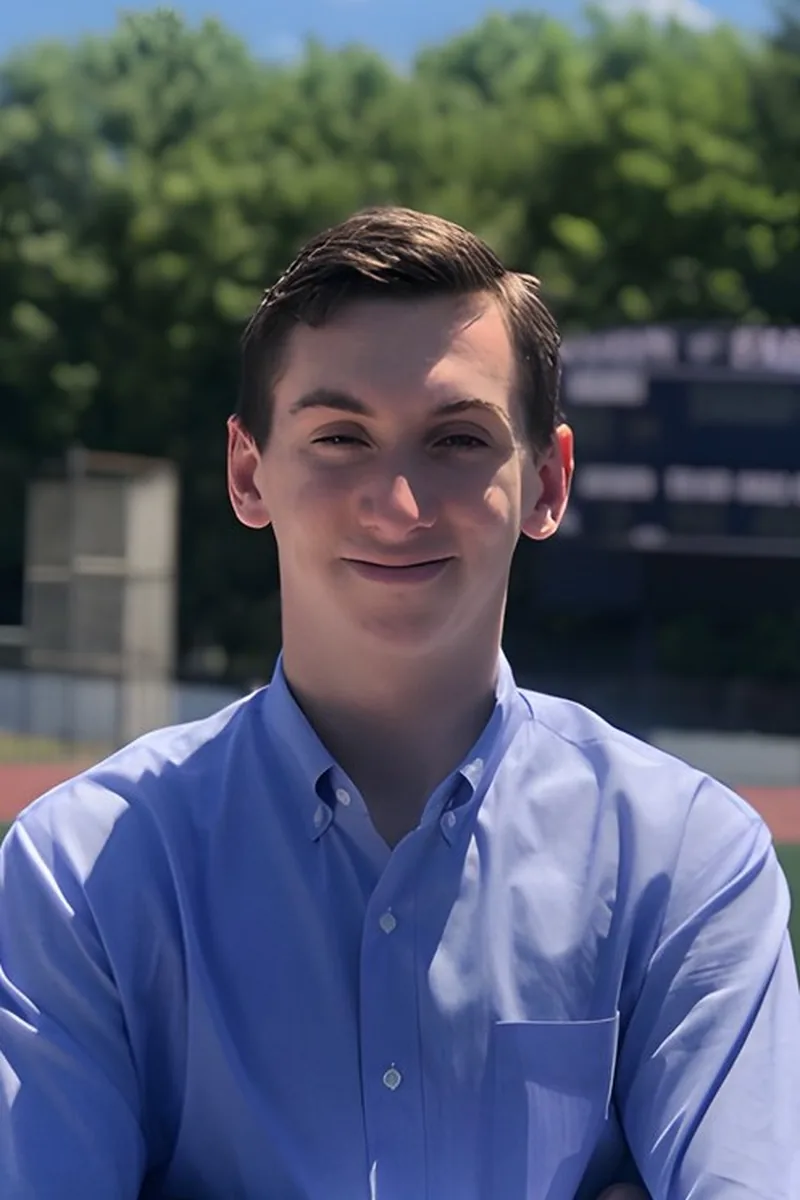
Cornell's biological sciences curriculum put Alec through rigorous quantitative coursework, but it was his TA experience in general chemistry — running problem-solving sessions where students had to wrestle with energy, equilibrium, and rate laws — that sharpened his instinct for where p-chem concepts start to blur. He teaches the subject by slowing down at the exact calculus step where the physical meaning tends to disappear, whether that's setting up a thermodynamic cycle or interpreting what a rate constant actually tells you about molecular collisions. Rated 4.8 by students.
Between biochemistry, organic chemistry, and physical chemistry, Samantha sits at the intersection where biology meets the math-heavy formalism of thermodynamics and kinetics — she understands both the molecular systems and the derivations that describe them. She breaks apart intimidating topics like Gibbs free energy or chemical equilibria by tying each variable back to the biological and chemical processes students already recognize from earlier coursework. Rated 5.0 by students.
A PhD in chemistry means Justin didn't just pass p-chem — he lived in its formalism for years, from quantum mechanical models to statistical thermodynamics, and then kept using it through doctoral research. That depth shows when he teaches: he can trace a concept like chemical potential or a Maxwell relation back to the physical picture driving the math, catching the exact step where a student's understanding breaks down. Rated 5.0 by students.
Two years as an organic chemistry lab TA at the college level gave Maha hands-on experience with the reaction kinetics and thermodynamic reasoning that form the backbone of any p-chem sequence. Now pursuing graduate work in public health at Johns Hopkins, she approaches topics like equilibrium constants and energy diagrams through the lens of someone who's had to apply them in real experimental settings, not just derive them on paper. Rated 5.0 by students.
Scoring in the 98th percentile on the MCAT required Nishant to internalize the thermodynamic and kinetic reasoning that p-chem makes rigorous — enthalpy diagrams, equilibrium constants, and rate law derivations all showed up under intense time pressure before he encountered them in their full mathematical form as a medical student at Case Western. He teaches a physics TA's instinct for applied problem-solving to the calculus-dense material, breaking a topic like a Maxwell relation or a phase diagram into the physical question it's actually answering.
Nicholas studied biology with enough chemistry and physics depth to encounter the thermodynamic and kinetic frameworks that p-chem builds on — enzyme energetics, gas laws, equilibrium — before they get buried under pages of calculus. His 33 ACT reflects strong quantitative reasoning, and he leans on that cross-disciplinary perspective to clarify why a concept like enthalpy or a phase transition behaves the way it does at the molecular level, not just how to push through the derivation.
A physics degree gives Cory something many p-chem tutors lack — native comfort with the quantum mechanics and statistical mechanics that chemistry students often encounter for the first time in this course. He treats topics like wave functions, partition functions, and thermodynamic state variables as extensions of the physics he already thinks in, then builds the chemical context around them. Rated 4.9 by students.
A PhD in biophysical chemistry means Tom didn't just survive p-chem — he built a research career on it, working at the intersection of thermodynamics, quantum mechanics, and molecular behavior where the math has to be airtight. He treats the subject like a language students need to actively speak: drilling derivations and problem sets until manipulating a Maxwell relation or setting up a partition function becomes fluent rather than formulaic.
P-chem is where thermodynamics, quantum mechanics, and kinetics collide, and most students feel overwhelmed by the math intensity alone. Jacob's biochemistry-emphasis BS in Chemistry means he tackled these derivations firsthand — from partition functions to the Schrödinger equation — and he's skilled at unpacking the physical meaning behind each equation so the math stops feeling arbitrary. Rated 5.0 by students.
I am currently a graduate student in Chemical Engineering at the University of Delaware. I am working on using magnetic and flow fields to create advanced materials by directing the self-assembly process of nanoparticles . I have tutored students in Chemistry, Physics and Math all throughout undergraduate and graduate work. I truly enjoy breaking material down into its core components that allows the students to understand complicated information.
Genetics PhD work is surprisingly calculus-intensive — population dynamics, statistical mechanics of molecular interactions, and the thermodynamic stability of nucleic acid structures all demand the same quantitative reasoning that drives p-chem. Nicholas brings that background to topics like free energy calculations and kinetic modeling, where his comfort with both the math and the molecular biology underneath it keeps derivations grounded in actual chemical behavior. Rated 4.8 by students.
Thermodynamics, kinetics, and quantum mechanics all converge in physical chemistry — and that's exactly where Monika's biochemistry and molecular biology training intersects. She breaks down intimidating topics like Gibbs free energy calculations and reaction rate laws by tying them to real chemical systems she studied during her PhD research. Rated 4.8 by students.
Testimonials
Because the right Physical Chemistry tutor makes all the difference.
Average Session Rating – Based on 3.4M Learner Ratings
Nearby Physical Chemistry Tutors
Other Knoxville Tutors
Related Science Tutors in Knoxville
Frequently Asked Questions
Physical Chemistry bridges chemistry and physics by studying how matter behaves at the molecular level, focusing on thermodynamics, kinetics, quantum mechanics, and equilibrium. It's challenging because it requires strong math skills, abstract thinking to visualize molecular interactions, and the ability to connect theoretical concepts to real laboratory observations. Many students struggle with the mathematical complexity and the leap from memorizing formulas to truly understanding the underlying principles.
Students typically struggle with thermodynamic calculations, balancing complex equations, unit conversions, and understanding quantum mechanical concepts like orbitals and wave functions. Many also find it difficult to visualize molecular-level processes and connect abstract theory to experimental results. Personalized tutoring helps break down these concepts step-by-step and builds the problem-solving strategies needed to tackle challenging problem sets.
In your first session, a tutor will assess your current understanding of key Physical Chemistry topics, identify specific areas where you're struggling, and learn about your learning style and goals. They'll then create a personalized plan that might include reviewing foundational concepts, working through practice problems, or preparing for exams. This diagnostic approach ensures every session after that is tailored to your needs rather than following a generic curriculum.
Expert tutors help you see how theoretical concepts—like reaction rates, equilibrium constants, and thermodynamic principles—show up in actual experiments and measurements. They can walk you through experimental design, help you interpret data, and explain why your results do (or don't) match theoretical predictions. This bridge between theory and practice deepens your understanding and makes both coursework and lab reports stronger.
Yes—Physical Chemistry is heavily mathematical, involving calculus, logarithms, complex algebraic manipulations, and unit conversions. If your math foundation is shaky, tutoring can help you strengthen those skills in the context of Physical Chemistry problems so you're not just learning math in isolation. Many students find that working through Physical Chemistry problems with a tutor actually improves their overall math confidence and problem-solving abilities.
Effective exam prep involves reviewing key concepts, practicing problems under timed conditions, identifying your weak spots, and building strategies for tackling unfamiliar questions. A tutor can help you create a study schedule, work through past exams or practice problems, and teach you how to approach multi-step problems systematically. Regular practice with feedback is far more effective than cramming, and tutoring ensures you're practicing the right material the right way.
Look for tutors with a strong background in chemistry or a related field, ideally with college-level Physical Chemistry experience or a relevant degree. They should understand both the content deeply and how to explain abstract concepts clearly—not everyone who knows Physical Chemistry can teach it well. Varsity Tutors connects you with tutors who have proven expertise in the subject and experience helping students at your level.
Real understanding comes from working through problems, asking 'why' questions, and connecting concepts across topics rather than treating each formula as isolated. A tutor helps you develop this deeper understanding by guiding you through the reasoning behind formulas, showing how concepts relate to each other, and encouraging you to explain ideas in your own words. This approach takes more effort upfront but leads to better exam performance and the ability to tackle novel problems confidently.
Let’s find your perfect tutor
Answer a few quick questions. We’ll recommend the right plan and match you with a top 5% tutor.