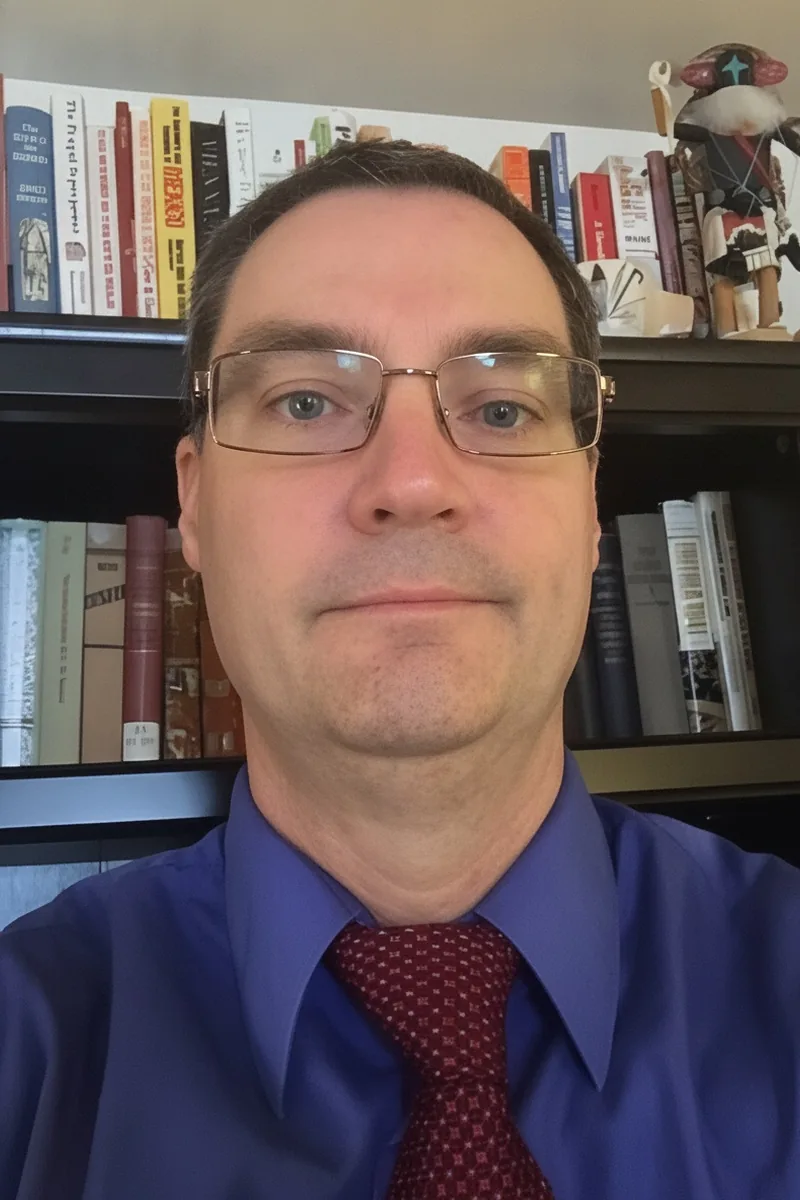
10+ years of tutoring
Scott
- In addition, I have taught courses in the history of the American Southwest, Native American history, and American Indian studies.
About Me
I have taught courses in American history and Western Civilization at Arizona State University, Scottsdale Community College, Chandler-Gilbert Community College. I have tutored students in English as a Second Language, reading comprehension, and essay writing. I use various types of information technology for class sessions, projects, and assignments. I have used both Blackboard and Canvas for my courses in conjunction with other online applications. I blend technology and traditional methods of instruction in my courses. I have worked in various capacities outside of the academic setting, and I utilize my experiences as an example how historical knowledge and methods are applicable outside of the classroom. I strive to show how topics relate to current events and stress the "cause-and-effect" aspects in history to show how history is relevant. I demonstrate how what occurred impacts people on a personal level with emphases on adaptability and continuity. Another of my goals is developing students critical thinking, writing, research, and collaborative working skills. I emphasize that materials presented in class are a starting point in seeking knowledge, not the final word. I view teaching as a major method for people to enrich their lives and broaden their views, in addition to their career preparation. I enjoy teaching and see it as a profession that is always evolving when it comes to the use of technology. I encourage visits to museums, heritage sites, guest lectures, and cultural events. I feel students can conceptualize what is being taught in the classroom through interaction. Students themselves are an invaluable resource in teaching each other. I approach every term as a learning experience for myself as well as my students, and encourage students to relate experiences relative to class topics. This gives students more confidence, encourages dialogue, and shows that the conveyance of ideas is not one way. However, my job does not end with class. I have encouraged and mentored students from various backgrounds in my career. It is greatly satisfying when they come to me requesting letters of recommendation to a program, law school, graduate school, a scholarship, or a job posting. It is gratifying seeing students apply what they learned to further their endeavors and enrich their lives.
Hobbies & Interests
Hiking, travel, reading, and writing.
Education
Q&A with Scott
Who needs tutoring?
No obligation. Takes ~1 minute.
Tutors with Similar Experience

Jeff

Jessica
Brian

Richard
Vivian

JF




Let’s find your perfect tutor
Answer a few quick questions. We’ll recommend the right plan and match you with a top 5% tutor.