Award-Winning Latin Tutors
serving Pittsburgh, PA
Latin
Tutors in Pittsburgh
Private 1-on-1 tutoring, weekly live classes for academic support, test prep & enrichment, practice tests and diagnostics, and more to elevate grades and test scores.
Based on 3.4M Learner Ratings
UniversitiesSchools & Universities
DeliveredHours Delivered
ProficiencyGrowth in Proficiency
Who needs tutoring?
No obligation. Takes ~1 minute.

Antony holds both a bachelor's and a master's degree in Classics, which means years of sustained reading in Latin prose and verse — not just a semester or two of grammar drills. That depth shows when he teaches syntax: he can walk a student through a dense periodic sentence from Cicero and explain exactly why the subjunctive appears where it does, connecting grammatical rules to how Roman authors actually wrote. Rated 5.0 by students.
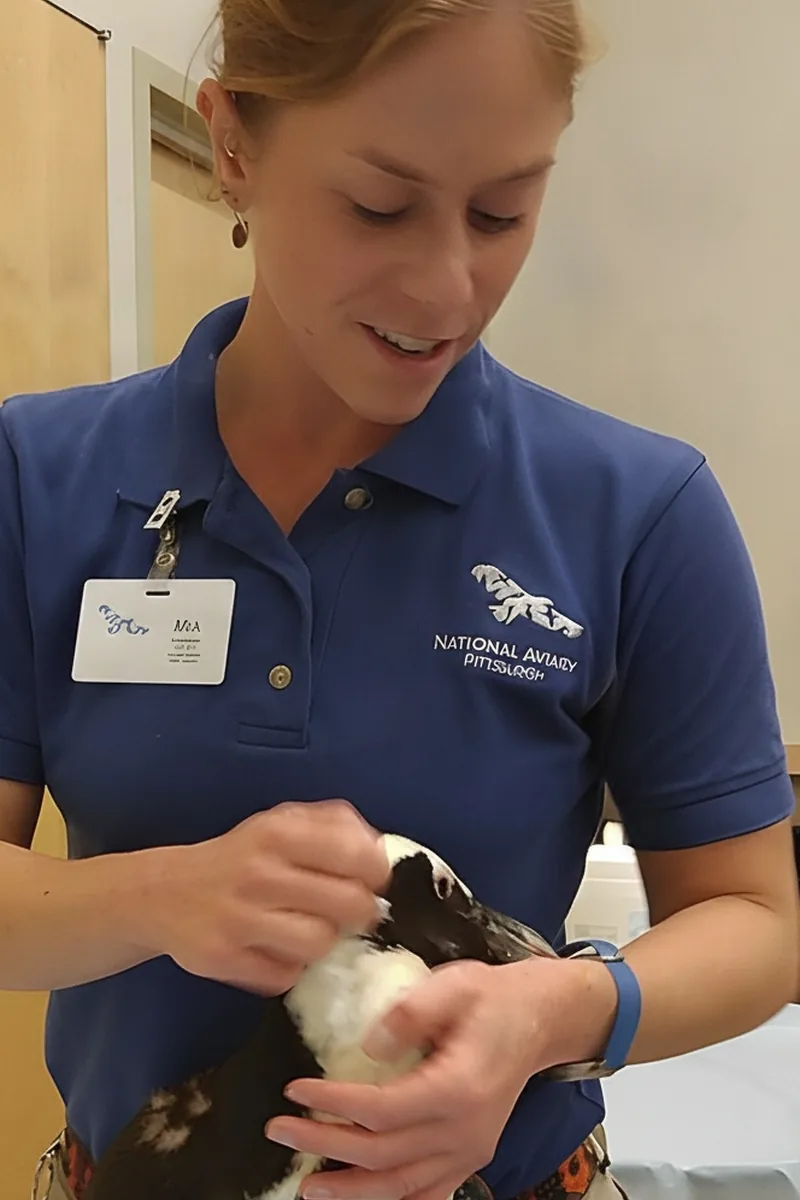
Studying Spanish, French, and Portuguese at the graduate level has given Mia an unusually sharp eye for how all three Romance languages trace their grammar and vocabulary back to Latin — she knows exactly where a tricky conjugation pattern or case structure resurfaces in its modern descendants. That multilingual perspective turns Latin lessons into something more like detective work, where students trace roots and grammatical logic across languages they may already recognize. Rated 5.0 by students.
I am a student at Carnegie Mellon University (CMU). I have spent a large portion of my life outside of the United States and am fluent in Spanish and currently studying Arabic as well. I was homeschooled for much of my life and loved it, but completed my last three years of high school in a public school and am thus well acquainted with the various forms of standardized testing. When I'm not studying I like singing and theatre, reading, playing the piano, climbing trees and doing anything outdoors. I have been tutoring Spanish at CMU for a year now, and am also well versed in History, Geography, and Math. I look forward to working with.
I am a writer who works extensively with historical documents and researcher who embraces learning for life. I love making a subject engaging, interesting and ultimately seeing others succeed in their endeavors.
Studying political science at Penn means Alessia regularly encounters Latin in its natural habitat — legal maxims, constitutional terminology, and the Roman political vocabulary that still shapes how we talk about governance today. She teaches Latin 1 through 4 and uses that real-world context to anchor grammar lessons, so students learning subjunctive mood or indirect statement constructions can see exactly where those forms show up outside a textbook. Rated 5.0 by students.
Psychology textbooks are packed with Latin — from "corpus callosum" to "in vivo" to the diagnostic terminology that runs through every subfield — so Melissa's BS in psychology keeps her bumping into the language's vocabulary and word-formation logic constantly. She uses that clinical and academic vocabulary as a bridge into declension patterns and root analysis, making new grammar feel less abstract and more like decoding terms students will actually encounter. Rated 5.0 by students.
I'm also a recent graduate of The New School, with a Bachelor of Arts in Literary Studies.
I am friendly, reliable, and most importantlycommitted to helping you learn! It is my top priority to create a positive learning experience that will help boost your test scores without boring you to tears. After all, shouldn't learning be fun?
I am most passionate about SAT/ACT Reading and Writing, Spanish, History, and ESOL. I enjoy being a tutor because I love to help students strive for and achieve their goals! I believe every student learns in a different way, which is why I personalize my tutoring approach to fit YOUR needs. I am familiar with the SAT and ACT reading and writing sections, and I can help students improve their scores by walking them through practice questions AND giving them my own testing strategies. I know the SAT and ACT can be stressful for students, but I prepare them so that they walk into the testing room feeling confident and ready!
Psychology's technical vocabulary is packed with Latin — terms like "affect," "stimulus," "ego," and "corpus callosum" all come straight from the language, and Aneri's neuroscience coursework at Cornell means she hits these roots constantly. She teaches Latin 1 and 2 with a knack for turning conjugation and declension patterns into something systematic, drawing on the same analytical rigor that earned her a 1520 SAT. Her SAT Subject Test preparation in Latin adds direct experience with the kind of grammar and reading comprehension the language demands.
Yuheon's applied mathematics training at Notre Dame built the same kind of systematic, pattern-driven thinking that Latin grammar demands — parsing case endings, matching verb conjugations, and untangling nested clauses all reward a logical, step-by-step mindset. He teaches across all four levels and draws on his own diverse cultural background (having lived in Korea and across the U.S.) to keep the language connected to real history and context rather than isolated drills.
Holding a PhD in English, Craig has spent years tracing how Latin's grammatical architecture — its case system, subjunctive moods, and participial constructions — shaped the literary traditions he studies professionally. He teaches Latin 2 and 3 with particular attention to how reading fluency develops, walking students through the process of holding a complex periodic sentence in their head long enough to render it into natural English. Rated 5.0 by students.
Working in Sewanee's writing center gave Wallis a sharp eye for how Latin grammatical structures — particularly case usage and participial constructions — surface in English academic prose, making her explanations feel grounded rather than abstract. She also studied at the European University at St. Petersburg, where reading across languages reinforced the kind of close, syntax-level attention that Latin translation demands. Her Latin 1 and Latin 2 teaching covers foundational declensions through more complex sentence parsing.
While Latin isn't Tara's primary subject, her science and medical coursework has given her deep familiarity with Latin roots, prefixes, and terminology that form the backbone of the language. She approaches Latin grammar with the same systematic, pattern-based thinking she uses in her science studies — breaking declensions and conjugations into logical structures rather than rote memorization lists.
Few students realize how much Latin overlaps with engineering thinking — every sentence is a system of interlocking parts where case endings, verb forms, and clause boundaries have to be identified and assembled in the right order. June studied Latin through four levels and prepared for the SAT Subject Test in it, giving her fluency with everything from basic noun declensions to reading original texts. Her electrical engineering training at Brown reinforces the same methodical, structure-first approach that makes complex translations manageable.
Physics training builds a habit of reading equations as sentences — every symbol has a role, every operation has a reason — and Cory applies that same structural decoding to Latin grammar, where case endings and verb forms function like variables in a well-defined system. He's not a classicist, but his 4.9 rating across dozens of subjects reflects someone who can break any rule-driven discipline into logical, learnable steps, which is exactly what first- and second-year Latin students need when declension tables start to blur together.
An applied mathematics degree and a computer science master's give Daniel an unusual toolkit for Latin — he approaches grammar the way a programmer approaches syntax, where every case ending and conjugation follows strict rules that either compile correctly or produce a visible error. That debugging mindset turns translation exercises into logic puzzles, making it easier for students to spot why a sentence breaks down and how to fix it. Rated 5.0 by students.
Danny's music education background puts him in constant contact with Latin — choral repertoire from Renaissance masses to sacred motets is written in it, and understanding the text means understanding the grammar underneath. He teaches Latin 1 through 3 with a focus on how verb forms and noun cases shape meaning in real passages, not just fill-in-the-blank exercises. His 1450 SAT composite reflects the kind of close-reading precision that carries over into translating Latin prose.
Forgetting about right and wrong answers is where Latin actually starts — William treats translation as an act of interpretation, encouraging students to play with how a sentence's meaning shifts depending on how they read a subjunctive or resolve an ambiguous ablative. His BA in Classical Languages and Literature means he's spent years inside the original texts, not just parsing grammar exercises, and he also reads Ancient Greek, which sharpens his eye for the cross-linguistic patterns that make Latin's structures click. He covers all four levels plus the SAT Subject Test in Latin.
Biomedical sciences coursework means Sam encounters Latin daily — anatomical nomenclature, pharmacological terms, and disease classifications all trace directly back to the language's vocabulary and word-formation rules. That constant exposure to Latin roots and prefixes in a scientific context gives him a practical angle on teaching vocabulary acquisition, while his SAT verbal preparation (1530 composite) sharpened the grammatical parsing skills that make declensions and sentence structure click.
Headed to Columbia's medical school, Tyler knows firsthand how Latin vocabulary threads through anatomy, pharmacology, and clinical terminology — but his Latin teaching goes beyond roots and prefixes into the grammatical scaffolding that makes the language work. He covers both Latin 1 and Latin 2, walking students through conjugation patterns and case usage with the same methodical approach he applies to his biology and standardized test prep.
Testimonials
Because the right Latin tutor makes all the difference.
Average Session Rating – Based on 3.4M Learner Ratings
Other Pittsburgh Tutors
Related Languages Tutors in Pittsburgh
Frequently Asked Questions
Latin builds a strong foundation for English vocabulary—over 60% of English words have Latin roots—making it invaluable for standardized test performance and academic writing. Beyond vocabulary, Latin develops logical thinking through grammar analysis and opens doors to classical literature, history, and culture. For students in Pittsburgh considering advanced studies in law, medicine, science, or humanities, Latin provides essential linguistic and intellectual tools.
Verb conjugation is one of Latin's biggest hurdles because it requires memorizing patterns across multiple tenses, moods, and voices. Personalized 1-on-1 instruction helps by breaking conjugations into manageable chunks, using repetition and pattern recognition rather than rote memorization. A tutor can create targeted practice exercises based on your specific weak points and adjust pacing to match your learning style.
Yes—one of the biggest advantages of personalized tutoring is dedicated speaking practice that classroom settings rarely provide. Tutors can guide you through conversational Latin, help with pronunciation, and build confidence in oral expression. While classical Latin isn't a modern spoken language, practicing pronunciation and reading aloud strengthens comprehension and helps you internalize the language's rhythm and structure.
Effective vocabulary retention combines spaced repetition, contextual learning, and active recall—memorizing word lists alone rarely sticks. Tutors use strategies like connecting Latin words to English derivatives, practicing vocabulary within sentences and passages, and building personalized flashcard systems. Regular review sessions spaced over time help move vocabulary from short-term to long-term memory.
Understanding Roman culture transforms Latin from a grammar exercise into a window into ancient civilization, making the language more meaningful and memorable. Context helps explain why certain phrases matter, what references mean in classical texts, and how Romans thought about the world. Tutors often weave cultural and historical background into lessons, helping students appreciate the literature and society behind the language.
Your first session focuses on understanding your current level, learning goals, and specific challenges—whether that's grammar fundamentals, translation, or preparing for AP Latin. Tutors assess what's working and what isn't, then create a personalized plan tailored to your needs. This foundation ensures every future session builds directly on your strengths and targets your weaknesses.
AP Latin requires mastery of grammar, translation accuracy, and deep comprehension of classical texts—areas where personalized instruction makes a significant difference. Tutors develop targeted study plans, provide extensive translation practice with feedback, teach test-taking strategies, and help you build the vocabulary and syntactical knowledge needed for the exam. With focused 1-on-1 support, students can identify and close knowledge gaps before test day.
Look for tutors with strong classical language training, ideally with a background in Latin literature, ancient history, or classical studies. Experience teaching Latin at the high school or AP level is valuable, as is familiarity with different curriculum approaches and translation methods. Varsity Tutors connects you with expert tutors who have proven expertise in Latin and a track record of helping students succeed.
Let’s find your perfect tutor
Answer a few quick questions. We’ll recommend the right plan and match you with a top 5% tutor.