Award-Winning College Algebra Tutors
serving Philadelphia, PA
College Algebra
Tutors in Philadelphia
Private 1-on-1 tutoring, weekly live classes for academic support, test prep & enrichment, practice tests and diagnostics, and more to elevate grades and test scores.
Based on 3.4M Learner Ratings
UniversitiesSchools & Universities
DeliveredHours Delivered
ProficiencyGrowth in Proficiency
Who needs tutoring?
No obligation. Takes ~1 minute.

Rational expressions, logarithmic equations, and function composition tend to be the spots where college algebra students get stuck — not because the ideas are impossibly hard, but because the notation gets dense fast. Kate unpacks each step methodically, drawing on the same algebraic toolkit she relied on through two bachelor's degrees and a master's in engineering.
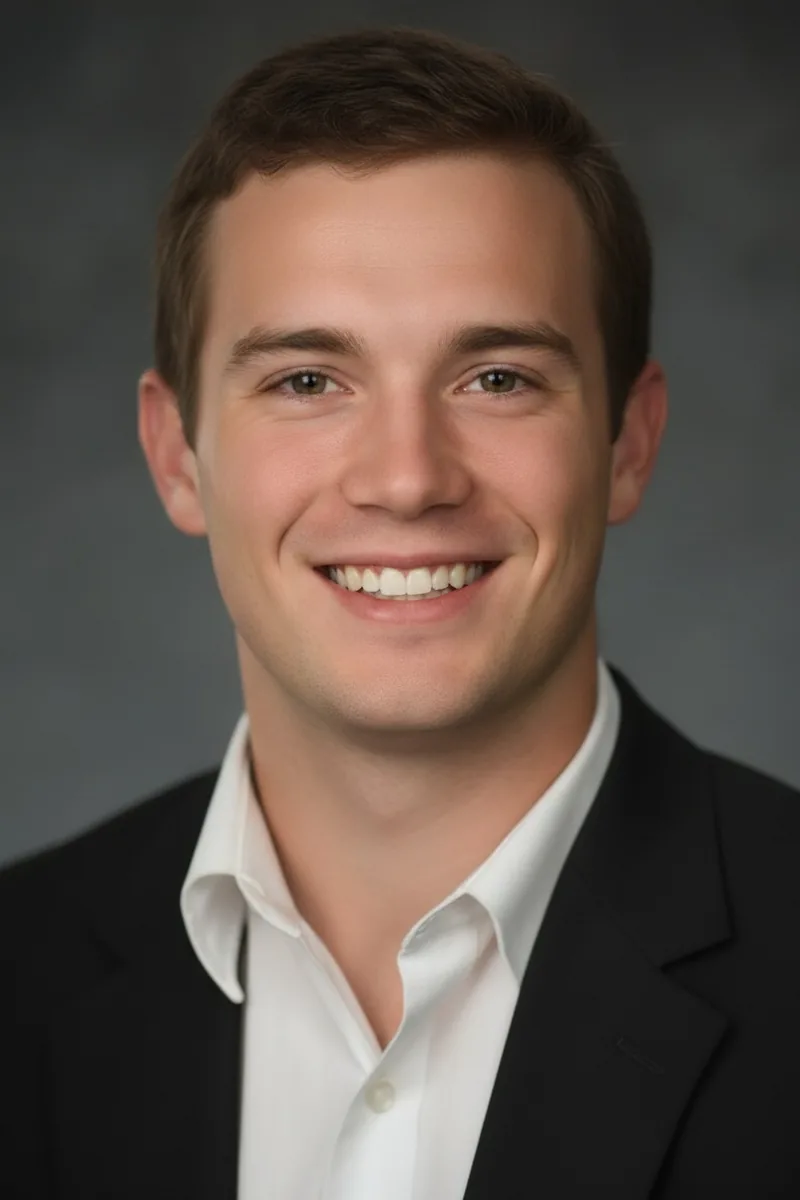
The jump from high school algebra to college algebra trips students up when rational functions, logarithmic equations, and matrix operations all land at once. Steve breaks these topics down by connecting them to the engineering applications he works with daily — showing, for instance, how a system of equations models a real circuit or structure.
Katherine's Wharton finance coursework means she uses algebraic tools — systems of equations, logarithmic functions, polynomial manipulation — on a regular basis, not just in a textbook vacuum. She connects college algebra topics to practical applications in business and data analysis, which tends to make the material click faster for students who wonder why it matters.
Matt's neuroscience and chemistry coursework meant constant exposure to the algebraic machinery underneath college algebra — modeling dose-response curves with rational functions, solving equilibrium systems, and manipulating logarithmic scales for data interpretation. His Master's in nutrition deepened that quantitative work, so when he teaches topics like function transformations or exponential equations, he draws on years of actually using them in scientific contexts. Rated 5.0 by students.
Sarah's math degree from Penn covered everything from linear algebra to statistics, so the college algebra toolkit — polynomial operations, logarithmic equations, systems of inequalities — sits squarely in her comfort zone rather than at its edges. What sets her apart is a knack for building algebraic intuition: she walks through *why* a technique works until students can adapt it to unfamiliar problems on their own. Rated 4.9 by students.
A biology degree means Ade has been applying algebraic reasoning to real problems — modeling population growth with exponential functions, linearizing enzyme kinetics data, interpreting dose-response curves — long enough that the mechanics of college algebra feel like second nature. He breaks down topics like logarithmic properties and rational expressions by connecting them to the quantitative work he's actually done, which makes abstract procedures feel purposeful rather than arbitrary.
Polynomial long division, rational functions, logarithmic equations — College Algebra is where math starts demanding real conceptual understanding instead of just arithmetic speed. Jackson breaks each problem type down by teaching students to recognize what the question is actually testing, a skill he developed through years of tutoring math alongside his doctoral studies in Music. He adapts his explanations to each student's learning style, making abstract algebraic concepts click in ways that crowded lecture halls rarely achieve.
Polynomial functions, rational expressions, and logarithmic equations all follow internal logic that clicks once someone sees the underlying structure. Daniel breaks these topics down collaboratively, talking through each step so students build real intuition for why a technique works — not just when to apply it.
Joyce scored a 1590 on the SAT, which means the algebraic reasoning that college algebra courses demand — manipulating rational expressions, solving exponential and logarithmic equations, working through systems — is deeply ingrained, not something she has to think twice about. Her finance and operations degree from Penn adds a practical layer: she can ground abstract techniques like function transformations in the kind of financial modeling and optimization problems where those tools actually get used.
Med school applicants live and die by quantitative reasoning, and Walaa's biology degree means she's been wielding algebraic tools — exponential growth models, logarithmic data transformations, systems of equations for metabolic pathways — throughout her undergraduate training. She breaks down problems like rational expressions or function composition by connecting each step to the scientific logic behind it, making the algebra feel purposeful rather than arbitrary. Rated 5.0 by students.
Studying economics and statistics at Penn, Jennifer works with algebraic structures every day — modeling supply and demand with systems of equations, transforming data with logarithmic and exponential functions, and building regression frameworks that depend on fluent function manipulation. That constant applied use means she can unpack a tricky rational expression or a domain restriction problem by connecting it to something concrete rather than leaving it abstract. Her 1540 SAT underscores the quantitative instincts behind that approach.
Felipe's public policy degree required building and interpreting quantitative models — regression analysis, cost projections, budget forecasting — all grounded in the same algebraic mechanics that college algebra courses formalize. Now as a CS grad student at Penn, he's extending that foundation into algorithm design and discrete math, which means he can trace a concept like function composition or logarithmic scaling back to both its policy applications and its computational logic. His 1540 SAT confirms the quantitative fluency behind that dual perspective.
Medical school at Drexel meant Prateek never stopped using algebra — dosage calculations, pharmacokinetic models, and physiological rate equations all depend on fluency with exponential functions, logarithmic properties, and systems of equations. His neuroscience background at Johns Hopkins built that quantitative foundation early, so he can trace a tricky rational expression or function transformation back to the underlying logic instead of just walking through the steps.
Four years of classroom teaching across math and social studies gave Jean a clear picture of the specific algebra skills that trip students up when they hit college-level work — particularly logarithmic and exponential functions, where the jump in abstraction catches people off guard. She's a state-certified math teacher who scored a 1540 SAT and 34 ACT, and she leans on that blend of formal training and test-prep experience to walk through problems step by step until the underlying logic clicks rather than just the memorized procedure.
I am happy when my student completely understands the material. I highly discourage memorization.
Rational expressions, polynomial division, and function composition tend to be the concepts where College Algebra students lose their footing. Tom approaches each of these by building from concrete numerical examples before moving to the abstract — a habit he developed studying neurobiology at Penn, where translating between math and science was a daily requirement.
I am a very passionate teacher who has worked in public and private school settings at both the high school and college level. I have an undergraduate mathematics degree, and taught AP Calculus at a North Carolina high school. I also have a PhD in philosophy, and have taught at major research universities in Missouri and Ohio. I am personally invested in my students' success, and take pride in being clear, conscientious, and accessible.
Dhinakaran's bioengineering and economics double major meant constantly toggling between biological modeling and econometric analysis — both of which run on the same college algebra machinery of systems of equations, exponential and logarithmic functions, and polynomial manipulation. His graduate work in biomedical engineering deepened that fluency, so he can unpack why a technique like completing the square or decomposing rational expressions actually works, not just walk through the steps. Rated 4.9 by students.
Steven's biology degree at Drexel had him neck-deep in the quantitative side of organismal physiology — modeling growth curves, linearizing data with log transformations, and solving systems that describe physiological relationships — so the college algebra toolkit is something he's used under pressure, not just studied in isolation. He's especially sharp on the SAT and ACT math sections (1480 SAT, 34 ACT), which means he can pinpoint exactly which algebraic habits — clean factoring, confident function manipulation, efficient equation-solving — transfer directly into coursework success. Rated 5.0 by students.
Before switching to pre-med, Sophie started college as an engineering student — which means she built her algebraic toolkit through courses that demanded fluency with functions, inequalities, and systems of equations under real problem-solving pressure. That background, combined with years of tutoring math at a local center, gives her a knack for diagnosing exactly where a student's reasoning breaks down on multi-step problems. Rated 4.9 by students.
Rational expressions, logarithmic equations, and systems of inequalities trip up many college algebra students because the rules seem arbitrary without a clear framework. Bahaeddine approaches each topic by building the logic behind the rule first, then drilling the technique — an instinct sharpened by years of teaching math at multiple universities.
I am currently a graduate student in Chemical Engineering at the University of Delaware. I am working on using magnetic and flow fields to create advanced materials by directing the self-assembly process of nanoparticles . I have tutored students in Chemistry, Physics and Math all throughout undergraduate and graduate work. I truly enjoy breaking material down into its core components that allows the students to understand complicated information.
Giancarlo's Penn math degree means he didn't just pass through college algebra — he taught it, serving as a TA for multiple mathematics courses where he learned exactly which mistakes students make when wrestling with logarithmic equations, rational expressions, and function transformations. That combination of formal training and hands-on classroom experience lets him anticipate where confusion starts and unpack the logic before it snowballs. Rated 5.0 by students.
I am a recent graduate of University of Pennsylvania. I love teaching, and have experience teaching students from different backgrounds and experiences. This past summer, I was a teaching fellow at the Social Justice Research Academy at the University of Pennsylvania. I mentored a small group of high-school students, many of them international, and help them navigate a rigorous research-based curriculum. Before coming to college, I co-founded a teaching center, tutoring economically disadvantaged students in English. In the summer of 2011, I taught creative writing at my high school.
Having taught Algebra 1, Algebra 2, and Geometry in the classroom, Jeremiah knows exactly which algebraic habits — sloppy sign errors in rational expressions, shaky intuition around function transformations — snowball into real trouble once students hit college-level material. His economics training at Brown meant living inside algebraic modeling, and his master's in Urban Education sharpened his ability to diagnose where a student's understanding actually breaks down and rebuild from that precise spot. Rated 5.0 by students.
Environmental science coursework builds surprisingly strong algebra muscles — Christine spent her degree working with exponential decay models for contaminant half-lives, logarithmic pH calculations, and systems of equations for nutrient cycling, all core college algebra territory. She's particularly good at demystifying logarithmic and exponential relationships by connecting them to processes students can actually picture. Rated 5.0 by students.
Sociology coursework at Temple has Cheridan building and interpreting statistical models regularly, which means the algebraic mechanics behind those models — solving systems, working with functions, and manipulating expressions — stay sharp through constant use rather than fading after a final exam. She's particularly good at walking through word problems step by step, translating messy real-world setups into clean algebraic equations that students can actually follow.
Ian's Biometry and Statistics degree from Cornell meant years of translating real-world data problems into algebraic setups — building fluency with functions, logarithmic expressions, and systems of equations as practical tools for analysis rather than abstract exercises. He zeroes in on the reasoning behind each algebraic manipulation, walking through why a technique works so that students can adapt when a problem looks slightly different from the textbook version.
Four years of GED tutoring gave Walter a clear picture of exactly which algebra fundamentals — order of operations, factoring, solving linear and quadratic equations — need to be rock-solid before students can tackle the more abstract college algebra topics like logarithms and function behavior. His education degree from Temple means he knows how to sequence those building blocks so each new concept clicks into place. Rated 4.8 by students.
A biology degree from UNC Chapel Hill meant Kimberly spent semesters modeling enzyme kinetics, population growth curves, and equilibrium systems — all problems that demand solid command of exponential functions, logarithms, and polynomial manipulation. That science-lab algebra, paired with a 1590 SAT and a 4.9 rating from students, translates into someone who can unpack why a technique works and show exactly where it shows up outside the textbook.
I am open to tutoring in a broad range of subjects, including Algebra, Spanish I/II, ESL and Biology (SAT II, AP, and MCAT).
Economics coursework gives Hunter a daily reason to actually use college algebra — building models with systems of equations, interpreting logarithmic and exponential relationships in market data, and manipulating functions that describe real economic behavior. That means when he walks through a topic like rational expressions or function transformations, he can ground the algebra in problems he's genuinely worked through rather than treating it as abstract symbol-pushing.
Melanie's Ph.D. work in School Psychology gives her a sharp read on how different learners process abstract algebraic concepts — she can spot whether a student is struggling with the logic of logarithmic properties or just the notation, and adjust on the fly. That diagnostic instinct, paired with her psychology and quantitative background, makes her especially effective at untangling the conceptual knots in topics like rational expressions and function transformations. Rated 4.8 by students.
Melissa is training to become a math teacher, which means she approaches college algebra the way she'll eventually teach it — building each concept from the ground up so that topics like logarithmic equations or function transformations actually make sense rather than just following memorized steps. Her psychology background also gives her a sharp read on where confusion sets in and how to reframe a problem before frustration takes over. Rated 5.0 by students.
Two mechanical engineering degrees mean Nicholaus didn't just pass college algebra — he pressure-tested every piece of it in statics, dynamics, thermodynamics, and fluid mechanics courses where a shaky grasp of polynomial manipulation or exponential modeling would sink an entire problem set. That repeated, applied use gives him a clear sense of which algebraic techniques actually need to be second nature and which shortcuts tend to fall apart under pressure.
Erin earned her math degree doing the proofs and abstractions that sit behind every college algebra technique — so when she teaches something like solving a logarithmic equation or graphing a rational function, she can explain the machinery underneath rather than just the procedure. Her 1530 SAT confirms the quantitative instincts, but it's the dedicated math training that lets her pinpoint exactly where a student's reasoning breaks down and rebuild it on the spot.
Accounting coursework drills one algebraic skill relentlessly: setting up equations from word problems and solving for unknowns buried inside financial models. Daniel's BS in Accounting means he spent years translating real-world scenarios into algebraic expressions — balancing multi-variable systems, working through cost-volume-profit formulas, and manipulating equations where every step has a dollar-sign consequence. That practical grounding makes him especially effective at demystifying the applied side of college algebra, from linear systems to modeling with functions.
A math degree gives Alex the kind of structural understanding that turns college algebra from a collection of disconnected rules into a coherent system — particularly when topics like logarithmic properties or rational expressions start building on each other faster than lectures can explain. He breaks problems into their underlying logic first, then walks through the mechanics, so students actually retain the reasoning behind each technique. His 1480 SAT underscores the quantitative fluency he brings to the table.
Anthropology coursework involves more quantitative reasoning than most people expect — Dana regularly works with statistical models and data analysis that depend on manipulating functions, solving equations, and interpreting graphs. She brings that practical comfort with algebra to topics like polynomial operations and exponential relationships, breaking each problem into concrete steps that mirror how she'd approach fieldwork data.
Ben's mathematics degree from Penn means college algebra isn't something he vaguely remembers — it's the foundation he's actively building on in courses like linear algebra and multivariable calculus every semester. That proximity lets him pinpoint exactly why a student's approach to, say, solving a logarithmic equation or graphing a rational function isn't clicking, and rebuild the reasoning step by step. Holds a 5.0 rating.
Testimonials
Because the right College Algebra tutor makes all the difference.
Average Session Rating – Based on 3.4M Learner Ratings
Practice College Algebra
Free practice tests, flashcards, and AI tutoring for College Algebra
Other Philadelphia Tutors
Related Math Tutors in Philadelphia
Frequently Asked Questions
College algebra requires deeper conceptual understanding beyond just memorizing procedures. While high school algebra focuses on solving equations, college algebra emphasizes why methods work, connecting multiple concepts, and applying algebra to real-world problems. This shift from "how" to "why" is where many students struggle, but personalized tutoring helps bridge that gap by building the foundational understanding needed for success in calculus and beyond.
Word problems require translating real-world situations into mathematical language—a skill that's different from solving equations directly. Many students can solve an equation perfectly but struggle to set it up from a paragraph of text. Tutors help by teaching problem-solving strategies like identifying what you know, what you're looking for, and which algebraic tools apply, turning word problems from intimidating into manageable.
Graphing connects abstract algebraic equations to visual representations, helping you see patterns and relationships you might miss in symbolic form alone. Many students memorize graphing rules without understanding the "why" behind them. Personalized instruction allows tutors to show you how changing coefficients affects a graph, help you recognize function families, and build the visual intuition that makes calculus much easier.
Showing work reveals your mathematical thinking and helps identify where errors occur—crucial for college-level math where partial credit matters and conceptual understanding is assessed. It also helps you catch mistakes and learn from them. Tutors can teach you how to organize your work clearly, explain your reasoning at each step, and develop problem-solving strategies that instructors are actually looking for.
Yes. Math anxiety often stems from past negative experiences or gaps in foundational understanding, not from lack of ability. Working with a tutor in a low-pressure, one-on-one environment helps rebuild confidence by breaking material into manageable pieces, celebrating small wins, and showing you that you're capable of understanding concepts you thought were impossible. Many students find that personalized instruction transforms their relationship with math.
Your first session is about connection and assessment. The tutor will ask about your current challenges, what's working and what isn't, and review specific problem areas you're facing in class. They'll identify gaps in understanding and create a personalized plan tailored to your learning style and goals. Come with recent homework, exams, or specific topics you'd like to focus on.
Varsity Tutors connects you with tutors experienced in working with Philadelphia students across the city's 91 school districts and various colleges. They're familiar with different textbooks, pacing, and teaching approaches used locally, so they can align instruction with what you're learning in class while also filling gaps and building deeper understanding.
College algebra is about recognizing that different-looking problems often use the same underlying concepts. Tutors help by showing you how polynomial equations, rational functions, and exponential models follow similar patterns, and how algebra connects to real applications. This pattern recognition is what transforms algebra from a collection of isolated rules into a coherent system—the key to genuine understanding and success in higher math.
Let’s find your perfect tutor
Answer a few quick questions. We’ll recommend the right plan and match you with a top 5% tutor.