Award-Winning IB Chemistry Tutors
serving Harrisburg, PA
IB Chemistry
Tutors in Harrisburg
Private 1-on-1 tutoring, weekly live classes for academic support, test prep & enrichment, practice tests and diagnostics, and more to elevate grades and test scores.
Based on 3.4M Learner Ratings
UniversitiesSchools & Universities
DeliveredHours Delivered
ProficiencyGrowth in Proficiency
Who needs tutoring?
No obligation. Takes ~1 minute.

Between redox balancing, enthalpy cycles, and equilibrium calculations, IB Chemistry demands more mathematical confidence than most students expect from a science course. Ben pairs his Penn math training with IB Chemistry experience to tackle the quantitative problem types that tend to cost students the most marks. He's rated 5.0 by the students he's worked with.
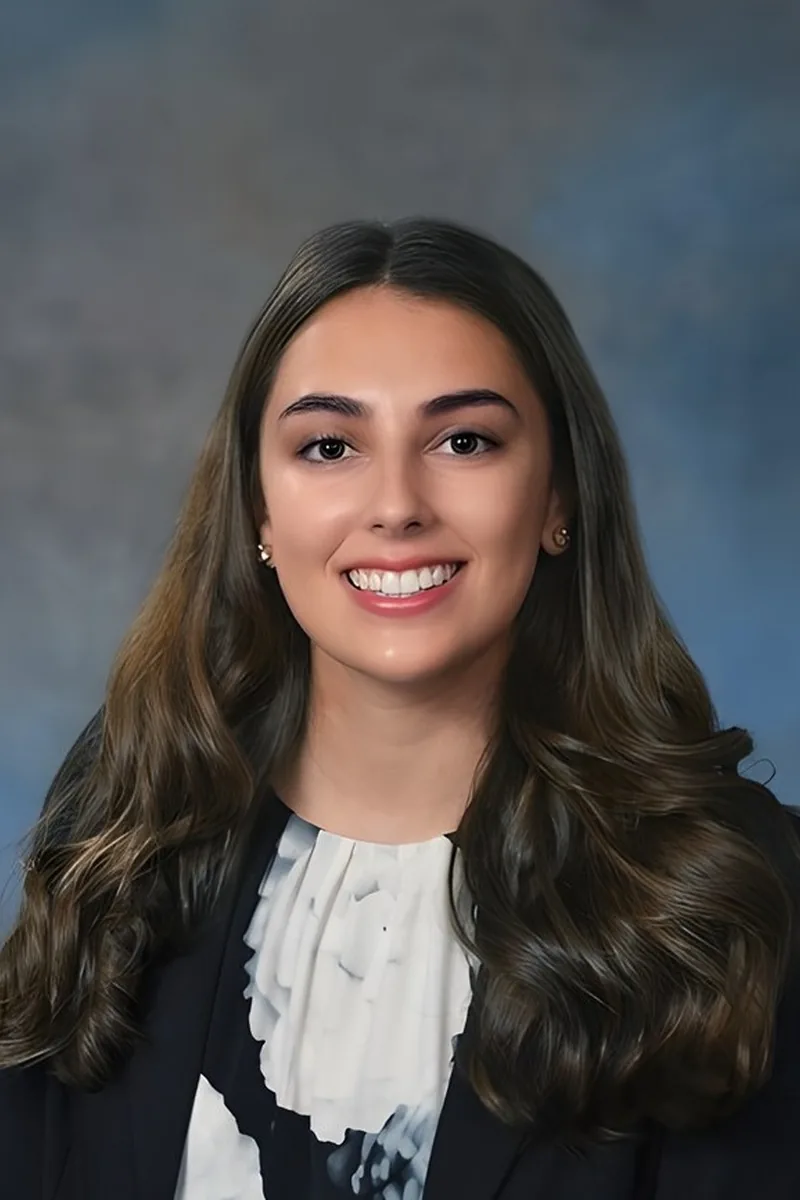
IB Chemistry's internal assessment alone can make or break a student's score, and that's before tackling the breadth of topics from atomic structure to organic chemistry to energetics. Amanda's background in biology and medicine means she naturally connects chemical concepts to their applications — explaining electronegativity through drug interactions or thermodynamics through metabolic energy. She also understands the IB framework's emphasis on linking theory to experimental design, which shapes how she prepares students for both papers and the IA.
Madhura's master's degree in chemistry and experience teaching at both the high school and university level means she's encountered IB Chemistry's trickiest content — periodicity, kinetics, organic nomenclature — from multiple angles and at multiple depths. That dual vantage point is particularly useful for HL students who need to move fluidly between conceptual understanding on Paper 1 and the structured, multi-step calculations Paper 2 demands.
Stoichiometry, equilibrium, and thermodynamics form the backbone of IB Chemistry, and each one requires a slightly different problem-solving mindset. Sidharth tackles these by walking through the logic behind each calculation step so students can self-correct on exam day instead of relying on memorized setups.
IB Chemistry's breadth — from stoichiometry and bonding through options like energy or medicinal chemistry — rewards students who can link ideas across topics rather than study each unit in isolation. Michael's PhD in Materials Chemistry gives him the cross-cutting perspective to tackle both Standard and Higher Level content, including the Internal Assessment's experimental design requirements. He holds a 5.0 rating from past students.
Succeeding in IB Chemistry means mastering everything from stoichiometry and periodicity to organic reaction mechanisms and energetics — a range that trips up students who study each topic in isolation. Kimberly's university work in biology and biochemistry at UNC Chapel Hill required deep fluency in chemical principles, and she uses that foundation to show students how bonding, thermodynamics, and kinetics thread through the entire IB syllabus.
IB Chemistry's internal assessment alone can make or break a final score, and the extended essay option in chemistry demands real experimental rigor. Alexander's university-level TA experience in chemistry labs means he can dig into everything from enthalpy calculations to redox equilibria while also coaching the data analysis and scientific writing that IB examiners specifically look for.
Between the HL/SL content split, IA lab work, and the exam's emphasis on applying concepts to unfamiliar reactions, IB Chemistry can overwhelm students fast. Diptesh teaches the subject as a chemistry concentrator at NYU, which means topics like equilibrium, energetics, and periodicity trends are part of his daily coursework. He knows which concepts the IB examiners test hardest and how to structure answers that earn full marks.
A Cornell Chemistry & Chemical Biology graduate (magna cum laude), Michael has the depth to tackle IB Chemistry's trickiest areas — from periodicity trends and molecular geometry at SL to the HL organic synthesis and equilibrium problems that demand real conceptual fluency. He also tutors organic chemistry and AP Chemistry, so he's used to scaling explanations up or down depending on what the syllabus actually requires. Rated 5.0 by students.
IB Chemistry's internal assessment alone can make or break a final score, and the exam's data-based questions demand more than rote recall. Akshaya approaches IB Chem the way her engineering program taught her — by connecting quantitative problem-solving (enthalpy calculations, Hess's law, redox balancing) to conceptual understanding so students can handle both Paper 1's multiple choice and Paper 2's extended response.
Stoichiometry, equilibrium, and redox reactions each have their own logic, and IB Chemistry expects students to switch fluently between all of them under exam pressure. Ehigbor approaches each topic by grounding it in the periodic trends and bonding concepts that explain why reactions behave the way they do. Her premed science training means she can also bridge IB Chem content to the biochemistry topics that show up in Option B and beyond.
Spending two semesters instructing general chemistry classes and organic chemistry labs at UGA gave Katheryn a clear picture of where students hit walls — and IB Chemistry's SL and HL syllabi lean heavily on exactly those foundational areas like stoichiometry, bonding, and reaction mechanisms. Her chemistry degree means she can dig into the quantitative reasoning behind topics like enthalpy calculations without oversimplifying, while her 4.8 rating suggests students find her explanations genuinely accessible.
The IB Chemistry syllabus packs in everything from stoichiometry and equilibrium to organic reaction pathways, and the exam expects students to move fluidly between calculation and conceptual explanation. Lloyd tutors the quantitative side of chemistry — enthalpy cycles, rate expressions, pH calculations — with the mathematical confidence that comes from his data science coursework at Rochester.
A PhD in materials engineering means Nivedina regularly works with the thermodynamics, bonding theory, and solid-state chemistry that IB Chemistry HL leans on heavily — except she applies them to real material systems like polymers and ceramics. That depth is especially useful for energetics and periodicity, where she can explain why lattice enthalpy trends or metallic bonding behavior work the way they do rather than just drilling the patterns. Her undergraduate chemistry degree covers the organic and stoichiometric fundamentals that round out the rest of the IB syllabus.
IB Chemistry's internal assessment alone demands a level of experimental design and data analysis that most high school courses never require. Andrew earned his PhD in Inorganic Chemistry, so he tackles HL topics like transition metal chemistry, spectroscopic analysis, and energetics with firsthand research knowledge. He also walks students through the structured paper formats and multi-step calculation problems that IB exams are known for.
The IB Chemistry curriculum weaves together quantitative problem-solving and theoretical explanation in a way that rewards deep understanding over rote memorization — especially on Paper 2's extended-response questions. James brings a Harvard chemistry degree and real lab experience to his tutoring, which means he can explain concepts like periodicity or chemical kinetics with the kind of concrete examples that make abstract theory stick. He's rated 4.9 by students across his subjects.
IB Chemistry's Internal Assessment alone can make or break a final score, and Zhenrui knows the program inside out — having completed IB Chemistry HL and now tackling advanced chemistry through Columbia's premed curriculum. He breaks down tough topics like equilibrium constants, redox electrochemistry, and organic reaction mechanisms by connecting them to the specific way IB examiners frame their mark schemes.
IB Chemistry's internal assessment and extended essay components demand a level of experimental reasoning that goes beyond standard test prep. Marlow tackles both the quantitative rigor — equilibrium constants, redox balancing, energetics calculations — and the scientific communication skills IB examiners specifically look for. A 5.0 student rating speaks to how well that approach lands.
IB Chemistry's internal assessment and data-analysis questions ask students to think like working scientists — designing experiments, propagating uncertainty, and drawing conclusions from imperfect data. Devin's engineering lab experience at NC State gives him a practical handle on these skills, and he connects IB topics like energetics and bonding to the quantitative chemistry he studies daily.
Testimonials
Because the right IB Chemistry tutor makes all the difference.
Average Session Rating – Based on 3.4M Learner Ratings
Other Harrisburg Tutors
Related Science Tutors in Harrisburg
Frequently Asked Questions
IB Chemistry follows a rigorous international curriculum that emphasizes conceptual understanding alongside practical skills. The course covers atomic structure, bonding, stoichiometry, kinetics, equilibrium, oxidation-reduction, organic chemistry, and analytical techniques—but with greater depth and emphasis on how chemistry connects to real-world contexts. IB Chemistry also requires students to develop strong scientific reasoning skills and complete internal assessments involving lab work and data analysis, which go beyond typical high school chemistry.
Many students struggle with balancing complex equations, understanding mole concepts and stoichiometry, and visualizing molecular structures and bonding at the atomic level. The course also demands strong quantitative skills—unit conversions, pH calculations, and equilibrium problems can feel overwhelming without a solid foundation. Additionally, IB Chemistry requires students to think critically about experimental design and data interpretation, which is different from simply memorizing facts, so students need support bridging the gap between theory and application.
Tutors help students develop the scientific reasoning and experimental design skills that are central to IB Chemistry's internal assessment component. They can guide you through planning investigations, collecting and analyzing data accurately, identifying sources of error, and communicating results clearly—skills that directly impact your IA grade. Working with a tutor on past lab scenarios and practice experiments also builds confidence in applying theoretical knowledge to hands-on situations.
Your first session is about understanding where you are in the course and what you need most. A tutor will likely assess your grasp of foundational concepts like atomic structure and bonding, identify specific topics causing confusion, and learn about your learning style. From there, they'll create a personalized plan that might focus on strengthening weak areas, preparing for upcoming assessments, or building problem-solving strategies for complex calculations and reasoning questions.
IB Chemistry is heavily concept-based—memorization alone won't get you far on exams or internal assessments. The course requires you to understand *why* reactions happen, *how* molecular structure affects properties, and *when* to apply different principles to new situations. Tutors help you move beyond memorizing formulas to truly grasping the underlying chemistry, which makes problem-solving easier and helps you tackle unfamiliar questions with confidence on exam day.
Varsity Tutors connects you with expert tutors who have deep knowledge of the IB Chemistry curriculum and understand the specific challenges students face. When you reach out, you can specify that you need IB Chemistry support, and we'll match you with a tutor who has experience with the course structure, exam format, and internal assessment requirements. This personalized matching ensures you get instruction tailored to IB's rigorous standards and your unique learning needs.
Starting early gives you the biggest advantage—building a strong foundation in atomic structure and bonding makes everything that follows easier to grasp. However, tutoring helps at any point in the course, whether you're getting ahead, catching up on difficult topics, or preparing for final exams and the IA. Many students benefit from ongoing support throughout the two-year IB program to stay on track and deepen their understanding progressively.
Tutors use multiple strategies to make abstract chemistry tangible—drawing molecular structures, using models and analogies, working through step-by-step problem breakdowns, and connecting concepts to real-world examples you can relate to. When you can visualize why certain bonds form or how electron distribution affects molecular properties, the chemistry becomes less mysterious and more logical. This deeper understanding makes it easier to predict reactions and apply concepts to new problems on exams.
Let’s find your perfect tutor
Answer a few quick questions. We’ll recommend the right plan and match you with a top 5% tutor.