Award-Winning IB Chemistry Tutors
serving Allentown, PA
IB Chemistry
Tutors in Allentown
Private 1-on-1 tutoring, weekly live classes for academic support, test prep & enrichment, practice tests and diagnostics, and more to elevate grades and test scores.
Based on 3.4M Learner Ratings
UniversitiesSchools & Universities
DeliveredHours Delivered
ProficiencyGrowth in Proficiency
Who needs tutoring?
No obligation. Takes ~1 minute.

Between redox balancing, enthalpy cycles, and equilibrium calculations, IB Chemistry demands more mathematical confidence than most students expect from a science course. Ben pairs his Penn math training with IB Chemistry experience to tackle the quantitative problem types that tend to cost students the most marks. He's rated 5.0 by the students he's worked with.
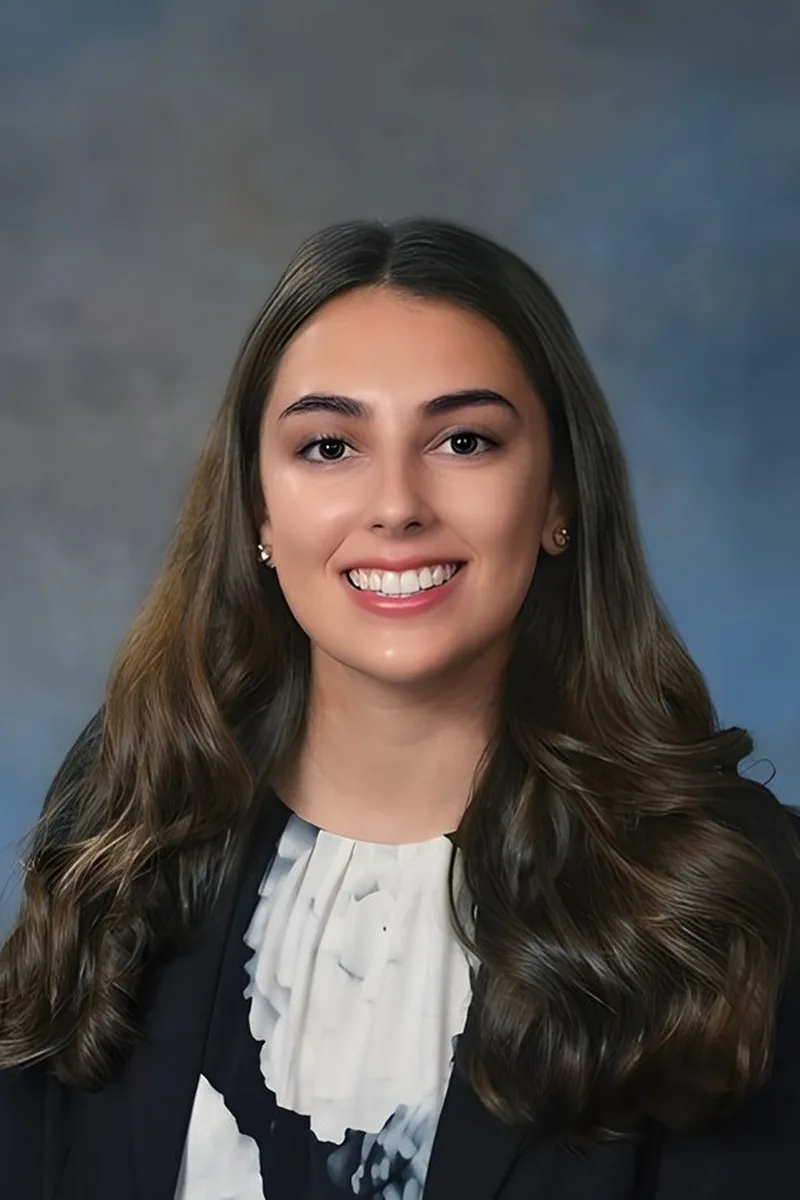
IB Chemistry's internal assessment alone can make or break a student's score, and that's before tackling the breadth of topics from atomic structure to organic chemistry to energetics. Amanda's background in biology and medicine means she naturally connects chemical concepts to their applications — explaining electronegativity through drug interactions or thermodynamics through metabolic energy. She also understands the IB framework's emphasis on linking theory to experimental design, which shapes how she prepares students for both papers and the IA.
Madhura's master's degree in chemistry and experience teaching at both the high school and university level means she's encountered IB Chemistry's trickiest content — periodicity, kinetics, organic nomenclature — from multiple angles and at multiple depths. That dual vantage point is particularly useful for HL students who need to move fluidly between conceptual understanding on Paper 1 and the structured, multi-step calculations Paper 2 demands.
Stoichiometry, equilibrium, and thermodynamics form the backbone of IB Chemistry, and each one requires a slightly different problem-solving mindset. Sidharth tackles these by walking through the logic behind each calculation step so students can self-correct on exam day instead of relying on memorized setups.
IB Chemistry's breadth — from stoichiometry and bonding through options like energy or medicinal chemistry — rewards students who can link ideas across topics rather than study each unit in isolation. Michael's PhD in Materials Chemistry gives him the cross-cutting perspective to tackle both Standard and Higher Level content, including the Internal Assessment's experimental design requirements. He holds a 5.0 rating from past students.
Succeeding in IB Chemistry means mastering everything from stoichiometry and periodicity to organic reaction mechanisms and energetics — a range that trips up students who study each topic in isolation. Kimberly's university work in biology and biochemistry at UNC Chapel Hill required deep fluency in chemical principles, and she uses that foundation to show students how bonding, thermodynamics, and kinetics thread through the entire IB syllabus.
IB Chemistry's internal assessment alone can make or break a final score, and the extended essay option in chemistry demands real experimental rigor. Alexander's university-level TA experience in chemistry labs means he can dig into everything from enthalpy calculations to redox equilibria while also coaching the data analysis and scientific writing that IB examiners specifically look for.
Mechanical engineering at UGA means Kayla has worked through thermodynamics, reaction kinetics, and materials chemistry at a level that maps directly onto IB Chemistry's most calculation-heavy SL and HL content — particularly energetics and equilibrium. She's especially comfortable with the quantitative side, turning multi-step problems like enthalpy cycles into clear, methodical sequences that match how IB mark schemes actually award points. Rated 5.0 by students.
Arianna's neuroscience degree required deep coursework in chemistry — from molecular interactions and reaction kinetics to the thermodynamic principles that IB Chemistry tests heavily across both SL and HL papers. That background means she can teach topics like bonding, stoichiometry, and organic mechanisms by grounding them in how molecules actually function in living systems, which is the kind of applied reasoning IB examiners consistently reward. Rated 4.8 by students.
I am a graduate of UC San Diego with a Bachelors in Neuroscience through the Psychology department. After graduating, I went to Michigan Technological University and did some graduate work, before moving to Texas to be closer to my parents. I did my alternative certification program through Texas Teachers and am highly qualified to teach Science for grades 7-12. I have been a teacher in public and charter schools for the last four years, and have tutoring experience extending over ten years behind me as well.
Micaela's zoology and pre-vet coursework at Auburn meant tackling general and organic chemistry head-on — the same stoichiometry, bonding, and reaction theory that IB Chemistry builds its SL and HL syllabi around. She also led Supplemental Instruction sessions for science courses, which sharpened her ability to unpack dense quantitative problems into the kind of structured, step-by-step reasoning IB mark schemes actually credit. Rated 4.9 by students.
IB Chemistry's breadth is what trips students up — one week it's periodicity, the next it's energetics, then suddenly you're writing a lab report on kinetics. Asad's chemistry degree from Rice gives him the depth to connect these topics into a coherent story, and he's comfortable tackling both SL and HL content including options like medicinal chemistry. His 4.7 rating speaks to how well that approach translates for students.
Eric holds a master's in inorganic chemistry, which means topics like periodicity, bonding models, and transition metal chemistry — areas that trip up many IB students — are squarely in his wheelhouse. He teaches the underlying "why" behind trends and reactions so that when an IB Paper 2 question asks students to "explain" rather than "state," they can construct answers that actually earn full marks. Rated 5.0 by students.
IB Chemistry's internal assessment alone requires students to design original experiments, collect data, and analyze results with genuine scientific rigor. Rithi's biotechnology master's involved exactly that kind of independent lab work, so she walks students through experimental design and error analysis from experience. She also tackles the trickiest Higher Level topics — periodicity trends, energetics calculations, organic reaction mechanisms — with a researcher's precision.
Two semesters as a learning assistant for general and organic chemistry gave Preston a sharp sense of where students get stuck — and IB Chemistry's HL topics like energetics, redox balancing, and reaction mechanisms hit many of those same pain points. His chemical engineering coursework at Penn State means he's worked through these concepts at a level well beyond what IB demands, so he can explain the reasoning behind each step rather than just walking through formulas.
Ritu's biology degree means she's deeply familiar with the chemical principles that underpin life sciences — atomic structure, molecular polarity, organic functional groups — all of which sit at the core of IB Chemistry's SL syllabus. That biology-chemistry overlap is particularly useful when IB questions ask students to apply concepts like bonding and intermolecular forces to real molecular behavior, rather than just recalling definitions. Rated 5.0 by students.
Stoichiometry, equilibrium, and redox reactions each have their own logic, and IB Chemistry expects students to switch fluently between all of them under exam pressure. Ehigbor approaches each topic by grounding it in the periodic trends and bonding concepts that explain why reactions behave the way they do. Her premed science training means she can also bridge IB Chem content to the biochemistry topics that show up in Option B and beyond.
The IB Chemistry syllabus packs in everything from stoichiometry and equilibrium to organic reaction pathways, and the exam expects students to move fluidly between calculation and conceptual explanation. Lloyd tutors the quantitative side of chemistry — enthalpy cycles, rate expressions, pH calculations — with the mathematical confidence that comes from his data science coursework at Rochester.
IB Chemistry's internal assessment alone demands a level of experimental design and data analysis that most high school science courses never touch. Dane's engineering background at Duke gives him strong fluency in stoichiometry, equilibrium calculations, and error analysis, and he walks students through both the quantitative problem-solving and the written evaluation that IB exams require.
Testimonials
Because the right IB Chemistry tutor makes all the difference.
Average Session Rating – Based on 3.4M Learner Ratings
Other Allentown Tutors
Related Science Tutors in Allentown
Frequently Asked Questions
IB Chemistry is a rigorous two-year course that covers atomic structure, bonding, stoichiometry, thermodynamics, kinetics, equilibrium, organic chemistry, and analytical techniques. The course emphasizes both theoretical understanding and practical application through internal assessments and a practical exam. Students must also complete a 10-hour individual investigation project, which requires strong experimental design and data analysis skills.
Many students struggle with connecting abstract concepts like molecular bonding and thermodynamics to real-world phenomena, as well as mastering stoichiometry and balancing complex equations. The course also demands strong quantitative skills—unit conversions, calculations, and graph interpretation appear throughout. Additionally, the internal assessment and individual investigation require students to think like scientists, designing experiments and interpreting data critically, which goes beyond memorization.
Personalized 1-on-1 instruction allows tutors to identify whether you're struggling with conceptual understanding or problem-solving technique, then target that specific gap. Tutors can walk you through lab work and experimental design for your internal assessment, help you visualize molecular structures and reactions, and build your confidence with calculations and quantitative reasoning. For Allentown students, this individualized approach is especially valuable given the course's demanding pace and the breadth of content.
Your first session is an opportunity for a tutor to understand your current level, identify your biggest challenges, and learn your learning style. They'll likely ask about specific topics that confuse you, review recent assessments or problem sets, and discuss your goals—whether that's improving your exam score, completing your internal assessment, or building foundational understanding. This foundation helps shape a personalized learning plan for future sessions.
Yes. Tutors can help you design rigorous experiments, understand proper lab technique, and develop strong data collection and analysis skills for your internal assessment. They can also guide you through writing clear method sections, interpreting results critically, and drawing evidence-based conclusions—all essential for earning high marks on this significant component of your final grade.
Look for tutors with strong chemistry backgrounds—ideally a degree in chemistry, biochemistry, or a related field, and experience teaching or tutoring IB Chemistry specifically. They should understand the IB curriculum's emphasis on both conceptual understanding and quantitative problem-solving, and be able to explain complex topics clearly. Varsity Tutors connects you with expert tutors who have proven experience helping students succeed in IB Chemistry.
Ideally, tutoring support should begin early in the course—even in Year 1—to build strong foundational understanding and prevent gaps that become harder to fill later. However, many students benefit from intensified support in the months leading up to exams. Starting early allows time to master difficult concepts like equilibrium and organic chemistry, practice problem-solving strategies, and work through past papers with feedback.
The ideal frequency depends on your current level and goals. Students new to challenging topics often benefit from weekly sessions to build confidence and understanding. As you progress, bi-weekly sessions may be sufficient for reinforcement and exam prep. Some students find intensive support helpful during particularly challenging units like thermodynamics or organic chemistry. A tutor can help you determine what works best for your learning pace and schedule.
Let’s find your perfect tutor
Answer a few quick questions. We’ll recommend the right plan and match you with a top 5% tutor.