Award-Winning Anatomy Tutors
serving Harrisburg, PA
Anatomy
Tutors in Harrisburg
Private 1-on-1 tutoring, weekly live classes for academic support, test prep & enrichment, practice tests and diagnostics, and more to elevate grades and test scores.
Based on 3.4M Learner Ratings
UniversitiesSchools & Universities
DeliveredHours Delivered
ProficiencyGrowth in Proficiency
Who needs tutoring?
No obligation. Takes ~1 minute.
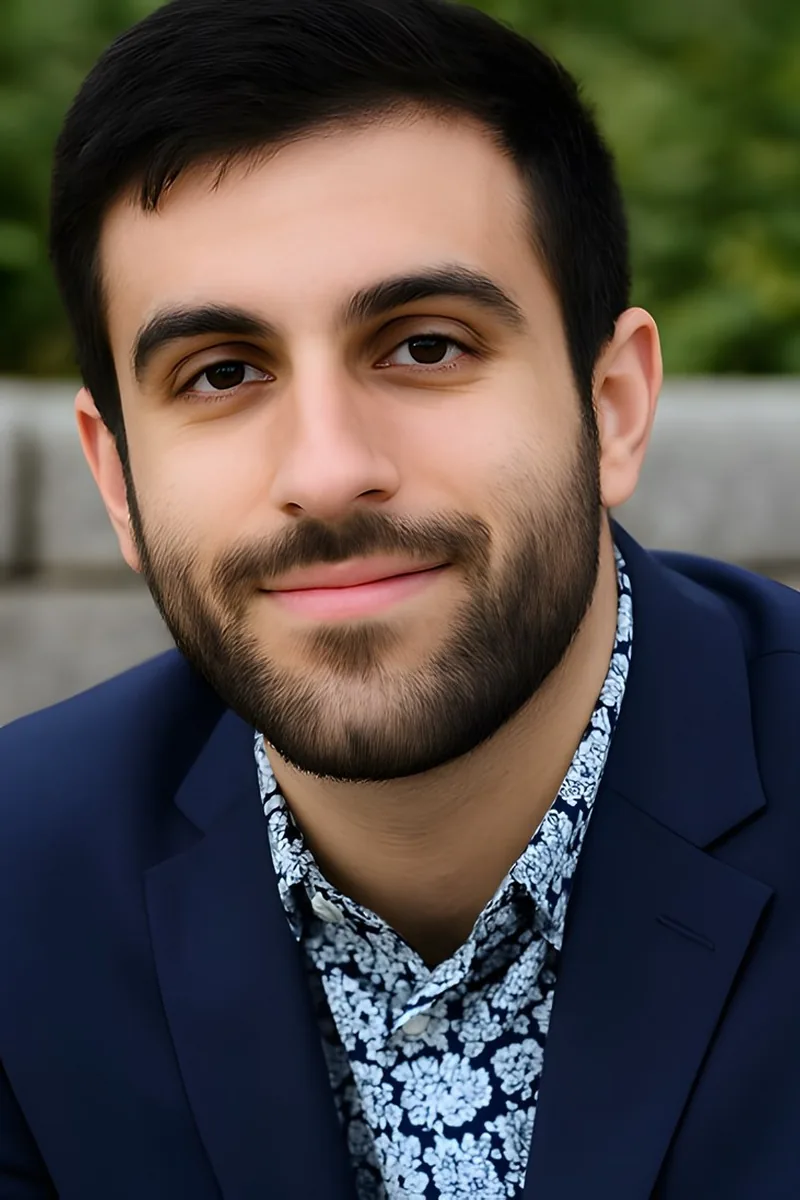
Memorizing every bone, muscle, and nerve pathway in anatomy can feel overwhelming without a framework. Shayan teaches structural relationships rather than isolated labels — once a student understands why the brachial plexus is organized the way it is, the individual nerve branches become far easier to recall. His pre-health background at Penn keeps the clinical relevance front and center.
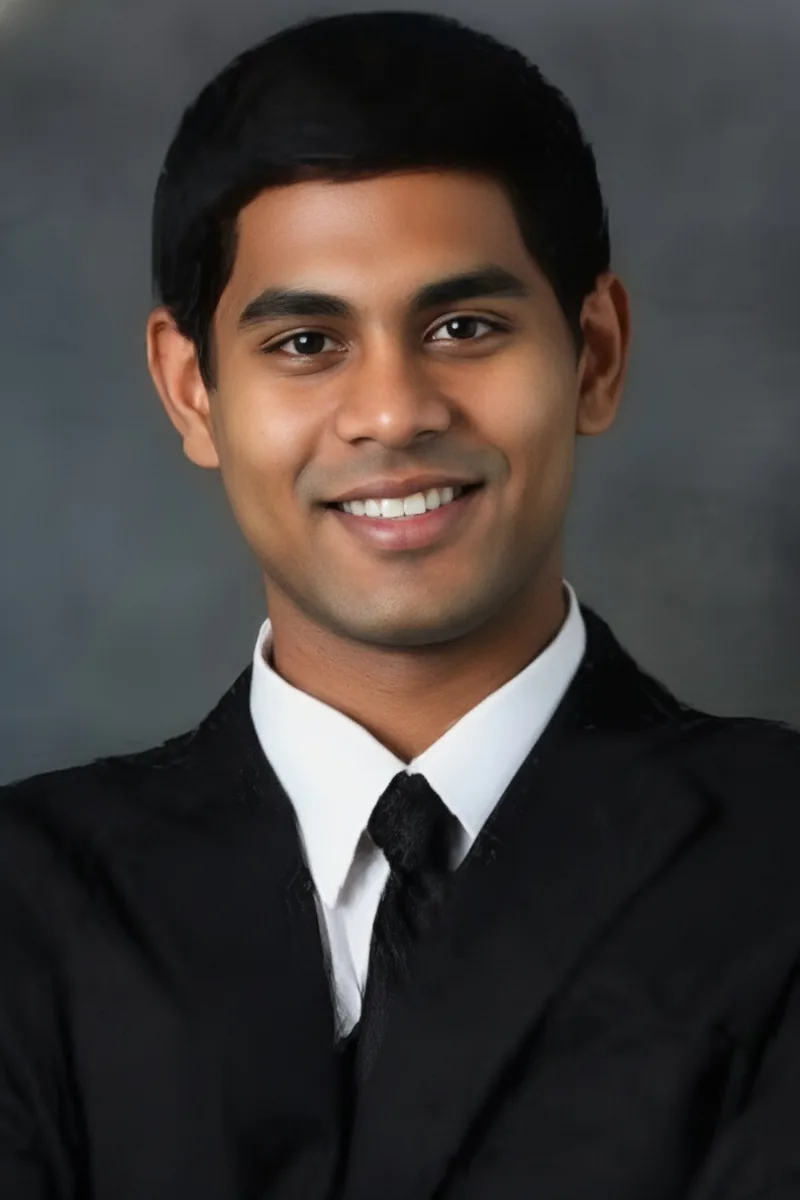
Memorizing every muscle origin and insertion or cranial nerve pathway can feel impossible without a system. Nishad, currently in medical school where anatomy is a cornerstone of the curriculum, teaches structural relationships and functional groupings that turn rote memorization into something closer to storytelling — following a nerve from the brainstem to the tissue it innervates, for example.
Medical school at the doctoral level means learning anatomy twice — once from textbooks and once from the body itself, where the relationship between a nerve's path and the tissue it innervates becomes tangible. Daniel's training gave him that layered understanding, and he teaches structures like organ systems and musculoskeletal attachments by connecting them to the physiological roles students encounter in his physiology and biology sessions. That cross-subject fluency means students leave with more than labeled diagrams — they understand how the parts actually work together.
Learning anatomy is often treated as pure memorization — origin, insertion, action, repeat — but Ade tackles it differently by linking structures to their physiological function. When a student understands why the brachial plexus is organized the way it is, or how blood flow through the heart's chambers relates to valve placement, the naming conventions start to make intuitive sense.
Prateek's medical training at Drexel built on a neuroscience foundation at Johns Hopkins, which means he learned anatomy twice — first as undergraduate neuroanatomy, then as the full-body systems approach required for clinical medicine. That double exposure is especially useful for topics like cranial nerve pathways and CNS structures, where understanding the neuroscience behind the anatomy makes spatial relationships click instead of requiring brute memorization.
Jennifer's biological sciences degree means she studied anatomy alongside physiology, microbiology, and chemistry — so she naturally teaches structures in the context of the larger systems they belong to, which is especially useful for topics like cardiovascular or respiratory anatomy where form and function are inseparable. Her current path toward PA studies keeps her actively reviewing organ systems and tissue-level detail at a clinical depth that matches what university anatomy courses demand.
Memorizing every bone, muscle, and nerve feels overwhelming until there's a system behind it. Meghan uses spatial reasoning techniques and functional groupings — like learning forearm muscles by their action on the wrist and fingers — to turn anatomy's massive vocabulary into something organized and retrievable. Her medical training keeps her fluent in exactly the level of detail most anatomy courses demand.
Learning anatomy is often about spatial reasoning — picturing how the brachial plexus threads through the shoulder or how the layers of the abdominal wall stack up. Magdi's medical training gave him years of hands-on anatomical study, and he teaches structures by building them up system by system rather than presenting disconnected labels to memorize. He holds a 5.0 rating.
Michael once designed an interactive obstacle course demonstrating the adaptive immune system — complete with NERF guns and secret handshakes — as part of a university outreach program. That same instinct for making the body's structures tangible carries into how he teaches anatomy, turning dense material like brachial plexus pathways or cardiac valve mechanics into something students can actually picture. He holds a 5.0 rating.
Every bone, muscle, and nerve pathway in anatomy has a name, a location, and a function — and most courses expect students to know all three simultaneously. As a current dental student who dissects head and neck structures regularly, Taylor teaches anatomy by anchoring each structure to its clinical relevance, turning rote memorization into something that actually sticks.
I am a firm believer that all students learn differently and identifying how each student best learns is essential to his/her academic success. Therefore, as a tutor, I aim to specifically tailor my teaching style to each student in order to help them maximize their potential. Outside of academics, I enjoy exercising, playing basketball, cooking, and attending concerts and other live performances in the Philadelphia area.
I am currently a second year medical student. I was a Physiological Sciences major at UCLA (class of 2015), and pursued research during my gap year between undergrad and medical school.
I am currently working as a Medical Assistant for a dermatologist. I am in the process of applying to medical school. I was a Biology major in college. I love working with people. I hope to be a good tutor and to help my students achieve their goals! I am always open to feedback and suggestions on how to be a better tutor.
I am currently a first-year medical school student. Prior to med school, I graduated from Duke University with a Bachelor's degree in Biomedical Engineering and received my Master's degree in Biomedical Studies from Drexel College of Medicine. I have over 6 years of experience tutoring individual students and also worked as a teaching assistant at the graduate school level. I am passionate about teaching and working with students. I have experience working with high school, college and graduate students and have a subject expertise that include Biology, Physics, Math, Physiology, Biochemistry.
I'm Sophie, and I'm a medical student with a passion for teaching. I want to work with patients, but my other goal is to go into academic medicine. I can't picture my present or future without education in it. I began tutoring for my little sister when both of us were in high school, helping her with math, English, science, and Spanish. In college, I started branching out to tutor friends. In 2019 I began volunteer tutoring for my college's chemistry department, and soon after, I took on a job at a local tutoring center teaching biology and chemistry (and occasionally physics and math) to high school students. Since taking the MCAT and scoring 99th percentile, I started tutoring for that as well. Biology and chemistry are my main teaching areas: chemistry because I've had the most tutoring experience in it, and biology because I have practical experience through lab research and patient care. I can also teach math or physics (I used to be an engineering student so I know those subjects well). I pride myself on bringing a real passion for the subjects I teach. I also strive to abolish simple; disjointed memorization and help my students see their subject matter through a logical, problem-solving oriented lens. I look forward to learning with you!
I am a student at the University of Pittsburgh, graduating in May with a major in Neuroscience and minors in Chemistry and Spanish. I've been teaching and tutoring for a year and a half as an Undergraduate Teaching Assistant in the Chemistry department, working with students one on one and in small groups in General and Organic Chemistry. As a pre-medical student and a Neuroscience major, I've taken extensive coursework in biology, physiology, physics and math, so I am qualified to tutor those subjects as well.
I am a recent graduate of Wagner College who received a Bachelor of Science in Nursing with a minor in French. I am currently a RN at the Children's Hospital of Philadelphia in the Pediatric ICU and come with fresh experience in NCLEX/TEAS test prep and clinical fieldwork. I have tutored students in the past with Kumon, in private, and while in university, so I'm very familiar working with students of all ages (children and adults alike), and very excited to begin work with Varsity Tutors! I always make sure to have fun and involve students in lessons so that the subjects are more relatable to students and they can find personal ways to engage with the topics taught. Although I tutor a broad range of subjects, I am most passionate about French language and culture, particularly francophone tradition, food, and celebration. My trips to France really kept my French knowledge and interests alive.
I graduated with a B.A from Cornell University and majored in biology (premed) with a concentration in genetics. I am currently a 3rd year medical student at DUCOM and am passionate about biology, biochemistry and English. I understand the struggle of memorising small details and struggling to understand the big picture conceptually. I look forward to working with students struggling with stem courses
I am here to help with pre-med coursework, MCAT prep, and many other classes. I am frequently available for online tutoring.
I am a first-year medical student attending Sidney Kimmel Medical College at Thomas Jefferson University in Philadelphia. I am originally from the Chicago suburbs and graduated from the University of Michigan in 2020 with a bachelor's degree in Biomolecular Science. During 2020-2021, I remained in Ann Arbor for a year, working as a research technician to gain experience and strengthen my future application. For 2021-2022, I returned home to Chicago and worked as a Certified Nursing Assistant at Ann & Robert H. Lurie Children's Hospital of Chicago for a year before beginning medical school in July 2022.
I am a Teaching Assistant at my university in various biology and chemistry courses. I have also taught guitar and piano lessons at my studio. I specialize in classical piano and guitar and also flamenco guitar, but I can definitely teach the basics of those instruments or other genres.
I am generally laid back in my approach to teaching and strongly believe that EVERYONE can succeed in math and science. The nice thing about these subjects is that there is a right answer and there is always a way to get to it.
Memorizing every bone, muscle, and organ system in anatomy can feel overwhelming without a strategy. Karishma's psychology background gives her insight into how memory actually works, and she teaches students to use spatial relationships and functional groupings — like linking muscle attachments to their actions — so the material organizes itself rather than piling up.
Memorizing every muscle insertion and nerve pathway in anatomy can feel overwhelming without a framework for organizing the material. Rachelle teaches students to approach structures by functional systems — grouping muscles by movement, tracing blood supply logically — so that recall becomes intuitive rather than brute force. Her disciplined study habits, honed through a philosophy degree and military service, translate directly into efficient anatomy prep.
Learning primate skeletal and muscular anatomy firsthand at Duke's Lemur Center gave Benjamin a tactile understanding of the structures most anatomy courses cover — bones, joints, muscle origins and insertions, and organ placement. He teaches by building spatial maps of the body region by region, linking each structure's name to its function so the terminology sticks.
Studying both speech and hearing science and medicine means Li has spent years learning the human body at every level — bones, muscles, nerves, and the way they interact as functional systems. She teaches anatomy by connecting structure to function, so students understand why the brachial plexus is organized the way it is, not just its branches.
Memorizing bones, muscles, and organ systems can feel overwhelming without a framework to hang it all on. Benjamin approaches anatomy by teaching students to think in terms of structure-function relationships — why the femur is shaped the way it is, how alveoli maximize gas exchange — so the details stick. His psychology training gives him a sharp sense of how memory and recall actually work, which he applies directly to study strategies.
Medical school gave Rachel the kind of anatomy knowledge that comes from repeated, high-stakes application — not just labeling diagrams but understanding why the celiac trunk branches where it does or how the layers of the thoracic wall protect what's beneath them. Her biology degree and 5.0 rating reflect a teaching style that ties every structure back to its physiological job, turning a memorization marathon into something that actually makes sense.
Memorizing every bone, muscle, and nerve pathway in anatomy feels overwhelming until someone shows you the organizational logic underneath it all. Eugene's doctoral studies in biomedical science at Morehouse School of Medicine gave him a systematic way to learn anatomical structures — grouping them by region, function, and clinical relevance. He teaches students to build mental maps of the body rather than relying on brute-force memorization.
Memorizing every bone, muscle, and nerve pathway in anatomy feels impossible until you start learning structures by their functional relationships. Hyerin, currently in medical school, tackles anatomy the same way she learned it — by connecting each structure to what it does, how it's innervated, and what happens when it fails. Rated 4.9 by students.
Working in a biochemistry lab at NYU Medical Center while applying to medical school, Alex lives inside the human body's systems daily — and his Columbia biology teaching assistant role meant explaining structures like organ relationships and tissue layers to students encountering them for the first time. That combination of active research and classroom teaching gives him a practical fluency with anatomy that translates directly into clear, efficient tutoring sessions. Rated 4.9 by students.
Studying anatomy in medical school is a different experience than reading about it in a textbook — Mike learned structures through cadaver dissection and clinical rotations at Rutgers. He breaks down musculoskeletal relationships, organ systems, and nerve pathways by tying each structure to its function, which makes spatial memorization far less overwhelming.
Medical school anatomy is relentless — cadaver labs, spatial reasoning, thousands of structures with Latin names. Felix went through that gauntlet and developed memorization strategies tied to clinical relevance: knowing the brachial plexus not just as a diagram but as the reason a patient can't extend their wrist. He walks students through regional and systems-based anatomy with that same emphasis on function over rote labeling.
Kinesiology is essentially applied anatomy, so Tori spent years learning how every bone, muscle, and joint works together to produce movement. She breaks down complex structures — the brachial plexus, cardiac conduction pathways, organ system interactions — by tying them to real functional examples rather than expecting pure memorization. Rated 4.9 by students.
Testimonials
Because the right Anatomy tutor makes all the difference.
Average Session Rating – Based on 3.4M Learner Ratings
Practice Anatomy
Free practice tests, flashcards, and AI tutoring for Anatomy
Other Harrisburg Tutors
Related Science Tutors in Harrisburg
Frequently Asked Questions
Students in Harrisburg schools typically study human body systems including skeletal, muscular, nervous, circulatory, respiratory, and digestive systems. Depending on the course level—whether it's introductory biology, AP Biology, or a dedicated anatomy course—students may also explore cellular structure, tissue types, organ function, and how systems work together. A tutor can help you focus on the specific topics your course emphasizes and ensure you're building a strong foundation in anatomical structures and their functions.
While anatomy does involve learning terminology and structures, true mastery requires understanding how and why different body parts work together. The challenge many students face is moving beyond memorization to grasp functional relationships—like how the nervous system controls muscle contraction or how the circulatory system delivers oxygen to tissues. Personalized tutoring helps you develop this deeper understanding by connecting structures to their functions, making the material more meaningful and easier to retain long-term.
Many students struggle with visualizing internal organs, cellular structures, and how systems interact in three dimensions. Expert tutors use a combination of strategies—detailed diagrams, models, analogies, and step-by-step walkthroughs—to help you build mental images of complex structures. They can also guide you through dissection labs or virtual anatomy software, helping you develop spatial reasoning skills that make exams and future coursework much more manageable.
Lab work is where anatomy comes alive, but many students feel unprepared when they first encounter a dissection or lab practical. A tutor can help you pre-learn the structures you'll be examining, understand what you're looking for, and develop systematic approaches to identifying tissues and organs. This preparation builds confidence, helps you make the most of limited lab time, and significantly improves your performance on lab practicals and written exams based on lab work.
Students often struggle with distinguishing between similar structures (like different types of muscle tissue or bone markings), understanding spatial relationships in the body, and connecting anatomical knowledge to physiological function. Many also find it challenging to balance memorizing terminology with understanding the 'why' behind anatomical organization. With Harrisburg's average student-teacher ratio of 15.8:1, personalized tutoring provides the focused attention needed to address these specific gaps and build confidence in the subject.
Anatomy exams often combine multiple question types—written identification, labeling diagrams, multiple choice about function, and practical exams with unlabeled specimens. A tutor can help you develop study strategies tailored to your specific exam format, practice identifying structures under timed conditions, and strengthen your understanding of both structure and function. They'll also help you organize information in ways that stick, so you're not just cramming names the night before.
Yes. AP Biology includes significant anatomy and physiology content, particularly around human body systems and how they maintain homeostasis. Tutors can help you master both the detailed anatomical knowledge AP exams require and the broader conceptual understanding of how systems regulate themselves. Whether you're preparing for the multiple-choice section, free-response questions, or the lab practical component, personalized instruction helps you approach AP-level anatomy with confidence.
Varsity Tutors connects you with expert tutors who have strong backgrounds in anatomy and understand how to teach it effectively. We consider your specific course level, learning style, and goals—whether you're in a general biology class, AP Biology, or a dedicated anatomy course. Once matched, you'll work with your tutor on a personalized schedule that fits your needs, focusing on the exact topics and exam formats your course requires.
Let’s find your perfect tutor
Answer a few quick questions. We’ll recommend the right plan and match you with a top 5% tutor.