Award-Winning Anatomy Tutors
serving Allentown, PA
Anatomy
Tutors in Allentown
Private 1-on-1 tutoring, weekly live classes for academic support, test prep & enrichment, practice tests and diagnostics, and more to elevate grades and test scores.
Based on 3.4M Learner Ratings
UniversitiesSchools & Universities
DeliveredHours Delivered
ProficiencyGrowth in Proficiency
Who needs tutoring?
No obligation. Takes ~1 minute.

Memorizing every bone, muscle, and nerve pathway in anatomy can feel overwhelming without a framework. Shayan teaches structural relationships rather than isolated labels — once a student understands why the brachial plexus is organized the way it is, the individual nerve branches become far easier to recall. His pre-health background at Penn keeps the clinical relevance front and center.
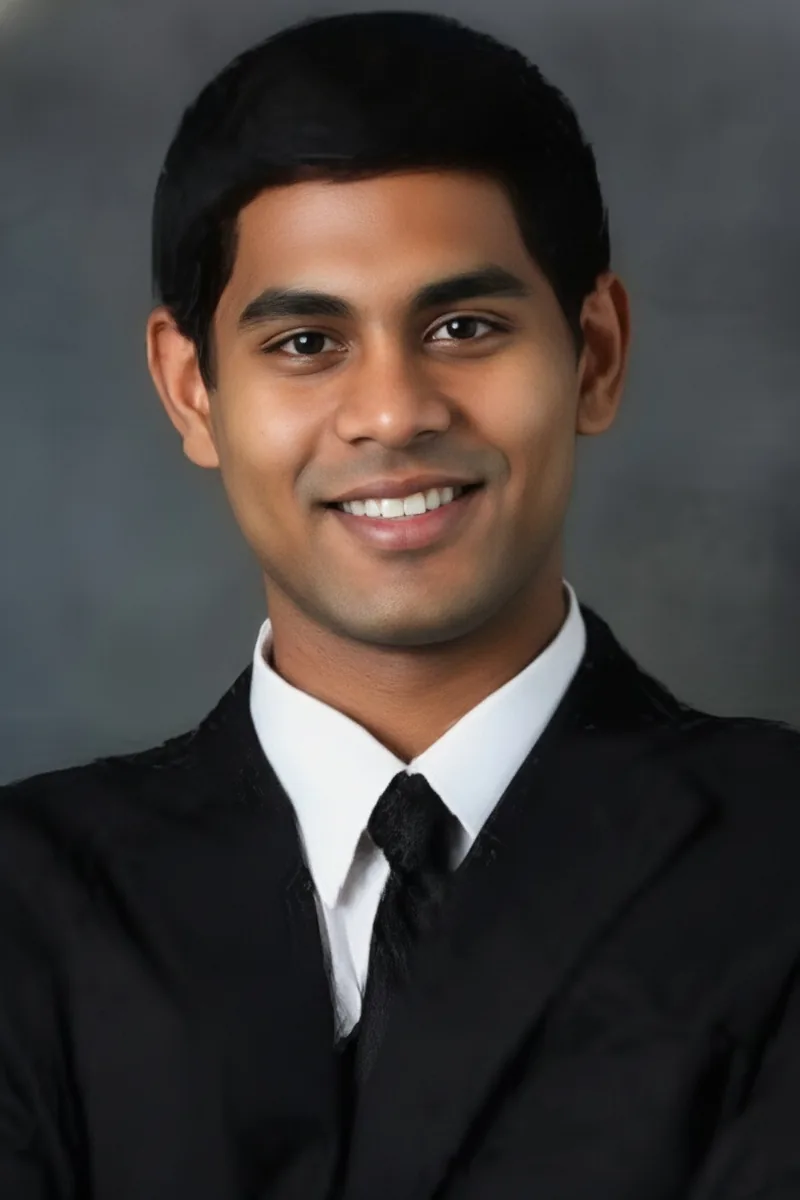
Memorizing every muscle origin and insertion or cranial nerve pathway can feel impossible without a system. Nishad, currently in medical school where anatomy is a cornerstone of the curriculum, teaches structural relationships and functional groupings that turn rote memorization into something closer to storytelling — following a nerve from the brainstem to the tissue it innervates, for example.
Medical school at the doctoral level means learning anatomy twice — once from textbooks and once from the body itself, where the relationship between a nerve's path and the tissue it innervates becomes tangible. Daniel's training gave him that layered understanding, and he teaches structures like organ systems and musculoskeletal attachments by connecting them to the physiological roles students encounter in his physiology and biology sessions. That cross-subject fluency means students leave with more than labeled diagrams — they understand how the parts actually work together.
Learning anatomy is often treated as pure memorization — origin, insertion, action, repeat — but Ade tackles it differently by linking structures to their physiological function. When a student understands why the brachial plexus is organized the way it is, or how blood flow through the heart's chambers relates to valve placement, the naming conventions start to make intuitive sense.
Prateek's medical training at Drexel built on a neuroscience foundation at Johns Hopkins, which means he learned anatomy twice — first as undergraduate neuroanatomy, then as the full-body systems approach required for clinical medicine. That double exposure is especially useful for topics like cranial nerve pathways and CNS structures, where understanding the neuroscience behind the anatomy makes spatial relationships click instead of requiring brute memorization.
Jennifer's biological sciences degree means she studied anatomy alongside physiology, microbiology, and chemistry — so she naturally teaches structures in the context of the larger systems they belong to, which is especially useful for topics like cardiovascular or respiratory anatomy where form and function are inseparable. Her current path toward PA studies keeps her actively reviewing organ systems and tissue-level detail at a clinical depth that matches what university anatomy courses demand.
Memorizing every bone, muscle, and nerve feels overwhelming until there's a system behind it. Meghan uses spatial reasoning techniques and functional groupings — like learning forearm muscles by their action on the wrist and fingers — to turn anatomy's massive vocabulary into something organized and retrievable. Her medical training keeps her fluent in exactly the level of detail most anatomy courses demand.
Learning anatomy is often about spatial reasoning — picturing how the brachial plexus threads through the shoulder or how the layers of the abdominal wall stack up. Magdi's medical training gave him years of hands-on anatomical study, and he teaches structures by building them up system by system rather than presenting disconnected labels to memorize. He holds a 5.0 rating.
Michael once designed an interactive obstacle course demonstrating the adaptive immune system — complete with NERF guns and secret handshakes — as part of a university outreach program. That same instinct for making the body's structures tangible carries into how he teaches anatomy, turning dense material like brachial plexus pathways or cardiac valve mechanics into something students can actually picture. He holds a 5.0 rating.
Every bone, muscle, and nerve pathway in anatomy has a name, a location, and a function — and most courses expect students to know all three simultaneously. As a current dental student who dissects head and neck structures regularly, Taylor teaches anatomy by anchoring each structure to its clinical relevance, turning rote memorization into something that actually sticks.
I am currently a second year medical student. I was a Physiological Sciences major at UCLA (class of 2015), and pursued research during my gap year between undergrad and medical school.
I am a firm believer that all students learn differently and identifying how each student best learns is essential to his/her academic success. Therefore, as a tutor, I aim to specifically tailor my teaching style to each student in order to help them maximize their potential. Outside of academics, I enjoy exercising, playing basketball, cooking, and attending concerts and other live performances in the Philadelphia area.
I am currently working as a Medical Assistant for a dermatologist. I am in the process of applying to medical school. I was a Biology major in college. I love working with people. I hope to be a good tutor and to help my students achieve their goals! I am always open to feedback and suggestions on how to be a better tutor.
I am currently a first-year medical school student. Prior to med school, I graduated from Duke University with a Bachelor's degree in Biomedical Engineering and received my Master's degree in Biomedical Studies from Drexel College of Medicine. I have over 6 years of experience tutoring individual students and also worked as a teaching assistant at the graduate school level. I am passionate about teaching and working with students. I have experience working with high school, college and graduate students and have a subject expertise that include Biology, Physics, Math, Physiology, Biochemistry.
I'm Sophie, and I'm a medical student with a passion for teaching. I want to work with patients, but my other goal is to go into academic medicine. I can't picture my present or future without education in it. I began tutoring for my little sister when both of us were in high school, helping her with math, English, science, and Spanish. In college, I started branching out to tutor friends. In 2019 I began volunteer tutoring for my college's chemistry department, and soon after, I took on a job at a local tutoring center teaching biology and chemistry (and occasionally physics and math) to high school students. Since taking the MCAT and scoring 99th percentile, I started tutoring for that as well. Biology and chemistry are my main teaching areas: chemistry because I've had the most tutoring experience in it, and biology because I have practical experience through lab research and patient care. I can also teach math or physics (I used to be an engineering student so I know those subjects well). I pride myself on bringing a real passion for the subjects I teach. I also strive to abolish simple; disjointed memorization and help my students see their subject matter through a logical, problem-solving oriented lens. I look forward to learning with you!
I am a student at the University of Pittsburgh, graduating in May with a major in Neuroscience and minors in Chemistry and Spanish. I've been teaching and tutoring for a year and a half as an Undergraduate Teaching Assistant in the Chemistry department, working with students one on one and in small groups in General and Organic Chemistry. As a pre-medical student and a Neuroscience major, I've taken extensive coursework in biology, physiology, physics and math, so I am qualified to tutor those subjects as well.
I am a recent graduate of Wagner College who received a Bachelor of Science in Nursing with a minor in French. I am currently a RN at the Children's Hospital of Philadelphia in the Pediatric ICU and come with fresh experience in NCLEX/TEAS test prep and clinical fieldwork. I have tutored students in the past with Kumon, in private, and while in university, so I'm very familiar working with students of all ages (children and adults alike), and very excited to begin work with Varsity Tutors! I always make sure to have fun and involve students in lessons so that the subjects are more relatable to students and they can find personal ways to engage with the topics taught. Although I tutor a broad range of subjects, I am most passionate about French language and culture, particularly francophone tradition, food, and celebration. My trips to France really kept my French knowledge and interests alive.
I am here to help with pre-med coursework, MCAT prep, and many other classes. I am frequently available for online tutoring.
I graduated with a B.A from Cornell University and majored in biology (premed) with a concentration in genetics. I am currently a 3rd year medical student at DUCOM and am passionate about biology, biochemistry and English. I understand the struggle of memorising small details and struggling to understand the big picture conceptually. I look forward to working with students struggling with stem courses
I am a first-year medical student attending Sidney Kimmel Medical College at Thomas Jefferson University in Philadelphia. I am originally from the Chicago suburbs and graduated from the University of Michigan in 2020 with a bachelor's degree in Biomolecular Science. During 2020-2021, I remained in Ann Arbor for a year, working as a research technician to gain experience and strengthen my future application. For 2021-2022, I returned home to Chicago and worked as a Certified Nursing Assistant at Ann & Robert H. Lurie Children's Hospital of Chicago for a year before beginning medical school in July 2022.
I am a Teaching Assistant at my university in various biology and chemistry courses. I have also taught guitar and piano lessons at my studio. I specialize in classical piano and guitar and also flamenco guitar, but I can definitely teach the basics of those instruments or other genres.
I am generally laid back in my approach to teaching and strongly believe that EVERYONE can succeed in math and science. The nice thing about these subjects is that there is a right answer and there is always a way to get to it.
Medical school gave Rachel the kind of anatomy knowledge that comes from repeated, high-stakes application — not just labeling diagrams but understanding why the celiac trunk branches where it does or how the layers of the thoracic wall protect what's beneath them. Her biology degree and 5.0 rating reflect a teaching style that ties every structure back to its physiological job, turning a memorization marathon into something that actually makes sense.
Studying tissue engineering at Tufts meant Kelly had to know anatomical structures inside and out — not just their names, but how their form supports their function. She teaches musculoskeletal, cardiovascular, and nervous system anatomy by linking each structure to the physiological role it plays, which makes retention far more durable than flashcard memorization alone.
Medical school gave Marc a clinical lens on anatomy that most tutors don't have — he connects each muscle origin, nerve pathway, or organ relationship to how it actually matters in a living body. He also teaches efficient memorization strategies for the sheer volume of structures students need to retain.
Memorizing every bone, muscle, and nerve pathway in anatomy can feel overwhelming without a system. Krishna approaches the subject by linking structure to function — explaining why the brachial plexus is organized the way it is, or how the histology of the small intestine relates to nutrient absorption. Her pre-med coursework and biology research background at Cornell keep her explanations grounded in clinical relevance.
Learning anatomy often feels like brute-force memorization of Latin terms, but Garrett reframes it around functional relationships — why the brachial plexus is organized the way it is, or how the arrangement of cardiac valves relates to blood flow direction. He uses spatial reasoning and system-level logic to give each structure a purpose students can recall under exam pressure. His biology background ensures the anatomy always connects back to underlying physiology.
Memorizing every bone, muscle, and nerve insertion point is daunting until you start seeing the structural logic behind it — why the rotator cuff is built for mobility over stability, or how the brachial plexus branches map onto arm movement. Leonard teaches anatomy by connecting form to function, giving students frameworks that make retention far easier than flashcard grinding alone.
Belinda's neuroscience degree required her to learn anatomy from the brain outward — tracing cranial nerves, mapping spinal cord regions, and understanding how the central and peripheral nervous systems connect to every major organ system. That top-down perspective means she teaches body structures as parts of functional circuits rather than standalone vocabulary, which is especially effective for students struggling to see how individual bones, muscles, and vessels fit into the bigger picture. Rated 5.0 by students.
Memorizing every muscle origin, insertion, and innervation feels impossible until someone shows you the structural logic behind it. Casey approaches anatomy through her bioengineering lens, teaching students to see the body as an integrated mechanical and biological system so that concepts like brachial plexus organization or cardiac valve function make spatial sense, not just flashcard sense.
Memorizing every bone, muscle, and nerve pathway in anatomy feels impossible without a system. Jessica's undergraduate concentration in Human Growth and Development gave her a developmental lens for anatomy — she teaches structures by connecting them to their function and embryological origin, which makes retention far more intuitive than flashcard drilling alone.
Learning anatomy means building a three-dimensional mental map of the body, and Muhammad's MBBS training included the kind of intensive dissection-based study that makes structural relationships intuitive. He walks through brachial plexus branches, abdominal cavity layers, and musculoskeletal attachments with clinical context that turns rote memorization into spatial understanding.
Working in a biochemistry lab at NYU Medical Center while applying to medical school, Alex lives inside the human body's systems daily — and his Columbia biology teaching assistant role meant explaining structures like organ relationships and tissue layers to students encountering them for the first time. That combination of active research and classroom teaching gives him a practical fluency with anatomy that translates directly into clear, efficient tutoring sessions. Rated 4.9 by students.
Physical therapy graduate students live in anatomy — Ken's current PT program means he's working with musculoskeletal structures, nerve pathways, and organ systems on a daily basis. That clinical context makes it easier to teach concepts like brachial plexus innervation or joint articulation because he can tie each structure to its real function in the body.
Testimonials
Because the right Anatomy tutor makes all the difference.
Average Session Rating – Based on 3.4M Learner Ratings
Practice Anatomy
Free practice tests, flashcards, and AI tutoring for Anatomy
Other Allentown Tutors
Related Science Tutors in Allentown
Frequently Asked Questions
Anatomy involves learning hundreds of structures and their functions, but true mastery comes from understanding how systems work together. Personalized tutoring helps you build mental models of anatomical relationships—like how the skeletal, muscular, and nervous systems interact—rather than just memorizing names and locations. Tutors can use diagrams, 3D visualization techniques, and real-world examples to help concepts stick, making it easier to apply your knowledge on exams and in future coursework.
Yes. Beyond classroom lectures, anatomy labs require hands-on skills like identifying structures on specimens, understanding spatial relationships, and interpreting lab diagrams accurately. Varsity Tutors connects you with tutors who can help you prepare for lab practicals by reviewing anatomical structures beforehand, explaining what to expect during dissections, and helping you interpret lab findings. This preparation builds confidence and improves your performance on practical exams.
Many students find it challenging to mentally rotate and understand 3D anatomy from 2D textbook images. Expert tutors can use multiple visualization strategies—describing structures from different angles, drawing cross-sections, using physical models, or recommending interactive anatomy apps—to help you build spatial understanding. With consistent practice and guided visualization, most students develop stronger mental models and find exams much less frustrating.
With 11 major body systems and countless interconnected structures, organization is key. Personalized tutoring helps you create a logical study framework—learning systems in a sequence that builds on previous knowledge, understanding how systems communicate, and using concept maps to visualize relationships. Tutors can also help you identify which details are essential for your specific course level, preventing overwhelm and making study time more efficient.
Your first session is about building a foundation for success. The tutor will assess your current understanding of anatomy concepts, identify specific areas where you're struggling (whether it's terminology, spatial relationships, or system interactions), and learn about your learning style and goals. From there, you'll develop a personalized plan that targets your needs—whether that's preparing for an upcoming exam, improving lab performance, or building deeper conceptual understanding.
Yes. Varsity Tutors connects students across Allentown's 8 school districts with expert tutors experienced in anatomy curricula at the high school and college levels. Whether you're taking anatomy as a prerequisite for nursing, pre-med, or health sciences programs, or as part of your high school science requirements, we match you with a tutor who understands local curriculum expectations and can provide personalized support.
Anatomy exams test both knowledge and application—you need to identify structures, explain their functions, and understand how they work in systems. Tutors help you develop effective study strategies, practice with past exams and practice questions, review weak areas with targeted explanations, and build test-taking confidence. Regular tutoring sessions also space out your learning over time, which research shows improves long-term retention better than cramming.
Varsity Tutors connects you with tutors who have strong backgrounds in anatomy and life sciences—many have degrees in biology, nursing, pre-med, or related fields, and many have teaching or tutoring experience. Each tutor is vetted to ensure they can explain complex concepts clearly and help students develop both content knowledge and scientific reasoning skills. You'll be matched with someone whose expertise and teaching style fit your specific needs.
Let’s find your perfect tutor
Answer a few quick questions. We’ll recommend the right plan and match you with a top 5% tutor.