Award-Winning AP Biology Tutors
serving Raleigh, NC
AP Biology
Tutors in Raleigh
Private 1-on-1 tutoring, weekly live classes for academic support, test prep & enrichment, practice tests and diagnostics, and more to elevate grades and test scores.
Based on 3.4M Learner Ratings
UniversitiesSchools & Universities
DeliveredHours Delivered
ProficiencyGrowth in Proficiency
Who needs tutoring?
No obligation. Takes ~1 minute.
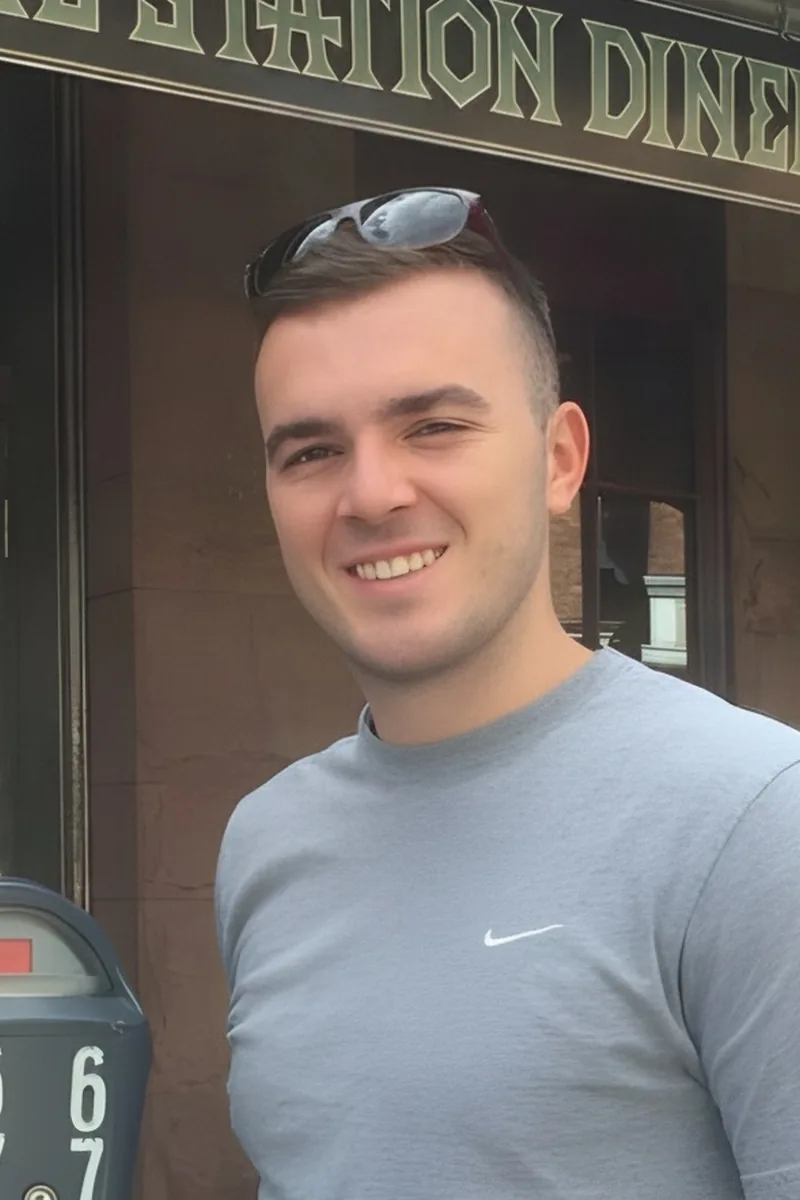
Biochemistry majors spend their time at the intersection of chemistry and biology — and that's exactly where AP Bio gets hardest, in units on enzyme kinetics, cellular energetics, and the molecular machinery behind gene expression. Hunter is currently studying biochemistry at Boston College and heading to graduate research at Duke, so these topics aren't abstract review but material he's actively working with at the college level. Rated 5.0 by students.

Studying biomedical engineering at Duke means Eric thinks about biological systems at the molecular, cellular, and organismal levels every day. He tackles AP Biology's toughest units — signal transduction, gene regulation, and energy flow through ecosystems — by tying them back to the underlying logic that the AP exam rewards.
A PhD in bioengineering from Georgia Tech means Jordan has studied biological systems at the molecular and cellular level — protein interactions, tissue mechanics, signal transduction — through the quantitative lens that AP Bio's data-analysis and experimental-design questions increasingly demand. That engineering perspective is especially useful for the units where students need to interpret graphs, design controlled experiments, or reason through mathematical models of population growth and gene frequency. Rated 5.0 by students.
Currently studying biological and physical sciences at Cornell, Katrina is learning AP Bio's core content — genetics, cellular processes, ecology — at the college level right now, which means she can pinpoint exactly where the jump from high school to college-level reasoning trips students up. She breaks down topics like gene expression and natural selection by connecting them to what she's actively studying in her own coursework, keeping explanations current rather than recycled. Rated 5.0 by students.
Rashmi's Economics and Computer Science studies at UNC Chapel Hill might seem like an unusual fit for AP Bio, but she tutors the subject alongside a full biology course load and brings a data-driven mindset that's especially useful for the exam's experimental design and chi-square analysis questions. She's rated 5.0 by students and is particularly good at teaching how to read and interpret the dense graphs and data tables that show up throughout the multiple-choice and free-response sections.
Neuroscience majors don't just memorize biology — they trace how signals move through neurons, how cells communicate via chemical gradients, and how gene expression shapes nervous system development, all of which overlaps heavily with AP Bio's units on cell communication and signal transduction. Anameeka brings that molecular-level perspective from her coursework at Pitt, and she's especially useful for students who struggle to connect what's happening inside a cell to the organism-level outcomes the free-response questions demand. Rated 5.0 by students.
Cellular biology and botany are Madison's specialties within her biology program at Guilford College, which means she can dig into AP Bio's plant physiology and cell structure questions with the kind of detail that turns vague answers into full-credit free responses. Her 34 ACT and hands-on lab experience translate into sharp data-interpretation skills — exactly what students need for the exam's grid-in and experimental design prompts. Rated 5.0 by students.
Julia's cellular and molecular biology degree means she built her understanding of AP Bio's core content — gene expression, cell division, membrane dynamics — from the molecular level up, which is exactly the direction the exam expects students to reason. Her microbiology background adds depth to the ecology and evolution units, where understanding how organisms adapt at the cellular level strengthens the kind of multi-scale arguments free-response questions demand. Rated 4.8 by students.
Nicole is studying biology at the undergraduate level right now, which means topics like cellular respiration, gene expression, and signal transduction are fresh in her mind — not something she learned a decade ago. She tackles AP Bio's notoriously dense curriculum by teaching students to reason through experimental design questions and data analysis, not just memorize vocabulary. Her 5.0 rating speaks to how well that approach lands.
Studying chemistry at the undergraduate level means Srikavya encounters the biochemistry behind AP Bio's toughest units — enzyme kinetics, metabolic pathways, and the energetics of photosynthesis and cellular respiration — through a quantitative lens that most biology-only tutors don't bring. She's especially useful for students who struggle with the chemistry-heavy portions of the course, like understanding how pH affects protein folding or why ATP hydrolysis actually releases energy. She also teaches AP Chemistry, so she's practiced at making molecular-level concepts accessible to high schoolers.
Studying chemistry as an undergrad gives Amanda an unusual edge when it comes to AP Bio's most chemistry-heavy content — enzyme kinetics, cellular energetics, and the biochemical details of photosynthesis and respiration that trip up students who try to memorize pathways without understanding the reactions driving them. She teaches students to think through biological processes mechanistically, connecting molecular interactions to the larger organism-level outcomes that free-response questions demand.
The trickiest part of AP Bio for most students isn't memorizing content — it's learning to think across biological scales, like connecting a mutation in a gene to a change in protein function to an observable trait in an organism. Jaela's biology degree gave her practice building exactly those kinds of multi-level explanations, and she's sharp at teaching students to construct the cause-and-effect reasoning that free-response questions demand. Rated 4.8 by students.
Ethan's economics and public policy studies at the University of Chicago aren't a typical path into AP Bio, but they've made him sharp at interpreting data sets, constructing evidence-based arguments, and reasoning through cause-and-effect chains — all skills the exam's free-response questions heavily reward. He's especially useful for students who struggle with the experimental design and data analysis portions of the test, where reading graphs and evaluating hypotheses matters more than memorizing vocabulary.
Three years running a cell biology lab section at Notre Dame gave Connor a front-row seat to exactly where students stumble on AP Bio material — signal transduction pathways, gene regulation, experimental design questions. His master's work in biomedical sciences deepened that knowledge, and he teaches the course with an eye toward the free-response questions that separate 4s from 5s.
Teaching has been a lifelong passion of mine. What drives me is sharing knowledge while genuinely connecting with others. I discovered my love for tutoring in high school and have been dedicated to it ever since. At Stanford University, I earned a BS in Human Biology and Chemistry while continuing to tutor throughout, advancing to Lead Tutor. After graduation, I spent a year as a Teaching Associate, designing and delivering course content which significantly broadening my pedagogical approach. What sets me apart is my versatility. Having served as both tutor and instructor, I can adapt my teaching style to each student's unique needs, whether that be building up foundational skills or pursuing advanced mastery. I'm now pursuing graduate studies at The Johns Hopkins School of Medicine, staying engaged with cutting-edge science while maintaining my commitment to education. I look forward to helping you achieve your academic goals!
Succeeding on the AP Biology exam means going beyond memorizing cell structures and metabolic pathways — it means interpreting experimental data, constructing explanations, and reasoning across biological scales from molecules to ecosystems. Jake studies Human Biology at Stanford, where his coursework in genetics, physiology, and ecology maps directly onto the AP curriculum's four big ideas.
AP Bio covers an enormous range — from molecular genetics to ecology — and the exam rewards students who can apply concepts to unfamiliar experimental scenarios, not just recall definitions. Phillip studies biomedical engineering at Brown, so he regularly engages with cell signaling, gene expression, and physiological systems at a level well beyond the AP curriculum. He teaches students to interpret data figures and design experiments the way the free-response questions demand.
A human biology degree from Cornell plus current graduate work in human development means Jonathan has studied the organism-level physiology and developmental processes that AP Bio's later units build toward — growth, reproduction, and how organisms maintain homeostasis through feedback mechanisms. He's particularly good at teaching students to read experimental data and construct the kind of evidence-based arguments the free-response section demands, a skill sharpened by his own med school prep and 1550 SAT analytical training. Rated 4.9 by students.
Christina's computer science background gives her an unusual edge for AP Bio's data analysis and experimental design questions — she's comfortable with statistical reasoning, interpreting graphs, and the kind of algorithmic thinking that makes tracing metabolic pathways or gene expression cascades more systematic. Her ACT score of 34 also signals strong science reading skills, which matters for an exam where decoding dense passages and pulling evidence from figures is half the battle.
AP Biology's shift toward data analysis and experimental design catches many students off guard — it's no longer enough to memorize cell structures and metabolic pathways. Noel's policy-analysis training at the University of Chicago sharpened his ability to interpret graphs, evaluate experimental controls, and construct evidence-based arguments, which maps directly onto the AP exam's free-response demands. He pairs content review with targeted practice on the analytical skills the College Board actually tests.
Cellular respiration, genetics, and evolution each require a different kind of thinking — sometimes quantitative, sometimes conceptual, sometimes both at once. Nima breaks down processes like the electron transport chain or Hardy-Weinberg equilibrium into logical steps, drawing on the same analytical rigor that earned him a full merit scholarship to Duke.
Rice University's biochemistry program is notoriously rigorous, and Michelle came out of it with a deep understanding of how molecular processes — protein folding, enzyme kinetics, gene regulation — drive the larger biological systems AP Bio tests at every level. Now in her second year of medical school at Baylor, she's actively applying concepts like metabolic pathways and cellular communication in clinical settings, which means she can teach students not just what happens during something like signal transduction, but why it matters physiologically.
Environmental science coursework gave Ethan an ecology-first perspective on biology — population dynamics, energy flow through ecosystems, and the interplay between organisms and their environments — which lines up directly with AP Bio's ecology and evolution units that many science-focused tutors breeze past. He also teaches AP Statistics, so he's unusually comfortable with the data interpretation and experimental design questions that trip students up on the exam. Rated 5.0 by students.
Studying biological sciences at Cornell means Viraj is immersed in the same cellular processes, genetics pathways, and ecological principles that AP Biology tests at a college level. He teaches students to think in terms of energy flow and information transfer — the two conceptual threads the College Board uses to connect every unit on the exam. His 5.0 rating speaks to how well that framework translates to exam-day performance.
Testimonials
Because the right AP Biology tutor makes all the difference.
Average Session Rating – Based on 3.4M Learner Ratings
Practice AP Biology
Free practice tests, flashcards, and AI tutoring for AP Biology
Other Raleigh Tutors
Related Science Tutors in Raleigh
Frequently Asked Questions
AP Biology is organized around four big ideas: cellular processes, energetics and dynamics, information and heredity, and interactions in biological systems. The course emphasizes understanding core biological principles through inquiry-based learning rather than memorization. Students explore topics like cell structure and function, photosynthesis and respiration, genetics, evolution, and ecology—with a focus on applying concepts to real-world scenarios and lab investigations.
The AP Biology exam has two sections: a 90-minute multiple-choice section (60 questions) and a 90-minute free-response section (6 questions). Success requires both conceptual understanding and the ability to apply knowledge to novel situations. Many students struggle with the free-response section, which demands clear explanations and data analysis skills—this is where personalized tutoring can help you practice articulating complex biological concepts and interpreting experimental results.
Students often struggle with the breadth of material—AP Biology covers a lot of ground—and distinguishing between memorization and conceptual understanding. The free-response questions trip up many students because they require explaining mechanisms, interpreting graphs, and connecting ideas across multiple units. Time management during the exam is another pain point; students who haven't practiced pacing often run out of time on the second section. Expert tutors can help you build a study strategy that prioritizes deep understanding and timed practice.
Score improvement depends on your starting point and how consistently you engage with tutoring and practice. Students who work with tutors typically see meaningful gains by focusing on their weakest units, practicing free-response questions under timed conditions, and refining their test-taking strategies. The national average AP Biology score is around 2.8 out of 5—many students improve from a 2 or 3 to a 4 or 5 with focused preparation and expert guidance on both content and exam technique.
Practice tests are essential for AP Biology success—they help you identify weak content areas, build familiarity with question formats, and develop pacing strategies before test day. Ideally, you should take full-length practice exams under timed conditions starting 4-6 weeks before the exam. After each practice test, review every question you missed to understand not just the correct answer, but why the other options were wrong. Tutors can help you analyze your practice test results to create a targeted study plan focused on your specific gaps.
Test anxiety often stems from feeling unprepared or unfamiliar with the exam format. Building confidence requires consistent, deliberate practice with actual AP questions and timed conditions—the more you practice, the more predictable the test becomes. Working with a tutor gives you a space to ask questions without judgment, tackle difficult concepts repeatedly until they click, and receive personalized encouragement. Many students find that understanding the 'why' behind answers, rather than just memorizing facts, significantly reduces anxiety on test day.
Varsity Tutors connects you with expert tutors who specialize in AP Biology and understand the specific challenges students face preparing for the exam. You can get matched with a tutor who fits your schedule and learning style, whether you need help with a specific unit, comprehensive exam prep, or building test-taking strategies. The tutoring process starts with understanding your current level and goals, then developing a personalized study plan tailored to your needs.
Ideally, you should begin focused exam prep 8-12 weeks before the AP exam in May, though consistent engagement throughout the school year makes the final push easier. Most students benefit from 2-3 tutoring sessions per week during the final 6-8 weeks, combined with independent practice and review. If you're struggling with foundational concepts, starting earlier allows you to build understanding gradually rather than cramming. A tutor can help you create a realistic timeline based on your current knowledge and target score.
Let’s find your perfect tutor
Answer a few quick questions. We’ll recommend the right plan and match you with a top 5% tutor.