Award-Winning AP Spanish Literature and Culture Tutors
serving Manhattan, NY
AP Spanish Literature and Culture
Tutors in Manhattan
Private 1-on-1 tutoring, weekly live classes for academic support, test prep & enrichment, practice tests and diagnostics, and more to elevate grades and test scores.
Based on 3.4M Learner Ratings
UniversitiesSchools & Universities
DeliveredHours Delivered
ProficiencyGrowth in Proficiency
Who needs tutoring?
No obligation. Takes ~1 minute.
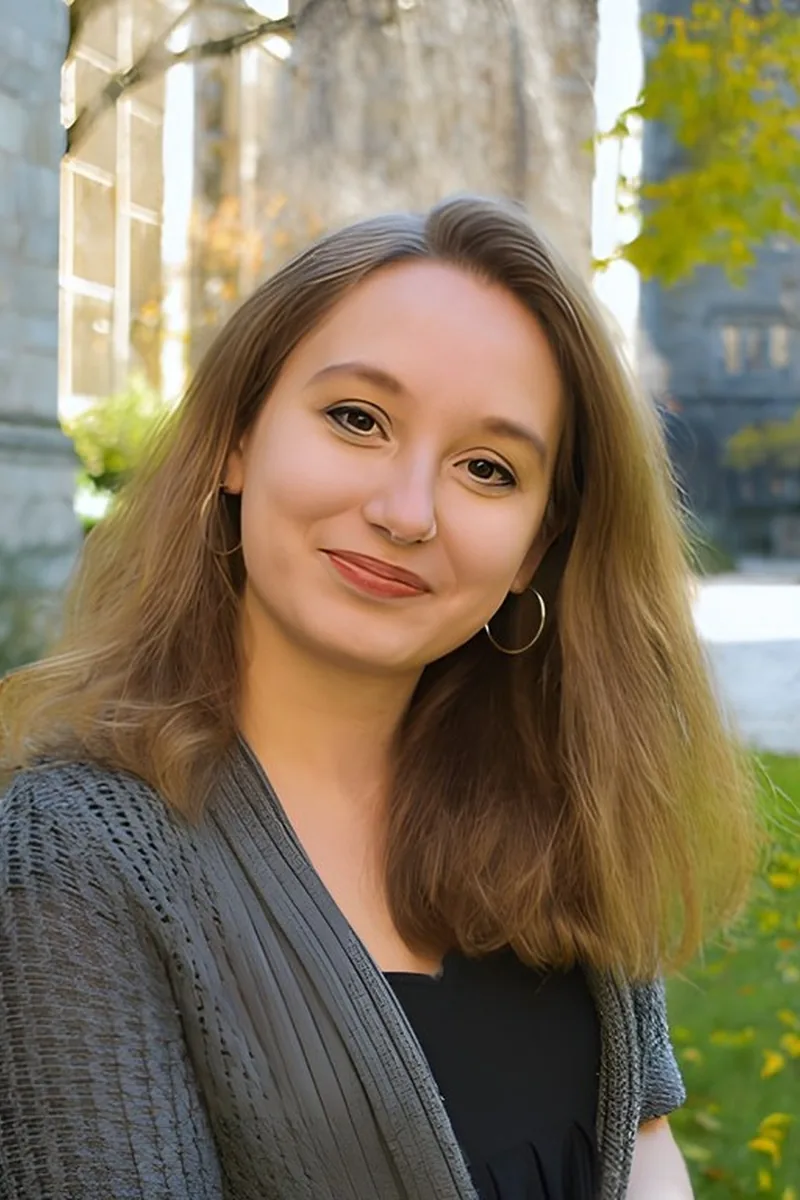
This isn't Vivian's core subject — her strengths center on standardized test prep and English — but her 36 ACT and 4.9 rating speak to the analytical rigor she brings to any text-based exam. For students who already have solid Spanish fluency and need help with the structural side of timed literary essays (building a thesis, organizing evidence, writing under pressure), her test-taking instincts translate well to the AP free-response format.

Before college, Heather's high school Spanish teacher trusted her enough to refer another student to her for one-on-one tutoring — the kind of endorsement that speaks to genuine command of the language beyond classroom basics. Her psychology training adds a useful angle for AP Literature essays where character motivation and identity themes drive the analysis, and she brings patient, structured coaching to students who get overwhelmed by timed writing in Spanish. Rated 5.0 by students.
Reading García Márquez or Sor Juana Inés de la Cruz in the original Spanish demands more than vocabulary — it requires understanding literary movements, rhetorical devices, and the cultural contexts that shaped each work. Corey studied Latin American & Caribbean Studies alongside cognitive science at the University of Michigan, giving him both the literary background and the analytical framework to unpack AP Spanish Literature's required reading list. He connects themes across periods so students can write stronger comparative essays on exam day.
Having double-majored in Spanish at Washington University, Megan brings deep literary fluency to AP Spanish Literature and Culture — from close reading of García Márquez's magical realism to analyzing the cultural context behind Sor Juana's poetry. She walks students through the essay and presentational speaking rubrics so they know exactly what earns top scores on exam day.
Studying Latin American Studies at Columbia alongside her American Studies major, Grace reads and analyzes Spanish-language literature at the university level daily. She unpacks the thematic and stylistic demands of the AP exam — from close reading García Márquez's magical realism to writing persuasive literary analysis essays in Spanish — with the cultural context that the rubric rewards.
Molecular biology and literary analysis share more than people think — both require pulling apart complex structures to understand how smaller components create meaning. Alana's science training sharpens how she teaches students to dissect a passage's formal choices, and her Spanish coursework through AP-level literature means she can coach essay construction and textual analysis in the target language. Rated 5.0 by students.
Growing up as a native speaker of Spanish and Galician — two languages with deeply intertwined literary traditions — Andrea brings an intuitive ear for the register shifts, regional idioms, and poetic rhythms that surface in AP reading list texts from both Peninsular and Latin American canons. Her International Relations studies at Princeton, paired with a certificate in Spanish, trained her to read literature through the political and social forces behind it, which strengthens the kind of culturally grounded essay arguments the free-response section rewards. Rated 5.0 by students.
Living in Bogotá as a Fulbright scholar while holding a double major in Spanish and Business from Emory means Michelle is immersed daily in the Colombian literary and cultural landscape — the kind of lived context that enriches discussion of Latin American works on the AP reading list. She brings that real-world fluency to essay practice in Spanish, particularly when students need to connect a text's themes to the broader cultural movements the exam expects them to articulate under timed conditions.
A Columbia-trained history major and certified social studies teacher, Daniel reads AP reading list texts the way a historian would — situating a Lazarillo de Tormes excerpt within its social critique or connecting Neruda's poetry to the political upheavals that shaped it. His Spanish fluency spans four levels of coursework through AP, and his background in analytical writing transfers directly to coaching the kind of thesis-driven, evidence-rich essays the exam's free-response section demands.
Minoring in Spanish at Barnard while studying History means Nabil is constantly reading primary sources across both disciplines — a habit that translates directly to analyzing AP reading list texts within their historical and cultural contexts. She teaches students to connect works like Lazarillo de Tormes or Neruda's poetry to the broader movements that shaped them, building the kind of contextualized arguments the free-response essays reward.
Reading García Márquez or Sor Juana Inés de la Cruz in the original Spanish requires literary analysis skills layered on top of advanced language proficiency. As a native Spanish speaker who studied Spanish literature at Amherst College, Alvaro unpacks the thematic and stylistic nuances the AP exam targets — from magical realism's narrative techniques to the socio-political context behind colonial-era poetry. He also coaches the presentational and interpersonal speaking components that often make or break exam scores.
Earning her degree in Spanish at UVA means Nora didn't just study the language — she spent semesters immersed in the literary and cultural traditions that populate the AP reading list, from colonial texts through contemporary Latin American prose. Her parallel degree in Global Development Studies adds a lens for the sociohistorical forces behind works dealing with colonialism, migration, and identity — themes that show up repeatedly in the exam's free-response prompts and reward essays grounded in cultural context, not just plot retelling.
Reading García Márquez or Sor Juana in the original Spanish requires more than vocabulary — it demands an ear for literary devices, historical context, and cultural subtext. Nicole's bachelor's degree in Spanish, combined with her journalism training in close textual analysis, makes her especially effective at unpacking the dense poetry and prose on the AP exam. She teaches students to build analytical essays that connect form and meaning.
Born and raised in San Juan, Puerto Rico, Carla is a native Spanish speaker whose theater background gives her a distinctive angle on literary analysis — she teaches students to read dramatic texts like *La casa de Bernarda Alba* and poetry by Sor Juana as living performances, not just words on a page. That instinct for voice, tone, and subtext translates directly to the close-reading and essay skills the AP exam rewards. Rated 5.0 by students.
Few tutors can match Trace's combination of a summa cum laude specialization in Spanish from Ohio State and professional experience as a Spanish-language court interpreter. For AP Spanish Literature and Culture, he unpacks texts from Cervantes to García Márquez in their original language, teaching students to write literary analysis in Spanish with the sophistication the exam requires.
Elliot's training is in neuroscience and cognitive science, not Spanish literature — so this is a peripheral subject for him. That said, his PhD-level analytical skills and experience teaching writing and essay construction mean he can coach students on the structural mechanics of timed literary essays: building a thesis, organizing textual evidence, and arguing a point clearly under pressure.
Studying political science sharpened Claire's ability to read texts as arguments — identifying how authors use structure, rhetoric, and cultural context to advance a point of view, which is exactly the analytical muscle the AP Spanish Literature free-response essays test. She tutors across four levels of both Spanish and French, so she's comfortable conducting literary discussion and essay practice in the target language. Rated 5.0 by students.
International Relations coursework gives Patrick a lens into the political and social forces behind Latin American and Spanish literary movements — useful context when essays on the AP reading list demand more than surface-level textual analysis. His Spanish studies through AP-level coursework and beyond mean he can conduct close reading and essay practice in the target language, connecting works to the broader historical currents his IR training covers.
Four years of TA'ing Spanish at Dartmouth using the Rassias method — an approach built around verb structure, syntax, and pronunciation drills — gave Elise an instinct for how language mechanics shape literary meaning, which is exactly what the AP exam's analytical essays reward. Her Comparative Literature degree with a Spanish concentration means she's trained to read across traditions and trace how formal choices in a Sor Juana sonnet or a Rulfo story carry thematic weight. Rated 5.0 by students.
Between his CLEP Spanish preparation, SAT Spanish with Listening work, and a Political Science degree that demands close reading of argumentative texts, Manuel has built the exact skill set AP Spanish Literature rewards: analyzing how authors construct meaning and defending an interpretation under timed conditions. He teaches students to treat essay prompts as arguments to win — identifying a thesis in the text's formal and thematic choices, then marshaling evidence efficiently in Spanish. Rated 5.0 by students.
A PhD in Spanish & Portuguese means Casey has spent years inside the texts that define this exam — from medieval romances and Sor Juana's baroque poetry to García Márquez's magical realism and Borges's labyrinths. She teaches students to build the kind of close-reading arguments in Spanish that earn top scores on the literary analysis free-response questions. Rated 5.0 by students.
Studying psychology alongside Spanish through AP-level coursework gives Marissa a particular angle on the reading list's most character-driven texts — she's sharp at teaching students how to articulate a character's internal conflict or a poet's emotional logic in timed analytical essays written entirely in Spanish. Her 35 ACT reflects the kind of disciplined, evidence-based reasoning she brings to constructing thesis statements and weaving in textual support under exam pressure.
Learning Spanish from scratch starting in second grade and continuing through a medical Spanish interpreting internship at Rice, Sanjay knows exactly where non-native speakers stumble when reading dense literary texts — the archaic syntax in a Cervantes passage or the layered metaphor in a Darío poem. That outsider-turned-fluent trajectory gives him a toolbox of strategies for breaking down AP reading list works into manageable pieces, especially for students who feel intimidated writing timed analytical essays entirely in Spanish. His biochemistry and molecular biology degree from Rice also means he's no stranger to rigorous close reading across disciplines.
Courtney earned her Master's in Hispanic and Latin American Languages alongside a BA in Spanish and Iberian Studies — meaning the literary periods, genres, and cultural movements on the AP reading list aren't exam prep material for her, they're the core of her academic training. She teaches students to build analytical essays in Spanish that connect a text's formal choices to the broader tradition it belongs to, whether that's tracing magical realism's roots in a passage or identifying how a Golden Age sonnet's structure reinforces its argument.
Testimonials
Because the right AP Spanish Literature and Culture tutor makes all the difference.
Average Session Rating – Based on 3.4M Learner Ratings
Nearby AP Spanish Literature and Culture Tutors
Other Manhattan Tutors
Related Languages Tutors in Manhattan
Frequently Asked Questions
AP Spanish Literature and Culture focuses on reading, analyzing, and discussing works of Spanish and Latin American literature across multiple genres—including novels, short stories, poetry, and drama. The course emphasizes cultural context, literary themes, and the ability to write analytical essays and participate in discussions entirely in Spanish. Students typically study 6-8 required texts alongside additional works chosen by their teacher, developing skills in textual analysis, interpretation, and cultural understanding.
The exam consists of two main sections: a multiple-choice section (50% of your score) with reading comprehension passages, and a free-response section (50%) featuring essay writing and spoken responses. You'll have about 3 hours total, with time split between analyzing unfamiliar texts, answering interpretive questions, and writing essays that demonstrate your understanding of literary techniques and cultural significance. Pacing is critical—many students struggle with time management, so practicing full-length exams helps you develop a sustainable rhythm.
Students often struggle with analyzing unfamiliar texts under time pressure, especially when literary language and cultural references are dense. Many also find it challenging to write analytical essays entirely in Spanish while maintaining grammatical accuracy and sophisticated vocabulary. Additionally, understanding the nuances of different literary movements, time periods, and regional contexts—and connecting them to broader cultural themes—requires both language skill and literary knowledge that can't be rushed.
Most students benefit from beginning focused exam preparation 3-4 months before the test, though this depends on your starting proficiency level and familiarity with literary analysis. If you're new to AP-level Spanish or literary analysis, starting earlier gives you time to build both language skills and analytical confidence. Consistent weekly study—including reading assigned texts, practicing essay writing, and taking practice exams—is more effective than cramming, especially for a test that requires both fluency and critical thinking.
Expert tutors can help you identify which literary works or themes are most challenging, provide targeted feedback on your essay writing in Spanish, and teach you strategies for analyzing unfamiliar texts quickly. Personalized instruction also allows you to practice speaking and discussion skills in a low-pressure environment, build confidence with test-taking strategies, and create a study plan tailored to your strengths and weak areas. Many students see significant improvement in both their analytical skills and their ability to express complex ideas in Spanish.
Score improvement depends on your starting point and how consistently you engage with tutoring and practice. Students who work with a tutor for several months and complete regular practice essays and exams often see meaningful gains—sometimes 1-2 points on the 5-point AP scale. The most significant improvements typically come from developing stronger analytical writing skills and learning to manage time effectively during the exam, both areas where personalized feedback makes a real difference.
Your first session is designed to assess your current level, understand your goals, and identify which areas need the most support—whether that's literary analysis, essay writing, conversation skills, or test-taking strategy. You'll likely discuss which texts you've already studied, what challenges you're facing, and what timeline you're working with for the exam. This gives the tutor the information needed to create a personalized study plan that addresses your specific needs.
Varsity Tutors connects you with expert tutors who specialize in AP Spanish Literature and Culture and understand the unique demands of the exam. You can share your goals, schedule, and learning preferences, and we'll match you with a tutor who fits your needs. The process is straightforward—you'll be able to start working together quickly and begin building the skills and confidence you need to succeed on test day.
Let’s find your perfect tutor
Answer a few quick questions. We’ll recommend the right plan and match you with a top 5% tutor.