Award-Winning College Algebra Tutors
serving Albany, NY
College Algebra
Tutors in Albany
Private 1-on-1 tutoring, weekly live classes for academic support, test prep & enrichment, practice tests and diagnostics, and more to elevate grades and test scores.
Based on 3.4M Learner Ratings
UniversitiesSchools & Universities
DeliveredHours Delivered
ProficiencyGrowth in Proficiency
Who needs tutoring?
No obligation. Takes ~1 minute.

Polynomial long division, rational expressions, systems of equations — college algebra covers a huge range of material at a pace that can feel relentless. Julie approaches each topic by identifying exactly where a student's reasoning breaks down and rebuilding from that point. Her philosophy training at Princeton gives her a knack for asking the right questions to surface misunderstandings quickly.
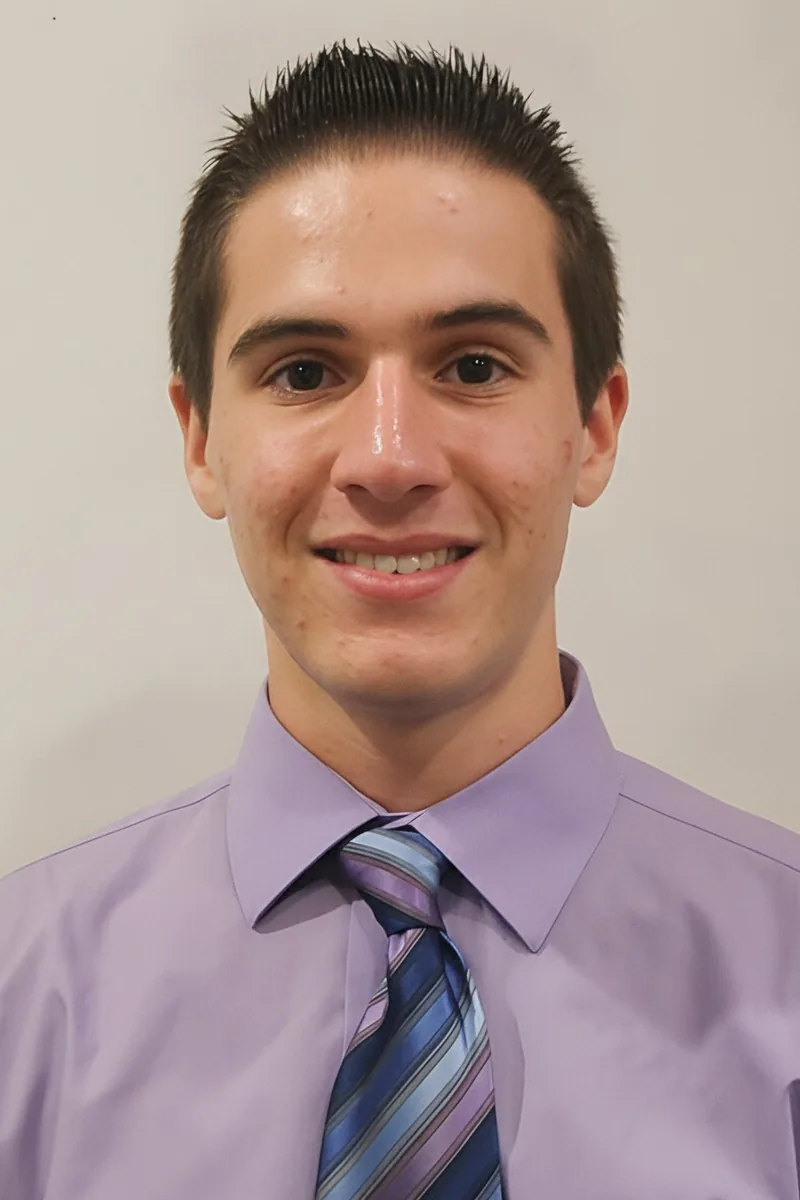
Mechanical and aerospace engineering at Princeton means Matthew doesn't just remember college algebra — he's actively building on it every semester, using polynomial models, systems of equations, and function analysis as the foundation for his coursework in dynamics and thermodynamics. His teaching style is deliberate: walk through a problem step by step, then hand over a harder one and let the student work through the logic with guidance. A 34 ACT backs up the quantitative instincts behind that approach.
A year as a course assistant in Harvard's math department teaching introductory calculus gave Richard a front-row seat to the exact algebra mistakes that derail students — sign errors in rational expressions, shaky intuition around function behavior, confusion over logarithmic properties. He learned to diagnose those gaps quickly and explain the underlying logic in plain terms, a skill sharpened by his own 1600 SAT and 36 ACT. That combination of classroom teaching experience and quantitative fluency makes him especially effective at catching the specific algebraic weak spots that hold students back.
A bioinformatics concentration at Stanford meant Matthew spent his coursework translating biological systems into mathematical models — the kind of work where manipulating exponential functions, solving systems of equations, and interpreting logarithmic transformations aren't abstract exercises but tools for analyzing real data. That top-down, interdisciplinary instinct carries into how he teaches college algebra: connecting each technique to a bigger picture so the logic sticks, not just the steps. His 1510 SAT and 4.9 rating back up the approach.
Allen's interdisciplinary economics and political science program at Yale leaned heavily on quantitative modeling — building cost-benefit analyses, interpreting regression outputs, and manipulating the kinds of polynomial and logarithmic functions that form the backbone of any college algebra syllabus. A 1570 SAT and 5.0 tutoring rating back up his ability to break down problems like systems of equations or rational expressions into clear, logical sequences that make the algebra feel less like arbitrary rules and more like tools with a purpose.
Judah's biology major at WashU means he's constantly solving algebraic problems in scientific contexts — modeling enzyme kinetics with rational functions, using logarithmic equations to calculate pH, and setting up systems of equations for dilution problems. That daily practice keeps techniques like function manipulation and exponential modeling sharp and grounded in something tangible, which makes a real difference when he's walking someone through an abstract textbook exercise.
Engineering coursework at Cornell demanded fluency in polynomial functions, logarithmic equations, and systems of inequalities — all core college algebra topics Kelly uses regularly. Her PhD research also required constant quantitative modeling, so she teaches these concepts with real applications in mind rather than as abstract exercises. Rated 5.0 by students.
Polynomial functions, rational expressions, and logarithmic equations all become more manageable when you understand the underlying logic instead of memorizing steps. Dana earned a 36 ACT — including the math section — and brings that analytical precision to college algebra, breaking complex problems into clear, repeatable reasoning.
Samantha's chemistry degree from Cornell means she spent four years solving algebraic problems that actually mattered — dilution equations, reaction stoichiometry, equilibrium expressions — all built on the same function manipulation and equation-solving that college algebra courses test. She's a visual teacher who reaches for diagrams and sketches to make abstract operations like logarithmic properties or rational expressions click, rather than relying on purely symbolic explanations. Rated 5.0 by students.
Polynomial division, rational expressions, logarithmic equations — College Algebra covers a wide range of topics at a pace that assumes comfort with abstraction. As a Cornell engineering student carrying a 3.7 GPA through math-heavy coursework, Daniel treats each of these topics as a toolkit rather than a checklist, showing how algebraic structure connects across problems.
Studying biology at WashU means Laura constantly translates real phenomena into algebraic language — modeling enzyme kinetics with rational functions, fitting growth data to exponential curves, and solving systems that describe metabolic pathways. She brings that applied fluency to college algebra, breaking down topics like logarithmic properties and function transformations by connecting them to problems she's actually worked through in her coursework. Rated 5.0 by students.
As a premed student studying economics at Cornell, Tameem tackles algebraic reasoning from two angles — the quantitative modeling that underpins economic analysis and the rigorous problem-solving demanded by a science-heavy courseload. His 1510 SAT score backs up genuine comfort with the polynomial, rational, and exponential expressions that define college algebra, and he's particularly sharp at walking through multi-step problems by identifying which algebraic rule applies at each stage and why.
Economics at Penn is built on algebraic modeling — Katherine spent four years working with functions, systems of equations, and logarithmic relationships in contexts like supply-demand analysis and econometric forecasting. That means she can unpack college algebra concepts by connecting them to problems she's actually solved, making abstract manipulation of rational expressions or exponential equations feel purposeful. Her 1550 SAT backs up the quantitative instincts.
Polynomial functions, rational expressions, and logarithmic equations all click faster when you understand the reasoning behind each rule — and Jonathan's MS in Statistics means he uses algebraic tools daily, not just theoretically. He's currently deepening his math background with coursework at Columbia, so college-level algebra concepts stay sharp and accessible in his teaching.
Philosophy training at Cornell builds a habit of following logical chains step by step — and Christian applies that same structured reasoning to college algebra topics like solving systems of equations and breaking down rational expressions. Math isn't his primary field, but his 1520 SAT demonstrates genuine quantitative fluency, and his patient, deadline-conscious teaching style keeps students moving forward through the trickier procedural work.
Managing an immunology lab at Columbia means Matthew doesn't just remember college algebra — he's actively using exponential models, logarithmic data transformations, and systems of equations to analyze breast cancer research data every day. His physics degree built the formal mathematical foundation, while the lab work keeps it sharp and grounded in real applications, so he can show students exactly why a technique like logarithmic properties works the way it does.
A Yale graduate who went on to earn her Master's in Education from Columbia, Victoria brings both mathematical depth and real teaching skill to college algebra topics like polynomial functions, logarithmic equations, and systems of inequalities. She's taught math across every level from first grade through calculus, which means she can quickly identify where a gap in foundational thinking is causing trouble in a college-level course.
Geography might seem far from algebra, but Duncan's UChicago and UBC graduate training leaned heavily on quantitative spatial analysis — regression models, coordinate transformations, and the kind of functional reasoning that maps directly onto college algebra topics like systems of equations and polynomial manipulation. He's rated 5.0 by students, partly because he brings a social scientist's instinct for making abstract formulas feel grounded in something real.
Eric's ecology and evolutionary biology background means he's spent serious time with the algebraic modeling that underpins population dynamics — exponential and logarithmic functions aren't abstract exercises when you're tracking species growth curves or decay rates in the field. He brings that concrete grounding to college algebra, breaking down function behavior and transformations by connecting them to systems he's actually modeled. His 1520 SAT and 32 ACT confirm the quantitative instincts backing that approach.
At a prep school where she teaches and manages curriculum, Moriah has spent years diagnosing exactly where students lose the thread in topics like logarithmic equations, rational expressions, and function behavior — and building clear paths back. Her Cornell education and 1550 SAT score anchor serious quantitative ability, while her day-to-day classroom experience means she knows how to adapt an explanation on the fly when the first approach doesn't land. Rated 5.0 by students.
A materials science major at Brown, Shun uses college-level math daily — polynomial modeling, matrix operations, and rational functions all show up in his coursework. That real-world fluency means he can explain why a technique like completing the square or factoring a higher-degree polynomial actually matters beyond the homework set. He breaks problems into clear, repeatable steps that make the abstract feel manageable.
Princeton's Woodrow Wilson School is built on quantitative policy analysis — economic modeling, statistical reasoning, and the algebraic scaffolding underneath both — so Kaya spent her undergraduate years actively using the function manipulation, systems of equations, and exponential relationships that college algebra courses demand. She's also familiar with how these topics get tested across IB, Regents, and SAT formats, which gives her a clear sense of what fluency actually looks like versus surface-level formula memorization. Rated 5.0 by students.
Phillips Exeter's Harkness method taught Violet to explain her reasoning out loud — a skill she now brings to college algebra, where talking through the logic behind logarithmic properties or rational expressions often matters more than silently grinding through steps. Her math degree from Brown means she's built these algebraic tools into far more advanced structures, so she can pinpoint exactly why a technique works when a student's intuition stalls. Rated 4.5 by students.
Rational expressions, logarithmic equations, and systems of inequalities tend to be the topics where College Algebra students realize they can't rely on the shortcuts that got them through high school. Abismael earned his chemical engineering degree working through these exact tools in thermodynamics and reactor design, so he teaches the underlying logic rather than just the steps. He deliberately throws curveball problems to prepare students for anything a professor might put on an exam.
Most college algebra students struggle not with individual steps but with knowing which technique to reach for — is this a factoring problem, a logarithmic property, or a substitution situation? Samantha's anthropology training at Northwestern built her instinct for recognizing patterns across unfamiliar systems, and she applies that same pattern-matching approach to sorting out polynomial, rational, and exponential problems. Her 33 ACT and broad math tutoring range from arithmetic through calculus confirm the quantitative fluency behind it.
Neuroscience at Vanderbilt means Blake spends his time modeling neural data with the same algebraic toolkit — exponential decay functions, systems of equations, polynomial curve fitting — that college algebra courses test. His deep interest in how people actually learn has made him deliberate about teaching the reasoning behind each manipulation, so that topics like logarithmic properties and rational expressions hold together instead of feeling like disconnected rules. Rated 5.0 by students.
Studying neuroscience at Penn means Daniel uses matrices, logarithmic models, and polynomial functions regularly in his coursework — so college algebra isn't abstract theory for him. He connects topics like systems of equations and rational expressions to how they actually appear in scientific research. His 5.0 rating speaks to his ability to make dense material click.
Studying both finance and statistics at NYU means Dennis doesn't just solve college algebra problems — he uses the underlying machinery every day, from modeling financial scenarios with exponential and logarithmic functions to building statistical frameworks that depend on fluent algebraic manipulation. That dual lens lets him unpack a topic like rational expressions or function transformations by showing what the math actually does in practice, which tends to make the procedures far easier to remember. His 1550 SAT score backs up the quantitative instincts behind that approach.
Two years as a pre-med molecular biology major at Princeton meant Laura was constantly solving for unknowns — balancing chemical equations, modeling exponential decay, working through the same polynomial and logarithmic problems that now define her students' college algebra courses. Switching to a history degree and then landing at a private equity firm didn't retire those skills; if anything, financial modeling sharpened her algebraic fluency further. Rated 5.0 by students.
Rachelle's physiology degree from UCLA meant constantly translating biological systems into algebraic language — modeling membrane potentials with logarithmic equations, fitting exponential decay curves to physiological data, and solving systems that describe how the body maintains equilibrium. That scientific fluency lets her unpack college algebra concepts like function behavior and logarithmic properties by connecting them to something concrete and intuitive. Rated 5.0 by students.
Computer science at Cornell trains you to think about functions, variables, and logical operations with zero ambiguity — and Ryan carries that precision into college algebra topics like solving systems of equations and working through polynomial and rational expressions. He approaches each problem the way a programmer debugs code: isolating what's known, identifying where the logic breaks, and building toward the answer one clear step at a time. Rated 4.8 by students.
Studying biological sciences at Cornell, Drishti regularly applies algebraic tools — exponential growth models in ecology, logarithmic scales in biochemistry — which keeps the college algebra toolkit sharp and grounded in real applications. She's particularly effective at walking through problems involving function behavior and inequalities step by step, building each move from the previous one so the logic stays visible throughout. Rated 5.0 by students.
Studying applied math and biomedical engineering at Harvard means Elaine isn't just reviewing college algebra concepts — she's actively building on them every week in courses that demand fluency with function behavior, polynomial manipulation, and exponential modeling. Her 1550 SAT score backs up that quantitative depth, and her dual-discipline training gives her a knack for unpacking abstract algebraic procedures by connecting them to the applied problems where they actually matter.
Katherine's music degree might seem far from algebra, but reading music is essentially pattern recognition and structural analysis — skills that translate directly to unpacking how logarithmic rules, polynomial factoring, and function transformations actually work. Her 1500 SAT score confirms the quantitative instincts behind that pattern-reading ability, and she brings a methodical, step-by-step approach to equation-solving that mirrors how she'd break down a complex piece of sheet music.
Rasa's anthropology and educational studies background might not scream math, but her 35 ACT and years of tutoring algebra through calculus mean she's genuinely comfortable navigating the polynomial, rational, and exponential territory that college algebra covers. What sets her apart is a diagnostic teaching style — she pinpoints exactly where a student's reasoning breaks down on something like a multi-step logarithmic equation and rebuilds from that specific gap. Rated 5.0 by students.
After decades on Wall Street building financial models — projecting revenue with polynomial functions, analyzing risk through logarithmic scales, solving systems of equations to balance portfolios — Frank picked up the chalk and started teaching the same algebra that powered his career. His MBA and finance background mean he can ground abstract topics like rational expressions and exponential equations in real business scenarios that give students a reason to care about the math. He's taught college-level statistics and business math to hundreds of students, so he knows exactly which algebraic steps tend to trip people up and how to make them click.
Jonathan's engineering coursework at Cornell means he uses college-level algebra daily — polynomial division, rational functions, logarithmic equations, and matrix operations aren't abstract exercises for him but tools he applies in chemical process modeling and coding projects. He brings that applied mindset to tutoring, showing students how each algebraic technique connects to a bigger mathematical toolkit.
Katharine earned her math degree and a 1540 SAT, but what sets her apart in college algebra is how she teaches graphing transformations — she walks students through each shift, stretch, and reflection until they can sketch any function family by sight rather than plotting random points. Her broad tutoring range from elementary math through calculus means she quickly spots which earlier gaps in arithmetic or equation-solving are silently causing trouble in topics like rational expressions or logarithmic equations.
Gabriela tackles college algebra by connecting topics like polynomial functions, logarithmic equations, and systems of inequalities to the kind of quantitative reasoning she uses in her coursework at Harvard. She's especially strong at walking through multi-step problems where students lose track of what each manipulation actually means.
Sam's Yale biochemistry degree required constant algebraic fluency — fitting kinetic data to rate equations, linearizing enzyme assays with logarithmic plots, and solving equilibrium expressions that are really just rational equations in lab coats. That scientific context gives him a way to teach topics like function manipulation and exponential/logarithmic relationships through concrete problems rather than abstract symbol-pushing. His 1530 SAT underscores the quantitative instincts behind that approach.
Testimonials
Because the right College Algebra tutor makes all the difference.
Average Session Rating – Based on 3.4M Learner Ratings
Practice College Algebra
Free practice tests, flashcards, and AI tutoring for College Algebra
Nearby College Algebra Tutors
Other Albany Tutors
Related Math Tutors in Albany
Frequently Asked Questions
College Algebra often requires a shift from memorizing procedures to understanding the underlying concepts—students need to see why methods work, not just how to apply them. Common stumbling blocks include word problems (translating real-world scenarios into equations), multi-step equation solving, graphing functions, and working with rational and radical expressions. Many students also struggle with the abstract thinking required to connect algebraic manipulation to visual representations on a graph. Personalized tutoring helps students build conceptual understanding so they can tackle unfamiliar problem types with confidence.
Showing work reveals your problem-solving process and helps instructors identify exactly where misunderstandings occur—whether it's a computational error, a conceptual gap, or a missed step. In College Algebra, demonstrating your reasoning is often worth partial credit even if your final answer is incorrect, which can significantly impact your grade. More importantly, writing out each step forces you to slow down and think through the logic, which builds stronger understanding and helps you catch your own mistakes. A tutor can help you develop organized, clear work habits that make problem-solving easier and more efficient.
Word problems require translating everyday language into mathematical equations—a skill that takes practice and strategy. The key is to break problems into steps: identify what you know, define your variables clearly, set up the equation, solve it, and check if your answer makes sense in the original context. Many students rush through the setup phase, which leads to errors; slowing down here actually saves time overall. Tutors can teach you systematic approaches to different problem types (distance, mixture, investment problems, etc.) and help you recognize patterns, so you build confidence tackling new scenarios.
Graphing transforms abstract equations into visual patterns you can see and analyze—it's where algebra becomes concrete. When you graph a function, you're literally plotting all the solutions to an equation, which helps you understand behavior like where functions increase/decrease, where they intersect axes, and how changes to the equation affect the graph's shape. Many students struggle because they treat graphing as a separate skill rather than a window into what their algebra means. Personalized instruction helps you see these connections by moving fluidly between equations, graphs, and real-world interpretations, deepening your overall understanding.
Math anxiety often stems from feeling rushed, confused, or like you "should" understand something immediately—all feelings that fade when you work at your own pace with patient, expert guidance. In personalized tutoring, there's no judgment, no competition, and no pressure to move faster than makes sense for you. Tutors can break complex topics into smaller, manageable steps, celebrate your progress, and help you recognize patterns and build competence over time. As you experience success and develop genuine understanding (rather than just memorizing), your confidence grows naturally, and anxiety decreases.
Yes—different textbooks emphasize different approaches (some are more graphical, others more algebraic; some use technology heavily, others focus on hand calculation), and they may cover topics in different orders or with different notation. Varsity Tutors connects you with tutors who can adapt to your specific textbook and curriculum, whether you're using Stewart, Blitzer, Larson, or any other standard College Algebra resource. Your tutor can review your assignments, understand your instructor's expectations, and teach in a way that aligns with how your course is structured—so you're not learning one way in tutoring and another way in class.
Your first session is about building a foundation for your work together. The tutor will likely ask about your current challenges, review recent assignments or exams to identify specific gaps, and understand your learning style and goals. You might work through a problem or two together so the tutor can see how you approach math and where support would help most. By the end, you'll have a sense of how personalized instruction works and a plan for what to focus on in future sessions—whether that's mastering a specific concept, building problem-solving strategies, or preparing for an upcoming test.
College Algebra is fundamentally about recognizing and working with patterns—linear relationships, exponential growth, periodic functions, and more. Expert tutors help you move beyond isolated procedures by asking guiding questions that highlight how different topics relate: how does completing the square connect to the quadratic formula? Why do inverse functions "undo" each other? How does factoring relate to finding zeros? This pattern-recognition builds deeper understanding and makes new material feel less overwhelming because you're connecting it to what you already know. Over time, you develop intuition about which strategies to use and why, rather than just following steps.
Let’s find your perfect tutor
Answer a few quick questions. We’ll recommend the right plan and match you with a top 5% tutor.