Award-Winning AP Statistics Tutors
serving Albuquerque, NM
AP Statistics
Tutors in Albuquerque
Private 1-on-1 tutoring, weekly live classes for academic support, test prep & enrichment, practice tests and diagnostics, and more to elevate grades and test scores.
Based on 3.4M Learner Ratings
UniversitiesSchools & Universities
DeliveredHours Delivered
ProficiencyGrowth in Proficiency
Who needs tutoring?
No obligation. Takes ~1 minute.

Studying statistics and economics simultaneously at UNM means Matthew encounters the same distributions, inference procedures, and regression concepts from two different angles — once in the theory-heavy stats curriculum and again applied to real economic data. That dual exposure sharpens his ability to explain *why* a particular test or interval works, not just how to punch it into a calculator, which is exactly the interpretive skill the AP Stats free-response section grades hardest on. Rated 4.9 by students.
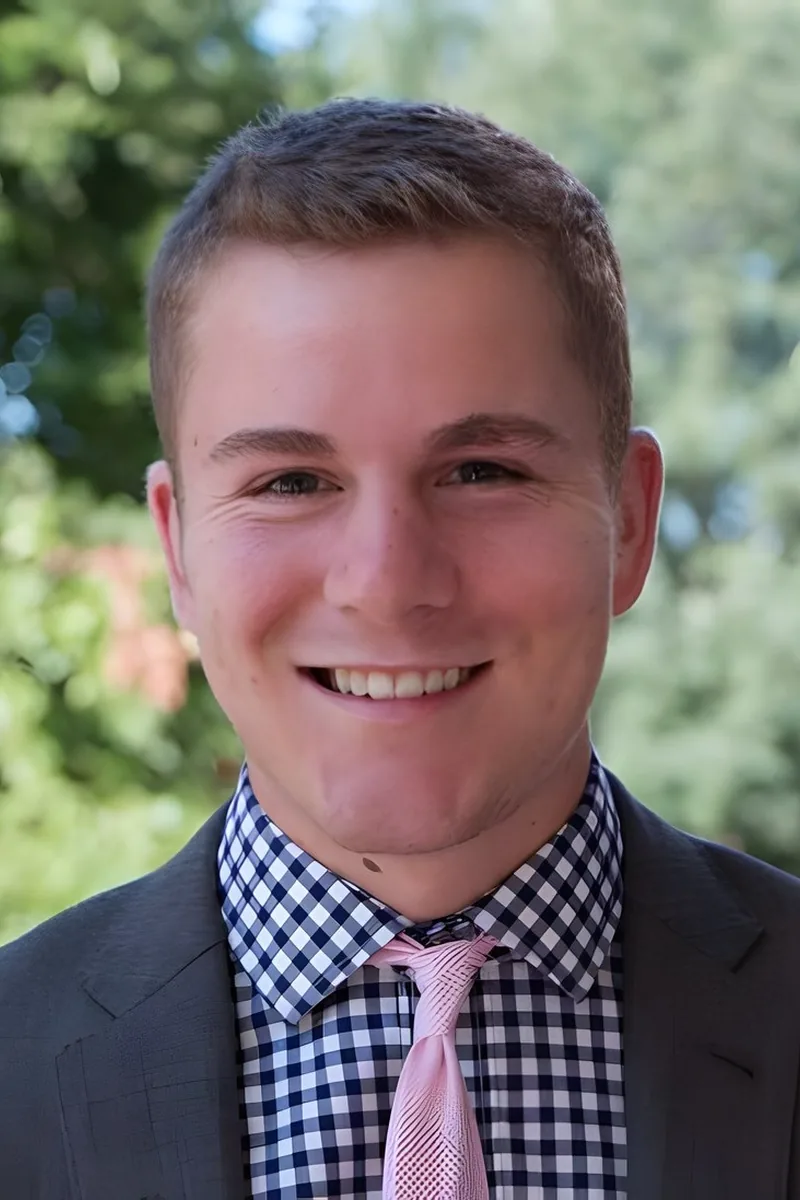
I am a graduate of Cornell University's College of Arts and Sciences. I received my Bachelor of Arts in Chemistry with Distinction in 2015. Since graduation, I was a physics/chemistry teacher and soccer coach at a private school in Virginia for a year, where I led the soccer team to an undefeated season. Before teaching and coaching professionally, I was a Teaching Assistant for the Cornell Math and Physics Departments, where I taught many subjects including calculus, mechanics, electromagnetism. Throughout my time at Cornell and as a teacher, I tutored subjects ranging from the SAT to AP Physics and Algebra II, which is where my true talents lie: in small group or one-on-one settings where I can give students the full attention they deserve and tailor my approach specifically to their learning styles. This is why I am now pursuing tutoring as a part-time occupation at Varsity Tutors. I embrace teaching all math and science subjects, especially physics and calculus, at both the college and high school level and will go above and beyond to make sure all of my students succeed, according to their definition of success. In my spare time, I enjoy playing league soccer, basketball, tennis and guitar, and also like to travel and see as much of the world as I can.
Neuroscience research runs on statistics — hypothesis testing, confidence intervals, regression analysis, interpreting p-values from real experimental data. Daniel applies that firsthand lab experience from his work at the Jungers Center for Neuroscience Research to break down AP Statistics concepts in ways that go beyond formula sheets. His biomedical engineering coursework at Rice keeps these tools sharp and current.
With two master's degrees in mathematics education and state teaching certification, Anthony has taught the full arc of the math curriculum — which means he knows exactly where AP Stats diverges from every other math class students have taken. He zeroes in on the reasoning behind inference procedures, teaching students to articulate why they're choosing a particular test and what their conclusion actually means in context, rather than just punching numbers into a calculator. His 34 ACT reflects the kind of disciplined, structured thinking that pays off on the exam's language-heavy free-response questions.
Pre-med coursework at Cornell means Pratik reads research papers full of p-values, confidence intervals, and regression tables — the same statistical literacy AP Stats is designed to build. He leans into the biology-meets-data angle, teaching students how to interpret experimental results and articulate why a particular inference procedure fits the study design, which is where the free-response rubric awards the most points. His 35 ACT reflects the kind of precise, structured reasoning that translates well to stats communication.
Graduate-level applied statistics at Penn State is a different animal from AP Stats, but William uses that deeper training to show students why formulas like the one for standard error of a sampling distribution are built the way they are — which makes the interpretation questions on the exam far less mysterious. His biomedical engineering background also means he's comfortable grounding lessons in real study designs, from clinical trials to observational health data, so students practice writing the kind of context-specific conclusions the free-response rubric actually rewards. Rated 4.8 by students.
Biology research at Yale means Shreya regularly interprets data — reading regression output, evaluating sample designs, and deciding whether results are statistically significant before drawing conclusions. She brings that same analytical lens to AP Statistics, teaching students how to set up and justify inference procedures the way the free-response section demands. Rated 5.0 by students.
Biomedical engineering at UIC meant Apoorva was designing experiments, collecting noisy biological data, and running statistical tests to figure out whether a device prototype actually performed better than chance — which is the same inferential reasoning AP Stats builds its curriculum around. She's especially sharp on the probability and simulation units, where her engineering instinct for modeling uncertainty makes abstract concepts like sampling variability feel concrete and grounded. Holds a 4.6 rating.
Most AP Stats students come in expecting another formula-driven math class, then hit a wall when the exam asks them to explain *why* a normal model applies or *what* a 95% confidence level actually means in context. Tessa's math major at Yale gives her the theoretical grounding to unpack those conceptual questions, while her history training — building arguments from evidence, weighing competing interpretations — maps surprisingly well onto the kind of structured, language-precise reasoning the free-response section rewards. Rated 4.9 by students.
Game Theory for advanced middle schoolers at Johns Hopkins CTY required Carter to make probability, expected value, and strategic reasoning click for students years ahead of the typical curve — experience that translates directly to the combinatorics and probability units in AP Stats. His economics training at Brown also means he's comfortable with regression and inference in applied contexts, so he can ground abstract concepts like sampling variability in real decision-making scenarios rather than just calculator routines. Rated 5.0 by students.
Cognitive science at Rice meant Adam spent semesters immersed in experimental design, hypothesis testing, and statistical inference — the exact skills AP Statistics demands. He teaches students to think through probability distributions and confidence intervals the way a researcher would, connecting each concept to the logic behind the test rather than just the formula sheet.
Cognitive science trains you to think about how people reason under uncertainty — which is surprisingly close to what AP Stats actually tests, from interpreting conditional probabilities to explaining why a particular sampling method can skew results. Kimberly uses that background to teach the mental models behind concepts like normal distributions and inference, so the logic clicks before students ever touch a calculator. Rated 5.0 by students.
Kyle's statistics degree means he didn't just learn AP Stats concepts — he kept going, building the theoretical framework underneath topics like sampling distributions, expected value, and the normal model that the course only scratches the surface of. That deeper fluency makes him especially effective at explaining why a particular inference procedure applies in a given scenario, not just how to execute it on a calculator. Rated 4.9 by students.
Testimonials
Because the right AP Statistics tutor makes all the difference.
Average Session Rating – Based on 3.4M Learner Ratings
Practice AP Statistics
Free practice tests, flashcards, and AI tutoring for AP Statistics
Other Albuquerque Tutors
Related Math Tutors in Albuquerque
Frequently Asked Questions
AP Statistics focuses on four main units: exploring data through visualizations and summary statistics, sampling and experimentation design, probability and random variables, and inference using confidence intervals and hypothesis tests. The course emphasizes understanding statistical concepts and interpreting real-world data rather than heavy computation. Most of the exam tests your ability to design studies, analyze data, and communicate statistical findings—skills that are increasingly valuable across many fields.
Score improvement depends on your starting point and consistency with practice, but students who work with tutors on weak areas typically see meaningful gains. Common improvements include moving from a 2 or 3 to a 4 or 5 by mastering inference concepts, strengthening experimental design reasoning, and building confidence with free-response questions. The key is identifying which topics (probability, sampling methods, or hypothesis testing, for example) are holding you back and targeting those systematically.
Students in Albuquerque and nationwide most commonly struggle with probability concepts, understanding when to use different inference procedures (t-tests vs. chi-square, for example), and interpreting confidence intervals and p-values correctly. The free-response section also trips up many students because it requires you to explain your reasoning and justify your statistical choices—not just calculate an answer. Tutors can help you build conceptual understanding rather than relying on formulas alone.
The AP Statistics exam is 3 hours total: 90 minutes for 40 multiple-choice questions and 90 minutes for 6 free-response questions. Time management is critical—you'll need to work efficiently on multiple-choice while leaving enough time for the free-response section, where you must show your work and explain your reasoning. Many students benefit from practicing full-length exams under timed conditions to build pacing skills and identify which question types slow them down.
Start by taking a full practice exam early to identify your weak areas—whether that's probability, experimental design, or inference procedures. Then focus your study on those specific topics before taking another full exam. In the final weeks, take timed practice exams to build speed and confidence with the format. Tutors can review your practice test results with you, explain why you missed questions, and help you develop strategies for the types of problems that consistently trip you up.
Look for tutors with strong statistics knowledge, ideally including college-level coursework or teaching experience with AP Statistics. The best tutors understand not just the formulas but the underlying concepts—why we use certain tests, what p-values actually mean, how to design valid experiments. For students in Albuquerque, Varsity Tutors connects you with expert tutors who can explain these concepts clearly and help you develop the reasoning skills the exam demands.
Free-response questions reward clear reasoning and complete explanations—not just correct answers. Practice writing out your work step-by-step: state what you're testing, show your calculations, and interpret your results in context. A common mistake is calculating a p-value without explaining what it means for your hypothesis. Tutors can give you feedback on your explanations, help you learn the language statisticians use, and build your confidence tackling multi-part questions.
Your first session is about understanding where you stand and what you need most. Tutors will likely assess your comfort with key concepts, review any recent exams or practice tests, and ask about your goals—whether you're aiming for a 3, 4, or 5. From there, you'll build a personalized plan targeting your specific weak areas, whether that's probability, inference, or exam strategy. This personalized approach means you're not wasting time on topics you already know.
Let’s find your perfect tutor
Answer a few quick questions. We’ll recommend the right plan and match you with a top 5% tutor.