Award-Winning Chemistry Tutors
serving Las Vegas, NV
Chemistry
Tutors in Las Vegas
Private 1-on-1 tutoring, weekly live classes for academic support, test prep & enrichment, practice tests and diagnostics, and more to elevate grades and test scores.
Based on 3.4M Learner Ratings
UniversitiesSchools & Universities
DeliveredHours Delivered
ProficiencyGrowth in Proficiency
Who needs tutoring?
No obligation. Takes ~1 minute.
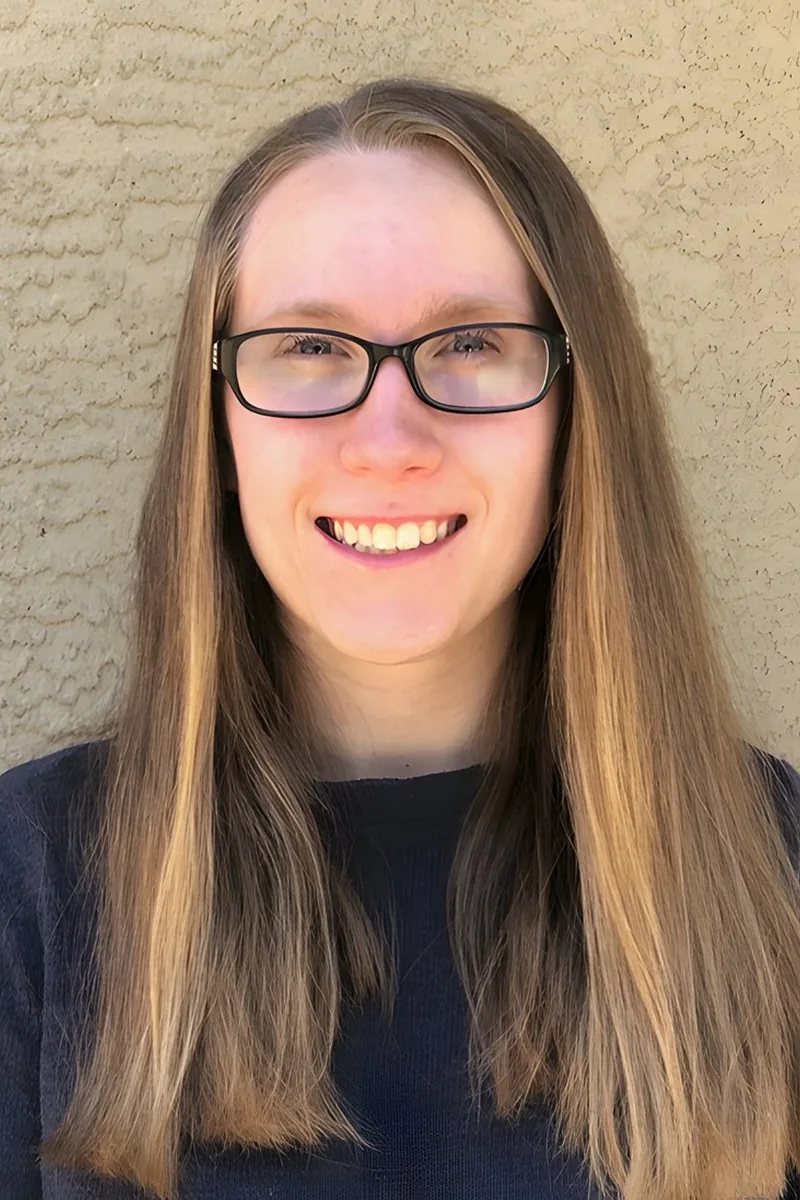
Stoichiometry, equilibrium, and acid-base chemistry each demand a slightly different way of thinking, and Cassandra adjusts her approach depending on which concept a student is wrestling with — dimensional analysis drills for stoich, ICE table walkthroughs for equilibrium, and proton-transfer logic for acids and bases. Her 4.9 rating comes from making these shifts feel natural rather than overwhelming. With a biology degree and experience across analytical and AP-level chemistry, she brings real depth to the subject.
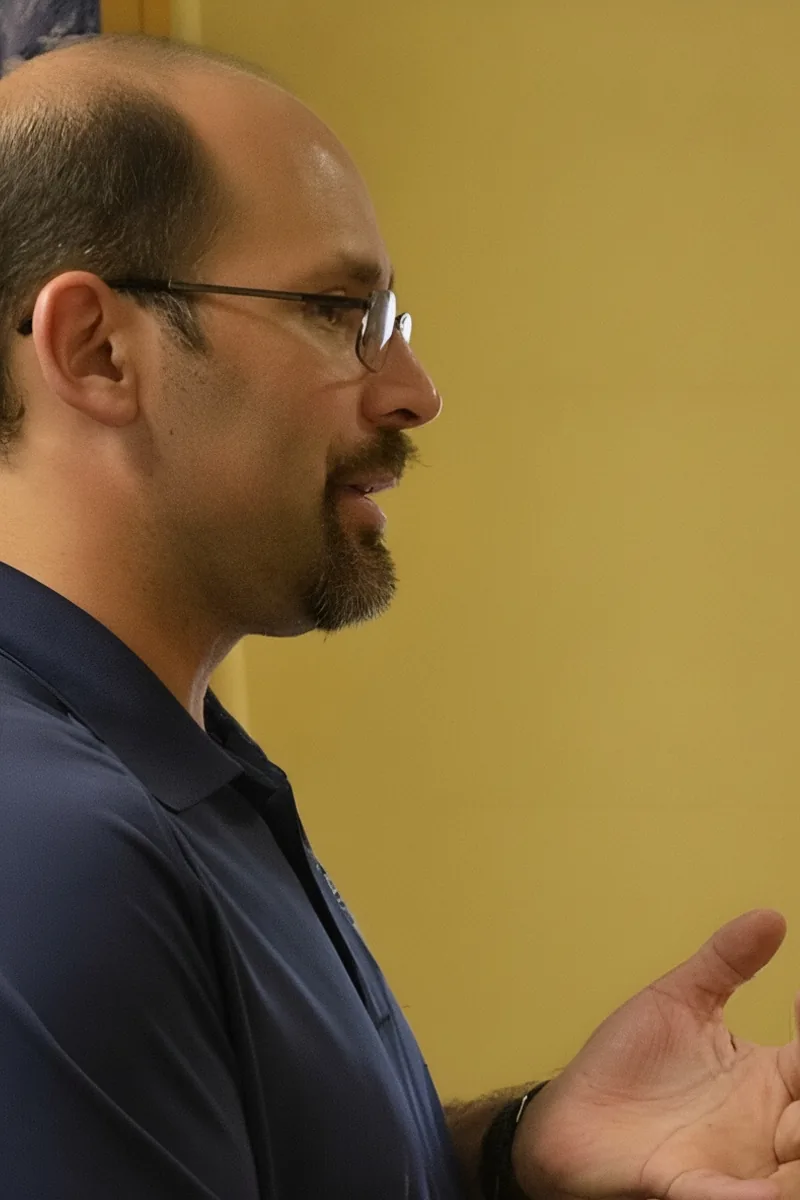
Holding a Master's in Chemistry, Shawn has the depth to teach everything from nomenclature and Lewis structures through kinetics and electrochemistry — and the range to adjust whether a student is in honors, AP, or IB Chemistry. He's particularly strong at diagnosing where a concept breaks down, then rebuilding the reasoning step by step so the next topic doesn't collapse on a shaky foundation. Rated 4.9 by students.
From balancing redox equations to predicting whether a reaction is spontaneous using Gibbs free energy, general chemistry asks students to juggle math, conceptual reasoning, and memorization all at once. Michael tackles this by anchoring each new topic to something concrete — connecting gas law calculations to real experimental setups, or explaining periodic trends through electron shielding rather than rote charts. His science background and comfort with math-heavy problem solving make him especially effective for students struggling with quantitative chemistry.
Every chemistry concept Andrea learned at UCLA had a physiological payoff — acid-base equilibria explained blood buffering, thermodynamics explained enzyme kinetics, and molecular geometry explained drug-receptor binding. She brings that same approach to tutoring, anchoring stoichiometry, bonding, and reaction mechanisms in concrete examples that give students a reason to care about the math behind the molecules.
Kyle has completed multiple upper-level chemistry courses as part of his forensic science program, covering everything from stoichiometry and equilibrium to organic reaction mechanisms. He approaches problem sets by connecting the math behind a concept to what's actually happening at the molecular level, which makes balancing equations and predicting products feel less arbitrary.
Stoichiometry, electron configurations, acid-base equilibria — chemistry demands comfort with both conceptual models and precise calculations. Aaron's engineering coursework required heavy chemistry training, and he applies that dual fluency when walking students through balancing reactions or predicting molecular geometry. He's especially effective at bridging the gap between understanding a concept qualitatively and executing it on paper.
I am currently a Biology major at the University of Nevada Las Vegas. I am in the process of switching into Computer Science. My background is primarily in the sciences and math, mostly Biology and Chemistry. I also am proficient in Spanish; I have received two awards from the National Spanish exam and I passed the AP Spanish and Culture exam. Prior to college, I graduated with an Advanced Honors Diploma from Northwest Career and Technical Academy under the program area of Biotechnology. I have some tutoring experience with my peers and with friends of the family. Outside of school, my hobbies include video games and digital media.
I'm Kat. I'm a math and science enthusiast with a passion for helping others understand and appreciate the science (and its applications) of our fascinating world.
Balancing equations, stoichiometry, and the mole concept trip students up because they require toggling between the macroscopic and the molecular. Nathaniel unpacks each conversion step-by-step, connecting what happens in a beaker to what's happening at the atomic level. His Biomedical Engineering doctorate gave him years of applied chemistry experience that keeps explanations grounded and practical.
Tim taught chemistry to middle and high school students at a STEM summer camp, where he learned to explain concepts like stoichiometry and molecular bonding without relying on the textbook's notation-heavy approach. His computational science background at MIT also means he's comfortable with the quantitative side — equilibrium calculations, thermodynamics, and kinetics — that trips up students transitioning from conceptual to problem-solving chemistry.
I'm a 2016 graduate of Pepperdine University with my Bachelor of Arts in Chemistry. Currently I'm preparing to apply to optometry school; I hope to be accepted for the 2018-19 academic year. During my time in college, I was involved as a teaching assistant for General Chemistry I and II laboratory, as a tutor for General Chemistry I, as a member of the Regents Scholar Student Board, and as a "small group" leader through multiple organizations. I am a member of the sorority Pi Beta Phi and held the positions of Historian, Senior Transition Leader, and member of the Leadership and Nominating Committee during my undergraduate years. As far as tutoring goes, I offer my services to students of all ages and in numerous subjects. I particularly enjoy tutoring the STEM subjects. I also thoroughly enjoy working with female STEM students, which allows me to serve as a role model and to offer additional encouragement for my female students to not lose interest in STEM subjects. A large part of my tutoring style focuses on logical thinking for how to tackle new and difficult problems using previous knoledge and educated hypotheses; I have found that my students find both success and a boost in confidence using my methodology. Aside from my academic interests, I love cooking and baking, my cat, photography, and National Parks.
Balancing equations and memorizing solubility rules only gets a student so far — real chemistry understanding means seeing why ionic compounds dissolve or how electron configurations predict reactivity. Viraj connects these ideas back to the periodic table's structure, giving students a mental map they can use on any problem from mole conversions to acid-base titrations.
Stoichiometry, electron configurations, and equilibrium calculations all demand a specific kind of careful, step-by-step reasoning. As a pre-med biomedical engineering student at Yale, Ellie uses chemistry constantly — from biochemistry coursework to her research in the School of Medicine. She's particularly good at teaching students to set up dimensional analysis and reaction problems methodically so they stop making the small errors that tank exam scores.
Stoichiometry, electron configurations, thermodynamics — Chemistry asks students to think at the atomic level while solving problems that feel like math puzzles. Michelle spent four years at Rice immersed in chemistry coursework as a biochemistry major and now applies that knowledge daily in medical school, so she can explain not just how to balance equations but why the underlying principles matter.
Nicholas calls chemistry one of his strongest and most-loved subjects, and his biomedical engineering program at Johns Hopkins reinforces it constantly — from thermodynamics and equilibrium to atomic structure and bonding. He digs into the "why" behind concepts like Le Chatelier's principle or stoichiometric calculations so students can reason through unfamiliar problems on exams. Rated 4.8 by students across all his subjects.
Stoichiometry is often the first real wall in Chemistry — suddenly, understanding a concept isn't enough, and students need to track units, mole ratios, and limiting reagents simultaneously. Sharan walks through these multi-step problems by teaching a consistent setup method that works from simple mole conversions all the way through solution chemistry. Her Cornell science coursework means she's solving these kinds of problems regularly herself.
Stoichiometry, equilibrium, and thermodynamics all click faster when you can see the math underneath them — and JF's math and computer science background at Stanford means that quantitative backbone comes naturally. He breaks down problems like limiting reagent calculations and ICE tables into logical steps that make the numbers feel intuitive rather than overwhelming.
Stoichiometry and equilibrium tend to be the two places where chemistry students lose their footing, often because the underlying logic gets buried under conversion steps. Yu tackles these topics by making students narrate what's happening at the molecular level before touching any math. Her education training at Harvard sharpened her ability to pinpoint exactly where a concept breaks down for each learner.
As a certified chemistry teacher running a 12th-grade course at one of Philadelphia's top magnet schools, Kathleen tackles everything from stoichiometry and gas laws to electrochemistry and organic functional groups. She connects each concept to lab-scale reasoning — predicting what should happen, explaining what actually did, and figuring out why they sometimes differ.
Between stoichiometry, equilibrium, and thermodynamics, chemistry asks students to think in multiple registers — quantitative, conceptual, and visual — sometimes in the same problem. Kade's dual focus on biology and chemistry at Northwestern means he's constantly applying these ideas across disciplines, which gives him a practical lens for explaining everything from mole conversions to acid-base titrations.
Balancing redox reactions or predicting products from a solubility table requires a kind of structured problem-solving that doesn't always come naturally. Akarsh's molecular biology training gave him deep fluency in chemical bonding, stoichiometry, and reaction kinetics, and he teaches students to approach each problem type with a clear, repeatable method.
Sanjana's applied math background at Harvard gives her a quantitative lens on chemistry — she's especially effective at breaking down stoichiometry, equilibrium calculations, and unit analysis into logical steps. She treats chemistry problem sets the way she treats math: find the pattern, set up the framework, then solve.
Understanding stoichiometry or molecular geometry becomes much easier when a student can visualize what's happening at the atomic level, not just balance numbers on a page. Emily's computational biology work at Cornell keeps her deeply engaged with chemical principles, and she brings that perspective to topics from bonding and Lewis structures through acid-base equilibria.
Testimonials
Because the right Chemistry tutor makes all the difference.
Average Session Rating – Based on 3.4M Learner Ratings
Practice Chemistry
Free practice tests, flashcards, and AI tutoring for Chemistry
Other Las Vegas Tutors
Related Science Tutors in Las Vegas
Frequently Asked Questions
Your first session is all about understanding where you are and what you need. A tutor will assess your current chemistry knowledge, discuss specific challenges (whether it's balancing equations, understanding molecular structure, or lab concepts), and learn about your goals. From there, they'll create a personalized plan to help you build both conceptual understanding and problem-solving skills.
Balancing equations is one of the most common chemistry challenges, and it's often about seeing the pattern rather than memorizing rules. A tutor can break down the systematic approach, help you visualize what's happening at the molecular level, and give you targeted practice with immediate feedback. This builds confidence and helps the concept stick.
Absolutely. Beyond just learning procedures, a tutor can help you understand the scientific reasoning behind experiments—why you're doing each step and what the results mean. This deeper understanding makes lab reports stronger and helps you think like a scientist, not just follow instructions.
Not at all. While some formulas and facts are useful, chemistry is really about understanding how and why reactions happen. Tutoring focuses on building conceptual understanding—like grasping how electron configuration affects bonding or why certain reactions release energy. When you understand the concepts, formulas make sense and stick naturally.
Chemistry involves visualizing things we can't see—atoms, bonds, electron clouds—which is genuinely challenging. Expert tutors use multiple strategies: drawing molecular structures, using models or analogies, working through step-by-step visualizations, and connecting abstract concepts to real observations. This multi-sensory approach helps abstract ideas become concrete.
Unit conversions require both math skills and understanding what the units represent, which is why they trip up many students. A tutor will help you master the dimensional analysis method, practice with different conversion types, and build the confidence to tackle stoichiometry and gas law problems. The key is seeing conversions as a logical process, not a mystery.
Look for tutors with strong chemistry backgrounds—whether through education, professional experience, or both—and experience working with students at your level (high school, AP, college). Equally important is their ability to explain concepts clearly and adapt their teaching style to how you learn best. Varsity Tutors connects you with tutors who combine subject expertise with proven teaching skills.
With an average student-teacher ratio of 22:1 in Las Vegas schools, many students don't get the individual attention needed to master chemistry's challenging concepts. Personalized 1-on-1 instruction lets a tutor focus entirely on your specific gaps—whether that's stoichiometry, thermodynamics, or lab analysis—and adjust pacing to match your learning speed. This targeted approach builds both understanding and confidence.
Let’s find your perfect tutor
Answer a few quick questions. We’ll recommend the right plan and match you with a top 5% tutor.