Award-Winning SAT Reading and Writing Tutors
serving Minneapolis, MN
Award-Winning
SAT Reading and Writing
Tutors in Minneapolis
Private 1-on-1 tutoring, weekly live classes for academic support, test prep & enrichment, practice tests and diagnostics, and more to elevate grades and test scores.
Based on 3.4M Learner Ratings
UniversitiesSchools & Universities
DeliveredHours Delivered
ProficiencyGrowth in Proficiency
Who needs tutoring?
No obligation. Takes ~1 minute.

Scoring a 1570 SAT means David knows what it takes to move quickly through dense passages and pinpoint the evidence a question is actually asking for. He teaches a deliberate reading strategy for the SAT's passage types — literature, history, science — so students stop rereading and start eliminating wrong answers with confidence. Each session includes timed practice with immediate feedback on reasoning, not just answer choice.
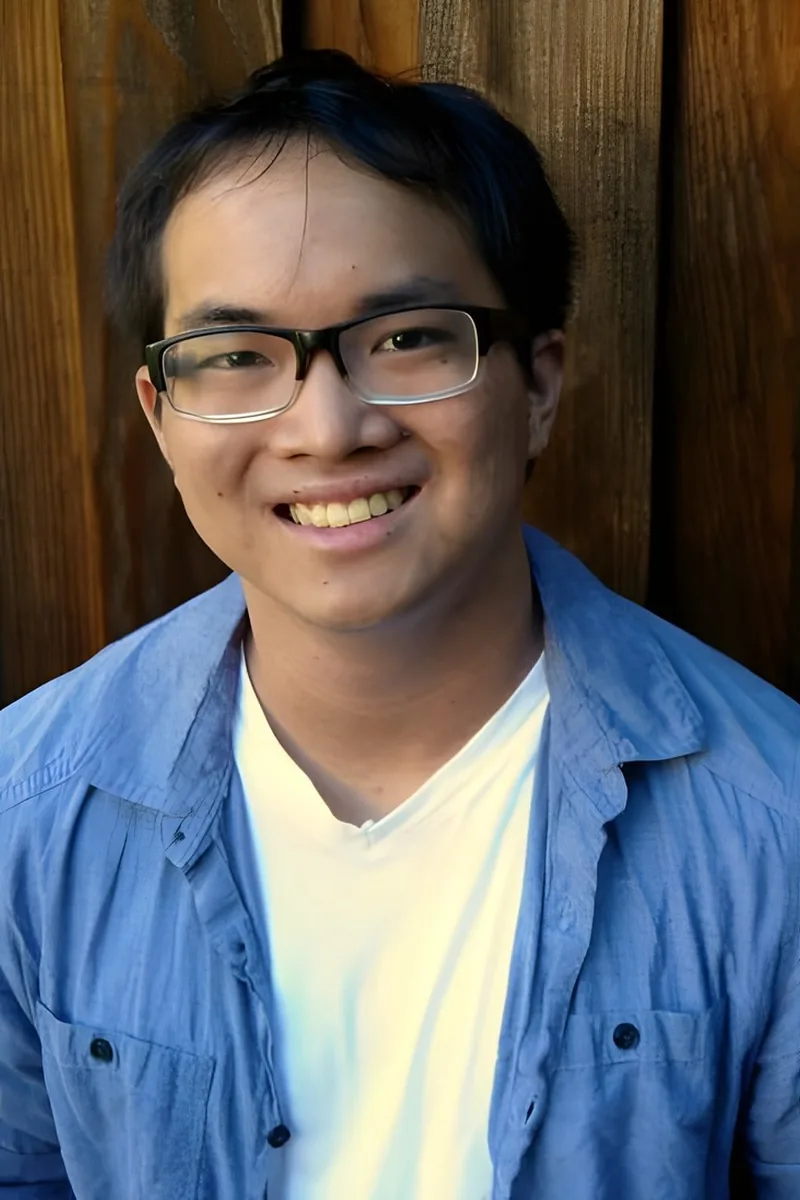
I am a graduate of Stanford University, where I received a BS in Cognitive Science and an MS in Computer Science. After graduation, I spent a summer in Palestine, where I taught web development, app development, and entrepreneurship to a cohort of overenthusiastic high school students; now, I've moved halfway across the country from the Bay Area to the Twin Cities. From volunteering with organizations like Twin Cities Rise and The Mid-Continent Oceanographic Institute to checking out art institutions like the Walker and Mia, it's been such a wonderful time settling into this new place that I call home.
The SAT Reading science passages trip up students who try to understand the experiments instead of just tracking the author's argument — Jaya's genetics major means she can teach the difference, showing where to extract what the passage claims versus what the science actually involves. Her 1530 composite and pre-med training in parsing dense research literature make her particularly quick at the paired-evidence questions, where she teaches students to treat each answer like a hypothesis that either matches a specific line or gets eliminated.
Scoring 1560 on the SAT, Abbey knows that the Reading section rewards a very specific skill: finding the one answer choice fully supported by the passage rather than the one that sounds right. She walks students through evidence-pairing strategies and passage annotation techniques that make even dense historical or scientific excerpts manageable under time pressure.
I'm more likely to give an answer quickly when a teacher asks a question if I have a habit of properly attuned instincts. So, if I want your confidence to grow, I need to redirect the water your instincts flow through to the proper conduits of careful thinking.
I am a rising senior at Pomona College, a small liberal arts college in California, majoring in Public Policy Analysis with a concentration in Economics and a minor in Mathematics. Born and raised just outside of Minneapolis, I am excited to be tutoring in the area. I've studied a variety of topics over the course of my academic career, but I feel especially confident in my knowledge base and tutoring ability in math, history, and standardized testing (especially the ACT).
Scoring 1500 on the SAT taught Marika that the Reading section rewards a specific kind of discipline: anchoring every answer to textual evidence rather than gut instinct. She breaks passages into argument structure, purpose, and tone, then teaches students to eliminate wrong answers systematically — especially on the paired-passage and evidence-support questions that trip up strong readers.
The SAT Reading section isn't really about reading — it's about finding evidence quickly and matching it to answer choices under strict time pressure. Broden, who scored a 1560 SAT, approaches each passage type (literature, history, science) with a different strategy, teaching students exactly where to look for the claims and data the questions target.
The SAT Reading section rewards a specific kind of discipline: answering based on what the passage actually says, not what seems reasonable. Cleo, who scored 1530 on the SAT, walks students through evidence-pairing questions and dual-passage comparisons with a method rooted in close reading and eliminating trap answers systematically.
I am a supportive teacher but I always push my students to succeed. I don't teach based on what my students can already do, I teach based on where I know they are capable of going and what they are capable of doing. I also make sure to talk with them. No one knows how the students learn best more than the students themselves. I bring multiple approaches and vantage points, ready to hit every possible arena and hopefully perk the students' learning style at some point.
Scoring 1550 on the SAT meant mastering the Reading section's particular trick: every correct answer is directly supported by the passage, even when it doesn't feel obvious. Audrey teaches students to locate and annotate that textual evidence quickly, especially on the paired-passage and data-interpretation questions that tend to eat up time.
I am now pursuing a Master's Degree in education from the University of Minnesota and am working toward obtaining my K-6 elementary teaching license. During the day, I work full time as a reading tutor at a school in South Minneapolis. I enjoy basketball, video games, hiking, and reading. In addition to my undergraduate degree in finance, I also received my CFA Charter in 2019.
I am a current student at the University of St. Thomas, working towards my major of Computer Science and while I am proficient in a broad range of subjects I love math and science the most. Before university, I was able to travel with my family to a lot of places and meet a huge variety of people because of this I love meeting new people. I love hearing about their family dynamic or their group of friends at school and exchanging funny stories along the way.
I am a sophomore at the University of Minnesota majoring in Economics. I enjoy helping people learn because I believe true mastery of a subject is being able to teach it. My promise to the students I work with is to put in as much work as they do. I firmly believe that what you get out of something depends on what you put in, so whatever a student will put in I will give back.
Most students lose SAT Reading points not because they can't read, but because they pick answers that sound right instead of answers supported by the passage. Vania, who earned a 1590 composite, teaches a disciplined evidence-matching approach — pairing every answer choice with a specific line or paragraph. She also tackles the paired-passage and data-interpretation questions that tend to eat up the most time.
Hi! My name is Oscar, and I grew up in Washington, DC. I attended St. Olaf College and graduated Magna Cum Laude with a degree in mathematics in 2023. That year I started tutoring students online and I now have two years of post-college tutoring experience. Math is a subject many students find stressful or intimidating. It might make them anxious, or math might be their least favorite class, or both! No matter where a student is coming from, my goal is to create a low-stress environment where he or she feels comfortable making mistakes and asking questions. I've worked with students from elementary school through college, often on Algebra or Algebra 2. I've helped students improve grades, understand tough homework and class concepts, prepare for the SAT and Regents exams, and get ahead by teaching future material.
I am back in the United States, I work at Children's Defense Fund as the Youth Programs Associate. In my free time, I like to hike with my dog, read, and cook!
I'm Emma! I'm a rising senior Classics major at Carleton College in Northfield, MN. I study Latin, Ancient Greek, and the histories associated with the two languages. Outside of class, I'm an RA, and I spend 6-8 hours a week tutoring and teaching college access courses in a nearby high school. In the future, I hope to teach high school Latin!
The SAT Reading section buries answers in passage structure — how an author shifts tone between paragraphs, or where evidence for an inference actually lives. Shrey teaches a deliberate annotation method that keeps students from re-reading the same paragraph three times, a strategy he refined through his own 1530-scoring prep and years of running a tutoring nonprofit.
Scoring 1580 on the SAT requires near-perfect reading comprehension under tight time pressure, and Edward knows exactly how to break down the passage types — literature, history, science, social science — so students stop rereading and start reading strategically. He teaches a question-first approach that trains students to identify what the test is actually asking before hunting for evidence in the text.
The SAT Reading section rewards a specific skill: finding the answer that's supported by the text, not the one that sounds right. Richard teaches students to identify evidence-based reasoning traps — especially on paired-passage questions and "best evidence" follow-ups — using a line-reference strategy that keeps answers grounded. His own 1490 SAT and 5.0 tutoring rating speak to how well that approach translates.
I am a software engineer and logistics specialist with a B.S. from the College of Science & Engineering at the University of Minnesota.
I am right now if not for the patient, determined, and creative teachers I had who not only helped me academically but also made me feel safe and connected. This is the kind of teacher I want to be, and I hope that I can make the kind of difference in my students’ lives that my teachers have made for me.
The SAT Reading section isn't really testing whether you understood the passage — it's testing whether you can find the specific lines that prove an answer choice right or wrong. John, who earned a 1420 SAT and teaches literature and reading across multiple levels, approaches each passage type differently: historical documents get one strategy, science passages another. His English and drama training sharpened the close-reading instincts that make evidence-based questions feel straightforward.
Medical school admissions forced Alex to master the MCAT's verbal reasoning section, which tests the same core skill as SAT Reading — tracking an author's argument through dense, unfamiliar prose and distinguishing what's stated from what's inferred. With a 1590 SAT composite and a chemical engineering background, he's especially sharp on the science passages, where students panic over technical vocabulary instead of following the straightforward logical structure underneath. Rated 4.8 by students.
Scoring 1540 on the SAT, Elliot knows the Reading section rewards a specific kind of discipline: answering from the text, not from intuition. He teaches students to locate concrete textual evidence before even looking at the answer choices, a method that's especially effective on the paired-passage and science-based reading sets. Rated 5.0 by students.
The SAT Reading section rewards a specific kind of discipline: finding answers that are directly supported by the passage, not the one that sounds right. Michelle, who scored a 1570 composite, walks students through evidence-pairing techniques and passage annotation methods that keep them grounded in the text. She's especially sharp on the science-based passages, given her biochemistry background.
I'm Anna! I'm currently a student in the MD/MBA program between Northwestern University's Feinberg School of Medicine and the Kellogg School of Management, and graduated from Northwestern University as part of the Honors Program in Medical Education. I attended the Bergen County Academies in New Jersey, a selective, application-based magnet school, for high school.
The SAT Reading section is really an argument-analysis exam, and Elena — currently in law school at the University of Chicago — spends her days dissecting exactly these kinds of dense, evidence-based passages. She teaches students to identify what each question is actually asking before returning to the text, a discipline that cuts down on the second-guessing that eats up time. Her own 1600 SAT composite speaks to how well this approach works.
I am a recent graduate from a masters program in biostatistics at Columbia University. I received my Bachelor of Arts in biological sciences, with a focus in neurobiology at Northwestern University. In August, I will be starting a doctoral program in biostatistics at NYU. I was a teaching assistant at Columbia University in my department and also have tutored graduate students and undergraduates privately as well. My primary areas of tutoring are math and statistics coursework in addition to math sections on standardized tests such as the GRE and GMAT. I am very passionate about helping students feel more confident and excited about math. In my spare time, I enjoy running, playing piano, and spending time with friends and family.
I am an interdisciplinary educator with an Ed.M. from the Harvard Graduate School of Education and a B.A. from Dartmouth College. My background is primarily in integrated arts learning and museum education and I specialize in visual arts, history and art history, and object-based learning. In all subjects, I take a creative, inquiry-based and learner-centered approach, designing opportunities for each unique individual to meet their learning goals.
I am currently a resident physician at Northwestern Hospital.
The SAT Reading section isn't really about reading — it's about quickly identifying what the passage is doing and finding the one answer choice supported by specific lines of text. As a screenwriting major at USC who dissects written arguments daily, Kiersten teaches students to read for structure and evidence rather than getting lost in dense historical or scientific passages. Her 1550 SAT score speaks to how well that approach works in practice.
Studying religion and philosophy at Pomona College is essentially a four-year exercise in close reading — pulling apart ancient and modern texts where every word carries weight and arguments hinge on subtle distinctions. Miranda brings that interpretive discipline to the SAT Reading section's trickiest question types, particularly the inference and purpose questions where students need to distinguish what an author states from what they merely suggest. Her 1560 composite and 5.0 rating back up the approach.
Scoring 1580 on the SAT gave Peter a sharp sense of what the Reading section actually tests — not whether you understood the passage, but whether you can find the specific line that proves your answer. He teaches students to eliminate trap choices by treating every question like a scavenger hunt for textual evidence, a method that turns even dense historical passages into manageable puzzles.
The SAT Reading section rewards a specific kind of attention — knowing when the answer is buried in a subordinate clause versus when it requires synthesizing across paragraphs. Violet scored a 1550 composite and breaks each passage type (literature, history, science) into its own reading strategy so students stop second-guessing between those last two answer choices. Her approach turns the evidence-based question pairs into a reliable point source rather than a guessing game.
I am an incoming medical student at the University of Miami Miller School of Medicine. I graduated from Rice University in 2025 with a Bachelor of Science in Biology with minors in Medical Humanities and Business.
Most students lose SAT Reading points not because they can't read, but because they pick answers that sound right instead of answers the passage actually supports. Eric, who scored a 1570 SAT and reads voraciously in his spare time, teaches a concrete evidence-matching method: find the claim, locate the lines, eliminate what the text doesn't say. It's a disciplined approach that works across fiction, history, and science passages alike.
I'm a rising junior at Brown University studying biomedical engineering. I have lots of experience in middle school through college level instruction in STEM and SAT/ACT prep. My goal is to provide a fun and productive learning environment by only teaching subjects that I am passionate about.
Testimonials
Because the right SAT Reading and Writing tutor makes all the difference.
Average Session Rating – Based on 3.4M Learner Ratings
Practice SAT Reading and Writing
Free practice tests, flashcards, and AI tutoring for SAT Reading and Writing
Nearby SAT Reading and Writing Tutors
Other Minneapolis Tutors
Related Test Prep Tutors in Minneapolis
Frequently Asked Questions
Varsity Tutors matches Minneapolis students with expert SAT Reading and Writing tutors for 1-on-1 instruction. We pair each student with a tutor based on their specific needs, learning style, and goals.
Whether you need homework help, exam prep, or want to get ahead, our SAT Reading and Writing tutors are ready to help.
Common challenges include gaps from earlier material, difficulty with specific concepts, and trouble applying learning to new problems. These issues can snowball quickly in SAT Reading and Writing.
A tutor identifies where you're stuck, fills in gaps, and provides targeted practice. The 1-on-1 format means you get help exactly where you need it.
Tutors work with your student's actual coursework—homework assignments, class notes, and upcoming tests. This keeps tutoring directly relevant to what's happening in the classroom.
When you share information about your student's school and curriculum, we can match you with a tutor who has relevant experience.
All tutors complete background checks, credential verification, and teaching evaluation. Many of our SAT Reading and Writing tutors hold advanced degrees or have years of teaching experience.
You can review tutor profiles to find someone with the right background for your student's level and needs.
Many students see improved grades within a few weeks, along with better understanding of SAT Reading and Writing concepts and more confidence tackling challenging material.
Tutors track progress and adjust their approach to ensure continued improvement.
Most students benefit from 1-2 sessions per week. More frequent sessions help if your student is significantly behind or has an important exam coming up.
Your tutor can recommend a schedule based on your student's specific situation and goals.
Tutoring is purchased in packages of hours, with rates varying by tutor experience. Varsity Tutors offers several options to fit different budgets and needs.
You can discuss pricing during your consultation to find what works best.
Your tutor will assess where your student is, discuss goals, and start working on priority areas. Most students bring current homework or upcoming test material to focus on.
By the end, you'll have a clear sense of how the tutor can help and a plan for moving forward.
Let’s find your perfect tutor
Answer a few quick questions. We’ll recommend the right plan and match you with a top 5% tutor.