Award-Winning College Algebra Tutors
serving Minneapolis, MN
College Algebra
Tutors in Minneapolis
Private 1-on-1 tutoring, weekly live classes for academic support, test prep & enrichment, practice tests and diagnostics, and more to elevate grades and test scores.
Based on 3.4M Learner Ratings
UniversitiesSchools & Universities
DeliveredHours Delivered
ProficiencyGrowth in Proficiency
Who needs tutoring?
No obligation. Takes ~1 minute.
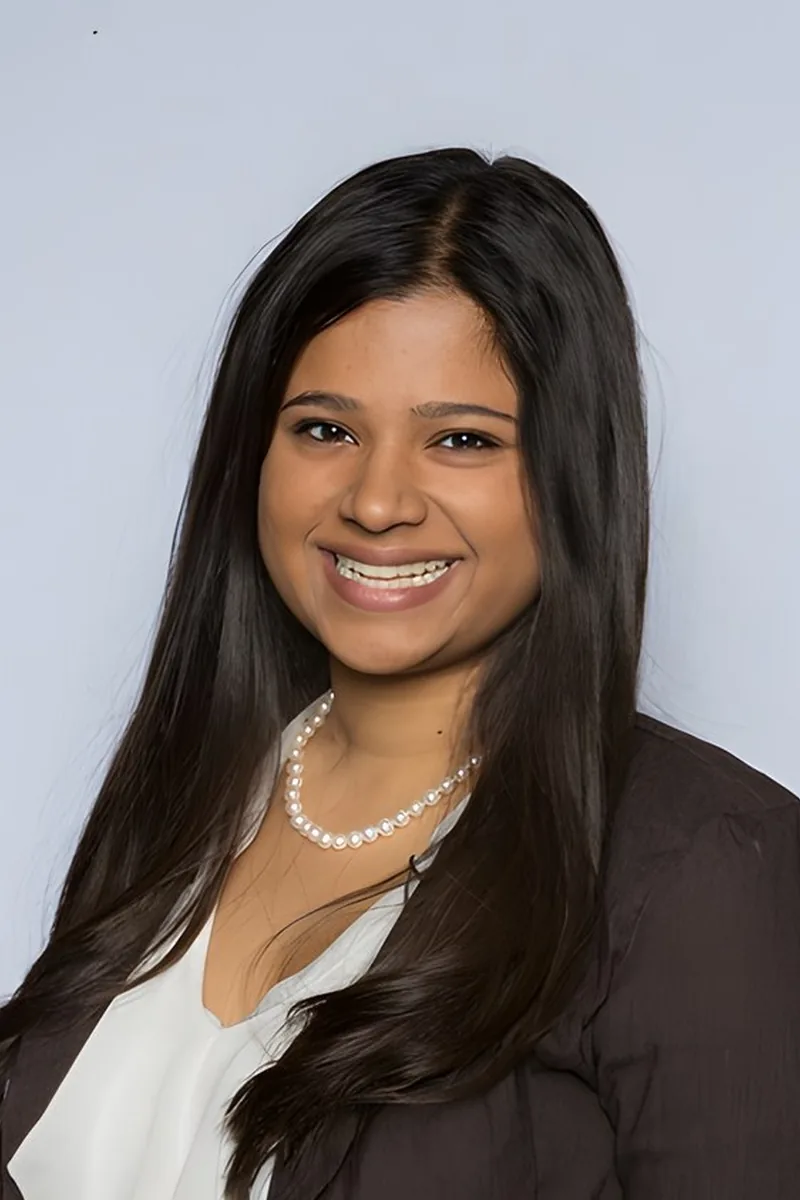
Genetics research involves a surprising amount of algebra — modeling gene frequencies, solving systems of equations for experimental variables, and manipulating logarithmic expressions. Jaya brings that applied perspective to college algebra, showing students how polynomial functions and rational expressions actually behave outside a textbook. Her dual background in science and French also means she's comfortable breaking down dense, unfamiliar notation into plain language.

Two cancer research labs taught Brian that algebra isn't abstract — he's used exponential models for tumor growth curves, logarithmic transformations for dose-response data, and systems of equations to analyze experimental variables, all core college algebra material. His genetics degree at the University of Minnesota means he can ground topics like function behavior and polynomial manipulation in the biological problems where they actually matter. Rated 4.9 by students.
Steve's English and Global Studies degree isn't the obvious math background, but his 32 ACT and experience tutoring algebra through calculus mean he's genuinely comfortable with the polynomial operations, logarithmic properties, and function manipulation that college algebra demands. He's particularly good at unpacking word problems and translating them into algebraic setups — a skill sharpened by years of close reading and precise writing.
Orthopedic research as a biomedical engineer keeps Colleen solving algebraic problems that actually matter — modeling stress-strain relationships, linearizing experimental data, and building equations that describe how implants behave under load. She brings that same structured, step-by-step engineering mindset to college algebra topics like systems of equations and exponential functions, making the abstract feel concrete.
Most college algebra students don't need someone to re-lecture at them — they need someone who can spot the exact step where a logarithmic property or rational expression stopped making sense and reframe it on the spot. Matt is finishing his math degree at the University of Minnesota, so topics like function behavior and polynomial manipulation are things he's actively working with, not half-remembered. Rated 5.0 by students.
Emily's biomedical engineering coursework at the University of Minnesota has her constantly modeling biological systems — which means manipulating exponential and logarithmic functions, solving systems of equations, and building fluency with the exact algebraic toolkit that college algebra courses demand. Her math minor adds formal depth to that applied instinct, so she can walk through why a technique like completing the square or decomposing a rational expression actually works. Rated 5.0 by students.
Nate teaches across the full algebra-to-differential-equations arc, which means when he tackles a college algebra topic like logarithmic equations or rational inequalities, he already knows exactly which skills will matter in the courses that follow — and builds that awareness into how he explains each technique. His 33 ACT and 5.0 tutoring rating back up the math instincts, but it's his range across both math and science subjects that lets him ground abstract algebraic procedures in problems students can actually picture.
Programming in languages like Java, C++, and Python trains you to think in variables, functions, and logical operations — which is exactly the mental toolkit Broden brings to college algebra topics like solving systems of equations and working with exponential and logarithmic functions. His 1560 SAT and 33 ACT back up serious quantitative ability, and as a current CS student at the University of Minnesota, he's still actively using algebraic reasoning in coursework every week. Rated 5.0 by students.
Bioproducts and Biosystems Engineering at the University of Minnesota has Shannon solving real design problems that run on college algebra fundamentals — modeling growth curves with exponential and logarithmic functions, setting up systems of equations for material balances, and transforming data with polynomial fits. That engineering context means she can unpack why a technique like completing the square or rewriting a rational expression actually matters, not just walk through the mechanics. Her 32 ACT backs up the quantitative instincts she brings to every session.
Most college algebra students don't struggle because the math is impossibly hard — they struggle because somewhere between logarithmic properties and rational expressions, a mental block kicks in and the notation starts looking like a foreign language. Tully, who scored a 34 on the ACT and is studying cross-curricular education, is especially good at diagnosing exactly where that block lives and walking through the logic step by step until the notation feels readable again. Rated 4.8 by students.
Two years of tutoring math gave Sarah a clear picture of exactly where college algebra students lose the thread — usually somewhere between mastering basic equation-solving and suddenly facing logarithmic or rational expressions that demand a different kind of thinking. Her current science and engineering coursework keeps these tools sharp, since courses in calculus, physics, and programming all rely on the algebraic manipulation skills she's actively using every week.
Testimonials
Because the right College Algebra tutor makes all the difference.
Average Session Rating – Based on 3.4M Learner Ratings
Practice College Algebra
Free practice tests, flashcards, and AI tutoring for College Algebra
Nearby College Algebra Tutors
Other Minneapolis Tutors
Related Math Tutors in Minneapolis
Frequently Asked Questions
College Algebra typically covers functions, equations, inequalities, polynomial and rational functions, exponential and logarithmic functions, systems of equations, and sequences. The course emphasizes moving beyond memorizing procedures to understanding the underlying concepts—like recognizing patterns in function behavior and connecting algebraic solutions to their graphical representations. Since different textbooks and instructors may emphasize different topics, personalized tutoring helps students align their understanding with their specific course requirements.
Word problems require translating real-world situations into algebraic equations—a skill that combines reading comprehension, mathematical reasoning, and problem-solving strategy. Many students can solve equations mechanically but struggle to set up the problem correctly or decide which approach to use. Personalized tutoring helps students develop a systematic approach: identifying variables, translating language into equations, and checking whether their answer makes sense in context.
Many students memorize graphing rules without understanding why they work, which makes it hard to apply them to new situations. Expert tutors help you see the connections between an equation's form (like vertex form for parabolas) and its graph's features (vertex, axis of symmetry, direction). Through guided practice and visual exploration, you'll develop intuition for how changes in an equation affect the graph—building the conceptual foundation that makes future topics like transformations and compositions much clearer.
One-on-one instruction creates a judgment-free space where you can ask questions, work through mistakes, and build confidence at your own pace. Rather than rushing through material, tutors help you understand why you're stuck and develop problem-solving strategies that work for your thinking style. Over time, as you see patterns, solve problems correctly, and understand concepts deeply rather than just memorizing, your confidence naturally grows—and math anxiety decreases.
Showing work isn't just about getting the right answer—it demonstrates your reasoning and makes it easier to catch mistakes. In College Algebra, instructors want to see that you understand each step, not just that you can use a calculator. Personalized tutoring emphasizes the process: breaking multi-step problems into manageable pieces, explaining your reasoning, and checking your work. This habit strengthens your problem-solving skills and often improves your grades since partial credit is awarded for correct method even if the final answer is wrong.
Bring your textbook, class notes, syllabus, and any recent assignments or exams where you struggled. This helps tutors understand your specific curriculum, your instructor's expectations, and where to focus. If you have a particular topic or problem that's confusing, bring that too. The first session is about building a personalized plan—tutors will assess your strengths and gaps, then tailor instruction to help you succeed in your course.
Minneapolis students have access to personalized instruction that adapts to your learning style and your specific course demands. Whether your class uses a particular textbook, emphasizes certain topics, or has a unique grading structure, Varsity Tutors connects you with expert tutors who understand College Algebra deeply and can explain concepts in multiple ways until they click. With the strong student-teacher ratios in Minneapolis schools (17.6:1 on average), personalized 1-on-1 tutoring fills the gap by giving you dedicated, focused attention when you need it most.
The best time is as soon as you feel stuck or confused—waiting until you're failing makes it much harder to catch up. If you're struggling with foundational concepts like solving equations or graphing, early intervention prevents those gaps from compounding in later topics. Even students earning B's or C's benefit from tutoring that deepens their conceptual understanding, which often leads to better grades and stronger preparation for future math courses.
Let’s find your perfect tutor
Answer a few quick questions. We’ll recommend the right plan and match you with a top 5% tutor.