Award-Winning AP Psychology Tutors
serving Worcester, MA
AP Psychology
Tutors in Worcester
Private 1-on-1 tutoring, weekly live classes for academic support, test prep & enrichment, practice tests and diagnostics, and more to elevate grades and test scores.
Based on 3.4M Learner Ratings
UniversitiesSchools & Universities
DeliveredHours Delivered
ProficiencyGrowth in Proficiency
Who needs tutoring?
No obligation. Takes ~1 minute.
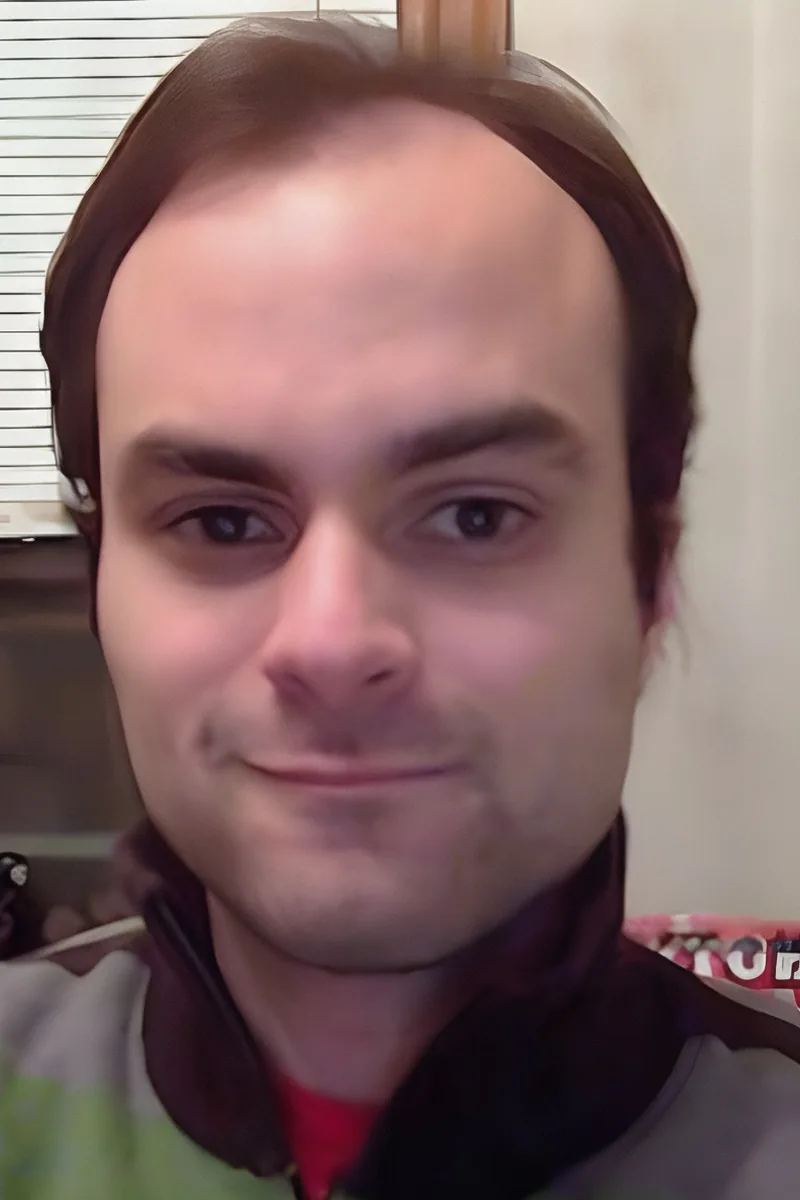
A biology master's student researching evolution and bioanthropology, Alex brings a lens to AP Psychology that's rooted in how organisms actually develop and behave — making units like biological bases of behavior and developmental psychology feel like natural extensions of what he already studies. His dual English and Theater training at Bowdoin also sharpens the free-response side, where crafting precise, well-structured answers under time pressure is essentially a writing and performance exercise. Rated 4.8 by students.

Nicole's chemistry background gives her a tangible way to teach the biological bases of behavior unit — she explains neurotransmitter pathways and synaptic signaling with the precision of someone who studied those molecules, not just their psychological effects. Her English literature training then kicks in for the free-response section, where she coaches students to construct tight, definition-rich answers that don't waste words. Rated 5.0 by students.
Liana's biological sciences coursework gives her a running start on the AP Psych units that trip up most students — biological bases of behavior, sensation-perception, and the neuroscience threading through topics like memory and motivation. She tackles the terminology-dense sections by tying psychological concepts back to the underlying biology, turning flashcard-style definitions into something students can actually reason through on free-response questions. Rated 4.9 by students.
Biochemistry gives Tahmid a molecular-level understanding of neurons, neurotransmitters, and hormonal pathways — the exact content that trips up students in AP Psych's biological bases of behavior unit, where vague answers about "brain chemicals" don't earn full credit. His science outreach work at Wesleyan, breaking down complex concepts for younger students, translates directly into clear, layered explanations for the terminology-dense units like memory and learning theory that demand both precision and accessibility. Rated 5.0 by students.
Peace and Justice Studies at Tufts covers social structures, group dynamics, and systemic inequality — topics that overlap directly with AP Psychology's social psychology and developmental units, where concepts like conformity, obedience, and prejudice show up on nearly every exam. Sophie draws on that sociological lens to make theorists like Milgram and Asch feel less like flashcard material and more like case studies in how power actually works. Her strong writing and reading background also gives her a practical edge coaching students through the free-response section's scenario-based prompts.
Having studied both history and psychology as an undergraduate, Andrew actually completed the coursework that mirrors the AP Psych curriculum — so when he explains concepts like Erikson's developmental stages or the mechanics of classical conditioning, he's drawing on material he learned in depth, not skimming a review book. His dual background is especially useful for the units on learning theory and social psychology, where he ties psychological concepts to the real historical events and experiments that produced them.
Cassie's biology degree with minors in psychology and neuroscience means she's studied the science behind the AP Psych curriculum from both sides — the psychological theories in the classroom and the neural mechanisms in the lab. That dual perspective is especially useful for bridging the biological bases of behavior unit with the more conceptual units like learning theory and developmental psychology, where students often struggle to see how neurotransmitters and brain structures connect to Piaget or Pavlov. Rated 5.0 by students.
Alexis earned her psychology degree and knows exactly which theories, experiments, and terminology the AP exam emphasizes — from Milgram's obedience studies to the nuances of classical versus operant conditioning. She breaks down the trickiest free-response prompts by teaching students to weave multiple perspectives (biological, cognitive, sociocultural) into a single cohesive answer. Rated 5.0 by students.
Linguistics at Yale trains you to analyze how language shapes thought, perception, and social interaction — concepts that map directly onto AP Psychology units like cognition, memory, and social psychology, where understanding how people process and communicate information is half the battle. William brings that analytical lens to the free-response section too, where his writing background and 5.0 rating reflect how well he coaches students to define terms with precision and build scenario-based answers that earn full credit.
Neuroscience is Alex's self-described favorite subject, and that shows up most clearly in how she tackles AP Psychology's biological bases of behavior unit — breaking down neurotransmitter systems, brain regions, and neural pathways with the depth of someone heading into a doctorate program at Washington University's OT school this fall. Her psychology major and neuroscience minor mean the rest of the curriculum, from developmental theory to abnormal psychology, draws on coursework she's already completed with honors. Rated 5.0 by students.
I am a sophomore at Duke University with a strong academic background and a passion for helping students build both confidence and mastery in challenging subjects. Having recently completed AP coursework myself, I understand not only the content but also the strategies needed to succeed under time pressure, particularly on exams and free-response questions. My approach to tutoring is highly structured but adaptable. I focus on breaking down complex concepts into clear, manageable steps while reinforcing patterns that help students recognize how to approach different types of questions. I also emphasize active learningworking through problems together, identifying mistakes, and developing efficient study methods that students can apply independently. In addition to content review, I help students improve test-taking skills, including time management, question interpretation, and organization of written responses. I aim to create a supportive environment where students feel comfortable asking questions and engaging with the material at a deeper level. I am reliable, responsive, and committed to meeting students where they are, whether they need ongoing support or targeted help before an exam. My goal is not only to improve grades but to help students feel more confident and capable in their academic work.
Studying cognitive science on a pre-med track at Rice, Natalie digs into the overlap between brain structure and behavior every day — exactly the territory AP Psych tests hardest. She's especially sharp on the cognitive and biological units, breaking down topics like memory models, perception, and states of consciousness in ways that go beyond vocabulary flashcards and into the kind of conceptual reasoning the exam's scoring rubrics actually reward.
Three semesters on UIUC's Teachers Ranked as Excellent list suggest Angelina knows how to make dense material click — and AP Psychology is nothing if not dense, with fourteen units of terminology that students need to define, distinguish, and apply under exam pressure. Her cellular and molecular biology degree gives her a genuine edge in the biological bases of behavior unit, where she breaks down action potentials, neurotransmitter reuptake, and brain lateralization with the precision of someone who studied those systems at the molecular level. Rated 5.0 by students.
Neuroscience and psychology overlap more than most AP students realize — concepts like neurotransmitter function, brain lateralization, and action potentials show up heavily on the AP Psychology exam. Rithi's neuroscience degree and current medical training mean she can explain the biological underpinnings behind every major psychological theory rather than asking students to memorize disconnected terms. Rated 4.9 by students.
Tashina earned her PhD in Psychological and Brain Sciences, so the AP Psych curriculum — from operant conditioning to the intricacies of the DSM — is territory she's navigated at the research level, not just the introductory one. Her statistics expertise is particularly useful for the research methods unit, where she breaks down experimental design, p-values, and confounding variables with the fluency of someone who runs studies rather than just reads about them. She also brings sharp writing instincts to the free-response section, coaching students to define terms with precision and apply them cleanly to scenario prompts.
Brian's economics training at Caltech — heavy on behavioral models, decision theory, and statistical reasoning — gives him a quantitative angle on AP Psychology that's especially useful in the research methods unit and anywhere the exam tests concepts like heuristics, framing effects, or rational choice. His 1580 SAT also means he's sharp on the reading-and-argument skills that drive free-response scoring, where students need to define terms cleanly and apply them to unfamiliar scenarios under time pressure.
Studying neuroscience at Johns Hopkins means Christopher encounters AP Psychology concepts — from neural signaling and brain anatomy to memory encoding and cognitive biases — in his own coursework on a daily basis. He breaks down dense units like biological bases of behavior and research methods by tying them to real experiments and clinical examples. Students preparing for the AP exam get someone who understands both the science and the test format.
Cognitive science at Rice meant Adam studied the AP Psych curriculum from the inside out — perception, memory, language processing, and the neural underpinnings of behavior were core coursework, not elective reading. That training makes him especially sharp on the cognition and biological bases units, where he connects concepts like dual-process theory and neural plasticity to the real research behind them rather than treating them as isolated vocabulary terms.
Years of teaching English overseas in Thailand and Laos gave Gabriel firsthand experience with how culture shapes cognition, communication, and social behavior — exactly the kind of cross-cultural thinking that AP Psychology's social psychology and developmental units test on free-response questions. His TEFL background also means he's practiced at breaking down dense terminology for learners who need concepts explained clearly and concretely, a skill that transfers directly to vocabulary-heavy units like memory, learning theory, and abnormal psychology. Rated 4.9 by students.
Testimonials
Because the right AP Psychology tutor makes all the difference.
Average Session Rating – Based on 3.4M Learner Ratings
Practice AP Psychology
Free practice tests, flashcards, and AI tutoring for AP Psychology
Nearby AP Psychology Tutors
Other Worcester Tutors
Related Social Sciences Tutors in Worcester
Frequently Asked Questions
AP Psychology covers eight major units: Scientific Foundations of Psychology, Research Methods and Statistics, Sensation and Perception, Learning, Cognition, Motivation and Emotion, Personality, Testing and Individual Differences, Abnormal Psychology, and Treatment of Abnormal Behavior. The exam emphasizes both foundational concepts and real-world applications, requiring students to understand psychological principles and be able to analyze case studies and research scenarios. Tutors can help you master these units systematically and identify which areas need extra attention before the May exam.
The AP Psychology exam is 2 hours and 10 minutes long, consisting of 100 multiple-choice questions (70 minutes) and two free-response questions (50 minutes). The multiple-choice section tests your ability to recall concepts and apply them to scenarios, while the free-response section requires you to explain psychological concepts in depth and analyze research or real-world situations. Strong performance requires both quick recall and the ability to articulate your understanding clearly—areas where personalized tutoring can make a significant difference.
Students often struggle with Statistics and Research Methods, particularly understanding study designs, validity, and how to interpret data—concepts that require both conceptual understanding and mathematical reasoning. Abnormal Psychology and Treatment also challenge students because they involve memorizing disorders, symptoms, and therapeutic approaches simultaneously. Tutors can break down these dense topics into manageable pieces, use visual aids and case studies to make concepts stick, and help you practice applying knowledge to exam-style questions.
Most students benefit from 3-4 months of consistent preparation, with roughly 60-100 hours of total study time leading up to the May exam. This breaks down to about 5-7 hours per week if you're starting in January, or more intensive study if you begin closer to the exam. Working with a tutor helps you use that time efficiently by focusing on your specific weak areas, practicing with real AP-style questions, and building test-taking strategies rather than passively reviewing notes.
A score of 3 or higher is considered "passing" and qualifies for college credit at most institutions, though some colleges require a 4 or 5 for credit. The national average score is around 2.6, so aiming for a 3 or 4 puts you above average. Your target should depend on your college goals and current performance on practice tests—a tutor can help you set realistic milestones, track your progress through practice exams, and adjust your study strategy to reach your goal score.
The two free-response questions typically ask you to define and apply psychological concepts to scenarios, or to analyze research studies. Success requires practicing under timed conditions, learning how to structure clear, concise responses, and understanding what graders are looking for. Tutors can provide sample prompts, give you feedback on your written responses, and teach you how to allocate your 25 minutes per question effectively—ensuring you explain concepts thoroughly without getting bogged down in unnecessary details.
Test anxiety often stems from feeling unprepared or uncertain about question formats—both things that personalized tutoring directly addresses. By practicing with real AP-style questions repeatedly, you build confidence and automaticity, which reduces anxiety on test day. Tutors can also teach you pacing strategies (like skipping difficult questions and returning to them), breathing techniques, and how to interpret tricky question wording so you feel in control during the exam.
Varsity Tutors connects Worcester students with expert tutors who specialize in AP Psychology and understand the curriculum, exam format, and common student challenges. You can get matched with a tutor who fits your schedule and learning style, whether you need help with specific units, full-course review, or intensive exam prep. Tutors work with you to assess your current level, create a personalized study plan, and track your progress toward your score goal.
Let’s find your perfect tutor
Answer a few quick questions. We’ll recommend the right plan and match you with a top 5% tutor.