Award-Winning Statistics Tutors
serving Louisville, KY
Statistics
Tutors in Louisville
Private 1-on-1 tutoring, weekly live classes for academic support, test prep & enrichment, practice tests and diagnostics, and more to elevate grades and test scores.
Based on 3.4M Learner Ratings
UniversitiesSchools & Universities
DeliveredHours Delivered
ProficiencyGrowth in Proficiency
Who needs tutoring?
No obligation. Takes ~1 minute.

I enjoy helping students by explaining concepts in ways that make sense to them, by eliciting their feedback and tailoring my approach to their individual needs, and by conveying my enthusiasm for the learning process. It's great to see the light come on and to see their progress. I have an undergraduate degree in Politics from Princeton, a post-baccalaureate certificate in Quantitative Studies for Finance from Columbia, and an MBA from London Business School. I served as an officer in the Marine Corps and have worked in a number of academic and private-sector positions. I founded and am currently running an analytics-focused consulting practice.
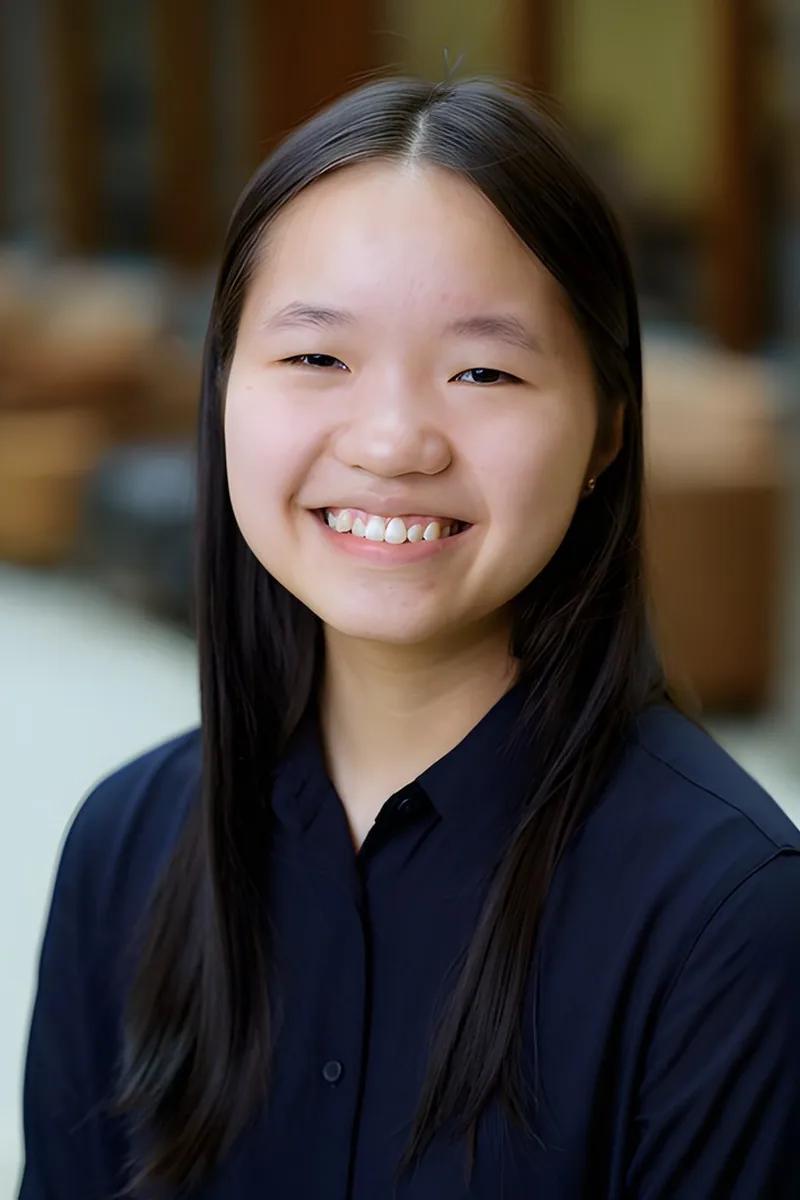
Between her biostatistics background and hands-on research experience in Northwestern's John Rogers Lab, Ingrid knows statistics as both a classroom subject and a practical tool. She walks students through concepts like hypothesis testing, confidence intervals, and probability distributions by connecting each one to what the numbers actually mean in context.
A PhD in economics at Yale means Anthony doesn't just teach statistics — he relies on it daily, from econometric modeling to designing empirical studies that require careful handling of inference, sampling, and regression. His dual undergraduate background in physics and math gives him an unusual ability to trace statistical methods back to their mathematical roots, making concepts like maximum likelihood estimation or the central limit theorem genuinely intuitive. Rated 5.0 by students.
A PhD statistician who also holds a biomedical engineering degree, Sam teaches introductory and intermediate statistics with an unusual amount of real-world context. Whether the topic is hypothesis testing, confidence intervals, or regression, he unpacks the logic behind each method so students can interpret results critically, not just run calculations.
A Quantitative Methods minor at Vanderbilt means Heather spent semesters immersed in regression analysis, hypothesis testing, and probability — the exact material that trips up most statistics students. She teaches the reasoning behind each test so students can choose the right method on their own, not just follow a decision flowchart. Her 4.9 rating speaks to that approach.
Engineering Physics at Cornell requires serious statistical reasoning — error analysis, probability distributions, hypothesis testing — so Daniel brings a practical lens to statistics rather than a purely textbook one. He walks through concepts like standard deviation, regression, and confidence intervals by tying them to real data questions, which makes the logic behind each formula click.
Most students memorize the formulas for z-scores or standard deviation without ever seeing where they come from — Kathleen's math degree from Washington University means she can derive them from scratch and explain each piece along the way. She treats every statistics concept as an extension of the algebra and calculus her students already know, which makes new material feel like a logical next step rather than a disconnected set of rules.
Understanding statistics means learning to ask the right questions about data before running any test: Is the sample random? What's the shape of the distribution? Could this result have happened by chance? Ethan's policy background gave him years of practice interrogating datasets and translating statistical output into plain-language conclusions, a skill he now brings directly to topics like hypothesis testing and regression analysis.
Between her sociology research in undergrad and her MBA coursework, Krupa has run enough regressions, hypothesis tests, and probability models to know exactly where students get tripped up. She tackles the conceptual side — why you'd choose a t-test over a z-test, what a p-value actually means — so the formulas stop feeling arbitrary. Her 4.9 rating speaks to how clearly she communicates these ideas.
Kaylah's graduate work in Computational Social Science at the University of Chicago is built almost entirely on statistical methods — probability distributions, hypothesis testing, regression modeling, and data interpretation. She teaches statistics the way she actually uses it: starting with what question you're trying to answer, then selecting and applying the right tool. Her background in cognitive neuroscience research means every example she pulls from is grounded in real data.
Most students walk into statistics expecting another math class and get blindsided by the emphasis on interpretation — explaining what a confidence interval actually means, or why correlation isn't causation. Amber tackles that interpretive layer head-on, teaching students to read context before crunching numbers. Her theater background gives her a knack for making abstract concepts like probability distributions feel concrete and memorable.
Emily's computational biology concentration at Cornell is essentially applied statistics — she uses probability distributions, confidence intervals, and regression analysis to interpret biological data every week. That hands-on context lets her explain statistical reasoning through concrete examples rather than abstract formulas.
Studying Philosophy, Politics, and Economics at Penn means Kevin encounters statistics not as an abstract math course but as a tool for answering real questions — polling reliability, economic trends, policy evaluation. He unpacks topics like probability distributions, hypothesis testing, and regression with that applied lens. Students come away understanding not just how to compute a standard deviation but what it actually tells them.
Testimonials
Because the right Statistics tutor makes all the difference.
Average Session Rating – Based on 3.4M Learner Ratings
Practice Statistics
Free practice tests, flashcards, and AI tutoring for Statistics
Nearby Statistics Tutors
Other Louisville Tutors
Related Math Tutors in Louisville
Frequently Asked Questions
Statistics is taught differently depending on whether students are in AP Statistics, Honors Statistics, or a standard Statistics course—and textbooks vary across Louisville's school districts. Tutors work with your student's specific curriculum, whether that's focusing on probability distributions, hypothesis testing, data analysis, or exam preparation. They'll review your student's class materials and notes to ensure tutoring directly supports what's being taught in the classroom.
Many students find the conceptual leap from arithmetic to statistical thinking challenging—understanding what a p-value actually means or why sample size matters requires thinking differently about data. Word problems in Statistics are particularly tricky because they require translating real-world scenarios into mathematical language and choosing the right test or method. Tutors help students build this conceptual foundation so they're not just memorizing formulas, but genuinely understanding when and why to use them.
In Statistics, showing work means clearly documenting your assumptions, identifying the correct procedure, and explaining your reasoning—not just getting the right answer. Tutors teach students to organize their solutions step-by-step, label what they're calculating, and justify their method choices. This approach builds deeper understanding and ensures students earn full credit on exams and assignments, especially in AP Statistics where communication of statistical reasoning is heavily weighted.
Word problems in Statistics require students to identify what's being asked, recognize which statistical method applies, and translate the scenario into mathematical notation—a multi-step process that confuses many students. Tutors break this down by teaching a consistent problem-solving strategy: identify the population and sample, determine what parameter or statistic is relevant, and select the appropriate test or confidence interval. With practice and guided feedback, students develop confidence in tackling unfamiliar problems.
Absolutely. Statistics anxiety often stems from feeling like concepts don't make intuitive sense or from past math struggles. Tutors create a low-pressure environment where students can ask questions, work through problems at their own pace, and see patterns emerge. As students experience success with increasingly complex problems and understand the logic behind statistical methods, confidence naturally builds—and that confidence carries into the classroom and onto exams.
AP Statistics tutors focus on mastering the four major units: exploring data, sampling and experimentation, probability and simulation, and inference. They help students practice free-response questions (which require clear statistical communication), understand what the graders are looking for, and develop time-management strategies for the exam. Tutors also identify weak areas early—whether that's interpreting confidence intervals, designing experiments, or recognizing when to use different inference procedures—so students can strengthen them before test day.
In the first session, a tutor will assess your student's current understanding of Statistics fundamentals, identify specific challenges (whether that's probability, hypothesis testing, or interpreting data), and learn about their goals (passing the class, AP exam prep, college readiness). They'll also ask about your student's learning style and what's worked in the past. From there, they'll create a personalized plan that targets weak areas while building on strengths.
Varsity Tutors connects you with expert tutors in Louisville who specialize in Statistics and understand the local curriculum. You can specify your student's needs—whether they're in AP Statistics, need help with a specific unit, or want to build foundational understanding—and get matched with a tutor who's the right fit. The process is straightforward, and tutoring can start quickly once you're connected.
Let’s find your perfect tutor
Answer a few quick questions. We’ll recommend the right plan and match you with a top 5% tutor.