Award-Winning AP Calculus BC Tutors
serving Louisville, KY
AP Calculus BC
Tutors in Louisville
Private 1-on-1 tutoring, weekly live classes for academic support, test prep & enrichment, practice tests and diagnostics, and more to elevate grades and test scores.
Based on 3.4M Learner Ratings
UniversitiesSchools & Universities
DeliveredHours Delivered
ProficiencyGrowth in Proficiency
Who needs tutoring?
No obligation. Takes ~1 minute.

I am no longer needed.
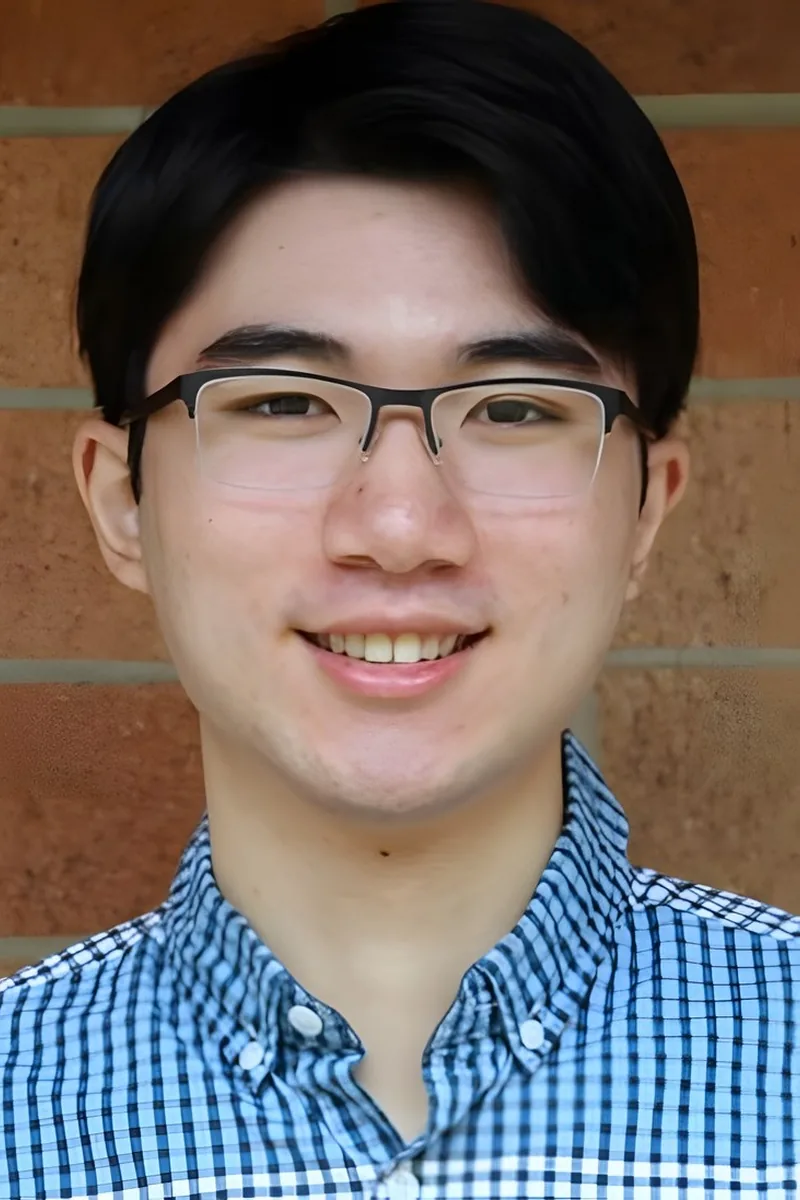
As a medical student at the University of Kentucky who teaches organic chemistry recitation, Jason is used to breaking complex multi-step processes into clear reasoning chains — exactly what BC demands when students face series convergence arguments or parametric curve analysis. His biology and math background means he can ground abstract topics like Taylor polynomial error bounds in concrete problem-solving logic rather than rote memorization. Rated 5.0 by students.
Neuroscience coursework at the undergraduate level is surprisingly calculus-heavy — modeling action potentials with differential equations, using integration to analyze receptor binding curves — so Nick learned BC-level tools like series approximations and advanced integration as practical necessities for his major. He's especially clear at walking through the logic of convergence tests, breaking each one into a decision rather than a memorized rule. Rated 4.8 by students.
Scoring a 36 on the ACT while studying Human Biology at Cornell means Sharan lives at the intersection of rigorous quantitative thinking and applied science — exactly where BC Calculus sits when series approximations and integration techniques start modeling real biological systems. She breaks down the AB-to-BC jump by treating topics like Taylor polynomials and convergence tests as logical extensions of limits and derivatives, not a separate universe of formulas to memorize. Rated 5.0 by students.
Scoring a 36 on the ACT while studying economics at Vanderbilt means Kerr lives comfortably in the quantitative reasoning that BC Calculus demands — and his computer science focus sharpens the algorithmic thinking behind recursive sequences and series convergence. He teaches BC's trickiest leaps, like moving from basic integration to constructing Taylor polynomials, by grounding each new idea in the conceptual logic rather than just the procedural steps. Rated 4.9 by students.
Notre Dame's Science-Computing program front-loads calculus-heavy coursework — Aidan moved through multivariable calc and differential equations while simultaneously applying integration techniques and series in his science courses, so BC topics like Taylor polynomials and convergence tests landed as tools he actually needed, not just exam hurdles. He's especially sharp at tracing where a BC struggle — say, setting up an integral in polar coordinates or choosing the right convergence test — traces back to an AB concept that needs reinforcing. His 35 ACT and premed science background keep explanations precise and grounded.
Series convergence tests, parametric equations, polar curves — BC Calculus piles on concepts fast, and falling behind on one unit can cascade through the rest of the course. Ethan breaks each new topic back to its AB foundation before building upward, so students see Taylor series and integration techniques as extensions of ideas they already own rather than entirely new material.
Mackenzie scored a 35 on the ACT and tutors math at every level from elementary through AP, which means she knows exactly which algebra and AB gaps trip students up once BC introduces new integration techniques and series. She walks through problems like setting up improper integrals or applying ratio tests by tracing each step back to the reasoning behind it, so students build intuition they can rely on during the exam.
Until age 16, Viktor saw math as blind formula memorization — then a series of teachers at the right moment revealed the deeper logic underneath, and he ended up majoring in math at UChicago, where rigorous proof-based coursework made concepts like convergence and infinite series feel inevitable rather than arbitrary. That shift from "memorize the ratio test" to "understand why it works" is exactly what he brings to BC Calculus, especially when students hit the wall where AB intuition stops and formal reasoning about Taylor polynomials and error bounds needs to take over. His 1600 SAT and current CS master's work at NYU keep that analytical edge sharp.
Tackling series convergence tests, parametric equations, and polar curves requires more than memorizing formulas — it demands knowing when and why each technique applies. Talia approaches BC-specific topics by building intuition around each concept before drilling the mechanics, so students can handle the free-response questions that reward deep understanding over rote calculation.
BC Calculus piles on series convergence, parametric equations, and polar coordinates on top of an already demanding AB curriculum. Julie's Princeton training in statistics and machine learning means she regularly uses advanced calculus as a tool, giving her an intuitive sense for which techniques apply where. She tackles integration strategies and Taylor series by connecting each method back to the core idea it extends.
Derek scored a 5 on the AP Calculus BC exam and now studies applied mathematics at Harvard, which means series convergence tests, parametric equations, and polar area problems are still part of his daily toolkit. He breaks down intimidating topics like Taylor series error bounds and integration by parts into repeatable strategies that click on exam day. Rated 4.9 by students.
BC Calculus covers a massive range — from parametric equations and polar curves to Taylor series and convergence tests — and Dennis's physics research at Princeton demanded fluency in all of it. He connects topics like integration techniques and differential equations to the physical problems they were invented to solve, which makes the logic behind each method click.
Most BC students can mechanically apply a ratio test or crank out a Taylor expansion — where they get stuck is understanding *when* each tool is the right one and *why* it works. Alexander, an applied math major at Rice with a 1580 SAT, approaches BC as a problem-solving course rather than a formula catalog, building each new concept from the reasoning students already developed in AB. That mindset is especially useful for the trickier BC territory — convergence arguments, error bounds, and parametric integration — where intuition matters more than memorization.
Most people who breeze through math can't explain it — Daniel learned BC Calculus by grinding through the logic of every convergence test, every parametric derivative, every series expansion until it genuinely made sense, and that's exactly how he teaches it. As an applied mathematics undergrad, he's currently using these tools in upper-level coursework, so he knows which BC concepts tend to feel arbitrary and how to make the reasoning behind them stick.
Testimonials
Because the right AP Calculus BC tutor makes all the difference.
Average Session Rating – Based on 3.4M Learner Ratings
Practice AP Calculus BC
Free practice tests, flashcards, and AI tutoring for AP Calculus BC
Nearby AP Calculus BC Tutors
Other Louisville Tutors
Related Math Tutors in Louisville
Frequently Asked Questions
AP Calculus BC builds on Calculus AB concepts and covers limits, derivatives, integrals, differential equations, and sequences/series. The BC exam includes all AB material plus additional topics like parametric equations, polar coordinates, vector-valued functions, and infinite series. For students in Louisville preparing for the exam, understanding how these topics interconnect—especially series convergence tests and their applications—is critical for scoring well on the multiple-choice and free-response sections.
Score improvement depends on your starting point and consistency with practice. Students who work with tutors typically see gains of 1-2 score points (on the 1-5 scale) over several months, though some see larger jumps by filling specific knowledge gaps. The key is identifying which topics—whether it's series, parametric equations, or integration techniques—are holding you back, then targeting those areas with focused practice and feedback.
Many students in Louisville struggle most with infinite series (convergence tests, Taylor series), parametric and polar calculus, and the conceptual leap from derivatives to integrals. Free-response questions often require combining multiple concepts—like using integration by parts within a series context—which trips up students who've only memorized procedures. Pacing through the full curriculum is also challenging since BC covers significantly more material than AB in the same timeframe.
Time management is critical: the multiple-choice section allows about 1.5 minutes per question, so knowing when to skip and return is essential. On free-response, read all six questions first to prioritize easier ones and build momentum. Practice identifying which integration technique or series test applies before diving into calculations. Many students benefit from working through released AP exams under timed conditions to build familiarity with question formats and refine their pacing strategy.
Most students benefit from consistent, focused practice over 2-3 months leading up to the exam. This typically means working through practice problems 4-5 times per week, with full-length practice tests every 2-3 weeks to track progress. Since AP Calculus BC covers more ground than AB, starting prep early—ideally right after winter break if testing in May—gives you time to revisit difficult topics without rushing through the curriculum.
Varsity Tutors connects you with tutors who have deep expertise in AP Calculus BC and understand the specific challenges students face on the exam. When getting matched, look for tutors with strong track records helping students improve their scores and experience with the exact topics giving you trouble. A good first session should involve a diagnostic conversation to pinpoint your weak areas and build a targeted study plan.
Your first session is typically a diagnostic where a tutor assesses your current understanding, reviews your course progress, and identifies which topics need the most attention. They'll likely work through a few problems with you to see where gaps exist—whether it's conceptual understanding or procedural fluency—and discuss your timeline and goals for the exam. From there, you'll develop a personalized study plan focused on maximizing your score improvement.
Confidence comes from mastery and familiarity. Working through practice exams with a tutor under timed conditions helps you build comfort with the test format and reduces anxiety about the unknown. Tutors can also teach you strategies for managing pressure—like breaking complex free-response questions into smaller steps and knowing which problems to attempt first. Regular practice with feedback builds the confidence that you can handle whatever the exam throws at you.
Let’s find your perfect tutor
Answer a few quick questions. We’ll recommend the right plan and match you with a top 5% tutor.