Award-Winning AP Pre-Calculus Tutors
serving Indianapolis, IN
AP Pre-Calculus
Tutors in Indianapolis
Private 1-on-1 tutoring, weekly live classes for academic support, test prep & enrichment, practice tests and diagnostics, and more to elevate grades and test scores.
Based on 3.4M Learner Ratings
UniversitiesSchools & Universities
DeliveredHours Delivered
ProficiencyGrowth in Proficiency
Who needs tutoring?
No obligation. Takes ~1 minute.
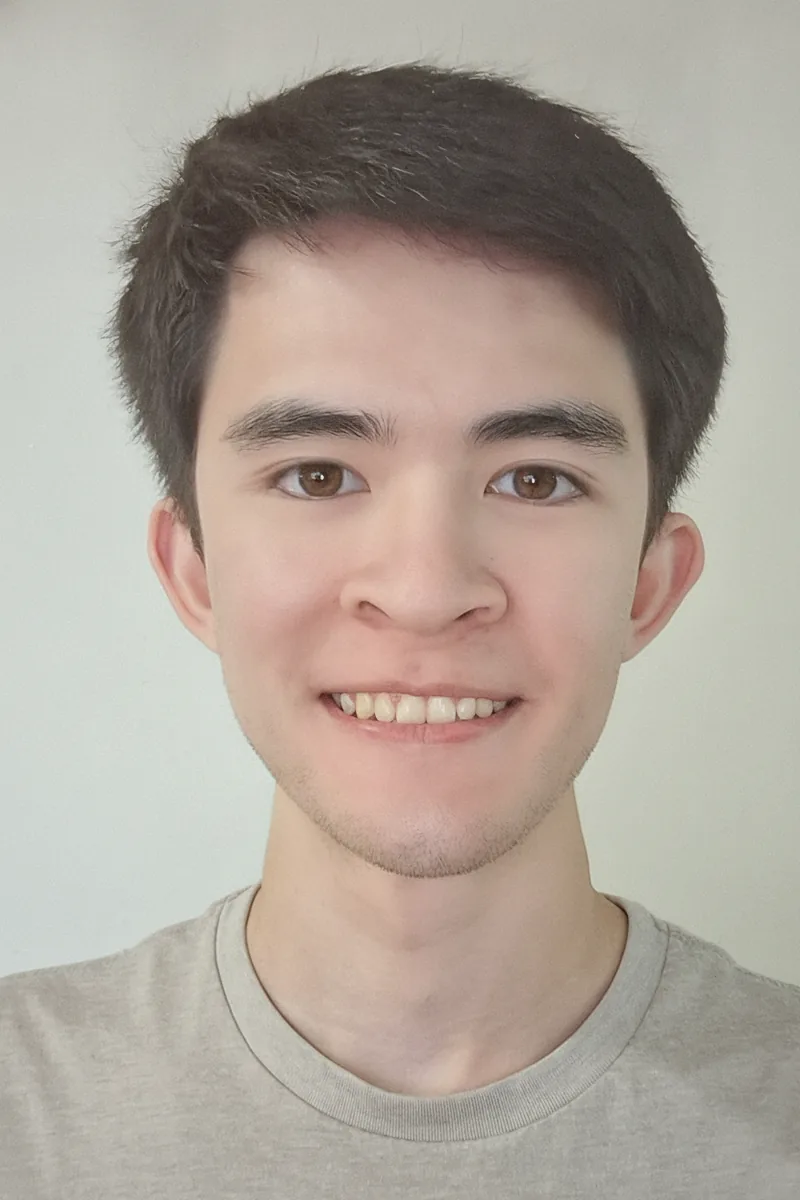
Hello! My name is AJ Eustace. I have five years of private tutoring experience working with students from middle school through college. I graduated from the University of Virginia with a double major in Statistics and Economics, and I'm currently enrolled in a Master of Social Work program at Ohio State. I specialize in helping students succeed in their math courses, particularly in algebra, geometry, and pre-calculus.

AP Pre-Calculus covers function analysis, trigonometry, and modeling at a pace that can overwhelm students who've only seen these topics casually. Joey's scientific computing work at Penn demanded fluency with polynomial behavior, transformations, and rate-of-change reasoning — exactly the skills this course tests. He teaches each unit by tying abstract function properties back to problems students can visualize.
Having earned a BS in Biology with High Honors from New Mexico State, Kayley knows the math-science pipeline firsthand — AP Pre-Calculus concepts like exponential growth models and trigonometric cycles showed up constantly in her genetics and ecology coursework. She leans into that cross-disciplinary angle, using real biological scenarios to make abstract function behavior feel concrete. Her approach zeroes in on building the graphical intuition the AP framework rewards, especially around transformations and end behavior.
One of the most important things in tutoring math is to make sure students understand why a mathematical procedure works, not just how to do it. When student know how to do the procedure, but don't understand why it works, they will forget the procedure or misapply it, or worse, they may begin to hate math, not because they can't do it, but because they don't understand its relevance.
Studying Astronomy, Astrophysics, and Planetary Science at Florida Institute of Technology, Matthew uses trigonometric and exponential models to describe everything from stellar luminosity curves to orbital dynamics — the same function families AP Pre-Calculus builds its entire framework around. He teaches composition and transformation questions by walking students through what's actually happening to a function's shape and why, drawing on the physical intuition that comes from applying these tools to real systems daily. His experience tutoring college peers in calculus and advanced physics means he can pinpoint exactly where a student's algebraic reasoning needs tightening before the AP exam.
I am a graduate of the University of Florida as well as the University of Washington, where I earned my Bachelors and Masters degree in Applied Mathematics, respectively. Since graduating, I have worked in different I.T. capacities such as Quality assurance and programming, but I have always made time to tutor students in math. Helping others to do math is one of my passions because I know how good it feels to go from "what is this math?" to "this actually makes sense!". Although I tutor all math courses ranging from 7th grade level through undergraduate level, algebra has to be my favorite math to tutor because I see it as the starting point of mathematics; it's the course where students are introduced to conceptual math. Getting a solid foundation in algebra affects all future math courses as well as science courses. Outside of tutoring, I like to work out, play blitz chess, and watch basketball and football.
The moment AP Pre-Calculus shifts from 'solve this equation' to 'describe what this function is doing and why,' a lot of students lose their footing — and that's exactly the transition Sharif is built to coach. His deep calculus background (he teaches through AP Calculus BC) means he can trace every pre-calculus concept forward, showing students how mastering function behavior now pays off in the next course. He approaches each session by working backward from the reasoning the AP exam actually tests, not just the computations.
Mechanical engineering at UT means Yucheng works with polynomial, exponential, and trigonometric models in applied settings — designing systems where function behavior isn't abstract but determines whether something actually works. He brings that practical lens to AP Pre-Calculus, breaking down the course's modeling and rate-of-change questions so students see the reasoning the exam rewards. Rated 4.9 by students.
When I was in high school, I remember seeing the joy of my math teachers when they would teach in class. This inspired me to become a high school math teacher. The first step was becoming a peer tutor to my classmates. This lead to tutoring math to college students. Then tutoring students while working as a TA. Then I worked as a data scientist which not only did I understand more how to apply math in the workspace, but also learned how to explain math concepts to coworkers without a strong math background. This helped me to shape my tutoring philosophy to relate to the person being tutored and this opened the door to me teaching high school calculus 1 & calculus 2! I am currently teaching precalculus at a community college.
Northwestern's engineering curriculum threw Katherine into differential equations and systems modeling early, which means she built her fluency with polynomial, trigonometric, and exponential functions under real problem-solving pressure — not just in a precalculus classroom. She uses that background to teach AP Pre-Calculus with an emphasis on function composition and rate-of-change reasoning, walking students through how to interpret what a model is doing before worrying about computing an answer. Her engineering instinct for breaking complex problems into sequential, manageable steps translates directly to the multi-part analysis questions the AP exam favors.
I have tutored and/or taught mathematics since 2009. I have received graduate degrees in mathematics from Clark Atlanta University and the University of Florida. I am very patient with my students and strive to develop their skills, strategies and critical thinking.
Hi, I'm Sebastian! I'm a student-athlete at Trinity College studying Mechanical Engineering, and I am passionate about helping students find their stride in the classroom. My experience leading youth soccer clinics and mentoring younger teammates taught me that every individual learns differently. I focus on creating an encouraging, structured environment where students feel comfortable asking questions. From math and sciences to study skills, I'm dedicated to providing the guidance and support
Testimonials
Because the right AP Pre-Calculus tutor makes all the difference.
Average Session Rating – Based on 3.4M Learner Ratings
Nearby AP Pre-Calculus Tutors
Other Indianapolis Tutors
Related Math Tutors in Indianapolis
Frequently Asked Questions
AP Pre-Calculus covers a broad range of topics including polynomial and rational functions, exponential and logarithmic functions, trigonometry, sequences and series, and parametric equations. The course also emphasizes mathematical modeling and real-world applications. Understanding how these topics connect is essential for success, as the AP exam tests both conceptual understanding and problem-solving skills across all these areas.
Students often struggle most with trigonometric identities, logarithmic equations, and understanding function transformations. These topics require both procedural fluency and conceptual understanding—you need to know how to manipulate equations while also grasping why certain transformations work. Personalized tutoring can help you identify which specific concepts are holding you back and build confidence in these areas before the AP exam.
Score improvement depends on your starting point and how consistently you engage with tutoring. Students who work with tutors typically see gains by focusing on weak topics, practicing with real AP-style problems, and developing test-taking strategies. Most students benefit from identifying their specific gaps early—whether that's algebraic skills, function concepts, or exam pacing—so tutoring can be targeted where it matters most.
Effective strategies include managing your time across multiple-choice and free-response sections, reading questions carefully to identify what's being asked, and showing all work on free-response items for partial credit. Practice tests are crucial—they help you understand the exam format, identify which question types slow you down, and build stamina for the full exam. Tutors can help you practice under timed conditions and refine your approach based on your performance patterns.
Your first session focuses on understanding where you are right now. Tutors will typically assess your comfort level with key topics, review any recent exams or assignments, and discuss your goals for the AP exam. This helps create a personalized plan that targets your specific needs—whether that's building foundational skills, tackling advanced topics, or developing test-taking confidence.
Practice tests are essential—they're the best way to understand exam format, identify weak areas, and practice pacing under real conditions. Taking full-length practice tests regularly helps you see patterns in where you lose points and what types of questions slow you down. Tutors can review your practice test results with you, pinpoint specific concepts to focus on, and help you develop strategies for the sections that challenge you most.
Ideally, you should begin focused exam preparation 2-3 months before the test, though starting earlier gives you more time to address gaps. If you're already in your AP Pre-Calculus course, you can start tutoring now to build strong foundations and stay ahead of challenging topics. Even if the exam is closer than that, targeted tutoring can still help you maximize your score by focusing on high-impact areas and test-taking strategies.
Varsity Tutors connects you with expert tutors who specialize in AP Pre-Calculus and understand the specific challenges students face. You can share your goals, current level, and preferred schedule, and we'll match you with a tutor who fits your needs. Whether you need help with specific topics, full exam preparation, or test-taking strategies, personalized 1-on-1 instruction is customized to help you succeed.
Let’s find your perfect tutor
Answer a few quick questions. We’ll recommend the right plan and match you with a top 5% tutor.