Award-Winning Math Tutors
serving Indianapolis, IN
Math
Tutors in Indianapolis
Private 1-on-1 tutoring, weekly live classes for academic support, test prep & enrichment, practice tests and diagnostics, and more to elevate grades and test scores.
Based on 3.4M Learner Ratings
UniversitiesSchools & Universities
DeliveredHours Delivered
ProficiencyGrowth in Proficiency
Who needs tutoring?
No obligation. Takes ~1 minute.

Covering everything from pre-algebra fundamentals through calculus, Ben approaches math the same way he approaches test prep: with a clear, step-by-step method tailored to how each student thinks. He's particularly effective at bridging gaps — connecting fraction operations to algebraic reasoning, or showing why slope matters before diving into linear equations. His experience teaching students with accommodations means he's skilled at finding alternate paths to the same concept.
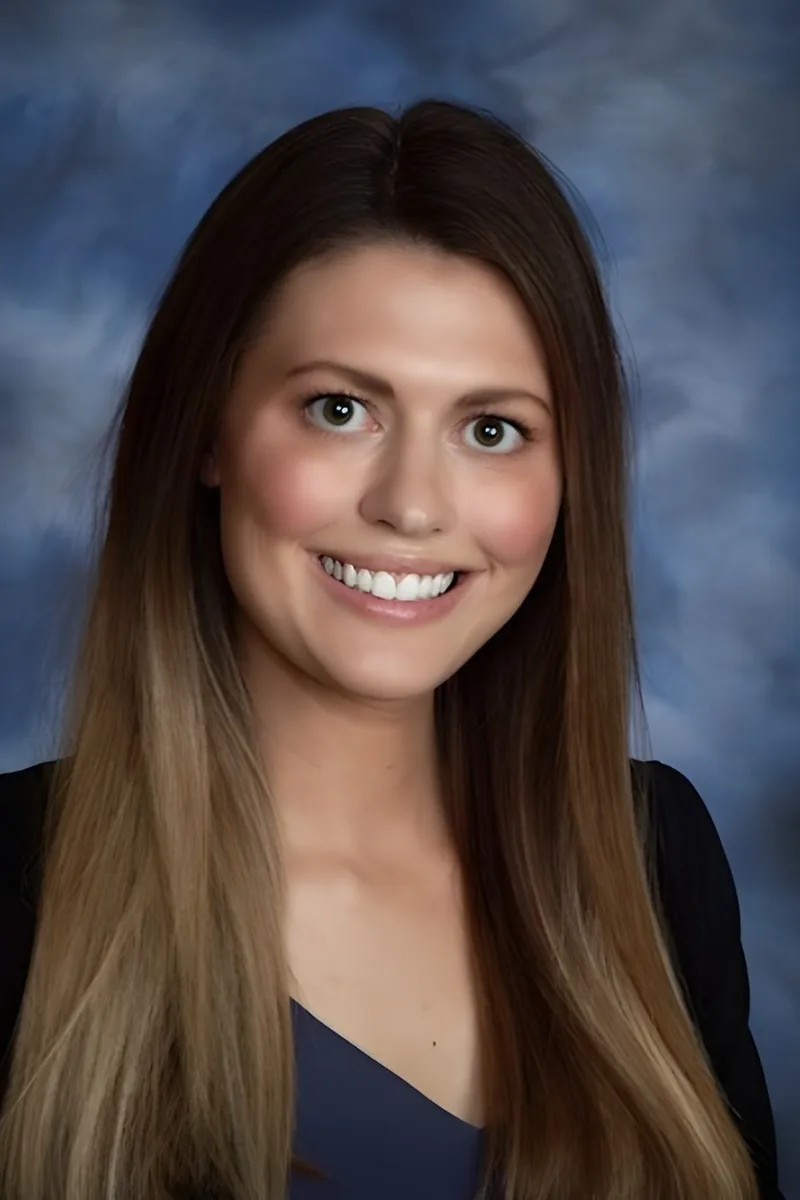
A 4.0 GPA through a biology degree with a math minor means Emily spent years in courses like calculus, statistics, and linear algebra — and actually retained it. She breaks down word problems and abstract concepts by connecting them to concrete reasoning, an approach that earned her a 35 ACT and a position with Indiana University's Department of Mathematics.
Having navigated school with ADHD himself, Owen knows firsthand that the standard way of explaining a math concept — the one in the textbook, the one the teacher used — isn't always the way that clicks. He's built alternative approaches to everything from fractions and ratios to multi-step word problems, drawing on the kind of lateral thinking that comes from years of having to find his own path through material. His sport management career also means he's fluent in the applied math students rarely see in class — statistics, percentages, budgeting — which gives him concrete hooks to make abstract operations feel real.
Aleta's background spans environmental science and an MBA in finance, both of which demanded fluency in applied math — from statistical analysis to financial modeling. She approaches topics like fractions, ratios, and algebraic reasoning by connecting them to practical problems so students see why the math matters, not just how to solve it.
I'm currently a Process Assistant at an Amazon warehouse, which is like an assistant manager. My job is interesting, active, and varied, but I missed tutoring and want to make math and other subjects as easy as possible to approach and grasp for students. With the right time and a commitment to tailoring a tutoring style for the person being assisted, any student can pass their classes and retain lifelong knowledge and experience. I'm looking forward to working with you!
Joubert's chemical engineering background means he doesn't just teach math procedures — he shows students why those procedures exist by connecting concepts like proportional reasoning, algebraic manipulation, and data interpretation to real problems he solved in engineering coursework. When a student gets stuck, he traces the logic back to fundamentals until the gap clicks into place. Rated 4.9 by students.
History degrees don't scream "math tutor," but Thomas's analytical training — constructing arguments from evidence, identifying patterns across complex systems — gives him a structured approach to walking through problems where students need to see the reasoning, not just the formula. He's particularly useful for students who struggle with word-heavy math questions, since his background is essentially professional close reading. Rated 5.0 by students.
Bill genuinely enjoys math and treats it as a series of puzzles rather than a chore — an attitude that tends to be contagious. He breaks down arithmetic, fractions, decimals, and early problem-solving into clear, logical steps, making sure each concept clicks before moving to the next one.
Having minored in mathematics at Indiana University while simultaneously completing a biology degree, Lauren sees math as a connected system rather than isolated problem sets. She digs into the reasoning behind formulas and operations so students can tackle unfamiliar problems with confidence instead of relying on memorized steps.
Jack's economics training is heavily quantitative, which means he's spent years working with the calculus, linear algebra, and statistical methods that underpin most college math courses. He breaks down problems by connecting abstract procedures to concrete applications — showing, for instance, how a derivative actually describes a rate of change rather than just a formula to memorize.
An economics degree is surprisingly math-intensive, and John puts that quantitative training to work when tackling algebra, functions, and introductory calculus concepts. He emphasizes setting up problems correctly — translating word problems into equations, identifying what a question is really asking — because that's usually where students lose points before they ever start solving.
Lauren's linguistics background sharpens how she teaches math — she's skilled at translating word problems into equations and breaking down the logic behind operations so that each step makes sense. She tackles arithmetic, fractions, proportions, and pre-algebra concepts by connecting them to patterns students can recognize and apply on their own.
I am a professional tutor with years of experience. I have helped students jump letter grades and improve as much as 8 composite points on the ACT and 200 points on the SAT. I have over 6 years and 1000 hours of test prep experience and over 6 years of experience tutoring math up to and including calculus, various science subjects, English, and Spanish. I like to meet all the tutoring needs of a student. This includes covering not only the academic subjects (including math, science, and language) and test prep (ACT and SAT) but also assisting with study skills and organization. I also have experience in working with students with various learning disabilities, including ADD/ADHD. I have helped students in all levels of courses, including honors and AP levels.
Whether a student is wrestling with long division or just starting to make sense of fractions and decimals, Ryan zeroes in on the specific step where confusion begins. He uses visual models and real-world scenarios — splitting a pizza, measuring distances — to make abstract number relationships click before moving to standard algorithms.
Triple-majoring in Mathematics, Computer Science, and Economics means Darren lives inside quantitative thinking all day — he's solving proofs in one class, coding algorithms in the next, and modeling economic systems in the third. That cross-disciplinary fluency is especially useful when a student asks "when will I ever use this?" because he can point to exactly where a concept like linear systems or rate of change shows up across multiple fields. He teaches everything from elementary arithmetic through multivariable calculus and differential equations.
A mechanical engineering degree demands math fluency from arithmetic through multivariable calculus, and Walker has that full range covered. Whether a student is stuck on long division or wrestling with integration techniques, he adapts his explanations to the level and zeroes in on the specific conceptual gap holding things up.
From pre-algebra fundamentals through calculus, Charles covers a wide range of math and zeroes in on the specific concept causing trouble — whether that's fraction operations, function transformations, or limit definitions. His 34 ACT composite reflects genuine comfort across math topics, and his two years of peer tutoring taught him how to explain the same idea multiple ways until it clicks.
Classics and philosophy trained Austin to follow long chains of logical reasoning without losing the thread — a skill that maps directly onto multi-step algebra and calculus problems where students need to track what they're doing and why at every stage. His 1570 SAT and 33 ACT confirm the quantitative chops, but it's the analytical rigor from translating Latin texts and constructing philosophical arguments that shapes how he actually teaches math. He breaks problems down into their underlying logic rather than drilling procedures, which tends to stick longer.
From pre-algebra fundamentals through multivariable calculus, Aidan's math background spans the entire K-12 and early college sequence. His approach zeroes in on the conceptual link a student is missing — whether that's understanding what a fraction actually represents or why the chain rule works — because patching that one gap often unlocks everything built on top of it.
Neuroscience at Duke is math-heavy in ways most people don't expect — Lauren's coursework demands fluency in calculus, statistical modeling, and quantitative analysis of experimental data, which keeps her skills sharp across the full algebra-to-calculus pipeline. She's especially good at showing students how to set up a problem before solving it, turning vague prompts into clear mathematical structure. Rated 4.8 by clients.
Victoria's math background spans algebra through calculus, and she's particularly effective at bridging the gap when students understand procedures but can't explain why they work. Whether it's fraction operations, proportional reasoning, or early algebraic thinking, she connects abstract steps to concrete examples that make the logic visible. A 34 ACT and 1510 SAT back up her fluency with the kind of quantitative reasoning that underpins every math course.
Two years as a Mathnasium instructor meant Amy taught math to every age group and skill level, from basic multiplication to pre-calculus concepts. That experience made her especially sharp at diagnosing exactly where a student's understanding breaks down — whether it's fraction operations, order of operations, or translating word problems into equations — and building from that specific gap forward.
While history and ESL are Christie's primary lanes, her teaching background includes math fundamentals — working through arithmetic, fractions, basic equations, and the kind of word problems that require careful reading comprehension. Her ESL experience is especially useful for students who struggle with math not because of the numbers, but because the language of math problems trips them up.
Engineering coursework at Notre Dame means Alexandra tackles math daily — from algebraic manipulation to calculus concepts — and she knows which foundational skills actually matter for moving forward. She breaks down topics like fractions, ratios, and equation-solving into concrete steps that build real number sense. Rated 5.0 by students.
Victoria's dual focus on computer science and math at Washington University in St. Louis means she doesn't just solve problems — she explains the reasoning behind each step, whether it's setting up proportions or working through function transformations. Rated 5.0 by students, she tailors her approach to whatever math level a student is tackling.
Jennifer's math teaching spans pre-algebra through calculus, which means she can spot exactly where a gap in earlier concepts — like fraction operations or order of operations — is quietly causing trouble in more advanced work. Three years as an elementary teaching assistant gave her a knack for explaining quantitative reasoning in plain, visual terms before layering on formal notation.
From pre-algebra through calculus and graduate-level statistics, Dan has tutored nearly every level of math on the curriculum. His approach leans on building intuition for why a method works — understanding what a derivative actually represents, for instance, before drilling computation. That science-trained instinct for quantitative reasoning makes abstract math concepts feel grounded and purposeful.
Kristen's pre-health track at Notre Dame kept her immersed in math through statistics, calculus, and quantitative reasoning, and she's been tutoring middle and high school students in the subject throughout. She tackles the concepts that tend to stall progress — like translating word problems into equations or building intuition around fractions and ratios — with patience and concrete examples.
Walker cut his teeth tutoring middle school math, walking students through operations, fractions, and early algebraic thinking until abstract concepts clicked. He's the kind of tutor who will find three different ways to explain the same problem — a habit he built teaching across language barriers in Cambodia — so the approach matches how each student actually thinks.
Six years of math tutoring at Kumon, Mathnasium, and Purdue have given Ritik a clear picture of where students get stuck — and it's usually not the arithmetic but the underlying logic. Whether the topic is fraction operations in fifth grade or function transformations in high school, he builds intuition for why a method works so students can adapt when problems look unfamiliar.
Studying neuroscience at Duke means Shivram regularly works through calculus-heavy models and statistical analysis, keeping his math skills sharp across algebra, functions, and quantitative reasoning. He breaks down word problems by teaching students to identify what's actually being asked before touching any numbers — a habit that clears up most of the confusion around multi-step problems.
As a math major at Notre Dame, Matthew doesn't just know how to solve problems — he understands the underlying logic connecting arithmetic, fractions, ratios, and early algebra into a coherent system. That depth means he can spot exactly where a concept broke down for a student and rebuild the reasoning from that point forward. His 35 ACT composite speaks to his ability to apply math under timed, high-pressure conditions.
While math isn't Kelly's primary academic focus, she scored a 1440 SAT and a 32 ACT, which required solid command of algebra, functions, and data analysis. She's especially effective with students who consider themselves "not math people" — her approach emphasizes understanding the logic behind each step so that problem-solving feels less like guessing and more like reasoning.
From simplifying expressions in pre-algebra to tackling derivatives in calculus, Payal has tutored across the full math spectrum and knows where the common stumbling blocks live — like the jump from arithmetic to variable thinking, or the shift from procedural algebra to conceptual problem-solving. Her 1470 SAT and science training mean she's comfortable connecting math to real applications in data analysis and modeling.
Double-majoring in Applied and Computational Mathematics at Notre Dame means Abby didn't just take math courses — she lived inside them, building fluency with everything from algebraic structures to calculus-based modeling and optimization. That depth lets her trace a student's confusion on, say, a tricky rational expression back to the underlying concept that isn't clicking, rather than just re-demonstrating the procedure. Her statistics training also gives her a practical edge when problems involve data interpretation or quantitative reasoning.
Whether a student is wrestling with fractions or working through early algebra, Om connects each concept to the reasoning behind it so the next topic doesn't feel like starting over. His math background spans pre-algebra through calculus, and his biochemistry training means he's comfortable translating abstract formulas into concrete, relatable examples. Rated 4.9 by students.
Before settling into economics, Victor spent two years as an Aerospace Engineering major at Purdue, which means he's done the heavy lifting in calculus, linear algebra, and differential equations. He also worked as a Special Education Instructional Assistant at Carmel High School supporting students in Algebra I and Geometry, so he's comfortable adjusting his explanations to match how each student actually processes math. His 5.0 rating speaks to that adaptability.
Leading Carmel High School's Science Olympiad team to back-to-back Nationals appearances meant Satvik had to teach teammates everything from number theory to applied physics problems under competition pressure — a background that built his instinct for finding the fastest, clearest path through a tough math problem. Now studying Aerospace Engineering at Georgia Tech, where he also serves as an undergraduate teaching assistant, he's comfortable across the full spectrum from pre-algebra through multivariable calculus. Rated 5.0 by students.
From fraction operations in pre-algebra to integration techniques in calculus, Alexis has taught across the full math spectrum and knows exactly where conceptual gaps tend to hide. Her engineering background means she approaches every problem by asking what the math actually represents, which makes abstract topics like variable manipulation and graphing click faster.
Hasan's chemistry background means he teaches math the way scientists actually use it — unit conversions, proportional reasoning, and algebraic manipulation all grounded in real problems rather than abstract drills. He's particularly effective at bridging the gap between arithmetic confidence and the more symbolic thinking that pre-algebra and algebra demand. Rated 5.0 by students.
Testimonials
Because the right Math tutor makes all the difference.
Average Session Rating – Based on 3.4M Learner Ratings
Practice Math
Free practice tests, flashcards, and AI tutoring for Math
Nearby Math Tutors
Other Indianapolis Tutors
Related Math Tutors in Indianapolis
Frequently Asked Questions
Math tutors work with students using whatever curriculum their school uses—whether it's traditional textbooks, problem-based approaches, or standards-aligned programs. During the first session, tutors review your student's current coursework and teaching style to ensure instruction builds on what's already being taught in class, rather than conflicting with it. This alignment helps students see connections between classroom lessons and tutoring, reinforcing both.
Procedural fluency (knowing how) is important, but conceptual understanding (knowing why) is what helps students tackle unfamiliar problems and build confidence in math. Many students memorize steps without grasping the underlying logic, which makes multi-step equations, word problems, and new topics feel overwhelming. Tutors help students move beyond memorization by exploring the reasoning behind each step, identifying patterns, and connecting concepts—so students can apply their knowledge flexibly rather than just reproduce procedures.
Word problems require students to translate language into mathematical relationships—a skill that's different from solving equations directly. Many students struggle because they're unsure where to start or how to organize the information. Tutors teach problem-solving strategies like identifying what you know, what you're solving for, and choosing the right operation or approach. With guided practice, students develop the confidence and systematic thinking needed to break down complex problems into manageable steps.
Math anxiety often stems from past struggles, pressure, or fear of being wrong—feelings that intensify in large classroom settings. Personalized 1-on-1 instruction creates a low-pressure environment where students can ask questions freely, make mistakes without judgment, and work at their own pace. This builds both competence and confidence: as students experience success with concepts they previously found intimidating, anxiety naturally decreases and they develop a more positive relationship with math.
Showing work isn't just about getting the right answer—it demonstrates your thinking process, helps catch errors, and shows you understand the steps involved. Many students rush or skip steps, then struggle when problems get more complex. Tutors reinforce the habit of organized, clear work by modeling how to structure solutions, explaining why each step matters, and helping students see that showing work actually makes problems easier to solve and check.
The first session is about understanding where your student is and what they need. Tutors assess current skills, identify specific challenges (like multi-step equations, graphing, or proofs), and learn about your student's learning style and goals. There's no pressure to solve difficult problems right away—instead, tutors use this time to build rapport and create a personalized plan that targets the areas where your student needs the most support.
With 82 school districts and a 19:1 student-teacher ratio across Indianapolis, classroom support varies significantly. Personalized tutoring fills that gap by giving each student individualized attention regardless of their school's resources. Whether your student needs help keeping up with their current curriculum, preparing for standardized tests, or building foundational skills, tutors adapt to your student's specific situation and pace.
Many students view each math topic as isolated—algebra separate from geometry, fractions disconnected from decimals—which makes learning feel fragmented and harder to retain. Tutors help students recognize underlying patterns and connections across topics, showing how concepts build on each other. This deeper understanding makes new material less intimidating and helps students remember what they've learned through meaningful relationships rather than rote memorization.
Let’s find your perfect tutor
Answer a few quick questions. We’ll recommend the right plan and match you with a top 5% tutor.