Award-Winning Microeconomics Tutors
serving Chicago, IL
Microeconomics
Tutors in Chicago
Private 1-on-1 tutoring, weekly live classes for academic support, test prep & enrichment, practice tests and diagnostics, and more to elevate grades and test scores.
Based on 3.4M Learner Ratings
UniversitiesSchools & Universities
DeliveredHours Delivered
ProficiencyGrowth in Proficiency
Who needs tutoring?
No obligation. Takes ~1 minute.

Elasticity, market structures, consumer surplus — microeconomics is full of concepts that seem straightforward on the surface but get tricky the moment you apply them to problem sets. Jack's Northwestern economics training means he can walk through the math behind each model while keeping the bigger economic intuition in focus. He holds a 5.0 rating from students.
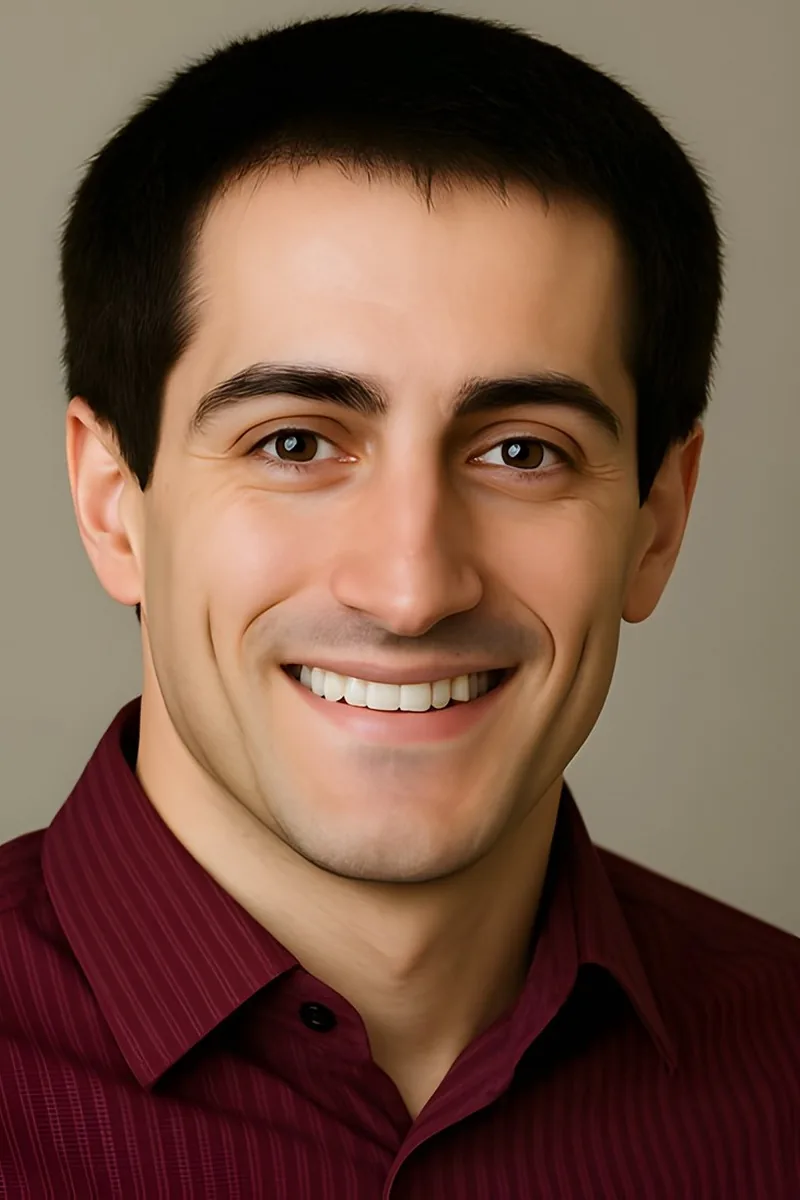
Reading The Economist for fun is one thing — Mark actually digs into the microeconomic logic underneath the headlines, connecting how firms price goods or respond to regulation back to the models students see in class. His bioengineering grad work is heavily quantitative, so he's comfortable walking through the calculus behind profit maximization or cost minimization problems that trip up students in intermediate micro.
I am a 2009 graduate of the University of Chicago in Statistics and Political Science. I have been a tutor for test prep (including ACT, SAT, LSAT and AP testing), academic and creative writing, and general academic assistance for three years.
A UChicago economics degree means Marvin didn't just survey microeconomic concepts — he worked through them with the rigor of a program known for its theoretical depth, from deriving demand curves using utility maximization to analyzing firm behavior under oligopoly. His current role as an elementary teacher through Teach For America has sharpened his ability to break dense material into clear, logical steps, which pays off when walking someone through indifference curves or the math behind price discrimination.
Elasticity, marginal cost curves, game theory, market structures — microeconomics asks students to think in precise, graphical terms about how individuals and firms make decisions. Joseph breaks each model down to its core logic, then rebuilds it step by step so students can apply it to new scenarios on exams.
Marketing is applied microeconomics — every pricing decision, product launch, and competitive strategy Jacob studied in his Business Administration program traces back to models of elasticity, consumer choice, and market structure. That background means he can teach supply-and-demand shifts or firm pricing behavior through the lens of how actual companies make these calls, turning textbook graphs into something students can reason through rather than just memorize.
Elasticity, marginal utility, and the behavior of firms under perfect competition versus monopoly — microeconomics is full of concepts that seem intuitive until you have to graph them or solve for equilibrium mathematically. Ben's Oberlin economics background means he can walk through both the logic and the math side by side, so the formulas actually make sense.
Supply and demand diagrams are only the starting point — microeconomics gets interesting when students dig into market failures, price discrimination, and why firms behave differently under monopolistic competition versus perfect competition. Ben's economics degree means he can explain the intuition behind cost curves and marginal analysis, not just walk through the math. He consistently earns 5.0 ratings by making sure students understand the "why" behind each model.
I am a student at the University of Chicago. I grew up on the upper east side and attended the Dalton School in Manhattan. My whole life I've enjoyed math and science but what I am really passionate about is teaching others. I've worked in all different areas from coaching to teaching, and if you want someone who will be relentlessly positive while also capable and engaged I'm your guy.
I am a recent graduate from Occidental College. My major was geology and my minor was economics. I also have coursework in math, biology, and physics. I like to break down large systems into digestible components that are easy to understand and then relate them back to the large scale topic at hand.
I am a 2016 graduate of New York University with a double major in Economics and Dance. I graduated in a three year time span with both degrees and currently am a professional dancer and teacher. While in college, I lead many economics and math study groups for my fellow colleagues and was a Freshman Resident Assistant my last year of college. While I am not rehearsing for performances, I teach dance to students ages 8-18 and have been doing that for over four years now. My favorite subjects to tutor are middle school - high school math and economics - focusing on microeconomics including AP microeconomics. While tutoring and teaching, I am a huge advocate for not understanding just how to solve the problem, but realizing why we are doing the steps in order to achieve the final solution. Not only am I trying to get the person to understand the problem, but teaching how to be a creative and independent thinker when approaching an unknown question. Outside of dancing, tutoring, and teaching I love to play sports such as soccer and volleyball, as well as travel as much as possible. My personal future goals will be to obtain my masters/phd in economics and economic policy and eventually become a top policy maker within the government.
Cognitive science trained Amanda to think about how people make decisions under constraints — which is essentially what microeconomics formalizes with models of consumer choice, firm behavior, and resource allocation. She breaks down the reasoning behind concepts like utility maximization and market equilibria by connecting them to the decision-making frameworks she studied at Northwestern, making the abstract logic behind the graphs feel grounded and intuitive.
Elasticity, consumer surplus, market structures, deadweight loss — microeconomics is full of concepts that seem intuitive until you're asked to graph them or solve for equilibrium mathematically. Hans pairs his Northwestern economics training with a knack for walking through the algebra behind the graphs, making sure students understand both the visual and quantitative sides of each model. He holds a 5.0 rating.
Consumer optimization, cost curves, and market structure problems all follow a logic that becomes predictable once you see the underlying math clearly. Marshall approaches microeconomics by walking through the calculus and graphical reasoning together, so students understand not just where the profit-maximizing quantity lands but why. His Northwestern economics training keeps the explanations rigorous without making them inaccessible.
Adrianne's social science background and Master's in Education give her a structured way to teach microeconomic reasoning — tracing how individual incentives shape larger market outcomes, or why a shift in one variable cascades through an entire supply-and-demand model. She's especially effective at breaking down the logic of graphs and trade-off problems for students who think in words and real-world examples rather than pure math. Rated 5.0 by students.
Elasticity, consumer and producer surplus, and cost curves for different market structures form the backbone of microeconomics — and each one builds on the last. Ahsan unpacks these concepts sequentially so students see the through-line, an approach he refined as a TA responsible for making sure classrooms of undergrads could apply theory to problem sets, not just recognize definitions.
I'm a sophomore at Harvard studying Applied Math, Economics, and Computer Science. I've tutored in a variety of subjects throughout high school and currently work part-time as a Course Assistant for an Introductory Calculus course at Harvard. I especially love tutoring math and making it a more accessible subject for students to learn. Aside from academics, I'm passionate about community service (I'm a director for a student-run homeless shelter!), music, digital design, and baking!
I am a classroom teacher who has spent the last ten years tutoring/educating students with a variety of learning needs. I specialize in figuring out what specific learning strategies work for different students. I can help you go from good to great as I have consistently scored in the 99th percentile for several graduate school tests.
I am a student of Finance and Accounting at the University of Illinois at Urbana-Champaign. Teaching is one of my passions and I am excited to help students out on Varsity Tutors.
I'm Kshitij and I study at the University of Michigan's Ross School of Business. The best feeling in the world to me is helping other people reach their dreams by conquering barriers like testing that stand in their way. I believe that the process of learning precedes the end goals-- that means that I focus on teaching students how to learn and to autonomize problem solving skills and processes they can apply to all problems rather than just helping them get the answer they need on a specific problem. This is the approach that my teachers used with me, and I've found it to be successful in teaching others as well. In fact, a student I tutored is now a tutor herself at Varsity Tutors! I'm well versed in tutoring for standardized tests like the SAT/PSAT/ACT/AP, as well as things like essay writing and public speaking. If you have any questions about me or my background, feel free to ask!
Supply and demand curves are just the starting point — the real challenge in microeconomics is applying them to consumer theory, production costs, and market structures like oligopoly and monopolistic competition. Ezra's economics degree gives him deep fluency with these models, and his finance background means he can connect textbook graphs to actual pricing and strategy decisions students find intuitive.
Consumer choice theory, production functions, and game theory matrices each demand a slightly different way of thinking — and that's where most micro students get stuck. Albert tackles each framework on its own terms, drawing on his MBA economics training to show why firms price-discriminate, how externalities distort market outcomes, and what happens when you shift from perfect competition to oligopoly.
Supply and demand curves are just the starting point — Hari digs into elasticity, marginal utility, and market structures like oligopoly and monopolistic competition to show how firms actually make pricing decisions. His MBA in Finance gives him real-world context for concepts like cost curves and profit maximization that textbooks often present too abstractly. Rated 5.0 by students.
An economics degree from SUNY Albany means James can teach microeconomic concepts — supply and demand curves, elasticity, market structures, consumer choice theory — with the depth of someone who studied them formally. He connects abstract models like marginal utility and cost curves to real-world pricing decisions that make the logic intuitive. His 4.9 rating speaks to how clearly he breaks down graphs and mathematical relationships that trip students up.
Elasticity, market structures, and consumer theory can feel abstract until someone walks you through the logic behind each graph. Noah breaks down microeconomic models step by step, connecting concepts like marginal cost curves and deadweight loss to concrete examples so the intuition clicks before the exam.
Supply and demand curves are simple enough on the surface, but microeconomics gets tricky fast once students hit elasticity calculations, game theory matrices, and market failure models. Laura studied economics at the undergraduate level and brings real fluency to topics like consumer surplus, price discrimination, and production cost analysis. She connects the math behind each graph to the economic intuition it represents, which makes problem sets far less mechanical.
With an applied math degree and PhD-level engineering work, Professor Florence tackles microeconomics from a deeply quantitative angle — the kind that makes optimization problems, constrained utility maximization, and cost function analysis feel like natural extensions of calculus rather than foreign territory. She teaches the mathematical machinery behind economic models so students understand what they're solving, not just how to push symbols around on an exam.
The jump from basic supply-and-demand to consumer theory, production functions, and market structures trips up a lot of students because the math and the intuition have to work together. Eric unpacks each model — indifference curves, marginal cost pricing, game theory matrices — by tying the algebra back to the economic story it tells. His Business Administration training gives him a practical lens on how firms actually make these decisions.
Marginal cost curves and consumer surplus diagrams start making sense once someone explains the decision-making logic underneath them. Jay approaches microeconomics from his background as an econ major, unpacking topics like market failures, production functions, and elasticity by first asking what a rational actor would actually do in a given scenario — then showing how the math and graphs formalize that reasoning.
Elasticity is where most microeconomics students first feel lost — the formulas seem straightforward, but applying them to tax incidence or consumer surplus problems requires real conceptual understanding. Mustafa tackles these topics by working through progressively harder problems and explaining the economic intuition at each step. Four years of tutoring have given him a sharp sense of where students get stuck between "I memorized it" and "I actually get it."
An International Economics degree gives John a real-world framework for teaching microeconomic concepts like elasticity, market structures, and consumer choice theory — not just as textbook abstractions but as tools for analyzing actual markets. His legal training adds a practical edge when covering topics like externalities, regulation, and game theory, since he can walk through how these ideas play out in policy and case law.
Running a SaaS company means living microeconomics daily — pricing strategies, marginal cost decisions, and reading market signals in real time. John brings that operational lens to concepts like elasticity, consumer surplus, and game theory, making abstract models feel like tools rather than textbook exercises. Rated 5.0 by students.
Testimonials
Because the right Microeconomics tutor makes all the difference.
Average Session Rating – Based on 3.4M Learner Ratings
Nearby Microeconomics Tutors
Other Chicago Tutors
Related Business Tutors in Chicago
Frequently Asked Questions
Chicago high schools typically introduce microeconomics concepts through AP Microeconomics or honors economics courses, focusing on supply and demand, elasticity, consumer behavior, and market structures. College-level microeconomics goes deeper into mathematical modeling, calculus-based analysis, and theoretical frameworks. Varsity Tutors connects students with tutors who understand both curricula and can bridge the gap, whether you're preparing for AP exams (which require application-level thinking) or college courses that demand more rigorous mathematical reasoning.
Students often find elasticity calculations, indifference curves, and profit maximization challenging because they require both conceptual understanding and problem-solving skills. Supply and demand graphing can also be difficult when students haven't mastered the underlying economic intuition. Personalized 1-on-1 instruction helps by allowing tutors to identify whether your struggle is conceptual (not understanding why elasticity matters) or mechanical (not executing calculations correctly), then address the specific gap rather than reviewing everything in a classroom setting.
In a Chicago classroom with a 17.7:1 student-teacher ratio on average, your economics teacher can't customize explanations for each student's learning style or pace. A tutor can spend an entire session on elasticity if that's your bottleneck, use your preferred graphing approach, and connect concepts to examples that resonate with you. Personalized instruction also allows for immediate feedback on practice problems and adaptive problem-solving—when you make a mistake, tutors can pinpoint whether it's a calculation error, a conceptual misunderstanding, or a test-taking strategy issue.
Yes. The AP Microeconomics exam tests your ability to analyze economic concepts, interpret graphs, and apply theories to real-world scenarios—skills that benefit significantly from personalized practice and feedback. Tutors can work through released exam questions with you, teach you how to approach free-response questions (where many students lose points), and help you master the specific vocabulary and graphing conventions AP graders expect. Varsity Tutors connects you with tutors experienced in AP Microeconomics who understand what it takes to score a 4 or 5.
Microeconomics requires comfort with algebra (solving for variables, manipulating equations), graphing, and understanding slopes and intercepts. College-level courses may include calculus concepts like derivatives for marginal analysis. Many Chicago students feel confident in their math but struggle applying it to economics problems. Tutors can help you translate real-world economic scenarios into equations, practice graphing supply and demand shifts, and strengthen the specific math-to-economics connections that show up on tests.
Microeconomics explains why prices change, how businesses set prices and production levels, and how individual choices ripple through markets. Understanding concepts like opportunity cost, elasticity, and market competition helps you analyze real situations—from why concert tickets cost different prices to how companies decide what to produce. Personalized tutoring connects theory to examples relevant to your interests, making the subject more engaging and helping concepts stick. This deeper understanding often translates to stronger exam performance because you're not just memorizing definitions—you understand the logic behind them.
Many students see noticeable improvement in understanding within 2-4 weeks of consistent personalized tutoring, especially if they're working on a specific challenge like graphing or elasticity problems. More comprehensive improvement—mastering the entire AP or introductory college curriculum—typically requires 8-12 weeks of regular sessions. The timeline depends on your starting point, how frequently you meet with a tutor, and how much you practice between sessions. Your tutor can create a personalized plan with realistic milestones based on your goals.
Let’s find your perfect tutor
Answer a few quick questions. We’ll recommend the right plan and match you with a top 5% tutor.