Award-Winning AP US History Tutors
serving Chicago, IL
AP US History
Tutors in Chicago
Private 1-on-1 tutoring, weekly live classes for academic support, test prep & enrichment, practice tests and diagnostics, and more to elevate grades and test scores.
Based on 3.4M Learner Ratings
UniversitiesSchools & Universities
DeliveredHours Delivered
ProficiencyGrowth in Proficiency
Who needs tutoring?
No obligation. Takes ~1 minute.
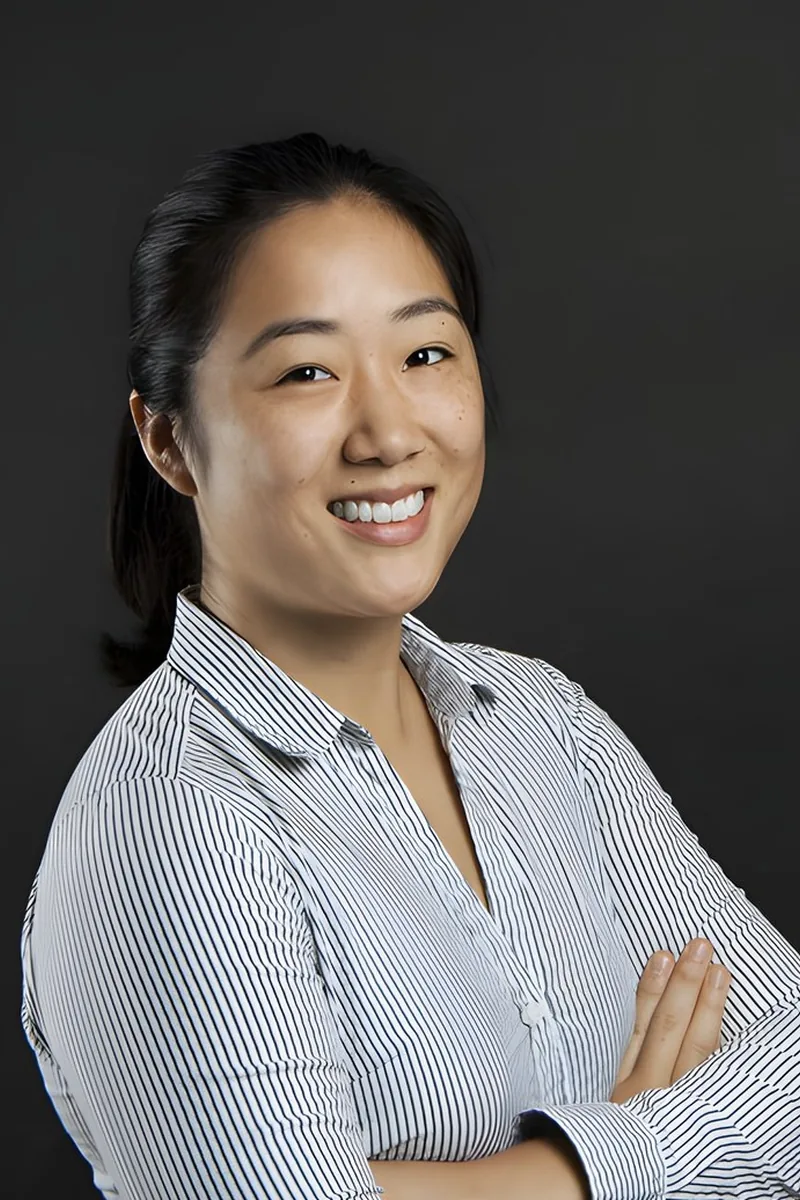
A University of Chicago political science degree means Asta spent four years immersed in the kind of rigorous argument-building and source analysis that APUSH essays demand — Chicago's core curriculum doesn't let you coast on surface-level claims. Her experience preparing international students in Hong Kong for U.S. college admissions also sharpened her ability to make American political and cultural context explicit, which is exactly what strong DBQ contextualization paragraphs require. Rated 5.0 by students.

The AP US History exam rewards students who can do more than recall events — they need to analyze documents, identify historical causation, and write a convincing DBQ under time pressure. Jeff earned his MA in history from UC Berkeley, where he taught undergraduates how to build arguments from primary sources. He applies that same document-analysis approach to APUSH prep, breaking down rubric expectations so students know exactly what earns top scores.
Molly's Columbia University history degree means she studied the same primary source debates and historiographical arguments that APUSH condenses into a single exam — from constitutional crises to westward expansion to twentieth-century reform. Her classroom teaching experience across elementary grades sharpened her ability to break complex ideas into clear, layered explanations, which pays off when walking students through the periodization and causation reasoning that separates a 3 from a 5. Rated 5.0 by students.
Studying economics and public policy at the University of Chicago means Ethan spends his coursework analyzing the same forces — tariff debates, fiscal policy, institutional power shifts — that APUSH tests across every period from Hamilton's economic plan through Great Society legislation. That policy-analysis training makes him especially sharp on the causation and continuity-and-change reasoning the exam's essays demand, since he's used to tracing how one political decision cascades through decades of consequences. His 1550 SAT reflects the timed reading and argumentation stamina the DBQ requires.
Evaluating hundreds of fellowship candidates' writing and academic work at a nonprofit gave Will a finely tuned sense for what makes a historical argument land — clear thesis, precise evidence, purposeful structure — which is exactly what APUSH's DBQ and LEQ score for. His humanities and political science degree from Villanova, plus coursework at Cambridge, means he can connect American political development to broader intellectual currents in ways that strengthen periodization and contextualization essays. Holds a 5.0 rating.
The AP US History exam rewards students who can do more than recall events — they need to contextualize documents, trace causation across periods, and write a defensible thesis under time pressure. Paul earned his Bachelor's in History and Political Science at UW-Madison and his Master's in History at Brandeis, giving him deep command of everything from colonial mercantilism to post-Cold War foreign policy. He breaks DBQ preparation into a repeatable system so students walk into the exam with a clear plan.
Disability studies — Daniel's focus at the University of Chicago — is essentially the history of who gets included in 'We the People' and who doesn't, which cuts straight through APUSH themes like reform movements, civil rights expansion, and the evolving meaning of citizenship from Reconstruction through the ADA. His humanities training at Chicago emphasized reading primary sources as arguments shaped by power and perspective, exactly the analytical move the DBQ scores for. Rated 4.9 by students.
UChicago's History and Philosophy of Science program trains students to examine how ideas develop within specific social and political contexts — exactly the kind of contextualization and change-over-time thinking that APUSH essays reward. Iris brings that framework to periods like industrialization and Cold War-era science policy, where understanding *why* events unfolded matters more than memorizing *when*. Her copyediting background also means she can sharpen a student's DBQ thesis and evidence integration at the sentence level.
I am a 2009 graduate of the University of Chicago in Statistics and Political Science. I have been a tutor for test prep (including ACT, SAT, LSAT and AP testing), academic and creative writing, and general academic assistance for three years.
An economics degree from the University of Chicago means Marvin spent years analyzing how policy decisions ripple through markets and institutions — exactly the causal reasoning APUSH rewards when students have to explain why tariff battles, banking crises, or labor movements reshaped American society across periods. His current work as an elementary teacher through Teach For America has also sharpened his ability to break complex ideas into clear, structured explanations, which pays off when students need to organize a DBQ argument under time pressure.
The AP US History exam rewards students who can synthesize across time periods and write under pressure — skills that don't come from rereading the textbook. Nicholas's graduate work in Diplomacy and International Relations gives him a framework for connecting domestic policy shifts to broader global forces, which is exactly the kind of thinking that earns high scores on DBQs and LEQs.
A biology undergrad who went on to earn a Master of Social Work brings an unusual combination to APUSH — Todd understands both the scientific and social dimensions of American history, from public health crises to Progressive Era reform to the policy debates that shaped the modern welfare state. That social work training means he naturally thinks in terms of systems, institutions, and their impact on communities, which is exactly the kind of causation and contextualization reasoning the DBQ and LEQ reward. Holds a 5.0 rating.
I am currently a senior at Northwestern University and I will be receiving a Bachelor of Arts in Political Science and Legal Studies this spring. In the fall, I will begin attending law school at Northwestern Law. For many years, I tutored a wide range of students in Spanish, English literature, and writing. I have also continued to help many high school seniors with college application essays. While I tutor a variety of subjects, I am very passionate about helping students improve their reading and writing skills, and I really enjoy helping students with Critical Reading and Writing portions of Standardized Tests. I love working with students and helping them realize their full academic potential. In my spare time, I enjoy traveling, exploring Chicago, reading, and cooking.
The AP US History exam rewards students who can do more than recall dates — they need to construct document-based arguments under time pressure. Oliver treats DBQs and LEQs the way he approaches journalism: identify the strongest evidence, build a clear thesis, and write with purpose. His international studies background also sharpens his ability to contextualize American events within broader global patterns, which is exactly what the exam's contextualization points demand.
Theater training builds a surprisingly useful APUSH skill: reading a source for subtext, audience, and intent — exactly what document-based questions ask students to do with speeches, political cartoons, and letters. Hallie applies that close-reading instinct to primary source analysis, teaching students to identify a document's purpose and point of view before folding it into a thesis-driven essay. Her 1550 SAT reflects the kind of timed reading and reasoning the exam rewards.
I am capable of teaching French comprehension and structure with confidence and a great deal of experience.
Marketing majors spend their time analyzing how audiences respond to messaging — figuring out who's being persuaded, why, and what's left unsaid — which is essentially what APUSH document-based questions ask students to do with primary sources. Aaron applies that audience-and-purpose thinking to DBQ prep, teaching students to quickly identify a document's intent and context before building it into a thesis-driven argument. His 33 ACT speaks to the kind of timed analytical performance the exam rewards.
Psychology training builds a specific habit of mind that pays off in APUSH: asking why people and groups behaved the way they did, then backing up the answer with evidence — which is essentially what the DBQ's sourcing and argumentation rubric scores for. Robert applies that behavioral lens to periods like the Great Awakening, Populism, and Cold War-era conformity, where understanding collective motivation matters more than memorizing dates. Rated 4.9 by students.
The AP US History exam rewards students who can build arguments from documents, not just recall dates and names. Connor teaches DBQ and LEQ writing as a craft — how to contextualize a source, weave evidence into a thesis, and address counterarguments — drawing on his own strengths as a writer and reader of dense material.
AP US History's Document-Based Questions are essentially legal briefs in miniature — you evaluate evidence, identify bias, and construct an argument under time pressure. John holds a history degree and a PhD in law, which means he can teach students to dissect primary sources and write thesis-driven essays that score well on the DBQ, LEQ, and SAQ formats.
This isn't Nima's core subject — his background is in physics, not history — but a 1580 SAT means he's sharp at the kind of timed analytical reading and evidence-based argumentation that APUSH document questions actually test. He approaches the exam's essays like a scientist building a case: identify the claim, marshal the evidence, eliminate what doesn't support the thesis.
AP US History's document-based questions reward a specific skill: synthesizing multiple sources into a coherent argument under time pressure. Maggie teaches students to quickly categorize documents by perspective and purpose, then build a thesis that doesn't just describe events but explains why they mattered. Her perfect SAT score reflects the same analytical rigor she brings to historical reasoning.
Theater training builds a surprisingly useful APUSH skill — Amber knows how to read a text for subtext, audience, and intent, which is exactly what document-based questions ask students to do with political speeches, editorials, and propaganda. Her 1570 SAT and 35 ACT reflect the kind of timed analytical performance the exam rewards, and her casting background means she's practiced at quickly sizing up what someone is really trying to communicate. Rated 5.0 by students.
Studying political science and government means Sarah spends her coursework inside the same constitutional debates, legislative battles, and shifts in federal power that APUSH tests most heavily — she's not reviewing this material secondhand but actively working through it in her current classes. That real-time fluency with American political development gives her a sharp handle on periodization and causation questions, especially from the founding era through twentieth-century policy reform. Rated 5.0 by students.
The AP US History exam tests a student's ability to construct document-based arguments under pressure, not just recall dates. Samantha tackles DBQ and LEQ writing head-on, teaching students to identify historical context, weigh evidence, and write essays that earn synthesis and complexity points. Her background in English gives her a particular edge on the writing-heavy portions of the exam.
A psychology and communication studies background gives Paula a dual lens that's particularly useful for APUSH's trickiest essay prompts — the ones asking students to analyze how rhetoric, propaganda, and public persuasion shaped movements from the Revolution through the Cold War. She teaches document analysis as an exercise in reading audience and intent, skills her communication training made second nature. Rated 4.8 by students.
Economics majors spend their time tracing how incentive structures, trade policy, and financial systems reshape societies — which means Ryan already thinks in the cause-and-effect chains that APUSH essays reward, especially for periods like the Market Revolution, Gilded Age industrialization, and New Deal economic reform. His 1590 SAT signals serious reading and analytical chops, the kind that make timed document analysis feel manageable rather than frantic. Rated 5.0 by students.
AP US History's exam doesn't just test what happened — it tests whether a student can construct an argument using documents they've never seen before. Jon's Asian American Studies background at UCLA gave him deep experience analyzing primary sources through the lens of race, immigration, and social movements, which maps directly onto the DBQ and LEQ skills the exam demands.
Studying political science at Stanford means Margaret spends her coursework inside the same institutional frameworks — constitutional design, federalism, party realignment — that APUSH tests most heavily across every period. That gives her a structural vocabulary for explaining why events like the Nullification Crisis or the New Deal reshape governance, which is exactly the causal reasoning the DBQ and LEQ score for. Her 1550 SAT also signals the timed reading and analytical writing stamina the exam demands.
Studying government at Harvard means Priscilla lives inside the institutional frameworks — federalism, separation of powers, constitutional interpretation — that APUSH tests as recurring themes from the founding through the modern era. She's also currently teaching a civics course to younger students, which sharpened her ability to break down complex political developments into clear cause-and-effect narratives, exactly the kind of reasoning the DBQ and LEQ reward. Her 1540 SAT reflects the timed reading and analytical writing chops the exam demands.
The AP US History exam rewards students who can build an argument under pressure — especially on the DBQ, where synthesizing multiple sources into a coherent thesis in 60 minutes separates 4s from 5s. Max treats history as a discipline of interpretation rather than memorization, teaching students to identify causation, continuity, and change over time the way the exam actually scores them. His 5.0 client rating speaks to how well that approach lands.
Testimonials
Because the right AP US History tutor makes all the difference.
Average Session Rating – Based on 3.4M Learner Ratings
Practice AP US History
Free practice tests, flashcards, and AI tutoring for AP US History
Nearby AP US History Tutors
Other Chicago Tutors
Related Social Studies Tutors in Chicago
Frequently Asked Questions
AP US History spans from pre-Columbian America through the present day, organized into nine thematic units. The course emphasizes historical thinking skills—like analyzing primary sources, understanding causation, and evaluating multiple perspectives—rather than pure memorization. Tutors help students master both the content and the analytical skills needed to succeed on the exam, which includes multiple-choice questions, short-answer responses, and document-based essays.
Score improvement depends on your starting point and how consistently you engage with tutoring. Students who work with a tutor typically see gains by strengthening weak content areas, learning effective essay-writing strategies, and practicing with released exams under timed conditions. Many students improve by one to two score points (on the 1-5 scale) when they combine tutoring with regular practice over several months.
Students often struggle with three main areas: managing the sheer volume of content across 9 units, mastering the document-based question (DBQ) and long essay question (LEQ) formats, and developing strong historical argumentation skills. Many also find it challenging to balance memorizing key dates and figures with understanding broader historical themes and cause-and-effect relationships. A tutor can help you prioritize what matters most and develop strategies for each question type.
Ideally, starting tutoring in the fall or early winter gives you 4-6 months to build content knowledge and refine test-taking skills. However, even 8-12 weeks of focused tutoring can make a meaningful difference if you're already familiar with the material and need help with essay structure or practice test analysis. Your tutor can assess your current level and create a timeline tailored to your needs and the exam date.
Practice tests are essential—they help you understand the exam format, identify weak content areas, and build stamina for the 3-hour exam. Taking full-length practice tests under timed conditions is especially valuable because it reveals pacing issues and helps you get comfortable with the multiple-choice and essay sections. Tutors often use practice test results to guide instruction, focusing on the topics and question types where you struggle most.
The key is developing a strong thesis statement first, then organizing your evidence around that argument rather than just listing facts. For the DBQ, you'll need to analyze documents as historical sources and weave them into your argument; for the LEQ, you'll choose a topic and build your case with specific examples. Tutors teach you how to outline essays quickly, structure paragraphs for maximum impact, and practice writing under time pressure so you can complete all three essays in the exam's 100-minute essay section.
Chicago's 12 school districts and 882 schools offer varying levels of AP preparation support. Many students benefit from personalized tutoring that complements their school's AP course, especially if they want extra help with essay writing, document analysis, or specific time periods. Varsity Tutors connects you with expert tutors who understand the AP curriculum and can provide customized instruction around your school's schedule and pacing.
Your first session typically includes an assessment of your current knowledge, a practice multiple-choice question or short essay to identify strengths and gaps, and a discussion of your goals and timeline. The tutor will learn about your school's curriculum, which units you've covered, and where you feel least confident. From there, you'll develop a personalized study plan focused on content review, essay technique, or whatever will have the biggest impact on your score.
Let’s find your perfect tutor
Answer a few quick questions. We’ll recommend the right plan and match you with a top 5% tutor.