Award-Winning Algebra 2 Tutors
serving Chicago, IL
Award-Winning
Algebra 2
Tutors in Chicago
Private 1-on-1 tutoring, weekly live classes for academic support, test prep & enrichment, practice tests and diagnostics, and more to elevate grades and test scores.
Based on 3.4M Learner Ratings
UniversitiesSchools & Universities
DeliveredHours Delivered
ProficiencyGrowth in Proficiency
Who needs tutoring?
No obligation. Takes ~1 minute.
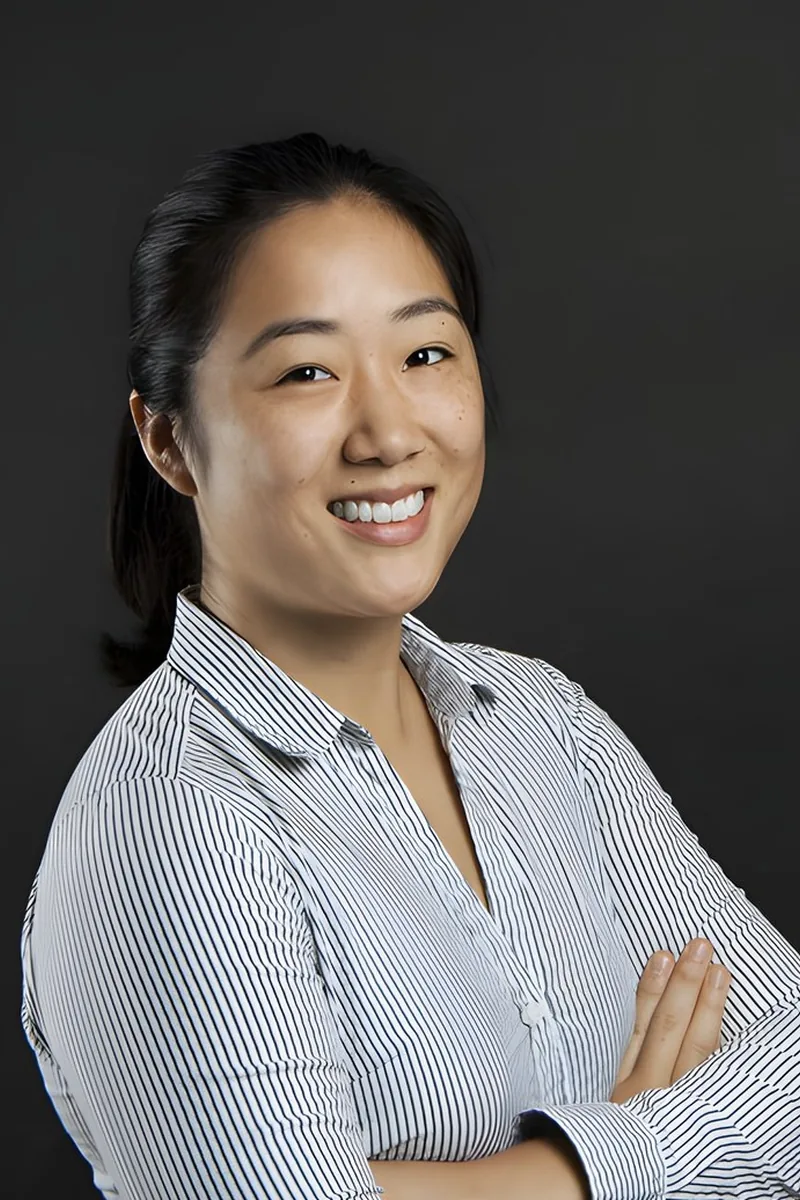
After scoring a 35 ACT and 1530 SAT, Asta spent years tutoring students in Hong Kong who were preparing for U.S. college admissions — many of whom needed to solidify Algebra 2 topics like systems of equations and exponential functions under real pressure. That experience taught her how to quickly identify whether a student's confusion is about the new concept itself or a gap in earlier algebra that's quietly causing problems. Rated 5.0 by her students.

The moment Algebra 2 shifts from straightforward equations to logarithms, rational functions, and polynomial behavior, many students feel the ground disappear beneath them. Viktor treats each of these topics the way his UChicago math training taught him — by unpacking why the rules exist before drilling how to use them. His 1600 SAT and 35 ACT confirm he can move fluidly between conceptual understanding and timed problem-solving.
Having tutored the full math sequence from pre-algebra through calculus, Pinelopi knows exactly which gaps from earlier courses cause Algebra 2 to feel overwhelming — a shaky grasp of function notation, for instance, can make logarithms seem impossible when they're really just a new lens on exponents. Her psychology training at Duke also gives her an edge in recognizing when frustration is masking a fixable misunderstanding, so she can redirect a session before a student shuts down. Holds a 5.0 rating.
Logarithmic functions, polynomial division, and conic sections tend to be the spots where Algebra 2 stops feeling intuitive — Ellie tackles these by connecting each new concept back to the algebraic reasoning students already have. Her 1520 SAT and economics coursework at UChicago both lean heavily on the kind of abstract function analysis that defines this course.
Having scored a 35 on the ACT while studying economics at the University of Chicago, Benjamin regularly works with the kind of algebraic modeling — systems of equations, exponential growth, optimization — that Algebra 2 lays the groundwork for. He's especially good at coaching students through the shift from Algebra 1 thinking to the more abstract reasoning Algebra 2 demands, like when familiar exponent rules suddenly need to accommodate logarithmic relationships. Rated 4.8 by his students.
A PhD candidate at the University of Chicago with a background in history, literature, and human development, Gabriel approaches Algebra 2 as someone who genuinely loves math — it was his favorite subject growing up, and that enthusiasm shows when he's unpacking why completing the square works or how logarithmic scales connect to real patterns. He's tutored math across every level from elementary through college, so he quickly identifies the specific Algebra 1 habits that need upgrading before new abstractions will stick. Rated 5.0 by his students.
Where a lot of Algebra 2 tutors lean on STEM backgrounds, Zac's Human and Organizational Development training at Vanderbilt made him unusually good at diagnosing exactly where a student's understanding breaks down — whether it's the shift from linear to exponential thinking or the first encounter with complex numbers. He scored a 34 ACT and tutors math from pre-algebra through calculus, so he can quickly trace an Algebra 2 stumbling block back to the specific gap causing it and rebuild from there.
The jump from Algebra 1 to Algebra 2 is where many students lose confidence — logarithms, complex numbers, and rational functions all pile up fast. Elizabeth, a classroom math teacher in Chicago, knows exactly where students tend to stall and rebuilds their understanding piece by piece so that each new concept connects back to something they already trust. Her 5.0 rating speaks to how well that approach lands.
Studying Computational Neuroscience and Fundamentals (Literature & Philosophy) at the University of Chicago means Gabriel lives in the overlap between abstract math and applied reasoning — building neural models that depend on exactly the kind of function behavior, exponential relationships, and symbolic manipulation that define Algebra 2. He's tutored students from middle school through college, so he knows how to adjust his explanations whether someone is seeing logarithms for the first time or trying to connect them to earlier algebra concepts. Rated 5.0 by his students.
Neuroscience training means Jhonatan has modeled everything from neural firing rates to pharmacokinetic curves — work that depends on the exponential, logarithmic, and polynomial reasoning running through every Algebra 2 unit. He tackles each topic by unpacking the structure underneath the procedure, so a student can look at an unfamiliar equation and reason through it instead of freezing. Rated 5.0 by his students.
During his physics PhD, Jonathan spent years watching how algebraic tools like systems of equations, complex expressions, and function transformations actually behave when you push them into real problems — which gives him a physicist's intuition for why Algebra 2 methods work, not just how to execute them. He's especially effective at the transition points where students' Algebra 1 instincts break down, like moving from linear to exponential thinking or handling compositions that layer multiple operations. Holds a 5.0 rating.
The jump to Algebra 2 is where many students lose their footing — logarithmic functions, polynomial division, and rational expressions all demand a new level of abstract thinking. Nicki tackles these topics by anchoring each new concept to the algebra fundamentals a student already knows, building outward from what makes sense rather than piling on formulas. She holds a 5.0 rating from students.
Most Algebra 2 students struggle at the exact moment the course shifts from familiar territory into logarithmic functions, polynomial behavior, and rational expressions. Amber's science background means she can show students where these abstract concepts actually appear — exponential growth in biology, decay curves in chemistry — turning confusing formulas into something concrete. She pairs that real-world grounding with structured problem-solving techniques that build genuine confidence.
A master's in education paired with an undergraduate math degree means Alan has thought carefully about both the content and the pedagogy of Algebra 2 — he knows the math cold, and he knows where students typically lose the thread. He's particularly effective at demystifying the shift from concrete arithmetic to abstract reasoning, like when students suddenly need to manipulate expressions with rational exponents instead of just computing with numbers. Rated 4.8 by his students.
I am a student at the University of Chicago majoring in mathematics & comparative human development. I sing in an acapella group, play violin, and on weekends I love to go for bike rides or long runs, see local theater and music performances, and explore the city of Chicago. Through my studies and bike rides and runs, I enjoy working hard and building personalized, step-by-step plans for pursuing the goals I set. Nonetheless, I also believe in the importance of having fun and finding enjoyment in my day-to-day life, which I do through music and geographic exploration. I believe that this enthusiasm, curiosity, and steady work ethic are the keys to achieving goals once thought impossible, and I hope to inspire such a mindset in the people with whom I work.
I am a graduate of Cornell University's College of Arts and Sciences. I received my Bachelor of Arts in Chemistry with Distinction in 2015. Since graduation, I was a physics/chemistry teacher and soccer coach at a private school in Virginia for a year, where I led the soccer team to an undefeated season. Before teaching and coaching professionally, I was a Teaching Assistant for the Cornell Math and Physics Departments, where I taught many subjects including calculus, mechanics, electromagnetism. Throughout my time at Cornell and as a teacher, I tutored subjects ranging from the SAT to AP Physics and Algebra II, which is where my true talents lie: in small group or one-on-one settings where I can give students the full attention they deserve and tailor my approach specifically to their learning styles. This is why I am now pursuing tutoring as a part-time occupation at Varsity Tutors. I embrace teaching all math and science subjects, especially physics and calculus, at both the college and high school level and will go above and beyond to make sure all of my students succeed, according to their definition of success. In my spare time, I enjoy playing league soccer, basketball, tennis and guitar, and also like to travel and see as much of the world as I can.
Logarithms, rational functions, and conic sections tend to be the moments in Algebra 2 where students lose the thread — the problems feel abstract and disconnected from anything real. Isabel tackles that by linking these concepts back to visual and spatial reasoning, drawing on her architecture background to show how exponential growth, parabolas, and ellipses actually appear in designed structures around us.
The jump from Algebra 1 to Algebra 2 is where many students lose confidence — suddenly they're dealing with logarithmic functions, complex numbers, and conic sections that feel disconnected from anything they've seen before. Jack's economics background at Northwestern required heavy quantitative modeling, so he's comfortable showing students how these abstract tools actually behave and why the underlying logic makes sense.
Perfect scores on the SAT math, SAT II Math IIC, and BC Calculus AP exam mean Richard didn't just pass through Algebra 2 concepts like rational functions and conic sections — he internalized them deeply enough to build advanced math on top of them. His PhD work at Northwestern still leans on that algebraic fluency daily, and he uses it to show students exactly how each new rule in Algebra 2 connects to the bigger mathematical picture. Rated 5.0 by his students.
A math degree from the University of Chicago means John didn't just pass through Algebra 2 concepts — he spent four years in one of the most rigorous undergraduate math programs in the country, where ideas like polynomial behavior and logarithmic reasoning were foundational to everything that followed. Now in law school at WashU, he brings a lawyer's precision to explaining why each algebraic rule works, making topics like rational expressions and complex inequalities feel logical rather than arbitrary.
Sam's MS in Accounting means he's spent years working with the kinds of exponential and logarithmic relationships that trip up most Algebra 2 students — compound interest formulas, depreciation models, growth projections where the math has real dollar signs attached. He uses those concrete scenarios to teach the mechanics of function transformations and logarithmic properties, giving students a practical anchor when the abstraction ramps up. His background teaching math across every level from pre-algebra through calculus means he can quickly identify which foundational gap is causing the confusion.
Logarithmic functions, complex numbers, and polynomial division start clicking when students see them as tools rather than abstract procedures. Victoria's engineering training at the intersection of materials science and earth science meant using Algebra 2 concepts daily — modeling exponential decay in materials, solving systems for geological data — so she teaches each topic with a clear sense of where it actually leads.
Engineering students hit Algebra 2 concepts like exponential models and systems of equations long before they reach the lab — Mark knows this because his bioengineering grad work still depends on that exact algebraic toolkit daily. He teaches each topic by anchoring it to the quantitative reasoning behind it, so students build intuition for why a logarithmic relationship behaves the way it does rather than just drilling transformation rules. His 34 ACT confirms the mathematical fluency backing up that approach.
Computer science at MIT means Mercy writes code that depends on the exact recursive thinking, sequence behavior, and logical structures Algebra 2 introduces — so she teaches those topics as building blocks for computational problem-solving, not just textbook exercises. Her 1560 SAT confirms the mathematical fluency, and her dual focus on neuroscience keeps her sharp at diagnosing precisely where a student's reasoning breaks down and restructuring the explanation on the spot.
Having taught every level of math from first grade through calculus, Sarah knows exactly which gaps from earlier courses cause students to stumble in Algebra 2 — a shaky grasp of function notation, half-remembered exponent rules, or a fear of fractions that quietly compounds. Her Master's in Secondary Education trained her to diagnose those gaps quickly and rebuild the specific skill a student needs before pushing forward into new territory like logarithms or polynomial division. Rated 5.0 by her students.
Logarithmic functions, complex numbers, and rational expressions tend to be the concepts where Algebra 2 students lose their footing. Felix's science-heavy academic background means he regularly uses these tools in applied contexts — modeling bacterial growth curves, for instance — so he can show students what these abstractions actually do in practice. He holds a 5.0 rating from past students.
Logarithms, complex numbers, and rational functions tend to be the exact spots where Algebra 2 students lose their footing — Taryn zeroes in on the conceptual gaps behind those struggles instead of just re-demonstrating procedures. Her PhD-level math background means she understands where these topics lead in calculus and science, so she can explain not only how an expression simplifies but why the technique matters down the road.
Having earned two biomedical engineering degrees, Lee has spent years working with the exact polynomial, exponential, and logarithmic models that make Algebra 2 feel so different from Algebra 1 — except in engineering, getting those relationships wrong means a device doesn't work. That applied pressure sharpened his ability to unpack why each algebraic rule exists, not just how to execute it, which makes his explanations stick for students hitting the abstraction wall for the first time. Rated 4.9 by his students.
I have years of experience teaching writing and literary analysis in the classroom setting, and years of teaching students one on one.
Theatre and premed might seem like an unlikely combination, but Ali's dual track means he's practiced at switching between creative intuition and rigorous quantitative thinking — exactly what Algebra 2 demands when students hit topics like piecewise functions or complex number operations. He scored a 1580 on the SAT and holds a 5.0 rating, and his approach leans on building each new idea from the Algebra 1 skills a student already trusts so the leap feels manageable.
Logarithmic functions, polynomial division, and rational expressions tend to be the exact topics where Algebra 2 starts feeling abstract and overwhelming. Sofia's biological sciences background at UChicago means she regularly applies these concepts — exponential growth models in ecology, logarithmic scales in lab data — and she uses those real-world connections to make the math click.
Pre-med coursework at the University of Chicago keeps Callie actively working through the kinds of equations and function behavior that define Algebra 2 — exponential models in biology, logarithmic scales in chemistry, polynomial relationships across her science classes. She spent years tutoring the same student from middle school through high school math, which taught her how to recognize exactly when an earlier gap in algebraic thinking is causing a new topic to fall apart. Rated 4.9 by her students.
Aaron's strength in Algebra 2 is making the transition from concrete arithmetic to abstract reasoning feel manageable — especially when students hit the wall around logarithms, where the notation alone can be intimidating before the math even starts. He strips each new concept back to its simplest form, rebuilds it in plain language, and then layers the formal notation on top once the logic is solid. Holds a 5.0 rating and a 1530 SAT.
Logarithms, rational expressions, and polynomial division are where most Algebra 2 students start to feel like math stopped making sense. Brea taught Algebra II in the classroom for four years and knows exactly which concepts cause the biggest breakdowns — she unpacks each one by connecting it back to patterns students already understand from Algebra 1. Her 5.0 rating speaks to how well that approach clicks.
Working with students who have diverse learning profiles — including those with developmental and learning disabilities — taught Hannah to read exactly where someone's understanding stalls and adjust on the fly, a skill that pays off in Algebra 2 when topics like conic sections or rational inequalities demand a different explanatory angle for each student. Her pre-med coursework kept her fluent in the algebraic reasoning that underlies science applications, so she can ground abstract symbolic work in something that actually makes sense. Rated 5.0 by her students.
After four years of tutoring across math and science subjects, Masooma has a sharp eye for the specific moments in Algebra 2 where students' earlier shortcuts fall apart — particularly when exponent rules need to extend to rational cases or when function notation suddenly carries real weight. Her political science training at the University of Chicago built her instinct for structured argumentation, which she channels into teaching students to reason through multi-step problems rather than relying on memorized formulas. Rated 4.9 by her students.
A physics degree means Thomas spent four years watching Algebra 2 concepts like exponential relationships and complex number operations do real work — modeling circuits, describing wave behavior, solving differential equations that start with the exact skills this course builds. That applied perspective lets him show students not just how to manipulate a logarithm or factor a higher-degree polynomial, but what those operations actually mean. His 5.0 rating and 33 ACT speak to the clarity he brings to each session.
A double major in Anthropology and Philosophy at the University of Chicago, Jacob has spent four years in a program that treats formal logic and structured argumentation as daily practice — skills that translate directly to parsing the symbolic reasoning Algebra 2 demands. He's especially effective at unpacking why a rule like the change-of-base formula or the behavior of rational functions actually holds, not just how to apply it mechanically. Holds a 5.0 rating from his students.
I am a 2009 graduate of the University of Chicago in Statistics and Political Science. I have been a tutor for test prep (including ACT, SAT, LSAT and AP testing), academic and creative writing, and general academic assistance for three years.
After decades teaching math and earning a PhD in Mathematics and Computer Science, Irene has seen every version of the Algebra 2 wall — the student who freezes at logarithms, the one who can graph a parabola but can't explain what a vertex form actually tells you. She digs into the structure behind each topic so that concepts like polynomial division or complex numbers become extensions of reasoning a student already owns, not disconnected procedures. Rated 4.9 by her students.
Testimonials
Because the right Algebra 2 tutor makes all the difference.
Average Session Rating – Based on 3.4M Learner Ratings
Practice Algebra 2
Free practice tests, flashcards, and AI tutoring for Algebra 2
Nearby Algebra 2 Tutors
Other Chicago Tutors
Related Math Tutors in Chicago
Frequently Asked Questions
Algebra 2 marks a significant shift from procedural math to conceptual understanding—students move beyond "how to solve" to "why it works." Many students struggle with multi-step equations, word problems, and graphing because they haven't solidified foundational skills or don't see how concepts connect. With Chicago's average student-teacher ratio of 17.7:1, personalized instruction can fill gaps and help students build confidence before these concepts compound into later math courses.
During an initial session, a tutor will assess your current understanding—reviewing specific topics like quadratic equations, exponential functions, or systems of equations to identify where you're strong and where you need support. They'll ask about your learning style, any math anxiety you experience, and what you hope to achieve, then create a personalized plan tailored to your pace and goals. This foundation helps ensure every session builds on what you actually need, not generic review.
Word problems top the list—translating real-world scenarios into equations requires both reading comprehension and algebraic thinking. Multi-step equation solving, graphing parabolas and other functions, and understanding why certain algebraic moves work (not just memorizing steps) are also frequent pain points. Many students also struggle with exponent rules, rational expressions, and seeing patterns in sequences. A tutor can break these down into manageable pieces and help you understand the "why" behind each step, which builds lasting confidence.
Tutors teach problem-solving strategies—like identifying what you're solving for, choosing the right method (factoring vs. quadratic formula, for example), and organizing your steps clearly. They'll model how to write out your reasoning so teachers can follow your thinking, which is crucial for partial credit and deeper learning. By working through problems together and discussing different approaches, you'll develop flexibility in how you tackle unfamiliar problems, not just memorize procedures.
Yes—tutors in Chicago are familiar with the various textbooks and approaches used across the city's 12 school districts, whether you're using Houghton Mifflin, McGraw-Hill, or another program. When you connect with a tutor, you can share your textbook, assignments, and class notes so they align their instruction with exactly what your teacher is covering. This makes tutoring directly relevant to your homework and upcoming tests.
Absolutely. Math anxiety often stems from feeling lost or embarrassed about gaps in understanding—personalized 1-on-1 instruction removes that pressure and lets you learn at your own pace in a judgment-free space. Tutors are skilled at breaking concepts into smaller, manageable pieces and celebrating progress, which rebuilds confidence. As you start seeing patterns and understanding the "why" behind problems, anxiety naturally decreases and you feel more capable.
Algebra 2 is fundamentally about recognizing patterns—in sequences, functions, transformations, and relationships. A tutor helps you move beyond isolated problem-solving by asking questions like "What happens when we change this coefficient?" or "How does this graph relate to the equation?" This active exploration builds deeper understanding and helps you retain concepts longer. When you see how quadratic equations connect to parabolas, or how exponent rules apply across different contexts, math becomes less about memorization and more about seeing the big picture.
Varsity Tutors offers flexible pricing based on your tutor's expertise, location, and frequency of sessions—you can discuss rates directly when you connect with a tutor. The process is straightforward: share your Algebra 2 goals and availability, get matched with an expert tutor who fits your needs, and schedule your first session. Many students start with 1-2 sessions per week and adjust based on their progress and upcoming tests or assignments.
Let’s find your perfect tutor
Answer a few quick questions. We’ll recommend the right plan and match you with a top 5% tutor.