Award-Winning Accounting Tutors
serving Port St. Lucie, FL
Accounting
Tutors in Port St. Lucie
Private 1-on-1 tutoring, weekly live classes for academic support, test prep & enrichment, practice tests and diagnostics, and more to elevate grades and test scores.
Based on 3.4M Learner Ratings
UniversitiesSchools & Universities
DeliveredHours Delivered
ProficiencyGrowth in Proficiency
Who needs tutoring?
No obligation. Takes ~1 minute.
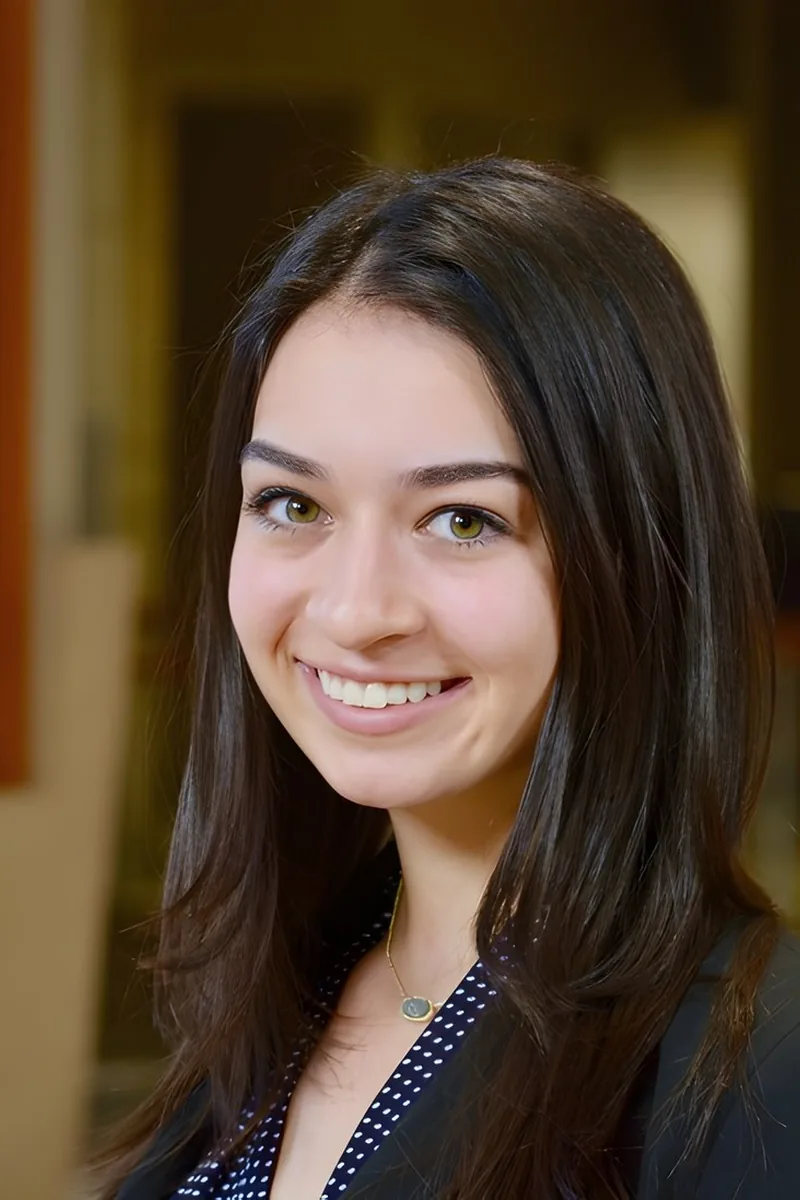
Tiffany's undergraduate degree is in accounting, so she teaches from genuine fluency with debits and credits, journal entries, and the full accounting cycle. Whether a student is struggling with adjusting entries, bank reconciliations, or the relationship between the income statement and balance sheet, she connects each concept back to the underlying logic of double-entry bookkeeping.

Debits and credits follow a logic that, once internalized, makes everything from journal entries to financial statement preparation feel systematic rather than arbitrary. Hari teaches across financial, managerial, and cost accounting, and his finance MBA means he connects each ledger entry to the bigger picture of how businesses actually use accounting data to make decisions.
Between serving as a supplemental instruction leader and a tutor at the University of North Florida, Daniel has spent years walking students through accounting coursework at every level — from high school basics to upper-division topics like cost accounting and managerial accounting. His dual degree in accounting and finance means he doesn't just know how to post entries; he understands how those numbers feed into the financial decisions that give them purpose. Rated 4.9 by students.
Debits, credits, and the accounting equation click faster when someone can explain the logic behind them — not just the rules. Valerie holds an MBA and a Florida certification in Business Education, and she breaks down journal entries, trial balances, and adjusting entries by connecting each step to the bigger picture of how financial statements actually come together.
Noah's business economics degree required coursework across financial accounting, managerial accounting, and cost accounting — giving him a breadth that lets him match explanations to whichever course a student is actually taking. He connects accounting concepts to the broader economic decisions businesses face, like how cost behavior shapes pricing or how variance analysis informs budgeting. That business-side perspective makes the numbers feel purposeful instead of abstract.
Few tutors can teach accounting from both the academic and professional side the way Stephen can. A Notre Dame accounting graduate who spent over twenty years at PwC — including seven-plus as a partner — he walks students through debits and credits, journal entries, and financial statement analysis with the authority of someone who's prepared and reviewed these documents for Fortune-level clients.
Pre-med biology coursework demands the same meticulous attention to detail that accounting does — every data point matters, and one misplaced number throws off the whole picture. Anup applies that systematic precision to the accounting equation, journal entries, and financial statement basics, treating each transaction as a logical sequence rather than a rote procedure. Holds a 5.0 rating.
Jordan's Italian Studies degree might seem far from accounting, but the discipline required to master a foreign language's rule systems — conjugation tables, grammatical structures, precise syntax — maps surprisingly well onto double-entry bookkeeping and the accounting equation. She treats debits and credits as a grammar to learn: once students internalize the underlying logic of how transactions balance, the rest of the accounting cycle clicks into place.
Sean's pre-med track means he's navigating the quantitative, detail-oriented coursework that makes accounting's logic feel familiar — tracking inputs, balancing outputs, and making sure every number has a purpose. He breaks down the accounting equation and basic journal entries by treating each transaction like a problem to solve systematically rather than a rule to memorize. Rated 4.9 by students.
I am an undergraduate student studying both legal studies and accounting at the University of Central Florida. Prior to college I was in the IB (International Baccalaureate) Program at my high school and was named a National Merit Commended Scholar. I've spent a number of years teaching and tutoring, despite my young age, in a variety of subjects ranging from music to different levels of math. I am most passionate about tutoring math related subjects as I see how many students struggle to connect certain concepts with others. I also love to tutor business related fields such as economics as I am an accounting major and it is what I study. I am a strong proponent of the idea that no matter how long it takes, every student is capable of being successful in a subject if they put in the work, with the proper guidance. In my spare time, I really love being a referee and participating in taekwondo tournaments as well as practicing the piano.
I am passionate about business, economics, and management and have nearly ten years of experience. I believe that when one teaches, two learn-the student and the teacher.
I am a senior at Rollins College and have my IB diploma from high school. I did TOK, HLs: Psych, Econ, language and literature, and SLs: Spanish, biology, and mathematical studies. I prefer psych, econ, business, and anything English or literature related. I can do paper revisions, essay help, reading comprehension, elementary/middle/high school math. I would prefer more basic math and science, can help with reading and writing in Spanish, and am up for anything.
Debits, credits, and T-accounts click faster when a student understands the logic behind double-entry bookkeeping instead of just memorizing rules. Rae's economics degree gave her a strong quantitative foundation, and she applies that analytical approach to topics like adjusting entries, financial statement preparation, and the accounting cycle.
Alexandra's accounting expertise spans financial, corporate, intermediate, and tax accounting, giving her unusual depth across the discipline. She unpacks the logic behind journal entries, T-accounts, and financial statement preparation so that debits and credits stop feeling like arbitrary rules and start making intuitive sense.
Logan's physics degree required rigorous quantitative problem-solving — tracking units, balancing equations, and maintaining systematic precision — skills that transfer directly to working through the accounting cycle. He approaches journal entries and financial statement preparation as logical puzzles, breaking each transaction into its component parts so the mechanics of double-entry bookkeeping feel structured rather than arbitrary.
Patrick is finishing his accounting degree at the University of Pittsburgh, which means he's knee-deep in the same textbooks and problem sets his students are working through — from financial accounting through intermediate and cost accounting. That real-time familiarity with the material lets him pinpoint exactly where concepts like multi-step income statements or adjusting entries tend to break down and explain them in plain terms. Rated 4.7 by students.
Debits, credits, and journal entries click faster when the underlying logic is clear — Professor Florence teaches accounting by connecting each transaction to the financial statements it ultimately affects. Her MBA from USC and years teaching at multiple universities mean she can bridge the gap between textbook exercises and how real businesses track their money.
Two master's degrees in accountancy — one with a taxation concentration from Notre Dame — give Steven a depth in this subject that few tutors can match. He digs into journal entries, financial statement preparation, and the logic behind GAAP principles so that students understand the "why" driving each debit and credit. Rated 4.8 by students.
Holding a Master of Science in Accounting, Sam digs into the logic behind debits and credits, journal entries, and financial statement preparation rather than treating them as rules to memorize. He walks through the full accounting cycle — from trial balance adjustments to closing entries — so students understand how each step feeds the next. That conceptual grounding makes advanced topics like depreciation methods and inventory valuation click faster.
Peter's background is in education and journalism rather than finance, but his Masters in Education means he knows how to break down unfamiliar systems into learnable steps — and accounting is fundamentally a system of rules and logic. He approaches topics like the accounting equation and basic transaction recording the way a skilled teacher would: building each concept sequentially so students understand the structure before tackling the details.
Nearly twenty years as a licensed CPA — spanning public practice, manufacturing, banking, and nonprofit work — means Sharon has seen the full accounting cycle play out in wildly different contexts. She unpacks debits, credits, journal entries, and financial statement preparation by connecting textbook rules to how transactions actually move through a real organization. Rated 5.0 by students.
Lulu spent an entire career in accounting after completing her master's in the field at UT Arlington, so she teaches debits, credits, journal entries, and financial statements from real-world experience rather than textbook theory alone. Whether the challenge is managerial accounting, cost allocation, or preparing for an intermediate exam, she connects each concept back to how businesses actually use the numbers.
Holding a diploma in accounting on top of his economics degree, Stuart brings both the theoretical framework and the practical detail that financial and managerial accounting courses demand. He digs into journal entries, T-accounts, and the full accounting cycle, making sure students understand why debits and credits balance — not just that they do.
Most of Emina's teaching load sits in math, writing, and SAT prep — but her state teaching certification and business coursework mean she can break down the accounting cycle with the structured, step-by-step clarity of someone trained to teach systematically. She connects each ledger entry and financial statement line item back to the quantitative reasoning her students already use in algebra and statistics, which makes the logic of double-entry bookkeeping feel less foreign.
Testimonials
Because the right Accounting tutor makes all the difference.
Average Session Rating – Based on 3.4M Learner Ratings
Practice Accounting
Free practice tests, flashcards, and AI tutoring for Accounting
Nearby Accounting Tutors
Other Port St. Lucie Tutors
Related Business Tutors in Port St. Lucie
Frequently Asked Questions
Many students struggle with understanding the fundamental concept of debits and credits, which forms the foundation for all accounting work. Other common challenges include mastering journal entries, reconciling accounts, understanding financial statements, and applying accounting principles to real-world scenarios. Personalized 1-on-1 instruction helps students work through these concepts at their own pace, identifying and addressing gaps before they compound into larger misunderstandings.
In a classroom setting with an average student-teacher ratio like Port St. Lucie's 17.8:1, it's difficult for teachers to address individual learning gaps or adjust pacing for different students. Personalized 1-on-1 instruction allows a tutor to focus entirely on your specific challenges—whether that's understanding the accounting cycle, preparing for the CPA exam, or mastering spreadsheet applications. This targeted approach means you spend less time on concepts you already understand and more time building mastery where you need it most.
Varsity Tutors connects students with tutors who cover the full range of accounting topics, including financial accounting, managerial accounting, cost accounting, auditing, and tax accounting. Whether you're working through introductory concepts like the accounting equation and financial statements, or advanced topics like consolidations and derivative accounting, expert tutors can provide targeted support aligned with your specific course or exam requirements.
Your first session is designed to establish a baseline understanding of your current knowledge and identify specific areas where you need support. The tutor will ask diagnostic questions, review your coursework or exam materials, and discuss your goals—whether that's improving your grade, preparing for the CPA exam, or building confidence in a particular accounting area. This foundation allows the tutor to create a personalized plan tailored to your learning style and timeline.
Yes. Varsity Tutors connects students with tutors experienced in preparing for accounting exams, including introductory accounting tests, intermediate and advanced accounting exams, and professional certifications like the CPA exam. Tutors can help you master difficult topics, practice problem-solving strategies, review past exams, and build the confidence needed to perform well on test day.
Many students notice improved understanding and confidence within the first few sessions, especially when focusing on specific challenging topics. More substantial improvements in grades or exam scores typically develop over several weeks of consistent practice and instruction. The timeline depends on your starting point, the complexity of the material, and how regularly you work with your tutor—but personalized instruction accelerates progress by targeting exactly what you need to master.
Expert tutors who work with Varsity Tutors for accounting typically have strong educational backgrounds in accounting or finance, often including bachelor's degrees or higher in accounting, CPA certification, or professional experience in accounting roles. When you connect with a tutor, you'll have access to their qualifications and teaching experience, allowing you to find someone whose expertise aligns with your specific needs—whether that's high school accounting, college-level courses, or professional certification prep.
Accounting isn't just about memorizing rules—it's about understanding how businesses track money, make financial decisions, and communicate their financial health. Expert tutors help you connect theoretical concepts to practical scenarios, such as analyzing actual financial statements, understanding how different business decisions affect the accounting records, and learning why certain accounting methods matter in the real world. This deeper understanding makes accounting more meaningful and helps you succeed both in your course and in future accounting careers.
Let’s find your perfect tutor
Answer a few quick questions. We’ll recommend the right plan and match you with a top 5% tutor.