Award-Winning AP European History Tutors
serving Miami, FL
AP European History
Tutors in Miami
Private 1-on-1 tutoring, weekly live classes for academic support, test prep & enrichment, practice tests and diagnostics, and more to elevate grades and test scores.
Based on 3.4M Learner Ratings
UniversitiesSchools & Universities
DeliveredHours Delivered
ProficiencyGrowth in Proficiency
Who needs tutoring?
No obligation. Takes ~1 minute.
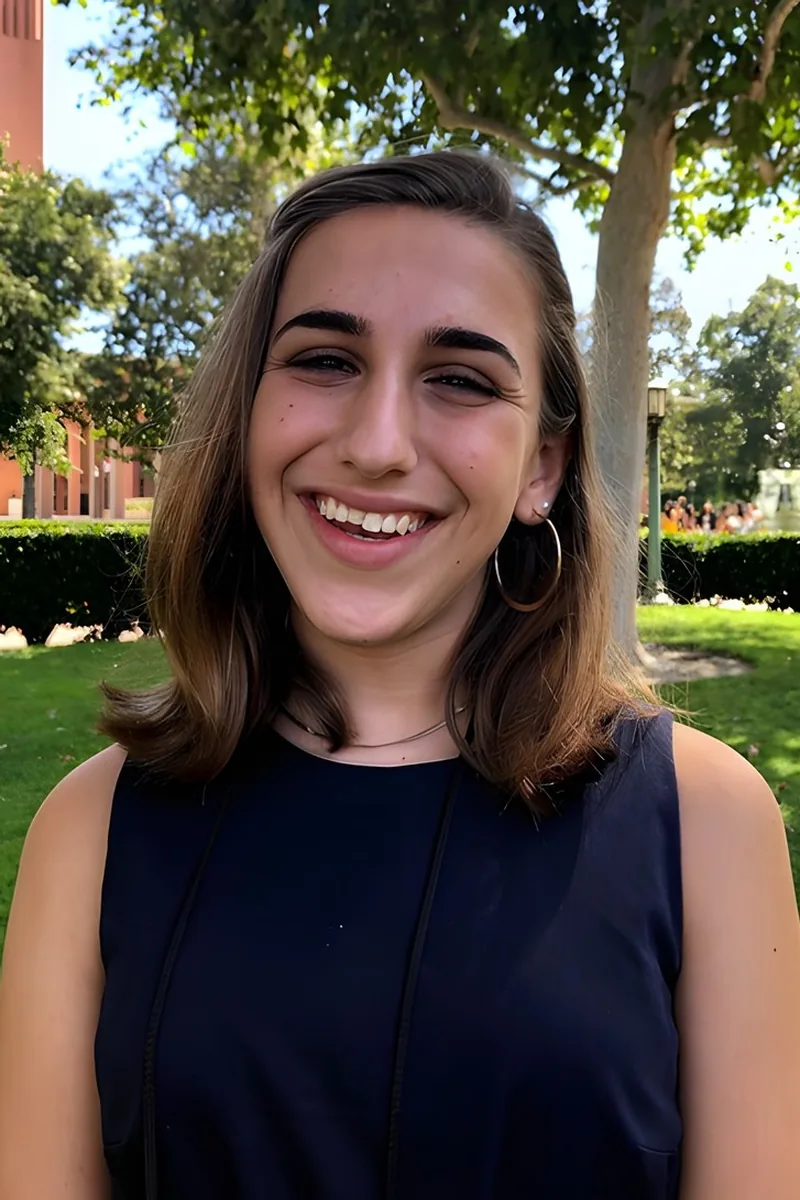
From the Protestant Reformation to the Congress of Vienna to post-WWII integration, AP European History demands that students trace ideological shifts across centuries. Solange's IB program at Coral Reef immersed her in exactly this kind of analytical history, and she brings a knack for turning dense political and intellectual movements into clear cause-and-effect chains that stick on exam day.

From the Protestant Reformation to the Congress of Vienna, AP European History rewards students who can trace causation across centuries rather than memorize isolated dates. Isabella approaches the course's essay components — particularly the DBQ and LEQ — as writing problems first, teaching students to build historically grounded arguments that earn top rubric scores. Her 5.0 rating speaks to how well that method clicks.
I am a law student, but I took an unusual route to get there. I used to attend medical school but had a change of heart in my career path. Part of this was due to my political science major (double major with biology) in college as well as a number of Spanish and other courses that I took. Tutoring is something, I feel, that has come naturally to me, even back to my high school days. My goal is to help you learn as much as you can and reach your true potential. I will work hard to make sure that this happens, as long as you put in the work, too! We will work together to tailor your learning experience to your needs.
From the Renaissance papacy to the Congress of Vienna, AP European History covers an enormous sweep of political, intellectual, and social change. Jessica studied history at the University of Pennsylvania and knows how to break that sweep into thematic threads — absolutism, revolution, nationalism — that make the material stick when it's time to write a document-based essay under exam conditions.
From the Protestant Reformation to the Cold War, AP European History covers centuries of interconnected political, social, and intellectual movements that can blur together fast. Emerson breaks these into cause-and-effect chains that make long essay questions manageable, drawing on the rigorous historical training he received through IB History HL and at the University of Chicago.
Teaching literature at the college level means Zachary has spent years tracing how European intellectual movements — the Enlightenment, Romanticism, modernism — shaped and were shaped by the political upheavals AP Euro covers. His Columbia writing training is especially useful for the exam's essay components, where crafting a tight, evidence-driven argument under pressure matters as much as knowing the history. Rated 5.0 by students.
Medical school teaches you to synthesize massive amounts of information and build diagnostic arguments from incomplete evidence — skills Uju now brings to AP Euro's document-based questions, where students must construct a thesis from a handful of unfamiliar sources under tight time constraints. Her biomedical engineering background at the University of Miami also gives her an unexpected entry point into topics like the Scientific Revolution and Enlightenment-era debates about empiricism versus tradition. Rated 4.9 by students.
From the Renaissance papacy to Cold War détente, AP European History covers an overwhelming sweep of material — and the exam expects students to argue about it, not just recall it. Kat connects her strong writing background to the skill that matters most on this test: constructing cause-and-effect arguments under timed conditions using specific historical evidence.
From the fall of Rome through the Enlightenment to twentieth-century conflict, AP European History asks students to trace how ideas reshaped entire societies. Leslie studied these intellectual traditions firsthand through her Classics degree, reading original texts from antiquity that seeded later European thought. She zeroes in on the document analysis and periodization skills the exam actually tests.
Winston treats history like a conversation — he'll crack a joke about Charles V's impossible empire or debate whether the Congress of Vienna actually worked, because that back-and-forth is how students internalize the kind of argumentation AP Euro essays demand. His history degree and 5.0 rating come from making periods like the Reformation or the age of revolutions feel like live debates rather than chapters to slog through.
From the Protestant Reformation to the Cold War, AP European History covers centuries of political upheaval, intellectual movements, and economic transformation — and the exam expects students to synthesize all of it into tight, evidence-driven essays. Katherine studied history at Denison University with a focus that sharpened her ability to trace cause-and-effect chains across eras. She breaks down DBQ and LEQ strategies so students know how to build an argument, not just recall dates.
I'm a current PhD student in the history department at Georgetown University who is also an experienced instructor with Varsity Tutors. As a recipient of several degrees, the most recent being a BA in history from Hillsdale College and a MA in Russian, East European, and Eurasian Studies from Stanford University, I have long sought to make teaching my profession. Meanwhile, as a volunteer grade school teacher and a tutor with this company, I have many years' experience helping students reach their full potential. I am capable of teaching students in many subjects, including reading, mathematics, test prep, Latin, and especially writing, history, and literature. In practice, I am comfortable adapting to different learning styles and specific student preferences. Outside of my academic and career endeavors, I enjoy cooking, reading, and listening to and making music.
European history is Alexander's favorite subject to teach, and it shows — his Johns Hopkins BA is specifically in the field, and he's built his own independent history teaching project around it. He unpacks the connections between the Renaissance, the Reformation, and the rise of nation-states in ways that make the AP Euro exam's periodization and causation questions feel intuitive rather than overwhelming. Rated 4.7 by students.
Christian's political science degree gives him a structural lens for the power struggles that run through AP Euro — whether it's the consolidation of absolutist monarchies, the ideological clashes of the French Revolution, or the Cold War division of the continent. He teaches students to read those events as political arguments rather than isolated facts, which is exactly the kind of thinking that translates into strong exam essays.
I am a 2009 graduate of the University of Chicago in Statistics and Political Science. I have been a tutor for test prep (including ACT, SAT, LSAT and AP testing), academic and creative writing, and general academic assistance for three years.
The AP European History exam asks students to do more than recall dates — it tests whether they can dissect a document set and construct an argument about, say, how Enlightenment thought reshaped political legitimacy. Brian approaches these document-based questions the way he approaches any analytical problem: identify the claim, weigh the evidence, and build a tight logical structure. His interdisciplinary background spanning economics and the humanities makes him especially effective at connecting Europe's intellectual, economic, and political threads.
From the Renaissance through the Cold War, AP European History requires students to connect political, economic, and cultural developments into coherent long-essay and DBQ arguments. Claire unpacks how to contextualize documents quickly and build a thesis that actually takes a defensible position — not just summarizes events. Her political science background gives her a natural fluency with the political and ideological movements that dominate the exam.
From the fragmentation of Christendom during the Reformation to the Congress of Vienna's attempt to reassemble it, AP European History rewards students who can trace causation across centuries. Hannah studied History as an undergraduate and brings a writer's discipline to the LEQ and DBQ formats — she teaches students to build arguments that are historically precise and structurally tight.
Gabrielle's biology training at Binghamton might seem unrelated to AP Euro, but scientific thinking — tracing how one development triggers the next — maps surprisingly well onto questions about, say, how the Scientific Revolution undermined Church authority or how Malthusian ideas shaped nineteenth-century social policy. She leans into those science-history intersections while drilling the cause-and-effect essay structure the exam actually rewards. Rated 4.9 by students.
Alexander is finishing a European history degree at Vanderbilt, which means he's currently immersed in the same material AP Euro students are tackling — from the political fragmentation of the Reformation era to the ideological battles of the twentieth century. His 1510 SAT reflects strong analytical reading and writing skills, the same toolkit students need to dissect a DBQ prompt and construct a thesis under exam conditions. He's especially effective at teaching students how to move from knowing what happened to explaining why it mattered.
From mercantilism to the Marshall Plan, AP European History is packed with economic forces driving political upheaval. Dana's deep background in economics lets her explain why the Commercial Revolution reshaped class structures or how hyperinflation destabilized Weimar Germany in ways that make the cause-and-effect reasoning on DBQs click. She also coaches students on sourcing and contextualization skills that earn the analysis points.
Testimonials
Because the right AP European History tutor makes all the difference.
Average Session Rating – Based on 3.4M Learner Ratings
Practice AP European History
Free practice tests, flashcards, and AI tutoring for AP European History
Nearby AP European History Tutors
Other Miami Tutors
Related Social Studies Tutors in Miami
Frequently Asked Questions
AP European History spans from 1450 to the present, organized around major themes like intellectual and cultural developments, state-building and interaction, individual and society, and national and international interactions. The course emphasizes understanding historical causation, evaluating primary and secondary sources, and analyzing continuity and change across centuries. Students typically study the Renaissance, Reformation, Age of Exploration, Enlightenment, French Revolution, Industrial Revolution, imperialism, world wars, Cold War, and modern Europe.
The AP European History exam is 3 hours and 15 minutes long, consisting of two sections. The multiple-choice and short-answer section (95 minutes) includes 55 multiple-choice questions and 3 short-answer questions. The free-response section (100 minutes) includes one document-based question and one long essay question. Success requires strong reading comprehension, analytical writing, and the ability to support arguments with specific historical evidence.
Many students struggle with the sheer volume of content spanning 500+ years and multiple regions—it's easy to lose sight of major themes and connections. Others find the document-based question intimidating because it requires analyzing unfamiliar primary sources under time pressure. Additionally, distinguishing between similar events (multiple revolutions, wars, or reform movements) and understanding cause-and-effect relationships across centuries can be difficult without a strong organizational framework.
Personalized 1-on-1 instruction allows tutors to identify your specific weak areas—whether that's a particular time period, understanding historiographical debates, or essay-writing skills—and create a targeted study plan. Tutors can teach you strategies for managing the document-based question, help you practice synthesizing information across topics, and provide feedback on your essays before the exam. This focused approach typically leads to stronger scores than general test prep because you're addressing exactly what you need.
Ideally, you'll have a full year of coursework to build foundational knowledge, but students often benefit from focused test prep starting 2-3 months before the May exam. This timeline allows you to review major units, practice full-length exams, refine your essay-writing approach, and identify gaps in your understanding. If you're starting closer to the exam date, an intensive tutoring schedule can help you prioritize high-yield content and test-taking strategies.
During your first session, a tutor will assess your current understanding of the course material, identify which time periods or themes feel strongest and weakest, and discuss your goals—whether you're aiming for a 3, 4, or 5 on the exam. They'll also evaluate your essay-writing skills and comfort with the exam format. From there, you'll develop a personalized study plan that focuses on your priorities and works within your timeline before the exam.
Score improvement depends on your starting point and effort level, but students often see meaningful gains when they work with a tutor consistently over several weeks or months. Typical improvements range from 1-2 score points (e.g., from a 3 to a 4 or 5), though students who start further behind or have significant gaps in understanding may see larger gains. The key is identifying weak areas early and addressing them with targeted practice and feedback.
Expert tutors working with Varsity Tutors for AP European History typically have strong backgrounds in European history, often with college degrees in history, European studies, or related fields. Many have taught AP courses or have extensive experience preparing students for the exam. Varsity Tutors connects you with tutors who understand both the content deeply and the specific skills needed to succeed on the AP exam—from document analysis to timed essay writing.
Let’s find your perfect tutor
Answer a few quick questions. We’ll recommend the right plan and match you with a top 5% tutor.