Award-Winning History Tutors
serving New Haven, CT
History
Tutors in New Haven
Private 1-on-1 tutoring, weekly live classes for academic support, test prep & enrichment, practice tests and diagnostics, and more to elevate grades and test scores.
Based on 3.4M Learner Ratings
UniversitiesSchools & Universities
DeliveredHours Delivered
ProficiencyGrowth in Proficiency
Who needs tutoring?
No obligation. Takes ~1 minute.

Rather than treating history as a list of dates and treaties, Anthony approaches it the way an economist would: by asking what incentives, constraints, and power dynamics drove people's decisions. His PhD work at Yale sharpened his ability to read primary sources critically and construct evidence-based arguments — skills he now applies to everything from ancient civilizations to modern geopolitics.
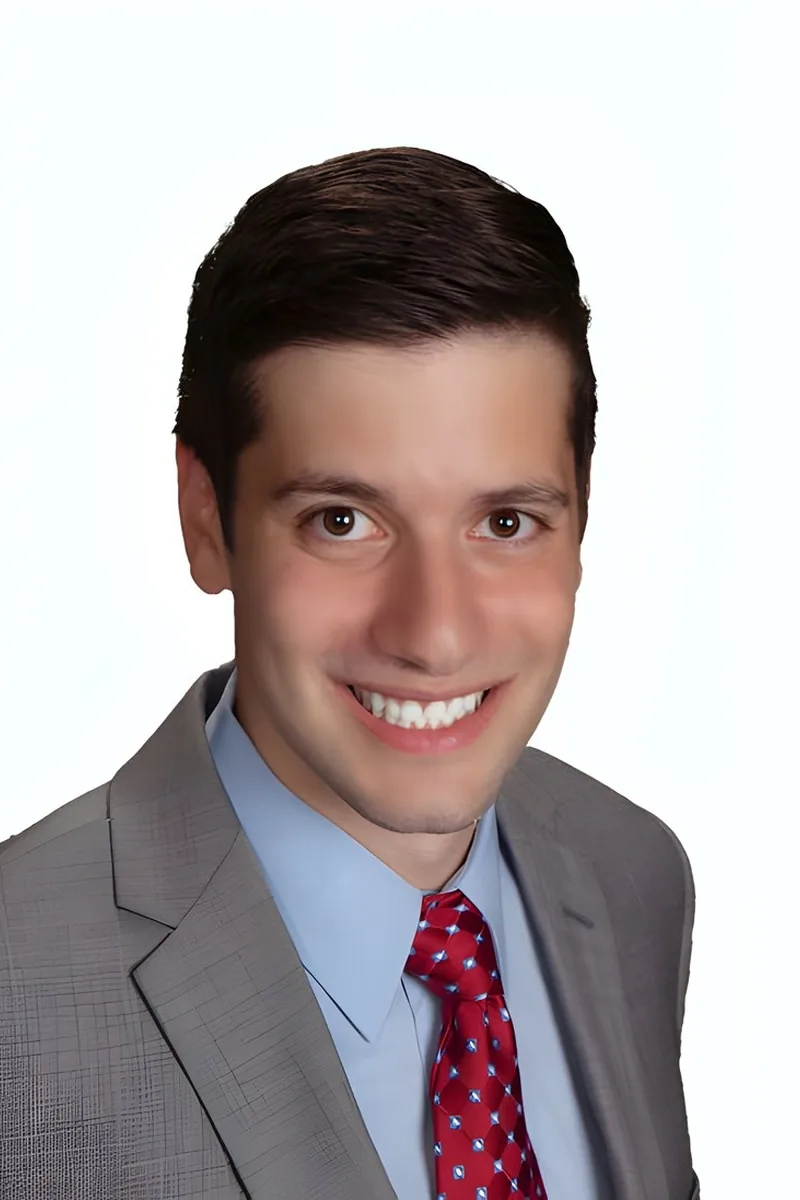
Sami treats history as a series of cause-and-effect chains rather than a list of dates to memorize, drawing on his economics background to explain why civilizations made the choices they did. Trade routes, political incentives, resource scarcity — these frameworks turn abstract events into stories that make sense. He teaches students to build arguments from evidence, which pays off on both essays and exams.
Xaviera's double major in International Studies and African American Studies means she doesn't treat history as a list of dates — she unpacks the political, economic, and cultural forces behind events. Whether a student is analyzing the causes of the Civil Rights Movement or writing a DBQ on imperialism, she teaches them to think like historians who interrogate sources rather than just recall facts.
Studying Asian American Studies at UCLA meant doing history from the ground up — working with immigration records, oral histories, and policy documents to understand how communities actually experienced major events. Jon applies that same source-driven approach to teaching history more broadly, whether a student is covering the Civil War, the Cold War, or ancient civilizations.
Rather than marching through a textbook timeline, Maxwell treats history as a set of arguments built on evidence — who wrote this source, why, and what does it leave out? His research background at Yale trained him to evaluate competing claims critically, a skill that translates directly to analyzing primary documents and writing evidence-based historical essays.
Paleography — James's area of focus at Yale — is literally the study of historical handwriting and manuscripts, which means he spends his academic life decoding original documents from centuries past. That hands-on work with primary sources translates naturally into teaching students how to contextualize historical texts, identify authorial intent, and build arguments grounded in evidence. Rated 5.0 by students.
Brittany earned her History degree from Yale, where she learned to treat historical study as argument-building rather than memorization of dates. She teaches students to analyze primary sources, identify cause-and-effect chains, and write thesis-driven essays that connect events like the French Revolution or Reconstruction to broader political patterns. Rated 4.9 by students, she brings the same analytical rigor she honed in college-level teaching to every session.
A public policy degree trains you to read historical events as case studies — asking not just what happened but what forces made it likely. Ethan applies that analytical framework to history at any level, walking students through how to organize evidence into coherent arguments for essays and discussions. His 5.0 rating speaks to an approach that makes historical reasoning click, not just historical trivia.
Understanding history means asking why events unfolded the way they did, not just memorizing when they happened. As a History major at Yale, Tessa digs into the causal chains behind major developments — how economic pressures, ideological shifts, and individual decisions interact — and teaches students to construct arguments that hold up under scrutiny.
Yale's History of Science, Medicine, and Public Health program trains students to treat history not as a parade of dates but as a web of ideas, institutions, and power — and that's exactly how Stephanie approaches the subject with her own students. Her IB Diploma background means she's been writing source-based historical essays since high school, and she teaches the specific skill those assignments demand: building an argument from a document rather than summarizing what it says. Rated 5.0 by students.
At Yale, Patrycja pairs her computer science major with a genuine interest in economics and history — two fields that overlap constantly when you're tracing how industrialization, trade networks, or government policy shaped entire eras. She teaches students to build arguments around those structural forces, turning a pile of facts into a coherent historical narrative with a clear thesis. Her experience editing essays in her high school's Literacy Resource Center means she's also sharp on the writing side of history coursework.
Niko's doctoral research in Near Eastern Languages and Cultures means he approaches history the way professional historians do: through primary sources, cultural context, and competing interpretations rather than a single textbook narrative. He's particularly strong on ancient and medieval civilizations, religious history, and the ways cultures interact across borders. Students learn to analyze evidence and construct arguments, which is what history courses at every level actually test.
Mia's Religious Studies major at Yale sits at the intersection of history, culture, and politics, which means she's constantly analyzing primary sources from different eras and civilizations. She teaches students to read historical documents the way a scholar does — asking who wrote it, why, and what it reveals about the broader forces shaping a period.
Studying Classics at Yale means living at the intersection of history, archaeology, and primary-source analysis — skills that translate directly to any history course. Maddie teaches students to read historical documents the way a scholar would: asking who wrote it, for whom, and what it leaves out. That approach turns memorization-heavy material into a series of arguments students can actually engage with.
Studying economics at Yale means constantly engaging with historical context — trade policy, institutional development, the forces behind political revolutions. Max applies that same cause-and-effect thinking to history tutoring, teaching students to analyze primary sources and construct arguments rather than simply memorize dates and names.
A math major at Yale might not be the first person you'd picture for history tutoring, but Aaron's analytical training shows up in how he teaches students to build arguments — isolating the key causes behind an event and structuring an essay around them the way you'd build a proof. His college essays work and literature background also mean he's comfortable coaching the close reading and persuasive writing that history courses actually grade on. Rated 5.0 by students.
I am a musician, educator, and philosopher based in New Haven, Connecticut. I studied at UCLA graduating Cum Laude with degrees in Music Performance, Education, and Philosophy. I have been tutoring private music lessons and academic subjects for over 5 years now, and I work as a substitute teacher across Connecticut. My favorite subjects to tutor are Music, English, and Reading/Writing Skills, but I am capable of tutoring various Historical subjects, Math, and Science as well.
Nathan's broad liberal arts coursework at Yale included substantial engagement with historical texts and primary source analysis. He teaches history as an exercise in constructing arguments from evidence — identifying cause and effect, evaluating competing interpretations, and writing the kind of document-based responses that earn top marks.
Spoken word poetry demands the same thing a strong history essay does — taking a messy tangle of causes, voices, and consequences and shaping it into a narrative that actually lands. Louie brings that storytelling instinct to history tutoring, teaching students to build arguments around *why* events unfolded rather than just recounting what happened. His writing background across college essays, literature, and editorial work means he's especially sharp on document analysis and thesis construction.
An engineering student at Yale might seem like an odd fit for history, but Yossi's mechanical engineering training is all about understanding how systems work — and that same thinking applies to untangling why empires collapsed or how industrial revolutions reshaped societies. He tackles historical essays by teaching students to map out causal mechanisms the way an engineer diagrams a system: inputs, pressures, and outcomes, all connected logically. Rated 5.0 by students.
Engineering coursework at Yale demands something history essays also reward: taking a messy system with dozens of variables and building a clear argument about which forces actually matter. Luke applies that mechanical reasoning to historical causation, teaching students to trace how political, economic, and technological pressures interact to produce events like industrialization or wartime mobilization. His writing chops — he also tutors college essays and essay editing — mean the analytical thinking translates into polished, thesis-driven prose.
I am a PhD student in Inorganic Chemistry at Yale University. I've been spreading my love of chemistry for the past several years as a TA for general chemistry, and I'm excited to share my passion with you! Prior to Yale, I got my B.S. in chemistry from Caltech, where I also served as a TA for both general chemistry lab and advanced inorganic chemistry. Outside of teaching and research, I enjoy fencing, reading, and playing piano.
Studying psychology at Yale taught Stephen to read historical events through the lens of human behavior — why populations follow certain leaders, how propaganda reshapes public opinion, what drives social movements to succeed or collapse. He approaches history as argument-building, teaching students to analyze primary sources and construct evidence-driven essays rather than memorize dates.
Medical training reshapes how you approach history — Muhammad's MBBS background means he instinctively traces how epidemics, public health crises, and scientific breakthroughs altered the course of civilizations, from the Black Death reshaping European labor markets to germ theory transforming colonial policy. His physiology graduate work keeps him sharp on the science behind these turning points, which gives students concrete, causal explanations instead of surface-level summaries. Rated 5.0 by students.
Joana's Latin studies required deep engagement with Roman political institutions, military campaigns, and cultural shifts across centuries — context that makes her a natural fit for ancient and European history topics. She teaches students to treat historical sources the way she treats a Latin passage: identify the author's purpose, weigh the evidence, and construct an argument rather than just recounting events.
Sophie's Humanities major at Yale immerses her in history from multiple angles — political philosophy, art history, and primary source analysis all converge in her coursework. She teaches students to build arguments around evidence rather than just recalling dates, whether they're tackling the causes of the French Revolution or analyzing Cold War foreign policy. Her experience designing classes at an ancient art museum sharpened her ability to make historical periods feel vivid and relevant.
Tackling history as an exercise in argument — why did this event matter, who benefited, what evidence supports competing interpretations — transforms it from memorization into critical thinking. Christina's graduate training at Yale sharpened her ability to analyze complex material quickly, and she applies that same rigor to teaching students how to construct and defend historical claims.
Twenty years of teaching law and criminology gives Ryan a particular edge when it comes to American political and legal history — he knows the constitutional debates, landmark cases, and policy shifts inside and out. His double major in political science and psychology at Wesleyan means he naturally connects institutional forces with the human motivations driving historical actors. Rated 5.0 by students.
Between her Smith College history degree, her Sorbonne master's in early modern French history, and two years teaching ancient civilizations to fifth graders, Julia has studied and taught history across nearly every era and continent. She digs into the skill behind the subject — evaluating sources, constructing cause-and-effect arguments, and writing the kind of analytical essays that history courses demand at every level.
Patrick approaches history the way a trial lawyer builds a case: evidence first, then interpretation. Whether the topic is the causes of World War I or the economic forces behind Reconstruction, he teaches students to evaluate primary sources critically and construct arguments that go beyond summarizing what happened to explaining why it mattered.
Jill's nonfiction writing and rhetoric training means she already thinks about history the way strong history students need to — as competing narratives built from evidence, where the framing matters as much as the facts. She teaches students to read a primary source the way a rhetorician would, asking who the audience was, what the writer wanted them to believe, and what got left out. Her 32 ACT reflects the kind of analytical reading speed that timed history exams reward.
Testimonials
Because the right History tutor makes all the difference.
Average Session Rating – Based on 3.4M Learner Ratings
Nearby History Tutors
Other New Haven Tutors
Related Social Studies Tutors in New Haven
Frequently Asked Questions
Many students struggle with memorizing dates and facts without understanding the broader context and cause-effect relationships between historical events. Others find it difficult to analyze primary sources, construct evidence-based arguments, or see how historical themes connect across time periods. Personalized tutoring helps students move beyond memorization to develop critical thinking skills, which is essential for success on essays, DBQs (Document-Based Questions), and standardized assessments.
In a classroom of 20+ students, teachers must move at an average pace that doesn't always match individual learning needs. Personalized 1-on-1 instruction allows tutors to identify exactly where a student is struggling—whether it's essay writing, source analysis, or chronological understanding—and adapt their teaching accordingly. This focused approach helps students fill knowledge gaps quickly and build confidence in areas where they've fallen behind.
Yes. Tutors who work with Varsity Tutors are familiar with Connecticut's Social Studies standards and the specific History curricula used across New Haven's school districts. Whether your student is in middle school World History, high school U.S. History, AP U.S. History, or AP European History, tutors can tailor instruction to match classroom expectations and help students master grade-level content.
The first session is an assessment and planning meeting. The tutor will discuss your student's current History class, recent assignments, and specific challenges—whether that's test anxiety, essay writing, or understanding complex topics. They'll also learn about your student's learning style and goals, then create a personalized plan focused on the areas that need the most support.
Absolutely. Essay writing and DBQs are core skills in History, especially in high school and AP courses. Tutors help students develop thesis statements, organize arguments with historical evidence, analyze primary and secondary sources, and revise for clarity and strength. This targeted support often leads to significant improvements in essay grades and test performance.
Tutors create focused study plans that target the specific content and question types on upcoming exams—whether that's a unit test, AP exam, SAT Subject Test, or state assessment. They use practice questions, timed writing exercises, and review strategies like spaced repetition to help students retain information and build test-taking confidence. This personalized approach is far more effective than generic test prep.
Varsity Tutors connects students with experienced History tutors who are matched based on your student's grade level, specific needs, and learning style. Simply share details about what your student needs help with, and you'll be matched with a tutor who has expertise in that area. The process is straightforward, and you can start personalized instruction quickly.
Many students see noticeable improvement within 4-6 weeks of consistent tutoring, especially in areas like essay writing and test performance. However, the timeline depends on your student's starting point and goals. A tutor will help set realistic milestones and track progress throughout your student's tutoring journey, adjusting the plan as needed to keep momentum going.
Let’s find your perfect tutor
Answer a few quick questions. We’ll recommend the right plan and match you with a top 5% tutor.