Award-Winning ACT Reading Tutors
serving Denver, CO
ACT Reading
Tutors in Denver
Private 1-on-1 tutoring, weekly live classes for academic support, test prep & enrichment, practice tests and diagnostics, and more to elevate grades and test scores.
Based on 3.4M Learner Ratings
UniversitiesSchools & Universities
DeliveredHours Delivered
ProficiencyGrowth in Proficiency
Who needs tutoring?
No obligation. Takes ~1 minute.
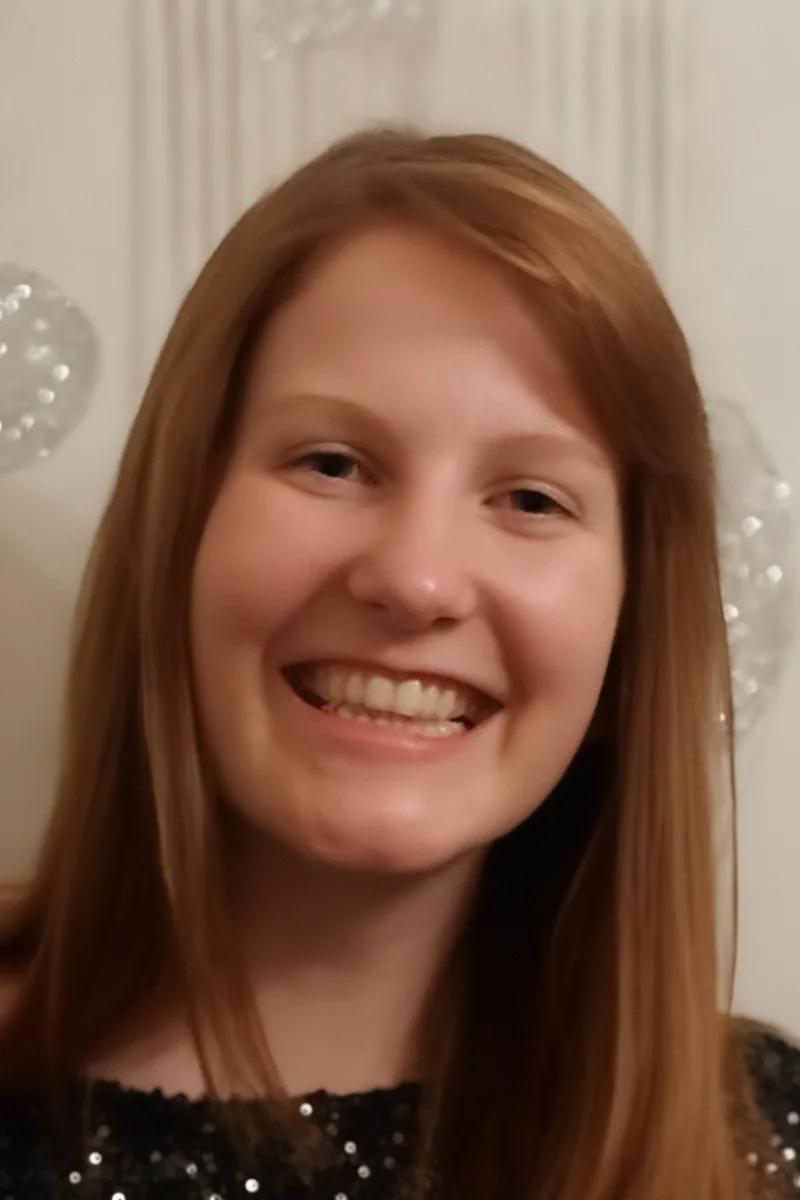
I am a lifelong learner, and I would love to be your next tutor!
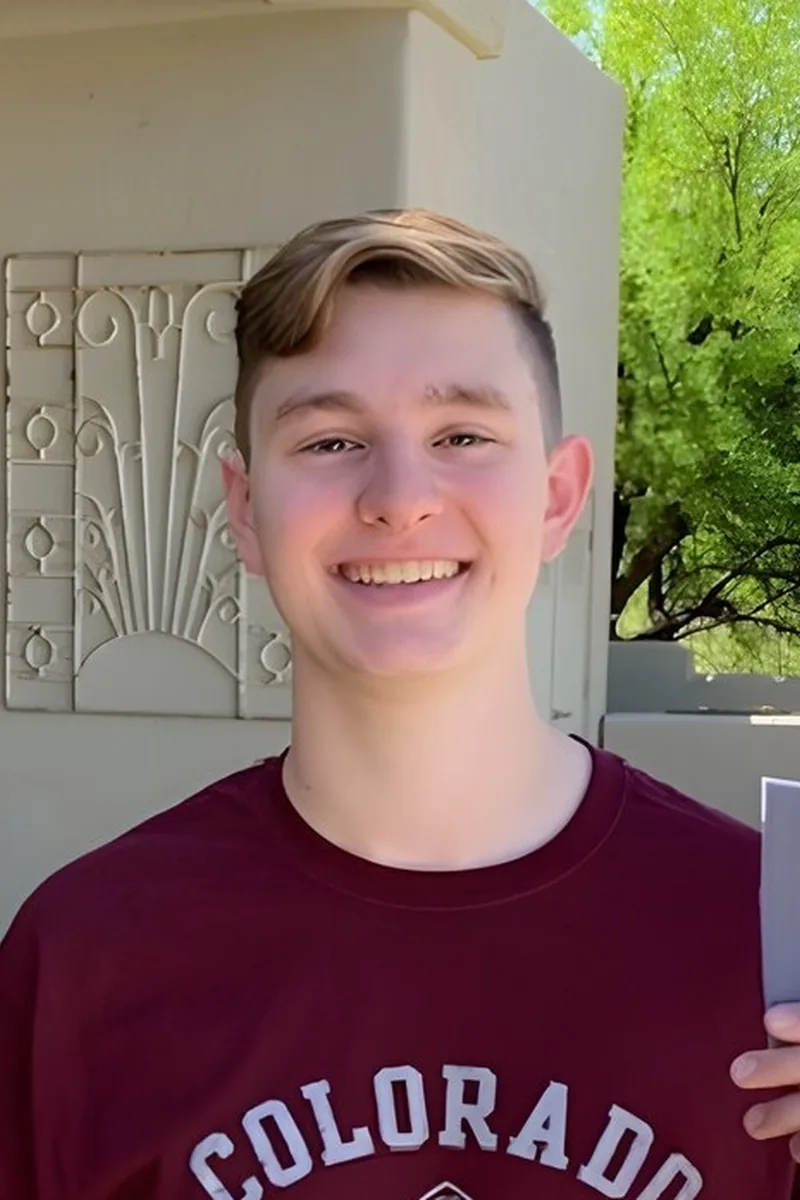
I am a current student at the Colorado School of Mines, studying to double major in Applied Mathematics and Engineering Physics. I have been tutoring students professionally for one year, but also through my schools for 5 years now. I tutor most kinds of Math and Science, and love doing so; being able to help spread understanding of a difficult concept never fails to bring me joy. As a current student, I understand how lecturing is often not the most effective (or interesting) way to learn, so I like to be very interactive and ask a lot of questions in my teaching, almost like a conversation between the student and myself.
I am a neuroscience and psychology double major from CU Boulder working to go to PA school down the road. I am originally from the East coast, but definitely prefer the hiking here. I was a learning assistant (basically student focused teacher aid) at CU, and took a course to learn more effective pedagogy. Afterwards, I was asked to be a mentor, and continued trying to help as much as I can.
I am a student at the Georgia Institute of Technology studying Chemical Engineering. For the past several years, I have worked with students extensively. Through hosting events for younger kids to learn about STEM and for older teens to practice empathetic design, I know the importance of teaching students in ways that engage them rather than frustrate them, which I apply to my teaching. I have tutored high school students in a drop-in resource center in various subjects including math of all levels, chemistry, and English, making me adequately equipped in a variety of topics. I have also tutored several students long-term. Establishing relationships with students and exploring their unique learning styles is my favorite part of tutoring. I prioritize helping students discover HOW to learn in a manner that is the most effective for them, so they can begin to use those skills on their own throughout their education. Learning is a lifelong skill that requires practice for improvement; I strive to help my students gain confidence in their ability to learn.
The ACT Reading section rewards speed and strategy more than deep literary analysis — it's about locating evidence quickly and eliminating wrong answers with confidence. Christian scored a 34 composite and teaches students a systematic passage-attack method that prioritizes time management across the four passage types. Rated 5.0 by students, he breaks down how to handle the dual-passage comparison questions that trip up most test-takers.
The ACT Reading section rewards a specific kind of speed — not skimming, but knowing exactly what to extract from each passage type. Oliver, who scored a 33 composite, teaches students to attack the paired-passage and prose fiction sections with targeted annotation strategies that cut re-reading time in half.
The ACT Reading section rewards a specific kind of speed — not skimming, but knowing where to look and how to eliminate answer choices that sound right but aren't supported by the passage. Graham, an avid reader studying astrophysics and chemistry at CU Boulder, breaks down each passage type (prose fiction, social science, humanities, natural science) so students know what to expect before the clock starts. His 33 ACT composite backs up the approach.
I am an incoming first year medical student at the University of Colorado School of Medicine in Aurora, Colorado. I graduated from the University of Virginia with a BS in Biomedical Engineering. Through the course of my undergraduate career, I served as a teaching assistant for Cell & Molecular Biology and both undergraduate and graduate versions of Introduction to MATLAB. I also have experience volunteering as a tutor from elementary to high school levels. In addition to teaching, I have personal experience with the ACT, SAT, AP, IB, and MCAT exams. I would like to now use my teaching experience to help local students in the subjects I encountered during my undergraduate career. I love teaching and work to make learning as easy as possible by employing games, shortcuts, and gradual build-up so that my students can improve to their desired performance levels.
Speed is the real enemy on ACT Reading: four passages, forty questions, thirty-five minutes. Rohith teaches a deliberate approach to each passage type — prose fiction, social science, humanities, natural science — showing students how to locate evidence quickly and eliminate answer choices without second-guessing themselves.
I am a undergraduate student who is willing to help other students in subjects that they may be experiencing difficulties in.
The ACT Reading section isn't really about reading — it's about efficiently locating evidence across four dense passages in 35 minutes. Austin teaches a strategic approach to passage ordering and question triage that keeps students from burning time on the hardest literary narrative while leaving easy social science points on the table. His 33 ACT composite and 5.0 tutoring rating speak to how well this method translates to real score gains.
Most students treat ACT Reading like a comprehension quiz, but it's really a speed-and-evidence game — four passages, forty questions, thirty-five minutes. Paige, who scored a 32 composite and reads analytically by training as a philosophy major, teaches students to locate textual evidence fast and eliminate answer choices that sound right but aren't supported. Her 5.0 rating speaks to how well that approach clicks with students.
Most ACT Reading mistakes come from spending too long on passages and rushing through questions — or the reverse. Logan, who earned a 36 composite, teaches a deliberate passage-mapping technique that lets students locate evidence for inference and detail questions without rereading entire paragraphs. His communication background also sharpens how students interpret tone and author's-purpose questions.
The ACT Reading section isn't about being a fast reader — it's about knowing where to look and how to eliminate answer choices efficiently across four dense passages in 35 minutes. Zhenrui, who earned a 36 composite, breaks down each passage type (prose fiction, social science, humanities, natural science) and teaches the specific retrieval strategies that keep students from second-guessing themselves.
Ryne earned a perfect 36 ACT composite, which means he knows firsthand how to handle the Reading section's brutal pacing — 40 questions in 35 minutes with no room for second-guessing. His political science training built a habit of quickly dissecting competing claims in dense texts, and he applies that to teaching students how dual passages and paired questions try to blur the line between an author's actual position and a tempting distortion. Rated 4.9 by students.
Most ACT Reading mistakes happen not because students can't comprehend the passage but because they spend too long on it and rush the questions. Jiatian teaches a triage method: skim for structure first, then go back to the text with specific question stems in mind. It's the same prioritize-and-filter approach she uses in medical training, applied to literary narratives and social science passages instead of clinical data.
Most ACT Reading mistakes come from running out of time, not from a lack of comprehension. Sharan, who earned a 36 composite, teaches a passage-attack strategy that prioritizes locating evidence over re-reading entire paragraphs. She walks through each question type — main idea, inference, vocabulary in context — so students know exactly what the test is asking before they even look at the answer choices.
The ACT Reading section gives students just 35 minutes for four dense passages, which means raw reading speed matters less than knowing where to look. Alyssa teaches a passage-mapping strategy that pinpoints main claims and key details before touching the questions — an approach refined from her own 35 composite score. She's rated 5.0 by students.
I am 22 years old and just graduated from the University of Kentucky with a double degree in French and Biochemistry. I have been a tutor for over a year now at UK's tutoring center. I believe that anyone can learn anything with enough practice and encouragement, and I love helping students overcome challenges and gain more self-confidence!
I really enjoy helping students master the fundamentals of math, physics, computer science, and electrical engineering, as well as succeed on standardized tests like the ACT. I focus on teaching in an interactive way by trying to understand your thought process and building your understanding using simple examples and guidance. Learning these fields is challenging but also very rewarding, and I believe everyone can find enjoyment in it and see the beauty in the theory and use the applications throughout their careers.
Reading four dense passages in 35 minutes requires a method, not just strong reading skills. Dana's policy studies trained her to extract arguments and evidence from complex texts fast — exactly the skill the ACT Reading section rewards, especially on the social science and humanities passages. Her 36 ACT composite came from treating each passage like a briefing document: identify the claim, locate the support, move on.
Most students treat ACT Reading as a speed test, but Ilesh reframes it as a precision exercise: knowing what the question actually asks before hunting for evidence in the passage. His 36 composite came partly from a disciplined passage-mapping strategy that he now teaches students to replicate across all four prose genres the section throws at them.
I am currently a fourth year medical student in Indianapolis. I completed my undergraduate education at Indiana University Bloomington, where I majored in Biology and Spanish. I also completed two minors in Mathematics and Chemistry. While at IU, I worked for the Department of Mathematics and Department of Spanish. I also worked as a Peer Tutor for the IU Athletics Department, tutoring in several subjects including statistics, chemistry, physics, and Spanish. I graduated from college with a 4.0, and I entered medical school shortly thereafter. Since coming to medical school, I have excelled in all of my pre-clinical coursework, and I currently rank in the Top 20% of my class. I feel very comfortable and confident tutoring other students in a variety of subjects from math and science to Spanish. I like to think that the same techniques I have used to excel in all phases of my education can be easily adapted to other students and help you achieve your academic goals, just as I have!
I am no longer needed.
Testimonials
Because the right ACT Reading tutor makes all the difference.
Average Session Rating – Based on 3.4M Learner Ratings
Practice ACT Reading
Free practice tests, flashcards, and AI tutoring for ACT Reading
Nearby ACT Reading Tutors
Other Denver Tutors
Related Test Prep Tutors in Denver
Frequently Asked Questions
Score improvement depends on your starting point and how much you practice, but most students see meaningful gains with focused tutoring. Students who work with tutors on reading comprehension strategies, vocabulary in context, and question-type patterns typically improve by 2-4 points on the ACT composite. The key is consistent practice between sessions—tutors can teach you efficient strategies, but your own effort with practice tests and timed passages makes the real difference.
The ACT Reading section gives you 35 minutes for 4 passages and 40 questions—roughly 8-9 minutes per passage. Many students struggle with pacing and rush through, missing key details. Expert tutors work with students on strategies like previewing questions before reading, identifying question types to prioritize (detail questions vs. inference), and determining whether skimming or careful reading works best for each passage. Finding your personal pacing strategy through timed practice is essential, and a tutor can help you diagnose where you're losing time.
Start by reviewing your practice tests to see which question types—detail questions, inference, main idea, word-in-context, function of a paragraph—consistently trip you up. You might find that you excel at detail questions but struggle with inference, or that certain genres (science passages vs. humanities) are harder. Tutors help you analyze your test data to identify these patterns, then focus instruction on your specific weaknesses rather than generic test prep. This targeted approach is much more efficient than trying to improve everything at once.
Test anxiety often comes from feeling unprepared or unsure about what to expect. Working with a tutor builds confidence through familiarity—when you've practiced dozens of timed passages and seen every question type multiple times, the test feels less intimidating. Tutors also teach calming strategies like pacing yourself intentionally, skipping hard passages and returning to them, and reminding yourself that you don't need to be perfect to get a good score. Many students in Denver find that starting tutoring early (junior year) gives them plenty of time to build mastery without cramming.
A good schedule depends on your timeline and starting score. If you're preparing over 3-4 months, aim for one full ACT practice test every 2-3 weeks, then review your reading section mistakes in detail. In the final 4-6 weeks before test day, increase to one full practice test per week. Between full tests, do focused practice on specific passage types or question formats—you don't need to take the entire test every time. Tutors help you choose which practice materials to use and ensure you're reviewing mistakes properly, since taking tests without analyzing errors won't move the needle on your score.
The ACT Reading section doesn't test vocabulary in isolation (unlike SAT), but word-in-context questions ask you to figure out the meaning of words from their context in the passage. These questions can be tricky because the word might have an unfamiliar meaning. Rather than memorizing vocabulary lists, focus on practicing word-in-context questions to get comfortable with the format. Tutors teach strategies like identifying context clues, eliminating wrong answers, and recognizing when a word's unusual definition is being tested. Building a habit of reading challenging material (science articles, classic literature) also naturally expands your exposure to how words function in context.
Varsity Tutors connects students throughout Denver with expert tutors who specialize in ACT Reading. When you get matched with a tutor, you can work together to assess your starting point, set specific score goals, and create a personalized study plan. Because Denver spans 9 school districts with more than 300 schools, students have different schedules and needs—tutors work with your timeline, whether you're a sophomore starting early or a junior in crunch mode. You can start with a consultation to discuss your goals, then meet regularly (typically 1-2 sessions per week during active prep) to build strategies and track progress.
Let’s find your perfect tutor
Answer a few quick questions. We’ll recommend the right plan and match you with a top 5% tutor.