Award-Winning Chemistry Tutors
serving San Francisco, CA
Chemistry
Tutors in San Francisco
Private 1-on-1 tutoring, weekly live classes for academic support, test prep & enrichment, practice tests and diagnostics, and more to elevate grades and test scores.
Based on 3.4M Learner Ratings
UniversitiesSchools & Universities
DeliveredHours Delivered
ProficiencyGrowth in Proficiency
Who needs tutoring?
No obligation. Takes ~1 minute.
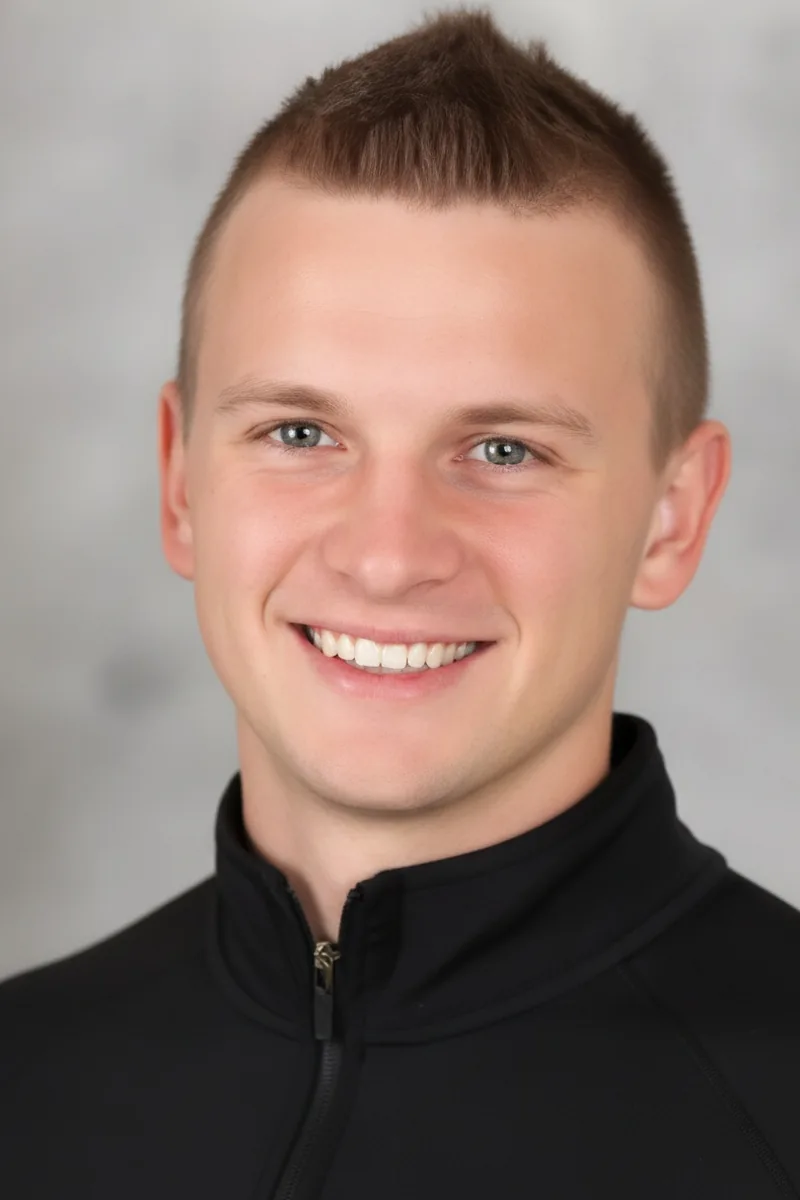
Balancing equations, stoichiometry, and the mole concept are where most chemistry students first feel lost — and where Aaron digs in deepest. He uses a conversational teaching style, asking students to explain each step of a problem aloud so gaps in understanding surface immediately. His pre-med science background at UCSB gives him daily fluency with the chemistry concepts he teaches.
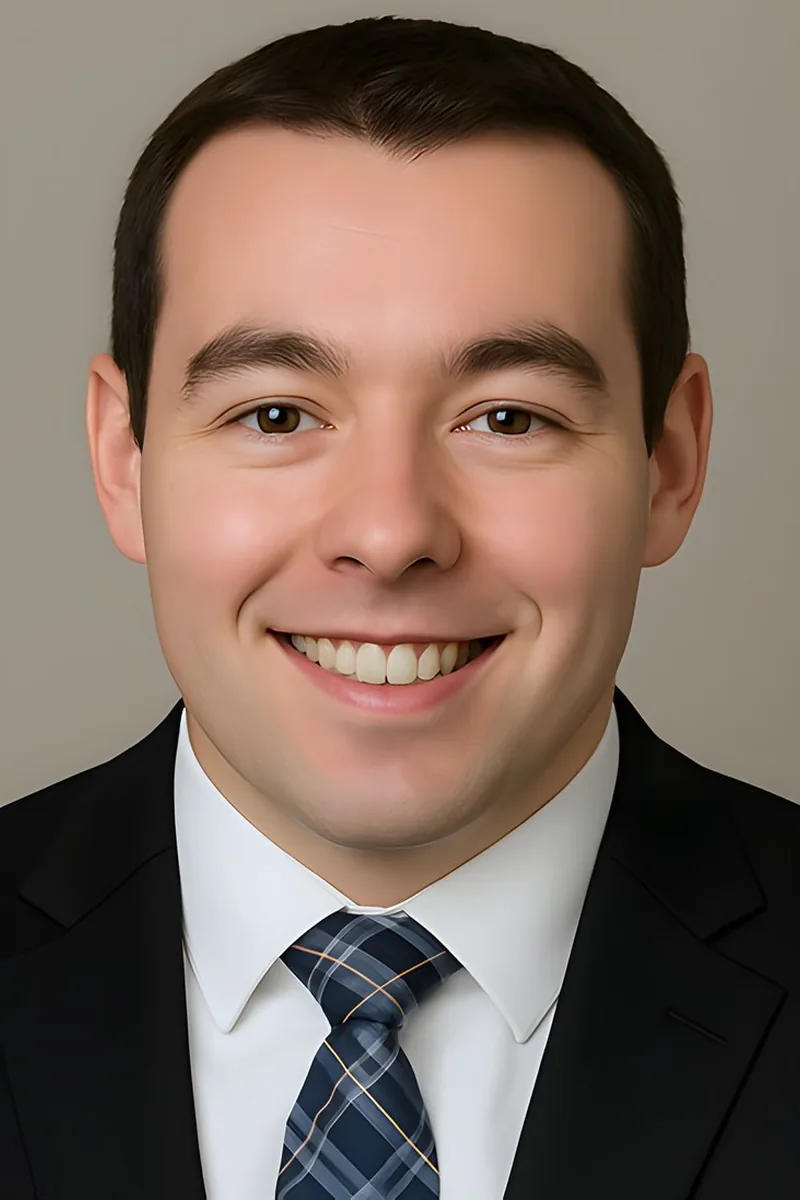
Stoichiometry, equilibrium, and acid-base reactions all follow predictable logic once you see the patterns — and Timothy's medical training has kept him working with chemical principles long after his own chemistry courses ended. He unpacks each problem type by identifying what's given, what's missing, and which relationship connects the two, turning intimidating calculations into manageable steps.
Shant's psychobiology degree from UCLA required deep coursework in general and organic chemistry, so he teaches concepts like stoichiometry, molecular bonding, and reaction equilibria with the confidence of someone who's applied them in biological contexts. He breaks down intimidating topics by connecting abstract chemical principles to real-world processes students can visualize. Rated 5.0 by students.
Balancing equations, stoichiometry, and molecular bonding all require a different kind of thinking than most students expect from a science class. John completed a full STEM chemistry sequence at Loyola Marymount as part of his biology and pre-med track, so he knows exactly where the conceptual gaps tend to form. He unpacks each reaction type with visual models and dimensional analysis practice that builds real problem-solving fluency.
From balancing redox reactions to predicting solubility, chemistry rewards students who understand the "why" behind each rule. Nicole spent her UCLA years tutoring friends and family through general chemistry while completing her own pre-med prerequisites, so she knows exactly where students get stuck — particularly on mole conversions, gas laws, and equilibrium. She earned cum laude honors and a Phi Beta Kappa nomination along the way.
Stoichiometry, electron orbitals, equilibrium constants — chemistry is full of concepts that look intimidating until someone shows you the logic underneath. Mitch's engineering background means he treats every problem as a system to break down, connecting molecular behavior to the math that describes it. Rated 5.0 by students.
Strong chemistry intuition comes from understanding why atoms behave the way they do, not just memorizing solubility rules or balancing equations by rote. Zhenrui's dual path through engineering and premed at Columbia means he's taken chemistry courses that span general, organic, and physical chem — and he uses that breadth to show students how concepts like thermodynamics and bonding connect across the entire subject.
A biology degree means Nicholas spent years relying on chemistry daily — from balancing redox reactions to interpreting equilibrium constants in biochemical systems. He teaches general chemistry topics like stoichiometry, acid-base equilibria, and thermochemistry by connecting each concept to a bigger picture, so students see how one chapter's ideas feed directly into the next.
Neuroscience at Pomona College meant Whitney spent serious time in chemistry — from balancing redox reactions to understanding thermodynamics and acid-base equilibria at the molecular level. She breaks down intimidating topics like stoichiometry and molecular geometry by connecting them to real-world applications in biology and medicine.
Understanding the mole concept changes everything in chemistry — suddenly balancing equations, calculating yields, and predicting reactions all share the same underlying logic. Justin unpacks that logic by starting with dimensional analysis and building outward to stoichiometry, gas laws, and solution chemistry. His science-heavy coursework in neuroscience and physiology gave him years of practice applying these exact principles.
Balancing equations, stoichiometry, and electron configurations all demand a different kind of thinking than most students expect from science — it's abstract, quantitative, and detail-heavy. Pooja approaches chemistry by linking each calculation back to what's physically happening at the molecular level, so the math feels purposeful. Her science background at UC Irvine means she can connect chemistry concepts to biology and physics contexts students may already understand.
A dual background in ecology and molecular biology gave Siavash an unusually broad view of chemistry, from thermodynamics and equilibrium to atomic structure and bonding. He unpacks tricky concepts like stoichiometry and reaction kinetics by tying them to tangible examples from the lab bench, making the math-chemistry overlap less intimidating.
Teaching chemistry alongside biology and college-level life sciences gives Kellie a feel for where the two fields overlap — enzyme kinetics, cellular respiration, and acid-base buffering all require solid chemistry reasoning to actually understand. She leans into that interdisciplinary angle when explaining concepts like reaction energetics or equilibrium, building intuition for why a reaction behaves the way it does rather than treating each topic as an isolated formula to memorize.
I'm an affable chemistry-loving person whose joy come from delivering knowledge :D
Balancing equations and memorizing the periodic table are just the surface — chemistry clicks when a student understands why atoms bond the way they do. Mark approaches topics like stoichiometry and molecular geometry by building up from electron behavior, so each new concept feels like a logical next step rather than a disconnected rule to memorize.
Balancing equations is mechanical, but understanding why a reaction proceeds — electronegativity, intermolecular forces, thermodynamic favorability — requires a different kind of thinking. Tito tackles chemistry from both angles, making sure students can handle the calculations and articulate the conceptual reasoning behind them.
Stoichiometry, equilibrium, and acid-base reactions each require a different kind of thinking, and Caroline switches gears naturally between them because her molecular biology program at Berkeley demanded fluency across all of general chemistry. She taught Berkeley's introductory biology lab, which meant reinforcing chemical principles — buffer systems, reaction kinetics, thermodynamics — in a hands-on setting every week. That lab-bench perspective makes her explanations unusually concrete.
Pre-med coursework in biological sciences means Fady has taken chemistry from general through organic and biochemistry — and knows exactly which concepts trip students up at each level. He's particularly strong at unpacking stoichiometry and acid-base problems, breaking the math and the chemical logic apart so students can tackle each piece before putting them back together.
Understanding chemistry often comes down to one shift: seeing atoms and molecules as real things that behave predictably, not just symbols on a page. Alan's biology degree required extensive chemistry coursework — organic, general, and biochemistry — so he can walk through concepts like bonding, equilibrium, and reaction energetics with concrete examples from the lab. His 4.7 rating speaks to how well that approach clicks with students.
Having studied both physics and mathematics at Clark University, Sarah sees chemistry through the quantitative and conceptual lenses simultaneously — she can explain why electron orbitals shape bonding behavior and then seamlessly walk through the math of a calorimetry or dilution problem. Growing up between Los Angeles and Paris also gave her practice translating complex ideas across languages, a skill that transfers surprisingly well to translating chemistry's symbolic shorthand into plain, intuitive reasoning.
I'm a recent graduate of the California Institute of Technology in Economics and Computer Science. I was also accepted at Harvard, Princeton, MIT, and Stanford. I have a broad range of interests spanning science, math, engineering, social science, the humanities, the arts, and athletics (I also played on the Caltech basketball team). My background allows me to tutor general college prep, especially the SAT, ACT and the GRE. I love to teach analytical thinking, ranging from advanced Math and Physics to strategies for understanding literature and developing arguments.
I am a UCLA Bioengineer. I am a well qualified tutor and have had many years of experience in both paid and unpaid roles from 6th grade to 12 grade to present. I have always excelled in academics, math, writing, and english and have scored well on all standardized tests and state tests. I have scored 800/800 in SAT 1 math, SAT 2 math. I have scored 760/800 in SAT writing. I received scores of 5/5 in AP Calculus AB and BC and have taken numerous other APs, passing the APs in Physics, Biology, Literature, Language and Composition, Environmental Science, Economics, US history, and Chemistry. I was the President of my high school's only tutoring club and only math club, Infinity Math Club, where I dedicated my time tutoring struggling students in all math levels. I was a tutor in my high school's RAMS program for all academic subjects. I love working with students and love to see them succeed in subjects that they once struggled in.
I am a student at the University of Southern California, pursuing my Master's Degree in Geographical Information Science and Technology (GIST). I received a my Bachelor's Degree in Earth Sciences from USC in May of 2015. Education has always been an important part of my life and I love learning new things and helping others learn. I am passionate about the subjects that I tutor and I enjoy passing my enthusiasm for learning on to my students. In my spare time, I enjoy reading, hiking, camping, being outdoors, traveling, and doing yoga. My future goals include completing my graduate degree by August 2016 and becoming a GIS Analyst working in the environmental field.
I am a current undergraduate student at Occidental College, where I am majoring in Chemistry. I have a passion for teaching and engaging students with their education. There is little that is more rewarding than aiding a struggling student successfully. In high school, I was a member of the National Honors Society and relished the opportunities that organization provided me to tutor others. I love learning, and I love sharing that with others. What better way to engage others learning than tutoring?I enjoy video games and other computer related tasks, baseball, basketball, and I love to read.
I'm an undergraduate at UC Berkeley with two years currently under my belt and the intention to double major in anthropology and biology. My focus is on understanding human biological and social origins through analysis of human artifacts, biological remains, and environmental reconstruction, with a parallel interest in preservation strategies. Outside of academics, I'm passionate about all manner of developing sciences and technologies as well as current events and the history behind them.
I am most excited to discuss ecology, evolution, and math, but I am also able to tutor subjects such as physics, writing, and standardized testing. In my free time, I enjoy playing video games, practicing martial arts, and hiking.
Stoichiometry, electron configurations, equilibrium — chemistry demands comfort with both abstract models and precise calculations. Priya's math background at Vanderbilt gives her a natural advantage when it comes to the quantitative side, and her experience tutoring science since high school means she can unpack the conceptual reasoning behind things like why certain reactions are spontaneous or how molecular geometry shapes polarity.
Balancing equations is mechanical; understanding why copper sulfate is soluble while barium sulfate isn't requires a different kind of thinking. Maggie's dual degree in economics and molecular biology means she learned chemistry from both the quantitative and the conceptual side, and she uses that range to tackle everything from mole conversions to acid-base equilibria. She's especially effective at connecting lab observations to the underlying theory.
Mole conversions, reaction types, gas laws — chemistry is full of concepts that seem disconnected until someone shows you the thread running through them. Amber excels at making those connections explicit, walking students through dimensional analysis and molecular interactions in a way that clicks. She tutors across math and science subjects, which means she's comfortable tackling the quantitative side of chemistry head-on.
Stoichiometry and equilibrium tend to be the two places where chemistry students lose their footing, often because the underlying logic gets buried under conversion steps. Yu tackles these topics by making students narrate what's happening at the molecular level before touching any math. Her education training at Harvard sharpened her ability to pinpoint exactly where a concept breaks down for each learner.
Stoichiometry, equilibrium, and thermodynamics all click faster when a student sees how they connect to real systems — and Kate's environmental engineering background means she can tie every chemistry concept to tangible processes like water treatment or combustion reactions. She breaks down dimensional analysis and reaction balancing into repeatable steps that build genuine confidence on exams.
Stoichiometry, equilibrium, and acid-base reactions each demand a slightly different way of thinking, which is exactly what trips students up when a single exam covers all three. Aidan completed a full premed chemistry sequence at Notre Dame and breaks each problem type down to its core logic — dimensional analysis for stoich, ICE tables for equilibrium — so students know which tool to reach for and when.
Tim taught chemistry to middle and high school students at a STEM summer camp, where he learned to explain concepts like stoichiometry and molecular bonding without relying on the textbook's notation-heavy approach. His computational science background at MIT also means he's comfortable with the quantitative side — equilibrium calculations, thermodynamics, and kinetics — that trips up students transitioning from conceptual to problem-solving chemistry.
A chemistry minor at Duke means Lauren spends her semesters immersed in stoichiometry, bonding theory, and thermochemistry — so she teaches these topics with the confidence of someone who uses them constantly. She's especially effective at demystifying mole conversions and equilibrium calculations, two areas where students often lose points from small conceptual gaps.
Balancing equations and understanding the mole concept are often the first real hurdles in chemistry, and Paula unpacks both by tying them to tangible, everyday examples. She scored a 1520 SAT and 32 ACT, reflecting the kind of cross-disciplinary thinking that makes abstract chemistry topics more accessible.
Stoichiometry and mole conversions trip up most chemistry students because they look like pure math divorced from anything real. Caroline connects these calculations to tangible examples — like how much reactant a chemical plant actually needs — drawing on her years working at an ExxonMobil refinery. That industrial context makes balancing equations and predicting yields feel purposeful.
Balancing equations, understanding mole ratios, distinguishing ionic from covalent bonds — chemistry has a vocabulary and logic all its own. John spent years teaching and chairing a science curriculum in Philadelphia, which gave him a sharp sense of how to sequence these ideas so each one builds naturally on the last.
Stoichiometry, equilibrium, and acid-base reactions all require a kind of disciplined reasoning that Jessica developed through years of medical training, where chemistry underpins everything from pharmacology to metabolic pathways. She breaks down each problem type into a clear sequence of decisions rather than a wall of formulas to memorize.
Testimonials
Because the right Chemistry tutor makes all the difference.
Average Session Rating – Based on 3.4M Learner Ratings
Practice Chemistry
Free practice tests, flashcards, and AI tutoring for Chemistry
Nearby Chemistry Tutors
Other San Francisco Tutors
Related Science Tutors in San Francisco
Frequently Asked Questions
Chemistry requires students to visualize abstract concepts—like atoms, molecular structures, and chemical bonds—that can't be seen with the naked eye. Many students struggle with the shift from memorizing facts to understanding underlying principles. Common pain points include balancing equations, mastering stoichiometry, and connecting lab observations to theoretical concepts. With San Francisco's competitive academic environment and rigorous chemistry curricula across the city's 17 school districts, students benefit from personalized instruction that breaks down these abstract ideas into concrete, manageable steps.
Chemistry tutoring goes beyond just explaining concepts—it bridges the gap between theory and hands-on practice. Expert tutors help students design and troubleshoot experiments, understand the scientific method, and interpret lab results through the lens of chemical principles. Personalized 1-on-1 instruction allows tutors to address specific challenges students face in the lab, whether that's reading instruments accurately, predicting reaction outcomes, or documenting observations properly. This dual focus strengthens both scientific reasoning and practical skills essential for success in chemistry courses.
Stoichiometry and unit conversions are among the most commonly cited challenging topics in chemistry because they require both conceptual understanding and procedural fluency. Personalized tutoring breaks these topics into manageable steps, helping students understand the "why" behind the math (proportional relationships in chemical reactions) before drilling problem-solving techniques. Tutors can identify whether a student struggles with dimensional analysis, mole concepts, or recognizing reaction types—and tailor practice accordingly. With consistent, targeted practice and immediate feedback, students develop confidence in approaching complex multi-step problems.
Varsity Tutors connects you with expert chemistry tutors who work with students across San Francisco. You can specify your preferences—whether you need help with general chemistry, organic chemistry, AP Chemistry, or chemistry lab skills—and get matched with a tutor experienced in your specific needs. The process is straightforward: provide details about your goals and current challenges, and Varsity Tutors handles the matching based on expertise and availability. Tutors offer flexible scheduling to fit your academic calendar and learning pace.
The first step is identifying whether struggles stem from foundational gaps (atomic structure, bonding concepts), procedural issues (balancing equations, calculations), or difficulty visualizing molecular-level processes. An experienced chemistry tutor typically starts by assessing current understanding through conversation and targeted questions, then builds a personalized plan. Early sessions often focus on strengthening foundational concepts and building intuition for how atoms and molecules interact. Even small improvements in understanding core ideas like the mole concept or equilibrium can create a snowball effect, making subsequent topics feel more manageable.
AP Chemistry demands both deep conceptual understanding and the ability to apply knowledge to novel problem-solving scenarios. Look for tutors with strong AP Chemistry backgrounds who understand the exam format and can help students develop scientific reasoning skills—not just memorization. Expert tutors focus on connecting big ideas like equilibrium, thermodynamics, and acid-base chemistry, and they're skilled at helping students interpret lab data and make predictions. They should be comfortable teaching advanced topics like kinetics and electrochemistry, and helping students practice the free-response questions that often trip up test-takers.
The timeline depends on where a student is starting. If foundational concepts are solid, targeted tutoring for a specific topic like equilibrium or redox reactions can show improvement within 2-3 weeks of consistent work. For students building from the ground up, meaningful progress typically becomes visible within 4-6 weeks as understanding deepens and connections between concepts strengthen. Consistent practice between sessions is key—tutors often assign focused problem sets that reinforce what was covered. Many students report a "turning point" where abstract concepts suddenly click, and chemistry shifts from overwhelming to manageable.
Let’s find your perfect tutor
Answer a few quick questions. We’ll recommend the right plan and match you with a top 5% tutor.