Award-Winning Discrete Math Tutors
serving Tucson, AZ
Discrete Math
Tutors in Tucson
Private 1-on-1 tutoring, weekly live classes for academic support, test prep & enrichment, practice tests and diagnostics, and more to elevate grades and test scores.
Based on 3.4M Learner Ratings
UniversitiesSchools & Universities
DeliveredHours Delivered
ProficiencyGrowth in Proficiency
Who needs tutoring?
No obligation. Takes ~1 minute.
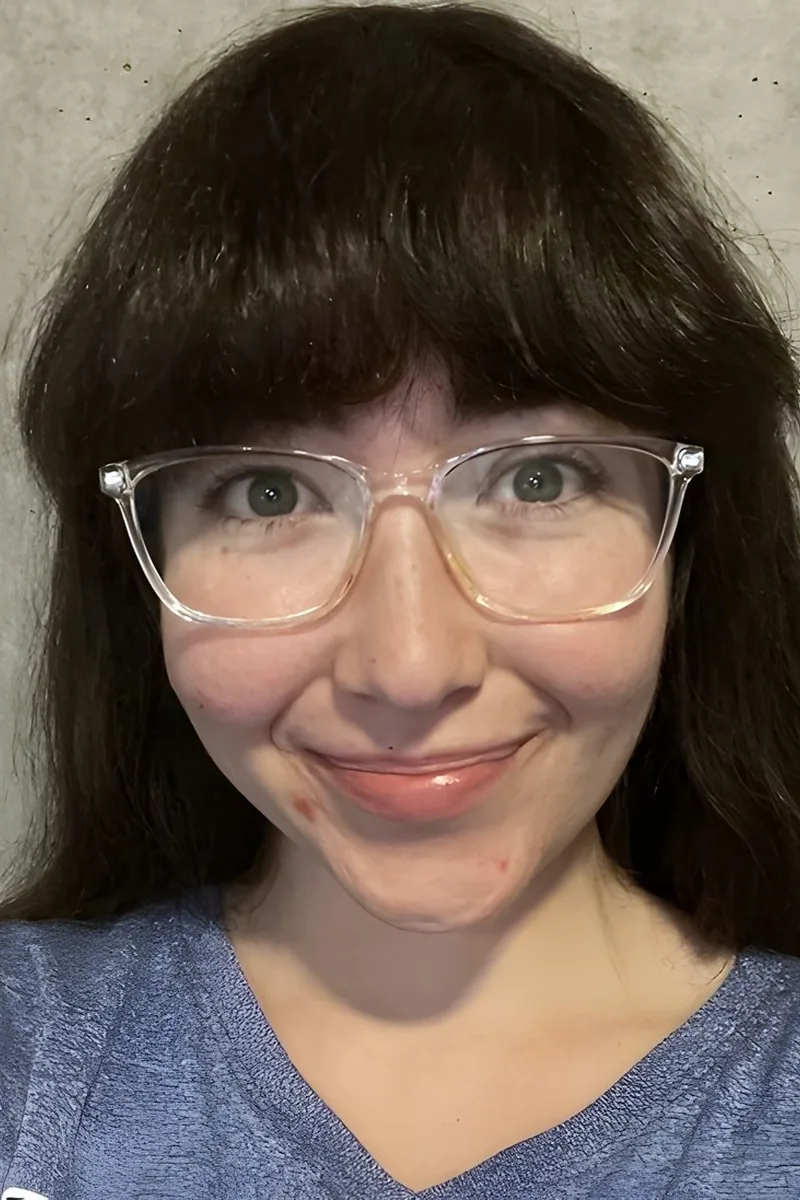
Proof techniques like induction, contradiction, and contrapositive reasoning can feel alien to students used to computational math courses. Madeleine studied these methods extensively in her applied mathematics program at ASU's Barrett Honors College, where discrete structures like graphs, sets, and combinatorics were core to her coursework. She breaks down the logic behind each proof strategy so the reasoning becomes intuitive.

Combinatorics, graph theory, and proof techniques like induction are exactly where Emily's research lives — her work at Smith College on Markov chains and combinatorial optimization draws directly from discrete math. She teaches students to construct clear, logical arguments and to recognize counting structures, turning a notoriously abstract course into something approachable.
Combinatorics proofs, recurrence relations, graph theory, and formal logic can feel disconnected from the rest of a math curriculum, which is exactly why they trip up students used to computation-heavy courses. Adam's statistics training gave him deep practice with combinatorial arguments and probability-based counting, and he walks through proof techniques like induction and contradiction step by step.
As a computer science major finishing up at Arizona State, Ayushi has gone through the full gauntlet of discrete math — the graph theory, combinatorics, and logic that CS programs treat not as electives but as prerequisites for everything from algorithms to database design. Working at ASU's engineering tutoring center, she's seen firsthand which topics (modular arithmetic and proof by induction, especially) tend to derail students, and she breaks those down by connecting them to the programming contexts where they actually get used.
Proof techniques, combinatorics, and graph theory all require a different kind of mathematical thinking than most students are used to. Aaron's pure math coursework at Rice leans heavily on the exact logical reasoning that discrete math demands — direct proofs, induction, contradiction — so he can walk students through not just the solutions but the reasoning patterns behind them.
As a computer science major at Duke who has TA'd courses in databases and network architecture, Florence uses discrete math every day — from graph theory and combinatorics to logic and set operations. She unpacks topics like recurrence relations and proof techniques by tying them to the CS applications where they actually matter, which makes abstract concepts far more concrete.
A PhD student in economics at Yale with an undergraduate degree in physics and math, Anthony has encountered discrete structures from multiple angles — combinatorial arguments in economic theory, logical formalism in mathematical proofs, and counting techniques in statistical modeling. He breaks down topics like induction and set operations by connecting them to the quantitative reasoning he uses in his own research, which gives students a sense of why these tools matter beyond the homework. Rated 5.0 by students.
Graph theory, combinatorics, proof techniques, and recurrence relations — discrete math is the mathematical backbone of computer science, and Ryan lives in this material as a CS student at Cornell. He walks through induction proofs and counting arguments with the fluency of someone who applies them in algorithm design, not just in a textbook chapter.
A Ph.D. in chemical and biomolecular engineering means Sabry has relied on discrete structures — combinatorial counting in statistical mechanics, graph-based network models, and logical frameworks in computational modeling — long before teaching them. He unpacks topics like recurrence relations and modular arithmetic by connecting them to the applied math problems where they naturally surface, which gives students a reason to care about the formalism instead of just surviving it.
Jing's accounting and business management degree required the kind of quantitative logic — combinatorics in probability, set theory in decision analysis — that overlaps heavily with what discrete math courses throw at students. Scoring in the 99th percentile on the GMAT's quantitative section speaks to the precision she brings to formal reasoning, and she applies that same rigor when breaking down proof techniques like induction or contradiction into clear, manageable steps. Rated 5.0 by students.
Having studied math at both the undergraduate and graduate level, Esteban brings formal training in proof techniques, set theory, and combinatorial reasoning to a subject that trips up students used to computation-heavy courses. He teaches the logic behind each proof strategy — induction, contradiction, direct — by building from concrete examples before moving to abstraction. Rated 5.0 by students.
Heading into a Ph.D. in electrical engineering, Thomas knows discrete math as the backbone of digital systems — Boolean algebra, combinatorial counting, and graph structures all feed directly into the circuit and signal work he's trained for. His physics degree at Notre Dame also means he's comfortable with the formal proof techniques that trip up students used to plug-and-chug math, and he builds intuition for induction and set arguments by grounding them in concrete physical or engineering scenarios. Rated 5.0 by students.
Most students walk into discrete math expecting it to feel like calculus — then hit a wall when the course pivots to proof writing, counting arguments, and graph theory. Alex's applied mathematics degree from Stanford means he's built to bridge that gap, breaking down induction proofs and combinatorial reasoning with the kind of structured clarity that makes unfamiliar notation feel manageable. Rated 4.8 by students.
Mechanical engineering at Case Western Reserve means Kevin's coursework runs through the logic and combinatorial structures that discrete math is built on — from counting arguments in probability to the Boolean reasoning embedded in systems design. He scored a 36 ACT and brings that same precision to breaking down proof techniques like induction and contradiction, walking through each logical step with enough concrete detail that the abstraction starts to feel earned rather than arbitrary.
Badeel's political science training at the undergraduate level involved more formal logic and structured argumentation than most people expect — skills that translate directly to truth tables, logical connectives, and proof construction in discrete math. He approaches each proof type by first clarifying the underlying reasoning in plain language before layering on the notation, which keeps students from freezing up when they see unfamiliar symbols. Rated 5.0 by students.
Dibyendu's PhD work in computer science means he's built on discrete math daily — from algorithm complexity analysis to the formal logic underpinning compiler design and data structures. He teaches topics like relations, modular arithmetic, and counting techniques by tying them back to the computational problems where they actually do work, so the abstraction has a clear purpose.
Computer science majors at Texas A&M don't just take discrete math as an elective — it's the backbone of everything from algorithm analysis to data structures, which means Payton has worked through combinatorics, graph theory, and formal logic in contexts where getting them wrong breaks actual code. That CS perspective lets him teach proof techniques and counting arguments by connecting them to the programming problems where they show up in practice, making the abstract feel purposeful. Rated 4.9 by students.
Testimonials
Because the right Discrete Math tutor makes all the difference.
Average Session Rating – Based on 3.4M Learner Ratings
Other Tucson Tutors
Related Math Tutors in Tucson
Frequently Asked Questions
Discrete math focuses on mathematical structures that are countable and distinct—like logic, sets, graphs, and combinatorics—rather than continuous functions. It's foundational for computer science, cryptography, and algorithm design, making it increasingly important in high school and college curricula. Understanding discrete math builds logical reasoning skills that transfer across STEM fields.
Many students struggle with the shift from procedural calculation to abstract logical thinking and proof-writing. Word problems involving combinatorics and graph theory often feel disconnected from real applications, and students may not see how different topics (logic, sets, algorithms) connect to each other. Personalized tutoring helps students build conceptual understanding by working through problems step-by-step and discovering the underlying patterns.
Proofs require a different mindset than computational math—they demand logical structure and clear reasoning. Tutors work with you to break down proof techniques (direct proof, proof by contradiction, induction) and practice applying them to concrete examples before tackling abstract problems. This scaffolded approach helps you build confidence in constructing rigorous arguments.
Yes. Discrete math is taught through various textbooks and approaches across Tucson's 67 school districts and 427 schools, and tutors who work with Varsity Tutors are experienced with multiple curriculum frameworks. Whether your course emphasizes logic and set theory, graph algorithms, or combinatorics, Varsity Tutors can connect you with a tutor who understands your specific curriculum and teaching style.
Your first session focuses on understanding your current level, identifying specific pain points (like proof-writing or graph problems), and learning your preferred problem-solving approach. The tutor will assess what you already understand and where gaps exist, then create a personalized plan to build both conceptual understanding and problem-solving confidence.
Personalized instruction lets tutors address your unique learning style and misconceptions in real time, rather than following a one-size-fits-all pace. Research on 1-on-1 learning shows significant gains in conceptual understanding and problem-solving when instruction is tailored to individual needs. Many students see improved grades, stronger proof-writing skills, and greater confidence tackling unfamiliar problem types.
Varsity Tutors connects you with expert tutors who specialize in discrete math and understand the specific challenges of the subject. You can share your curriculum, current struggles, and goals, and we'll match you with a tutor whose expertise and teaching style fit your needs. The process is straightforward—just tell us what you're working on and we handle the rest.
Absolutely. Math anxiety often stems from feeling lost or disconnected from material, and personalized tutoring addresses both by building understanding at your own pace. Working one-on-one with a tutor who explains concepts clearly and celebrates progress helps you see that discrete math is logical and learnable. Many students find that breaking problems into smaller steps and seeing patterns emerge reduces anxiety significantly.
Let’s find your perfect tutor
Answer a few quick questions. We’ll recommend the right plan and match you with a top 5% tutor.