Award-Winning Algebra 2 Tutors
serving Phoenix, AZ
Award-Winning
Algebra 2
Tutors in Phoenix
Private 1-on-1 tutoring, weekly live classes for academic support, test prep & enrichment, practice tests and diagnostics, and more to elevate grades and test scores.
Based on 3.4M Learner Ratings
UniversitiesSchools & Universities
DeliveredHours Delivered
ProficiencyGrowth in Proficiency
Who needs tutoring?
No obligation. Takes ~1 minute.
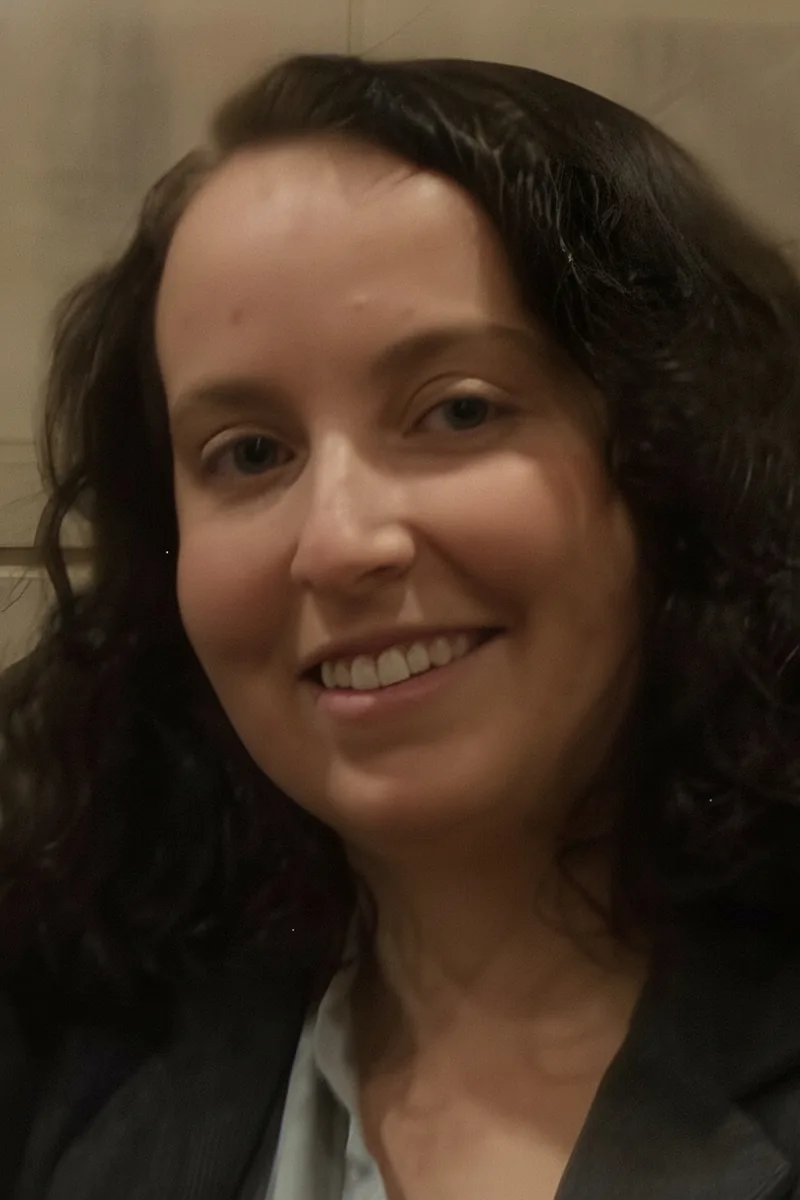
Having served as a multivariable calculus teaching assistant at Harvard, Kristi knows exactly which Algebra 2 skills — like fluency with logarithmic properties and comfort manipulating rational expressions — need to become second nature before higher math is possible. She treats each topic as a building block with a clear destination, drawing on her astrophysics training to show students how these algebraic tools describe real phenomena like orbital decay and planetary motion. Rated 5.0 by her students.

Philosophy trained Rachelle to dissect arguments into their logical structure — a skill that translates surprisingly well to Algebra 2, where understanding why completing the square works or how logarithmic and exponential forms mirror each other matters more than memorizing steps. Her summa cum laude finish at Arizona State and law school admission reflect the kind of disciplined, precise thinking she brings to every problem set. She's especially effective at slowing down the moment abstraction outpaces intuition and rebuilding the reasoning from scratch.
Logarithms, polynomial division, and rational functions are where Algebra 2 starts to feel like a different language — Thara translates it back into something intuitive. Algebra is her most-tutored subject, and she unpacks each new concept by tying it to the Algebra 1 foundations students already understand, so the jump in complexity feels manageable rather than overwhelming.
Algebra 2 is where math shifts from procedural to conceptual, and logarithms, rational functions, and conic sections can feel like a foreign language overnight. Tracey's graduate work in math education has her actively researching how students learn abstract algebraic concepts, so she brings tested strategies — not just extra practice problems — to every session.
Chemical engineering coursework throws Adrian into problems where systems of equations, complex number operations, and exponential models aren't optional — they're the foundation of reactor design and thermodynamics calculations. That daily fluency means he can pinpoint exactly where an Algebra 2 concept breaks down for a student and rebuild the reasoning on the spot. His 34 ACT confirms the broad mathematical sharpness behind that applied expertise.
The jump to Algebra 2 is where many students lose their footing because suddenly every topic — logarithms, complex numbers, polynomial division — builds on skills that were only loosely understood in Algebra 1. Jared teaches across the full math sequence from arithmetic through calculus, which means he can spot exactly which earlier concept is causing a breakdown and rebuild from there.
Three and a half years as a peer math tutor taught Chris something most people learn the hard way: Algebra 2 is where students' shaky earlier habits — especially around exponent rules and function notation — finally catch up with them. His applied mathematics minor means he can dig into the mechanics of logarithmic and polynomial reasoning with real fluency, while his psychology training gives him a sharp read on when frustration is masking a specific conceptual gap. Rated 5.0 by his students.
Logarithmic functions, polynomial division, and sequences tend to be the concepts where Algebra 2 students start feeling lost — Cameron tackles each one by connecting the abstract notation back to concrete patterns students can see and manipulate. His quantitative training through a Genetics PhD means he's spent years working with the exact kinds of mathematical models that Algebra 2 introduces for the first time.
Geological sciences taught Paul to think in systems — modeling how variables like pressure, temperature, and time interact through exactly the kinds of exponential and polynomial relationships that Algebra 2 formalizes. He's especially effective at the moment students hit the wall between Algebra 1 habits and the new abstractions of logarithms or rational functions, because his own path through math was built on making each concept concrete before moving forward. His broad tutoring range from arithmetic through calculus means he can quickly identify which foundational gap is causing the confusion.
Years of teaching special education sharpened Maurice's instinct for identifying exactly where a student's understanding breaks down — a skill that pays off in Algebra 2, where gaps in earlier concepts like exponent rules or function notation can silently derail topics like logarithms and polynomial division. He rebuilds those missing pieces alongside the new material so students aren't just keeping up but actually gaining confidence with each new layer of abstraction.
Aerospace engineering at Georgia Tech throws Naveen into problems where polynomial models, systems of equations, and exponential relationships aren't textbook exercises — they're how you calculate thrust curves and orbital trajectories. That applied fluency means he can unpack topics like logarithmic equations or sequence behavior by grounding them in scenarios where the math actually does something. His 35 ACT and 1570 SAT confirm the mathematical precision behind those explanations.
Testimonials
Because the right Algebra 2 tutor makes all the difference.
Average Session Rating – Based on 3.4M Learner Ratings
Practice Algebra 2
Free practice tests, flashcards, and AI tutoring for Algebra 2
Other Phoenix Tutors
Related Math Tutors in Phoenix
Frequently Asked Questions
Algebra 2 marks a shift from procedural skills to deeper conceptual understanding—many students struggle with this transition. Common pain points include multi-step equations, word problems that require translating real-world scenarios into equations, graphing complex functions, and understanding why certain algebraic manipulations work. With personalized 1-on-1 instruction, tutors can identify exactly where understanding breaks down and rebuild those foundations with targeted practice and clear explanations.
During an initial session, a tutor will assess your current understanding of key Algebra 2 concepts, identify specific areas where you're struggling, and learn about your learning style and goals. This might include reviewing recent assignments, discussing topics that feel confusing, or working through a sample problem together. The tutor then creates a personalized plan focused on building both confidence and competency in the areas that matter most to your success.
Word problems require translating language into mathematical equations—a skill that doesn't always come naturally. Expert tutors teach systematic strategies for breaking down complex problems into manageable steps: identifying what you know, defining variables, setting up equations, and checking answers for reasonableness. With practice and guided problem-solving, students develop the confidence to tackle unfamiliar scenarios rather than freezing when they see a paragraph instead of a straightforward equation.
Showing work reveals your thinking process and helps identify exactly where errors occur—whether it's a conceptual misunderstanding or a careless mistake. Tutors emphasize clear, organized problem-solving by modeling how to write out each step logically and explaining the reasoning behind each move. This builds both mathematical communication skills and self-awareness; students learn to catch their own mistakes and understand not just the answer, but why it's correct.
Graphing connects abstract algebraic equations to visual representations, which helps many students see patterns and relationships they might otherwise miss. Tutors use multiple approaches—plotting points, identifying key features like intercepts and asymptotes, and exploring how changes to an equation affect the graph. This visual-algebraic connection transforms graphing from a mechanical task into a powerful tool for understanding function behavior.
Yes. Phoenix schools use various textbooks and approaches, and expert tutors are familiar with different curricula and teaching methods. Whether your school uses a traditional textbook, integrated curriculum, or online platform, Varsity Tutors connects you with tutors who can align instruction with your specific coursework, assignments, and the way your teacher presents material. This ensures tutoring reinforces what you're learning in class rather than introducing conflicting approaches.
Math anxiety often stems from past struggles or feeling rushed in a classroom setting. Personalized 1-on-1 instruction removes that pressure; you work at your own pace with a tutor who explains concepts until they click, celebrates progress, and breaks problems into manageable pieces. As you experience success and understand the 'why' behind concepts, confidence builds naturally—and that confidence carries into tests and future math courses.
Algebra 2 is foundational for precalculus, calculus, and many STEM pathways. By developing deep conceptual understanding—not just memorizing procedures—students build the flexible thinking skills needed for more advanced math. Tutors help students see connections between topics and develop problem-solving strategies that apply across different courses, setting them up for success in whatever math comes next.
Let’s find your perfect tutor
Answer a few quick questions. We’ll recommend the right plan and match you with a top 5% tutor.