Award-Winning Middle School Math Tutors
serving Pittsburgh, PA
Middle School Math
Tutors in Pittsburgh
Private 1-on-1 tutoring, weekly live classes for academic support, test prep & enrichment, practice tests and diagnostics, and more to elevate grades and test scores.
Based on 3.4M Learner Ratings
UniversitiesSchools & Universities
DeliveredHours Delivered
ProficiencyGrowth in Proficiency
Who needs tutoring?
No obligation. Takes ~1 minute.

The jump from arithmetic to middle school math catches a lot of students off guard when ratios, proportions, and early algebraic thinking enter the picture. Elliot keeps things concrete — connecting fractions to real measurements, graphing to visual patterns — so that abstract ideas land before students are asked to generalize them.
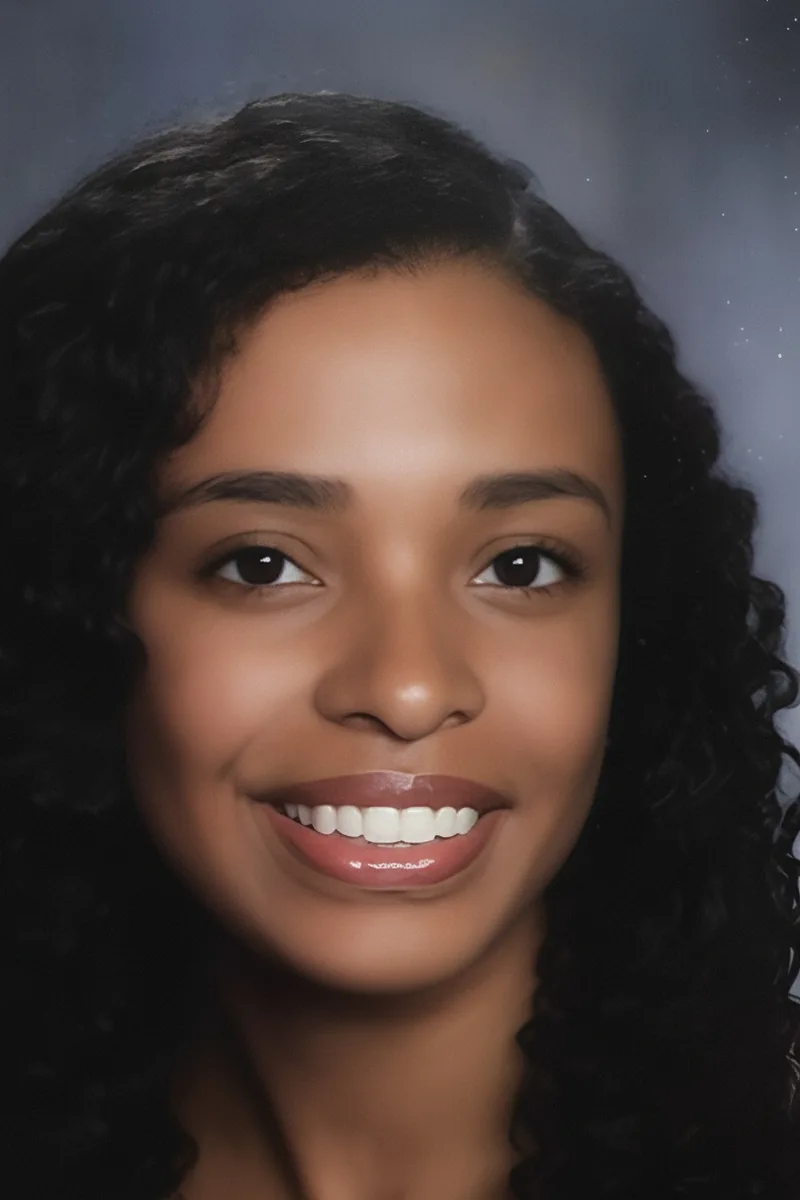
The jump from arithmetic to algebraic thinking trips up a lot of middle schoolers, especially when variables, negative numbers, and multi-step word problems enter the picture. Olivia breaks these concepts into concrete steps, connecting each new idea back to something the student already understands. Rated 4.9 by students and families.
At the middle school level, math confidence matters almost as much as math skill — a student who feels defeated by fractions or negative numbers will disengage long before algebra arrives. Samuel spends time reinforcing what a student already understands before layering on new ideas like ratios, proportions, and basic equation-solving. It's a deliberate strategy: genuine pride in small wins builds the momentum that carries through high school.
Confidence matters more than most people realize in middle school math — a student who freezes on fraction operations or proportional reasoning often knows more than their test scores suggest. Madhura pairs clear explanations with low-pressure practice, turning topics like ratios, percentages, and basic equation-solving into skills students trust themselves to use independently.
Somewhere between fractions and functions, middle school math asks students to start thinking abstractly — proportional reasoning, negative numbers, basic statistics. Cathy approaches each of these topics by connecting them to concrete situations first, then gradually building toward the symbolic representation. Her three engineering and science degrees give her deep fluency with the math these concepts are preparing students for.
Three semesters teaching ESL students through Tufts taught Danielle how to gauge exactly where a learner's understanding breaks down and adjust on the fly — a skill she brings directly to middle school math. Whether it's fractions, ratios, or introductory equations, she builds each session around what a student actually needs, not a one-size-fits-all lesson plan.
Ratios, proportions, and early linear relationships all click faster when a student sees how each concept builds on the last. Tiasha's chemical engineering background means she's spent years using middle school math foundations — fractions, percentages, basic geometry — in real calculations, and she brings that practical fluency into every session.
Fractions, ratios, and proportions click faster when students see how the math connects to something real — Timothy draws on his computer science background to show how these concepts power everyday technology. His 4.8 rating speaks to an approach that makes pre-algebra and integer operations feel less abstract and more intuitive.
Fractions, ratios, and early equation-solving are where math either starts making sense or starts feeling like a chore. Vincent ranked seventh out of over 600 students in high school, and he traces that success back to locking in these middle school fundamentals — he knows which specific skills matter most for what's ahead.
Fractions, ratios, and proportional reasoning trip up more middle schoolers than almost any other topic — and they're exactly the skills that need to be solid before algebra begins. Mary approaches these concepts with patience and structure, drawing on her experience as an undergraduate teaching assistant who regularly worked with students one-on-one to untangle confusing material.
I am a current undergraduate student at the University of Pittsburgh, studying Political Science and Psychology with a minor in Spanish. I have ample experience in tutoring and working with children ranging from preschool to 12th grade. Through the Bev Hickman Writing Center at Catonsville High School, I received a full school year's worth of intense writing tutoring training, including AP essays, college applications, cover letters, resumes, and other class assignments. I have also gained experience in childcare through Trinity Summer Camp, where I worked as a counselor for ages 3.5 to 5 for 7 weeks; we focused on creating an enriching environment for education and fun, managing a wide array of behaviors and personalities.
Ratios, proportions, coordinate graphing, early geometry — middle school math covers an enormous range of topics in a short time. Golda approaches each one by connecting it to something tangible, whether that's using proportions to scale a recipe or plotting real data on a graph. Rated 5.0 by students, she keeps sessions structured without making them feel like a lecture.
Having worked as an instructional assistant in both public and private schools, Alexander has spent years sitting next to middle schoolers at the exact moment a concept like integer operations or solving for a variable stops making sense — and figuring out how to restart the explanation on the spot. His Pomona College politics degree trained him to build logical arguments from evidence, a habit he carries into teaching students how to set up and reason through multi-step problems instead of guessing at operations.
The jump from arithmetic to early algebraic thinking trips up a lot of middle schoolers, especially when decimals, negative numbers, and basic geometry all show up in the same semester. Patrick breaks each concept into small, concrete steps — turning a word problem about percentages into something a student can diagram and solve without panic. His easygoing style keeps younger learners from shutting down when the material gets tough.
Ratios, proportional reasoning, and early equation-solving are the skills that either open the door to higher math or quietly become stumbling blocks for years. Regina breaks these topics into concrete, step-by-step logic — an instinct she developed through an industrial engineering degree where systematic problem-solving was the entire curriculum.
Ratios, proportions, and that first encounter with negative numbers — middle school math is where students either build genuine number sense or start faking their way through. Matt approaches each topic by diagnosing exactly where a student's reasoning breaks down, then rebuilding the logic from that specific point rather than re-teaching an entire chapter.
Amina tackles middle school math by making sure students don't just memorize steps for solving equations or computing with decimals — she checks that they can explain the reasoning behind each operation. That kind of conceptual grounding in proportional reasoning, basic geometry, and expressions is what separates students who coast through algebra from those who struggle. She uses everyday examples to make abstract ideas tangible.
Between fractions, ratios, and the first taste of geometry, middle school math covers a surprising amount of ground in a short time. Ben's architecture studies at Virginia Tech keep him using proportional reasoning and spatial thinking daily, which gives him a practical way to explain why these topics matter beyond the worksheet.
Studying applied physics at Carnegie Mellon means Sarah uses algebra, geometry, and proportional reasoning as daily tools — so when she teaches those same concepts to middle schoolers, she can point to exactly how and where they show up in real engineering problems. Her 4.5 rating and ACT experience also mean she knows how to keep younger students on track with the organizational habits that prevent small gaps from snowballing once math gets more demanding in high school.
I am a graduate from Rochester Institute of Technology with a master's in Game Design and Development. My passions lie in everything related to games and mathematics. In the past, I have tutored various subjects in mathematics throughout high school and college, including but not limited to Algebra, Algebra II, Trigonometry, Calculus, Discrete Mathematics, Mathematics of Graphical Simulation, and Linear Algebra. As for technology, I am more than happy to reach out for help in Web Development (HTML, CSS, Javascript) or C# programming. I believe that every person can learn any topic. While every individual has different tastes, strengths, and weaknesses, there is no such thing as an "incapability" to know a subject. Education often possesses a guise of anti-fun, but I can promise you that all topics can be engaging, and I am willing to show you how engaging mathematics and technology can be. As a Game Designer, I have a deep interest in both playing games and making games. This includes games of all kinds: video games, board games, tabletop role-playing games, trading card games, miniatures, and even some sports like tennis or ping pong. Games act as a fantastic teaching tool. They teach by design without users recognizing. It is always a satisfying moment when somebody says "I learned that word from Magic" or "D&D taught me that." Remember: you can succeed. If something is important to you, then it's always worthwhile.
I am a graduate of Geneva College with a B.S. degree in Educational Studies, specializing in Elementary and Special Education. I hold a Pennsylvania Elementary Education certificate (Grades K-8.) I have worked with children in classroom and daycare settings for five years. I can tutor a wide range of subjects, but my specialties are language arts and math. I have experience working with students with special needs, both gifted and children with physical and learning disabilities. I am familiar with IEPs and various methods to engage students, both general and special education. I enjoy tutoring because it allows me to work with a student in a way that works for them. I tailor my lessons to each student's unique learning style and interests. My philosophy of education is child first. I tailor my lessons to each student's unique learning style and interests. I believe that mixing interests with learning leads to more participation and engagement.
Testimonials
Because the right Middle School Math tutor makes all the difference.
Average Session Rating – Based on 3.4M Learner Ratings
Other Pittsburgh Tutors
Related Math Tutors in Pittsburgh
Frequently Asked Questions
Middle school math programs across Pittsburgh's 32 school districts may use different textbooks and pacing guides. Tutors connect with students understand their specific curriculum and build on what's being taught in class, whether that's a focus on procedural fluency, conceptual understanding, or a blend of both. This alignment ensures tutoring reinforces classroom learning rather than introducing conflicting approaches.
Middle school is when students transition from "how to do it" to "why it works," which is essential for success in algebra and beyond. Tutors help students build this deeper understanding by exploring why mathematical rules exist, not just memorizing steps. This conceptual foundation makes advanced math feel less intimidating and helps students solve unfamiliar problems with confidence.
Word problems require students to translate real-world situations into math, identify what they're solving for, and execute multiple steps correctly—skills that don't always develop naturally in a classroom setting. Tutors break down the problem-solving process, teach strategies for organizing information, and help students practice until they can tackle unfamiliar problem types independently. This builds both mathematical thinking and the confidence to approach complex questions.
Math anxiety is common in middle school and often stems from struggling with earlier concepts or feeling rushed in class. Personalized 1-on-1 instruction creates a low-pressure environment where students can ask questions, make mistakes, and learn at their own pace. As they experience success and understand "why" behind the math, confidence grows and anxiety typically decreases.
Showing work isn't just about getting the right answer—it helps teachers identify where students are struggling and allows students to catch their own errors. Tutors model clear, organized problem-solving approaches and help students develop the habit of documenting their thinking. This skill is essential for success on standardized tests and in future math courses where partial credit depends on demonstrated reasoning.
Graphing and proofs require students to visualize abstract concepts and communicate mathematical reasoning—skills that take time to develop. Many students struggle with coordinate planes, interpreting graphs, or understanding why a proof matters. Tutors use visual strategies, real-world examples, and step-by-step guidance to help students see patterns, build connections, and develop the logical thinking these topics demand.
The first session focuses on understanding where a student is strong, where they're struggling, and what their goals are. Tutors assess current skills, identify knowledge gaps from earlier grades if needed, and start building a personalized plan. This foundation ensures every subsequent session targets the right concepts and builds momentum toward measurable improvement.
Tutoring can address homework help, test preparation, filling gaps from previous grades, building conceptual understanding, and developing problem-solving strategies. Whether a student needs weekly support to keep up with class or intensive help preparing for a standardized test, tutors customize their approach. This flexibility means students get exactly what they need without paying for unnecessary services.
Let’s find your perfect tutor
Answer a few quick questions. We’ll recommend the right plan and match you with a top 5% tutor.