Award-Winning Microeconomics Tutors
serving Akron, OH
Who needs tutoring?
FEATURED BY


TUTORS FROM
- YaleUniversity
- PrincetonUniversity
- StanfordUniversity
- CornellUniversity
Award-Winning Microeconomics Tutors serving Akron, OH

Certified Tutor
9+ years
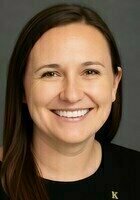
Sami
Sami earned his economics and computer science degrees at Duke, then moved into management consulting and corporate finance before starting his MBA at Yale — so when he teaches concepts like profit maximization under different market structures or strategic pricing in oligopolies, he's drawing on de...
Duke University
Bachelor of Science (Economics and Computer Science)
Yale School of Management
Current Undergrad Student, Business Administration and Management
Certified Tutor
Laura
Supply and demand curves are simple enough on the surface, but microeconomics gets tricky fast once students hit elasticity calculations, game theory matrices, and market failure models. Laura studied economics at the undergraduate level and brings real fluency to topics like consumer surplus, price...
Massachusetts Institute of Technology
Bachelors, Economics

Certified Tutor
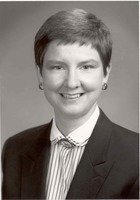
Jack
Elasticity, market structures, consumer surplus — microeconomics is full of concepts that seem straightforward on the surface but get tricky the moment you apply them to problem sets. Jack's Northwestern economics training means he can walk through the math behind each model while keeping the bigger...
Northwestern University
B.A. in Theatre and Economics
Certified Tutor
Mary's PhD in Chemistry from the University of Chicago means she spent years doing the kind of constrained optimization and quantitative modeling that microeconomics relies on — minimizing costs, maximizing outputs, interpreting how variables shift on a graph. She pairs that analytical rigor with MB...
University of Chicago
PhD in Chemistry
Lafayette College
Bachelors, Chemistry/Phyics

Certified Tutor
10+ years
Shoaib
The jump from understanding a basic supply curve to working through consumer optimization with indifference curves and budget constraints trips up a lot of students. Shoaib tackles microeconomics by connecting the math — marginal utility, cost functions, Nash equilibria — to the intuitive reasoning ...
Rutgers University-Newark
Masters, Economics
Universiti Malaya
Bachelors, Economics

Certified Tutor
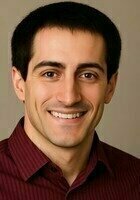
Mosab
Supply and demand curves are intuitive until you hit market failures, game theory, and the math behind consumer optimization — that's where microeconomics gets interesting and where most students need a push. Mosab teaches AP Microeconomics with an emphasis on connecting graphical analysis to the un...
Tufts University
Bachelors, International Relations and Arabic
Harvard University
Current Grad Student, Health Sciences
Certified Tutor
Mark
Reading The Economist for fun is one thing — Mark actually digs into the microeconomic logic underneath the headlines, connecting how firms price goods or respond to regulation back to the models students see in class. His bioengineering grad work is heavily quantitative, so he's comfortable walking...
University of Illinois at Chicago
Current Grad Student, Bioengineering
University of Illinois at Chicago
Current Undergrad, Bioengineering

Certified Tutor
Hari
Supply and demand curves are just the starting point — Hari digs into elasticity, marginal utility, and market structures like oligopoly and monopolistic competition to show how firms actually make pricing decisions. His MBA in Finance gives him real-world context for concepts like cost curves and p...
University of South Florida-Main Campus
Masters, MBA (Finance and Management)
Washington University in St. Louis
Bachelors
Certified Tutor
17+ years
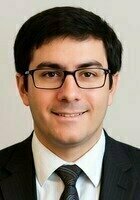
Supply and demand curves are just the entry point — the real challenge in microeconomics is applying them to problems involving market structures, consumer choice, and externalities. Adi's economics training means he can walk through the intuition behind utility maximization or Nash equilibrium with...
Rice University
Bachelor in Arts

Certified Tutor
9+ years
Albert
Consumer choice theory, production functions, and game theory matrices each demand a slightly different way of thinking — and that's where most micro students get stuck. Albert tackles each framework on its own terms, drawing on his MBA economics training to show why firms price-discriminate, how ex...
University of California Los Angeles
Masters in Business Administration
Wuhan University
Bachelor in Arts, Broadcast Journalism
Other Akron Tutors
Related Business Tutors in Akron
Frequently Asked Questions
Microeconomics studies individual economic actors—consumers, businesses, and markets—and how they make decisions about production and pricing. Students often struggle because it requires both abstract thinking (understanding supply and demand curves) and practical application (analyzing real-world market behavior). Many find the mathematical components challenging, especially when graphing and interpreting elasticity or equilibrium concepts.
In a typical Akron classroom with a 14.2:1 student-teacher ratio, instructors must move at a pace that works for the majority. Personalized 1-on-1 instruction allows tutors to slow down on concepts like consumer surplus or monopolistic competition, spend extra time on graph interpretation, and adjust explanations to match how you learn best. This targeted approach helps you build confidence and mastery rather than just keeping up.
Your first session is a diagnostic conversation where a tutor assesses your current understanding of microeconomic concepts, identifies specific areas of confusion (whether it's utility theory, market structures, or problem-solving), and learns your learning style. Together, you'll establish clear goals—whether that's improving exam scores, understanding course material, or building skills for advanced economics classes—and create a personalized plan moving forward.
Students frequently need support with supply and demand analysis, elasticity calculations, consumer and producer surplus, cost structures (fixed vs. variable costs), and different market structures (perfect competition, monopoly, oligopoly). Many also struggle with interpreting graphs and translating word problems into economic models. A tutor can break down these foundational topics so you truly understand the 'why' behind each concept, not just memorize formulas.
Yes. Whether you're preparing for the AP Microeconomics exam (which tests supply/demand, elasticity, production costs, and market structures) or taking a college introductory or intermediate microeconomics course, personalized instruction helps you master both conceptual understanding and problem-solving skills. Tutors can align with your specific curriculum, help you practice exam-style questions, and ensure you're ready for assessments.
Many students notice improved confidence and clarity within 2-3 sessions, especially once a tutor helps them understand core concepts like equilibrium or elasticity that they previously found confusing. Measurable grade improvement typically follows within 3-4 weeks of consistent tutoring, depending on how frequently you meet and how actively you engage with practice problems between sessions. The key is consistent, focused work on your specific weak areas.
Varsity Tutors connects you with tutors who have demonstrated expertise in economics—whether through advanced degrees, professional experience, teaching backgrounds, or proven success helping other students master microeconomic concepts. Each tutor is vetted for subject knowledge and teaching ability, ensuring you're learning from someone who understands both the material and how to explain it clearly.
Pricing varies based on tutor expertise, session length, and frequency, so you have flexibility to find an arrangement that fits your budget and schedule. Many students benefit from meeting once or twice weekly for 60-90 minute sessions, though some prefer more intensive preparation closer to exams. When you connect with a tutor, you can discuss what works best for your goals and timeline.
Connect with Microeconomics Tutors in Akron
Get matched with local expert tutors