Award-Winning Japanese Tutors
serving Albuquerque, NM
Japanese
Tutors in Albuquerque
Private 1-on-1 tutoring, weekly live classes for academic support, test prep & enrichment, practice tests and diagnostics, and more to elevate grades and test scores.
Based on 3.4M Learner Ratings
UniversitiesSchools & Universities
DeliveredHours Delivered
ProficiencyGrowth in Proficiency
Who needs tutoring?
No obligation. Takes ~1 minute.
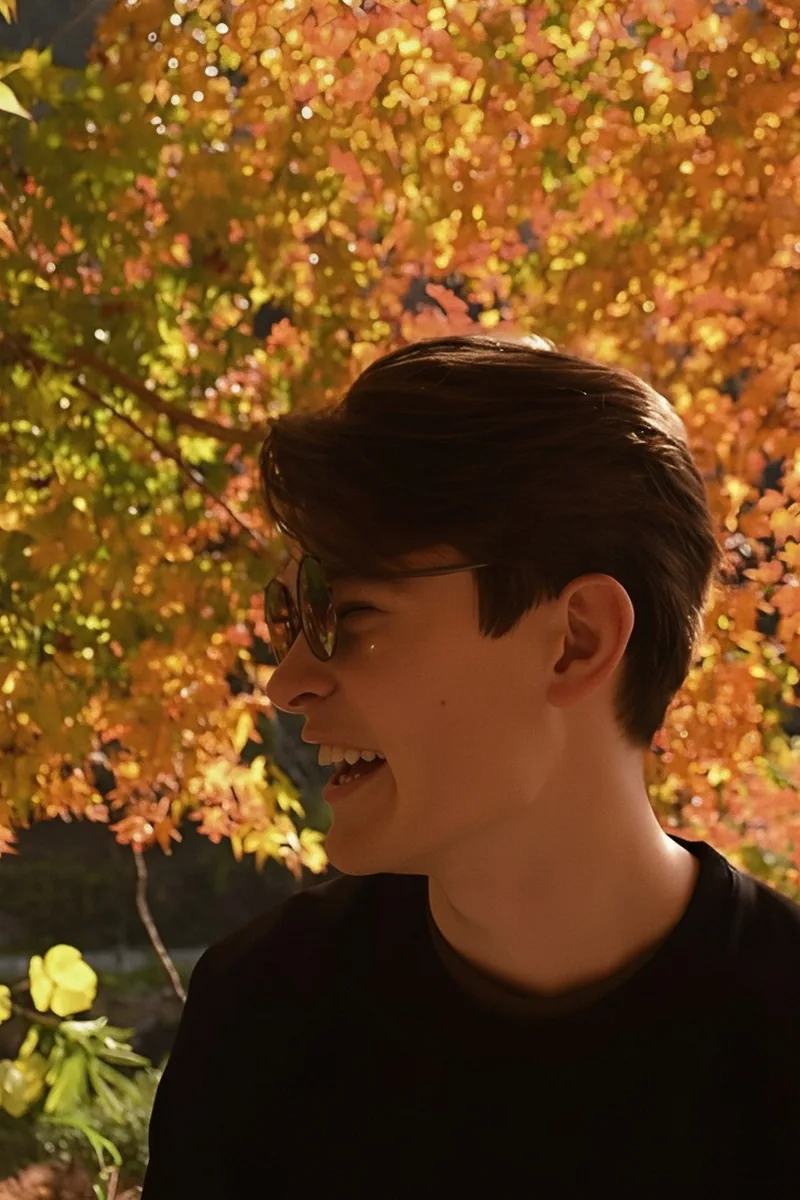
Triple-majoring in Japanese, linguistics, and computer science at UMass Amherst, Connor brings both fluency and analytical rigor to teaching the language. He unpacks grammar patterns like particle usage and verb conjugation groups by connecting them to the underlying logic of how Japanese sentences are built — making new structures easier to internalize and recall.

A drama degree might not scream Japanese fluency, but John's literary work — he's a section editor for the Los Angeles Review of Books and literary manager for two theater companies — means he's deeply attuned to how language shapes meaning, tone, and register. That sensitivity to nuance transfers directly to navigating Japanese's layered politeness levels and context-dependent sentence endings. Rated 5.0 by students.
Brian prepared for and took the SAT Subject Test in Japanese with Listening, which means he's worked through the grammar structures, kanji recognition, and listening comprehension challenges that define intermediate Japanese study. He approaches language learning with the same systematic thinking he applied to economics and CS at Caltech — breaking down sentence patterns and verb conjugations into logical rules rather than pure memorization.
Growing up attending the Japanese Weekend School of New Jersey while enrolled in American public schools, Hidefusa developed native-level fluency in both languages and a deep understanding of where English speakers stumble with Japanese. He teaches everything from hiragana and katakana basics to kanji recognition, particle usage, and keigo (formal speech) — drawing on the bilingual instincts of someone who has lived in both linguistic worlds.
Most students stall in Japanese once they move past hiragana and katakana into kanji recognition and grammatical particles like は versus が. Wahala minors in Japanese at Indiana University Bloomington and treats the language as a system to decode — connecting sentence structure, verb conjugation patterns, and cultural context so that reading and conversation reinforce each other.
I am currently finishing my thesis. For the past two years I was an adjunct instructor at The City College of New York, teaching statistics and introductory neuroscience, where I learned the importance of communicating complicated concepts clearly at an individualized level. All of my classes performed above average, and I discovered how satisfying it is to help people understand difficult ideas. I've found that by creating a good rapport with my students I am able to more effectively impart difficult concepts to them while causing them less stress. My passion is people, which first led me to study psychology, leading to my work in statistics, and later into teaching.
Few Japanese tutors can combine formal academic study with real teaching experience in Japan — Sophie has both. Her East Asian Studies work at Princeton included intensive Japanese language training, and she spent time teaching English in Japan, which gave her deep familiarity with how the two languages map onto (and diverge from) each other. She tackles everything from hiragana and katakana basics to particle usage and keigo politeness levels.
I am particularly passionate about math as well as standardized test prep. I studied math on a double-accelerated track throughout middle school and high school, covering math from algebra to multivariable calculus. Aside from teaching academic subjects, I am also trained in playing the piano and violin, having taken lessons for piano from the ages of 4 to 18 and playing violin in my school orchestra from 5th to 12th grade. I love working with students to improve their skills in an area of study, and my favorite part is getting to see them gain confidence in themselves and their own abilities!
I am also fluent (reading/listening/writing) in Cantonese and mandarin Chinese because of my upbringing. Half of my childhood education was received in Hong Kong and the other half was in Australia.
Though her degrees are in biology and science education, Sarah lists Japanese among her interests and brings a teacher's instinct for breaking complex systems into learnable parts — useful when students are wrestling with hiragana stroke order or the logic behind particle placement. Her 5.0 rating and four years of classroom teaching mean she knows how to pace a lesson and adjust when something isn't landing.
As a native Japanese speaker who has also worked professionally as an interpreter, Sonya understands both languages from the inside — the particles, sentence-final expressions, and politeness shifts that sound natural versus textbook-stiff. Her bilingual preschool volunteering sharpened her ability to explain concepts at any level, from first encounters with hiragana to nuanced keigo distinctions that even intermediate learners struggle with.
Between his East Asian Studies major at Harvard, his presidency of the Harvard College Japan Initiative, and his work in the Yenching Library's Japanese Collection, Shane lives and breathes Japanese. He reads novels and plays games in Japanese for fun, which means he teaches the language the way it's actually used — from kanji recognition and particle usage to the register shifts that textbooks barely cover.
Testimonials
Because the right Japanese tutor makes all the difference.
Average Session Rating – Based on 3.4M Learner Ratings
Other Albuquerque Tutors
Related Languages Tutors in Albuquerque
Frequently Asked Questions
Your first session is all about understanding your current level and learning goals. A tutor will assess your reading, writing, speaking, and listening skills, discuss what you want to achieve—whether that's conversational fluency, test preparation, or academic proficiency—and create a personalized plan tailored to your needs. This foundation helps ensure every session builds exactly what matters most to you.
In a classroom setting, students in Albuquerque schools often get limited speaking time. With personalized 1-on-1 instruction, you get consistent conversation practice with immediate feedback on pronunciation, natural phrasing, and accent refinement. Tutors can slow down, repeat, and adjust explanations to help you develop authentic speaking skills that build confidence for real-world communication.
Japanese grammar works very differently from English—verb conjugation, particles, kanji combinations, and sentence structure can feel overwhelming at first. A tutor breaks these patterns into manageable pieces, explains the logic behind grammar rules, and shows you how native speakers actually use them in conversation rather than just memorizing rules. This approach helps grammar stick and makes it easier to apply in real situations.
Vocabulary and kanji retention requires spaced repetition and active recall—seeing words multiple times over increasing intervals, then using them in context. Tutors help you build systems for tracking progress, connect kanji to their meanings and components, and practice vocabulary through conversation and writing. This targeted approach is far more effective than cramming or passive review.
Absolutely. Language and culture are deeply connected—understanding Japanese customs, social etiquette, honorifics, and cultural references makes the language make sense and helps you communicate authentically. Tutors often weave cultural context into lessons, explaining why certain phrases are used in specific situations and how context shapes meaning. This immersion-style approach accelerates both language skills and cultural fluency.
Yes. Personalized instruction means you can focus on the skills that matter most to you—whether that's reading classical literature, writing essays, having fluent conversations, or understanding native speakers. A tutor balances all four skills while emphasizing your priorities, ensuring you develop well-rounded proficiency rather than being limited by classroom pacing.
Reaching conversational fluency typically requires around 600-750 hours of study, according to language learning research. With consistent 1-on-1 tutoring combined with your own practice, most students see meaningful progress in speaking and listening within 3-6 months, and can hold basic conversations within 6-12 months. Your timeline depends on starting level, frequency of tutoring, and how much you practice between sessions.
Look for tutors with native or near-native fluency, experience teaching the specific skills you need (conversation, test prep, academic writing), and knowledge of Japanese culture and teaching methodology. Varsity Tutors connects you with expert tutors who have proven teaching experience and understand how to help students at your level progress effectively. During your first session, you'll get a sense of whether the teaching style is the right fit for you.
Let’s find your perfect tutor
Answer a few quick questions. We’ll recommend the right plan and match you with a top 5% tutor.